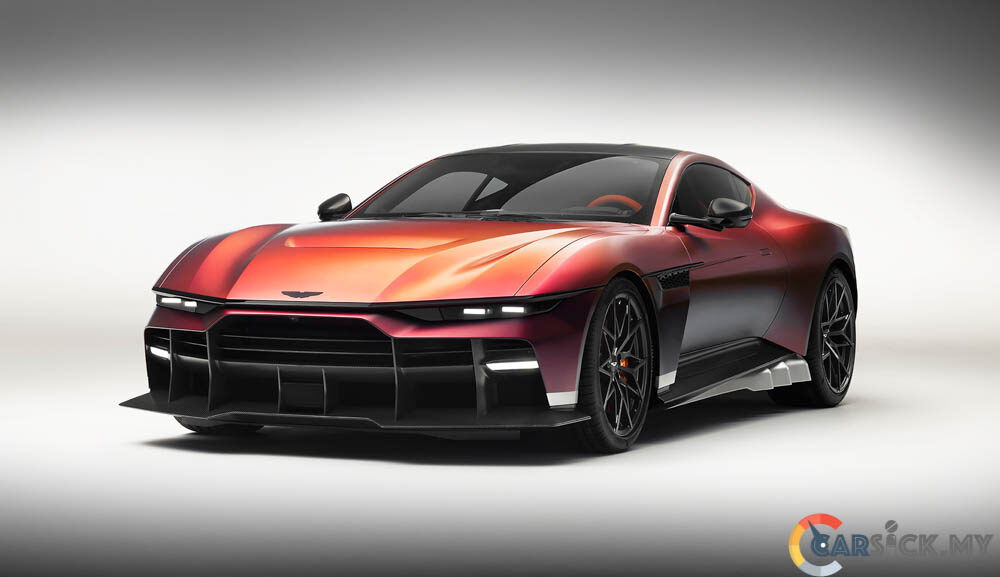

Aston Martin has unveiled the Valen, an exclusive V12 supercar created to push the company’s front-engined formula to an even more extreme level. Positioned as the most powerful front-engined production car from the British marque, the Valen combines an 850PS twin-turbocharged V12 with extensive weight reduction, bespoke chassis tuning and an aggressively styled carbon-fibre body.
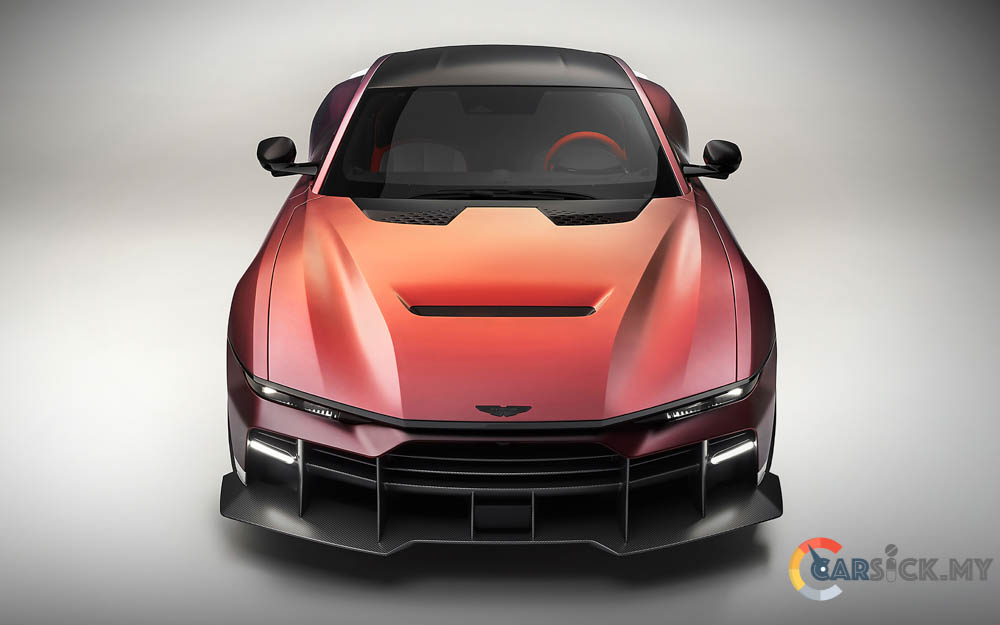 The Valen is the latest creation from Q by Aston Martin, the brand’s bespoke division, with the project brought to life through the expertise of Aston Martin’s newly established Special Vehicle Operations department. Its name is derived from the Latin word valens, meaning “strong” or “powerful”, fitting the character of what Aston Martin describes as its most powerful front-engined V12 supercar.
At the heart of the Valen is Aston Martin’s most powerful evolution yet of its 5.2-litre twin-turbocharged V12 engine. It produces 850PS and 1,000Nm of torque from just 2,500rpm, giving the car the substantial output expected from a limited-production flagship. Power is sent through an eight-speed ZF automatic transmission featuring sharper shift strategies developed from Aston Martin’s Vantage GT4 racing programme. The revised transmission contributes to a 0-60mph time of just 3.0 seconds, while top speed is electronically limited to 214mph.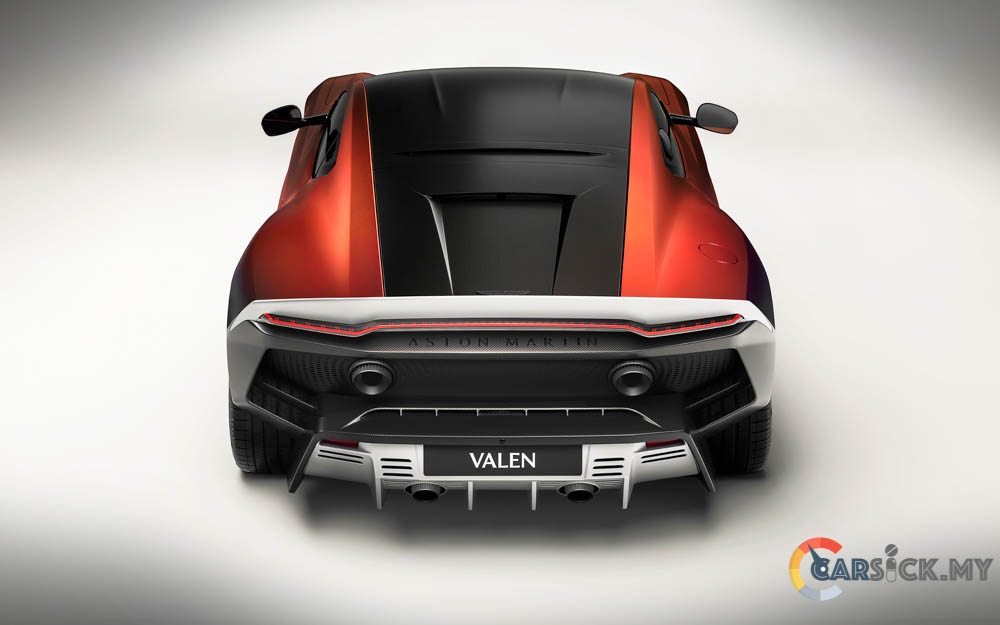
Rather than simply chasing outright power, Aston Martin has also developed the Valen around a more focused driving character. Sport, Sport+ and Track modes alter the car’s responses, including its throttle mapping. Sport and Sport+ provide a more immediate response for spirited road driving, while Track mode adopts a longer and more progressive throttle response to give drivers greater precision when driving at the limit.
Weight reduction is another major part of the Valen’s performance strategy. Compared with the core V12 platform, the Valen sheds up to 110kg through extensive use of carbon fibre, aluminium, titanium and magnesium. An optional lightweight package goes even further, replacing various suspension components with machined-from-solid aluminium parts while also introducing titanium chassis bolts. On its own, this package saves another 16.9kg.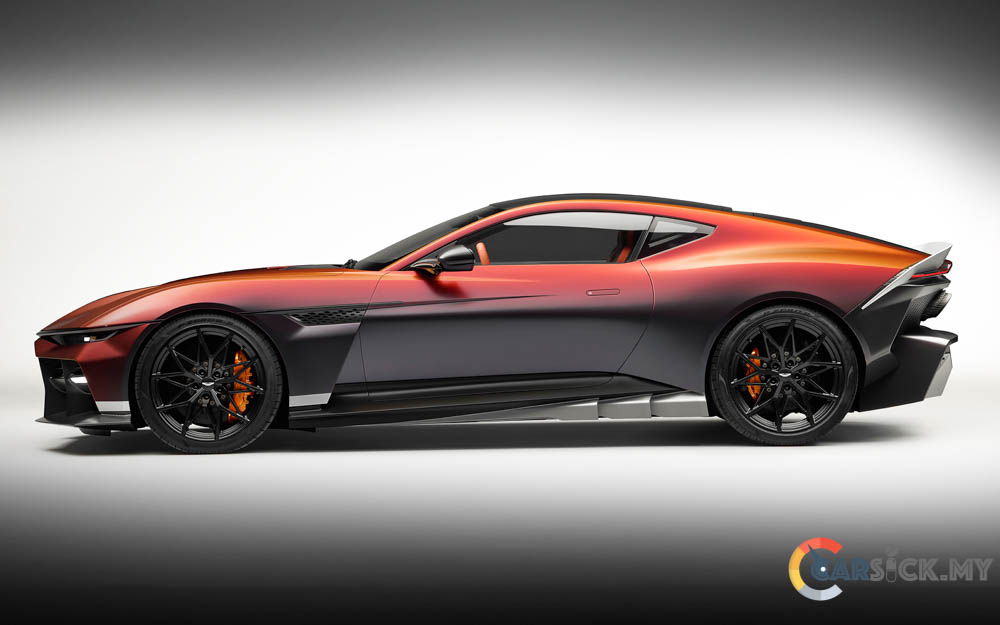
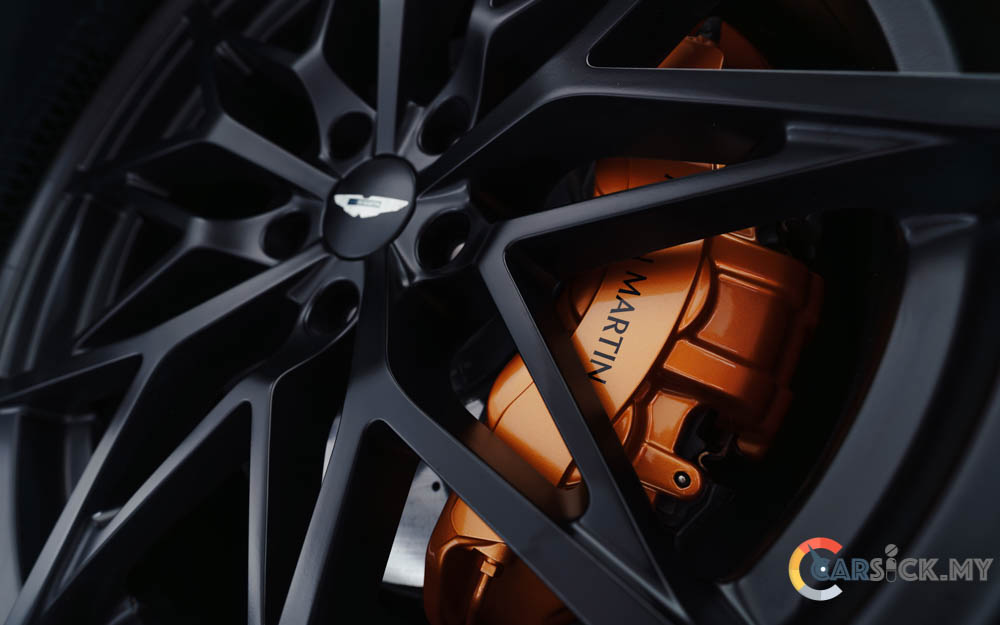
The Valen also comes fitted with lightweight magnesium wheels as standard, reducing unsprung mass to improve steering response, wheel control and ride refinement. The wheels are wrapped in Aston Martin-tuned Pirelli P Zero R tyres, with P Zero Winter 2 tyres also available. Both were developed specifically for the Valen to balance road usability with track-focused performance.
Adding another layer of technology is Pirelli’s Cyber Tyre system, which provides real-time tyre data to the vehicle’s dynamic control systems. Integrated with the car’s digital architecture, the system allows the ESP, ABS and traction control systems to continually adjust their operating thresholds for improved control and safety.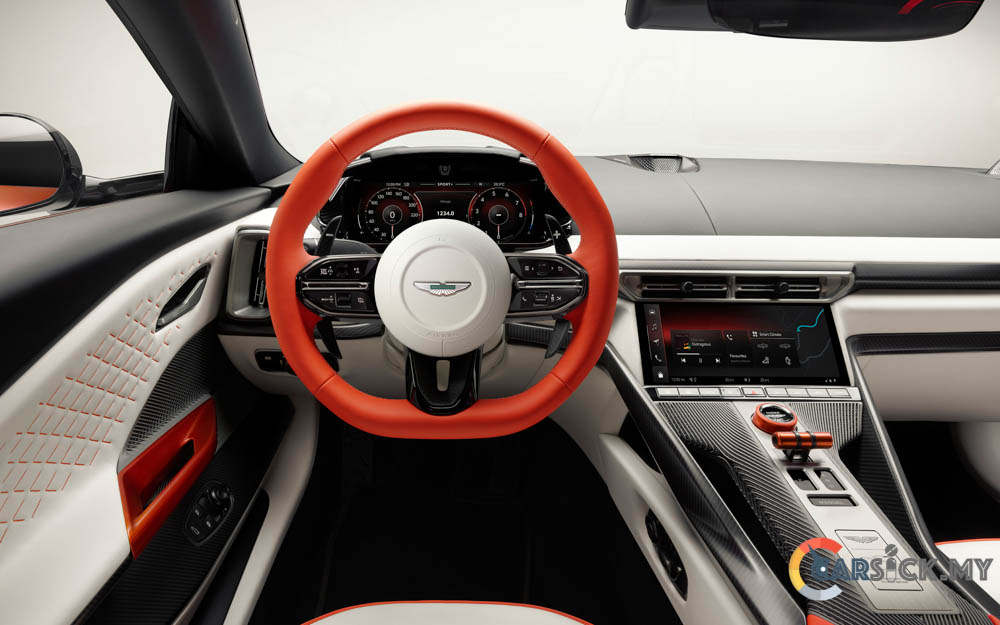
Aston Martin has made extensive hardware and software changes to give the Valen a substantially different character from its V12 foundation. The suspension, steering, brakes, dampers, camber settings and electronic stability systems have all been recalibrated.
The car uses a solid-mounted rear subframe, model-specific springs and helper springs, together with Bilstein DTX semi-active dampers. Steering calibration has also been developed to make the Valen feel more agile, with Aston Martin specifically targeting the response and behaviour of a smaller, lighter sports car.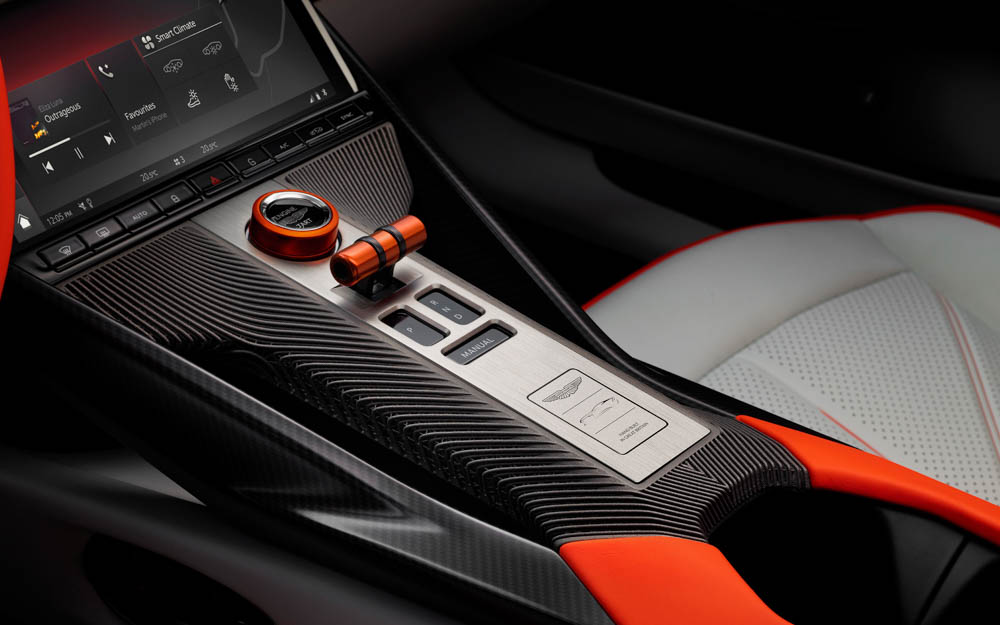
Stopping power comes from 410mm carbon-ceramic front brakes and 360mm rear units, supported by a brake booster tuned to provide a firm and precise pedal response. The Valen’s performance is accompanied by a bespoke lightweight titanium exhaust system featuring new micro mufflers. Its quad-exit arrangement is particularly distinctive, with two upper and two lower tailpipes integrated into the rear design.
The upper outlets remain open at all times, while the lower outlets are controlled by valves according to the selected driving mode. The exhaust finishers themselves are produced using 3D-printed titanium, combining lightweight construction with a strong visual connection to the car’s engineering-focused character.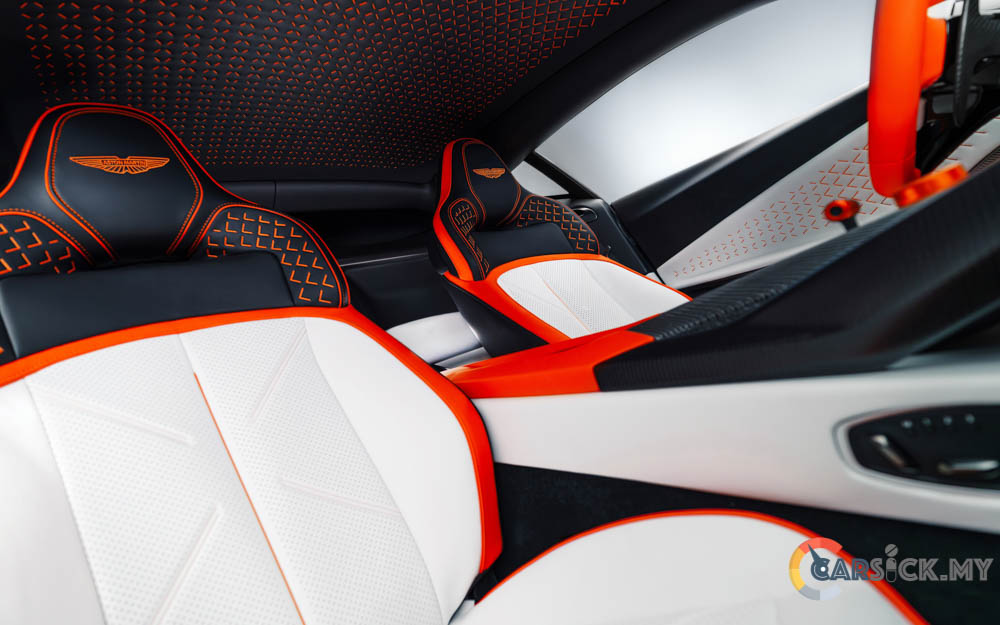
Aston Martin has also tuned the exhaust note to emphasise higher frequencies and create a more dramatic progression as engine speed rises. The upper outlets are designed to produce additional resonance at high revs, giving the V12 a more pronounced and emotional soundtrack.
Visually, the Valen represents a significant departure from Aston Martin’s more conventional front-engined designs. Its body is constructed entirely from carbon fibre, while the styling uses sharply defined surfaces and an aggressive stance to emphasise its front-engined, rear-wheel-drive configuration.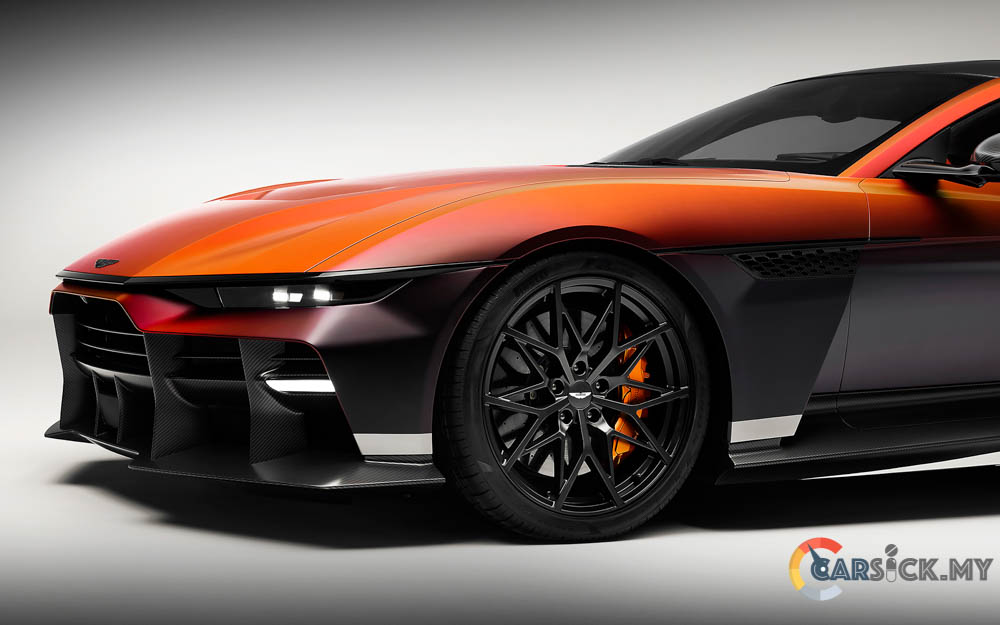
At the front, slim recessed headlights sit beneath the leading edge of the plunging bonnet. These are paired with a more angular radiator opening, a geometric mesh grille and a sharply angled splitter. The bonnet features a central vent, while the traditional Aston Martin side strakes have been transformed into larger functional vents that extract air from the wheel arches. These extend along the doors before flowing into the heavily sculpted rear haunches.
The lower bodywork features stepped sills and pronounced aerodynamic detailing, including saw-tooth vortex generators designed to manage airflow beneath the car and reduce lift. New quarter windows further distinguish the Valen from Aston Martin’s regular production models.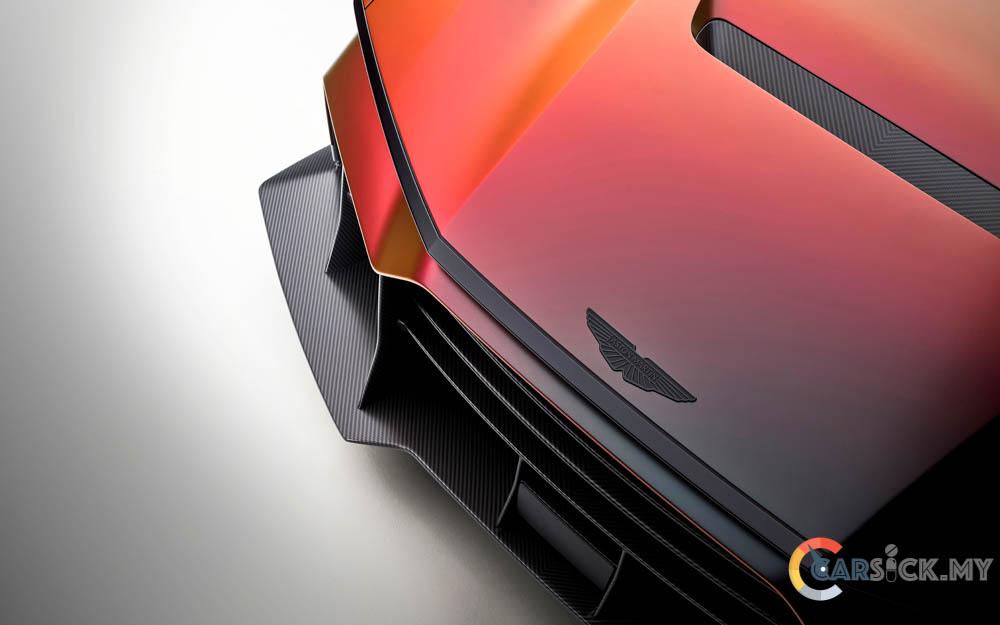
At the rear, Aston Martin has taken an unconventional approach by replacing the traditional rear window and boot lid with a solid tailgate. An integrated aerodynamic wing sits within the upper section, while the tailgate opens onto a 170-litre luggage compartment. A Touring Pack with bespoke luggage is available for customers intending to use the Valen on longer journeys.
A full-width rear light bar sits below the upswept tail, which doubles as a Gurney flap to generate additional downforce without requiring a large motorsport-style rear wing. Beneath it is a perforated panel designed to extract hot air from around the exhaust system.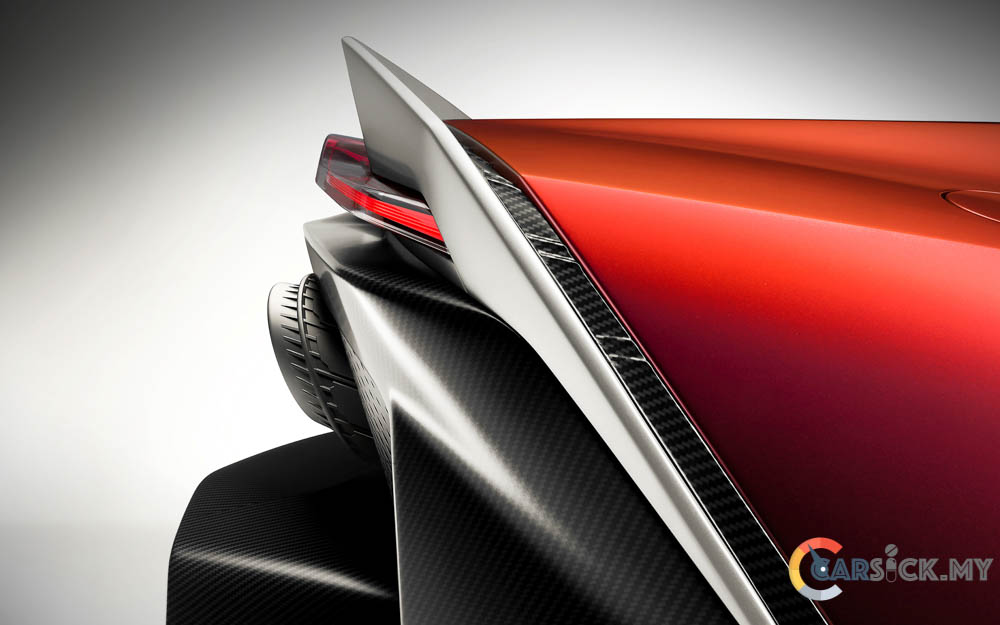
The Valen’s exclusivity extends well beyond its mechanical specification. The show car is finished in Satin Andromeda Red, a Q by Aston Martin-developed colour featuring deep red, copper and golden highlights that can shift towards blue depending on the lighting and viewing angle.
Customers can also specify the carbon-fibre body with the material left fully exposed. The carbon weave can be offered in satin or gloss finishes, while Q by Aston Martin can create bespoke tinted carbon treatments for individual customers.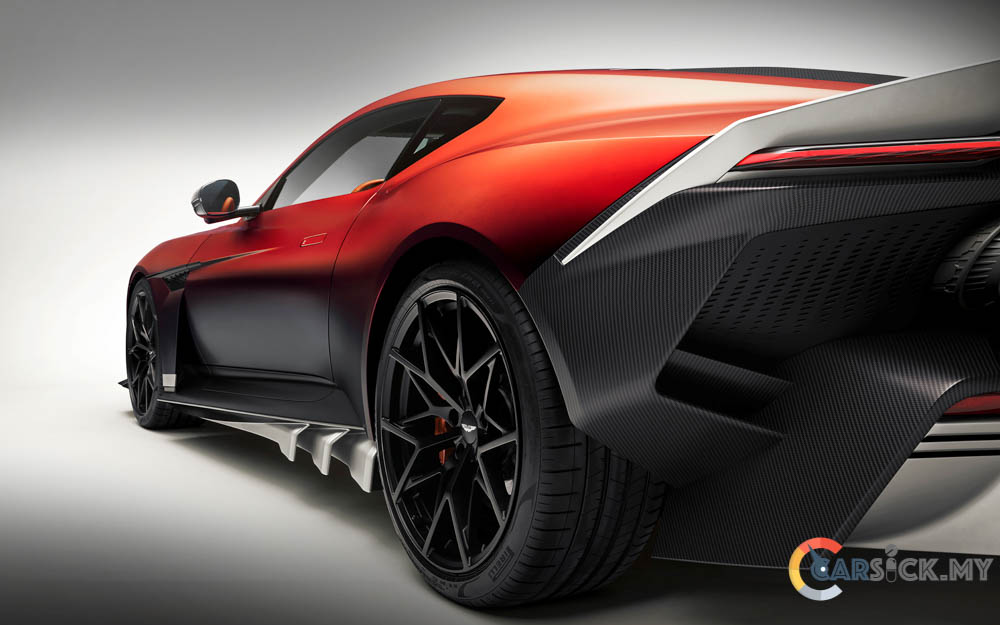
Inside, the cabin follows a philosophy of visual lightness. A slim centre console incorporates advanced 3D-printed components and the performance-oriented switchgear previously introduced on the Valhalla. Its driver-oriented angle is intended to create a more focused cockpit and strengthen the connection between driver and car.
Two seat designs are available: newly developed Sports Plus seats aimed at combining support with long-distance comfort, or lightweight carbon-fibre performance seats for customers seeking a more focused driving environment.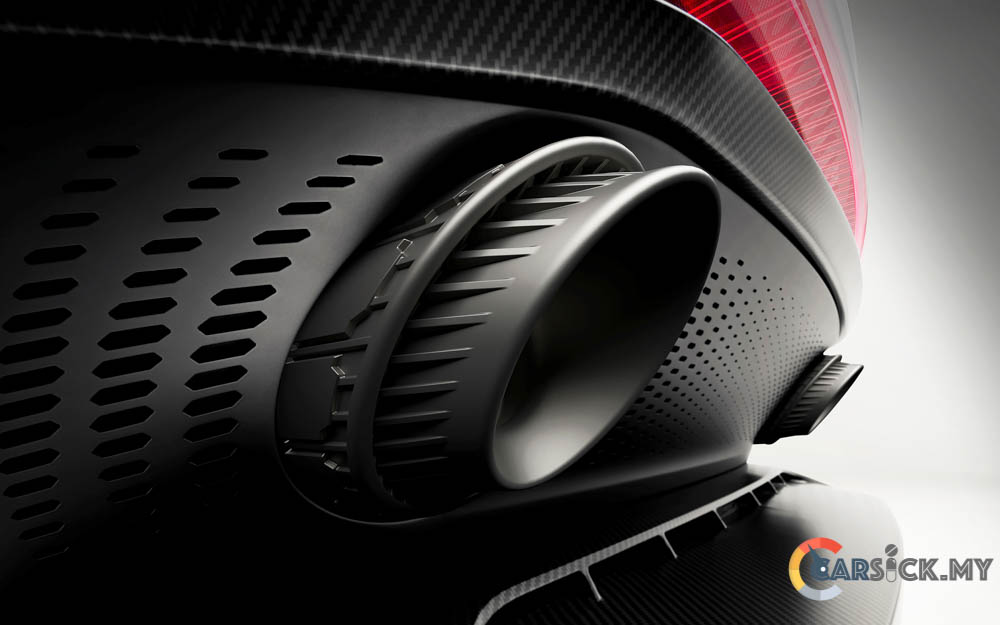
Interior personalisation is extensive, with customers able to choose between Semi-Aniline Leather and Alcantara or full Semi-Aniline Leather, followed by a choice of five different trim layouts. Additional driver-focused and accent options provide further scope for customisation.
The Aston Martin Valen is not intended to become a common sight on the road. Production will be strictly limited to just 150 examples worldwide, underlining its position as one of the company’s most exclusive V12 specials. First customer deliveries are scheduled for the second quarter of 2027.