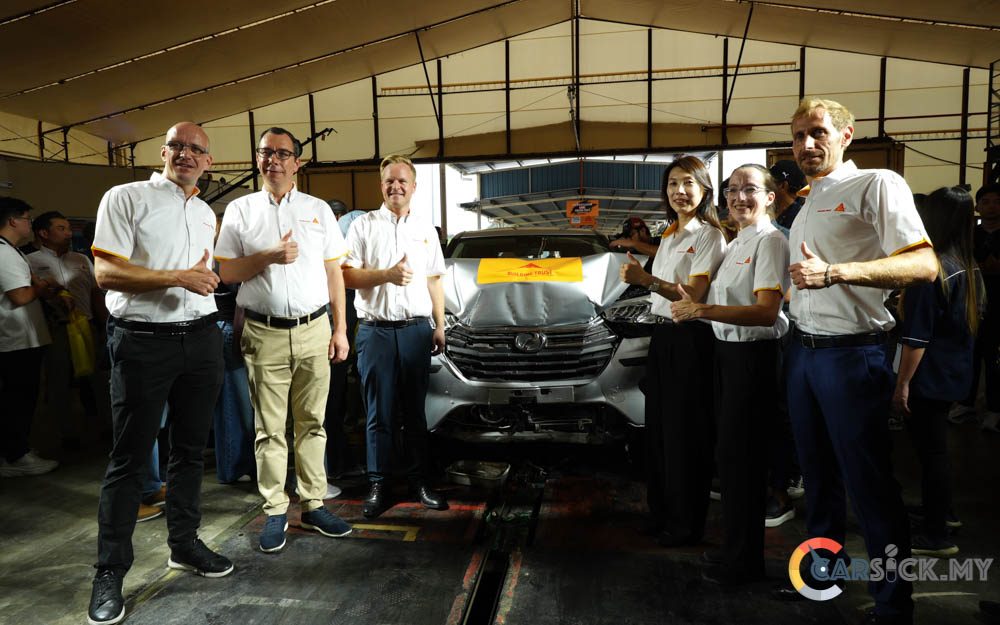

A windscreen might seem like little more than a sheet of glass separating a driver from the road ahead, but in a serious crash, it can play a far more important role. That was the message Sika Malaysia delivered in dramatic fashion after conducting Malaysia’s first exclusive live automotive windscreen crash test at the Malaysian Institute of Road Safety Research (MIROS) PC3 Laboratory in Melaka.
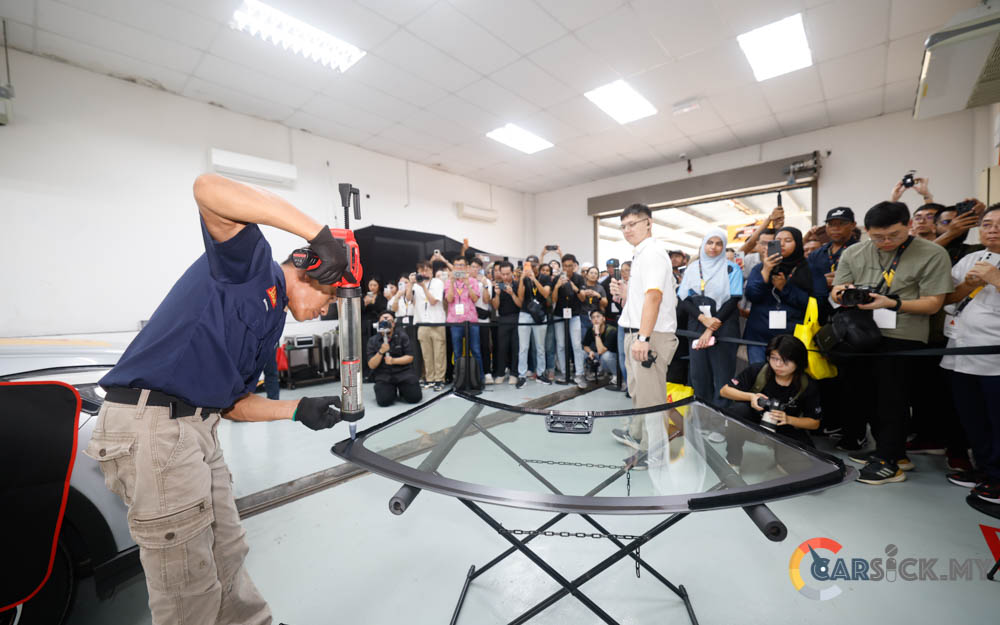 Recognised by the Malaysia Book of Records as the First Automotive Windscreen Crash Test Evaluation 2026 in Malaysia, the demonstration was designed to show just how critical the windscreen’s structural bond is to occupant protection — and why the quality of a windscreen replacement should never be reduced to price and installation speed alone.
During the demonstration, a passenger car was propelled into a frontal barrier at 48 km/h, replicating the forces of a real-world collision. The result highlighted a function of the windscreen that is often overlooked: it forms part of the vehicle’s structural safety system.
A correctly bonded windscreen helps maintain the integrity of the passenger cabin during a crash. It also provides an important support surface for the front airbag as it deploys, helping the restraint system work as intended.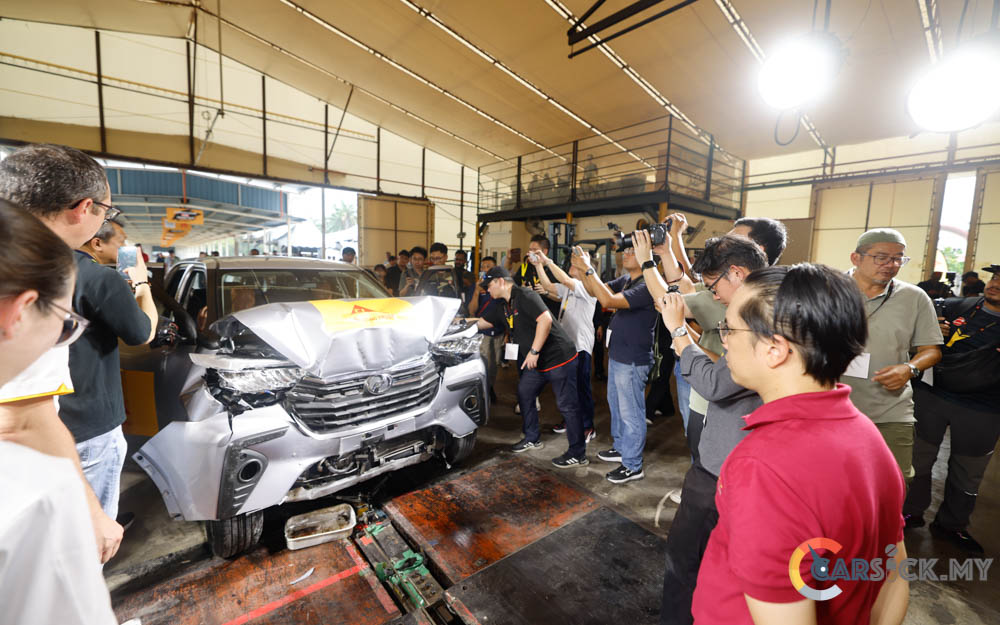
Beyond that, the windscreen can help prevent occupants from being ejected from the vehicle and contributes to the structural strength of the roof, particularly during a rollover. In other words, when the glass is correctly installed, it is doing considerably more than keeping rain and insects out of the cabin.
Sika says the demonstration was particularly important because windscreen replacement is sometimes viewed primarily as a matter of cost and convenience. However, the adhesive used and the quality of the installation can determine whether the windscreen remains securely bonded when the vehicle needs it most.
“A windscreen is a safety component, yet it is often replaced on price and speed alone,” said Daphne Wong, Head of Automotive & Industry, Sika Malaysia. “What matters just as much is the adhesive used and the standard of the installation, because those are what keep the glass in place when it is needed most. We chose to show this in a live crash rather than explain it on paper, so there is no doubt about how much the quality of a replacement matters.”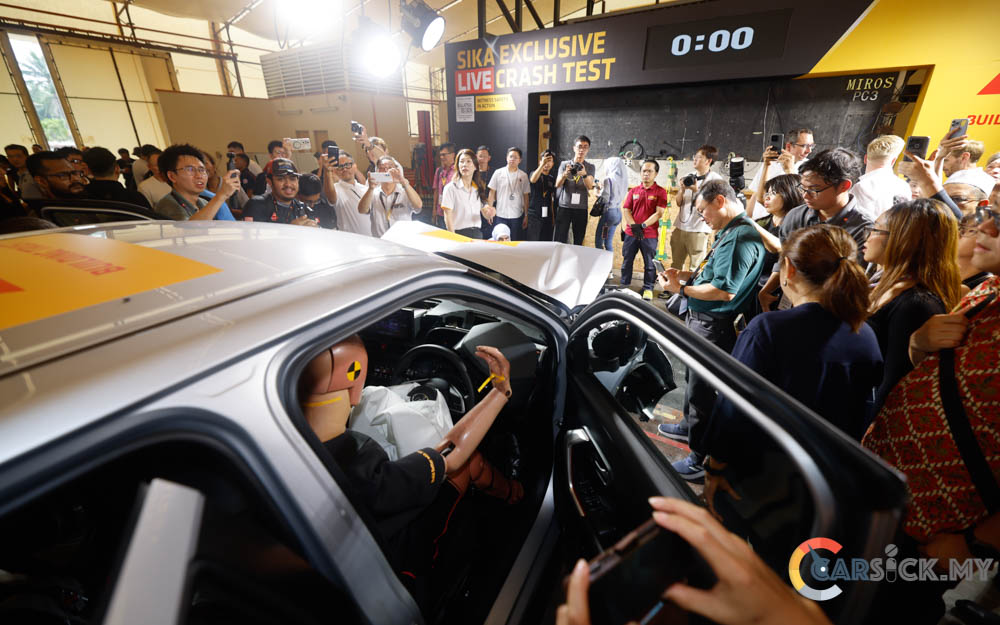
The issue becomes even more relevant in Malaysia, where the country’s hot and humid climate can shorten the working time of automotive adhesives. Using the wrong adhesive, installing the glass incorrectly or allowing a vehicle to be driven before the adhesive has sufficiently cured can all affect the strength of the bond.
Sika’s demonstration comes against a challenging backdrop for Malaysian road safety. The country recorded 6,537 road fatalities in 2025, while total road accidents reached a record 790,614 cases. Both figures were higher than the previous year. Malaysia’s Road Safety Plan 2022-2030 aims to halve road deaths by 2030, making vehicle safety systems and proper repair practices increasingly important.
Yet while considerable attention is given to airbags, seatbelts, autonomous emergency braking and crash-test ratings, the humble windscreen rarely receives the same level of attention. Sika’s crash test was intended to change that conversation.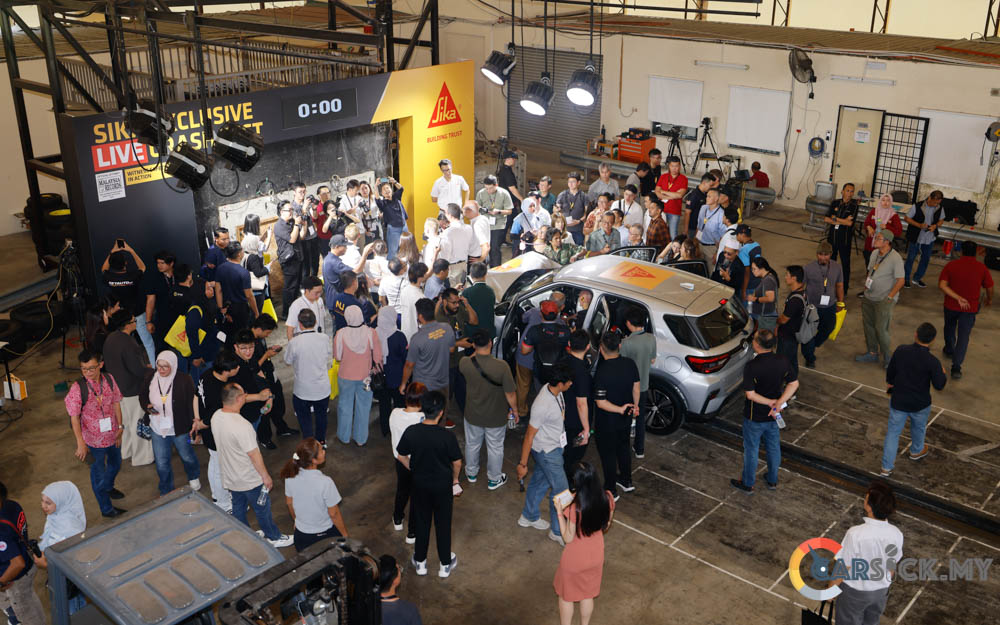
The windscreen used in the demonstration was installed with SikaTack® DRIVE, Sika’s automotive glass replacement adhesive. The product offers a 60-minute Minimum Drive Away Time (MDAT) and has undergone testing with 95th percentile crash-test dummies against the United States Federal Motor Vehicle Safety Standard (FMVSS) 212.
FMVSS 212 evaluates windscreen retention during a crash — an important characteristic because keeping the glass securely in position allows it to continue supporting the airbag and contributing to the vehicle’s structural integrity.
Sika has been involved in automotive windscreen bonding since 1980 and says it has conducted more than 80 crash tests over the past four decades to verify occupant safety following windscreen replacement. The company also played a role in establishing safe drive-away-time standards for the industry. In Malaysia alone, more than 400,000 vehicles are fitted with Sika windscreen adhesive every year.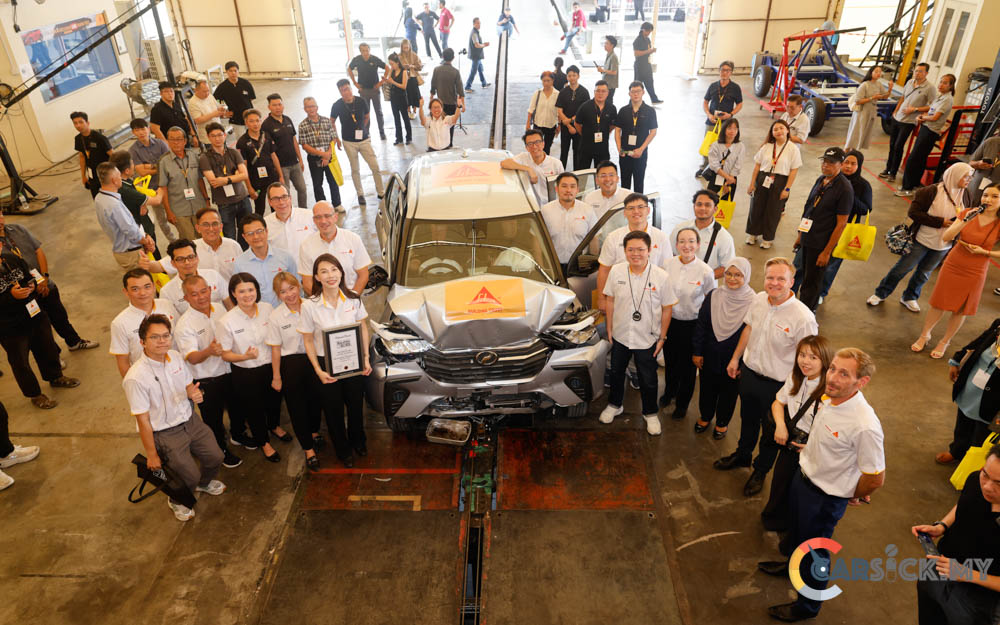
The company is also using the crash test to promote its Sika Certified Auto Glass Installer Campaign, encouraging motorists to look beyond price when choosing where to have a windscreen replaced. Sika’s certified installers use Sika windscreen adhesives and undergo continuous training and certification to ensure replacement work follows the company’s installation standards.
From 15 September to 31 December 2026, motorists who replace their windscreen at a certified workshop can also participate in a monthly lucky draw. To enter, customers need to submit a photograph of the workshop’s Sika Certified Auto Glass Installer signboard together with their receipt to Sika Malaysia. Three winners will be selected each month, with each receiving a RM100 petrol card.
For more information on Sika’s certified auto glass replacement programme and installer network, visit Sika Malaysia – Safe Auto Glass Replacement.