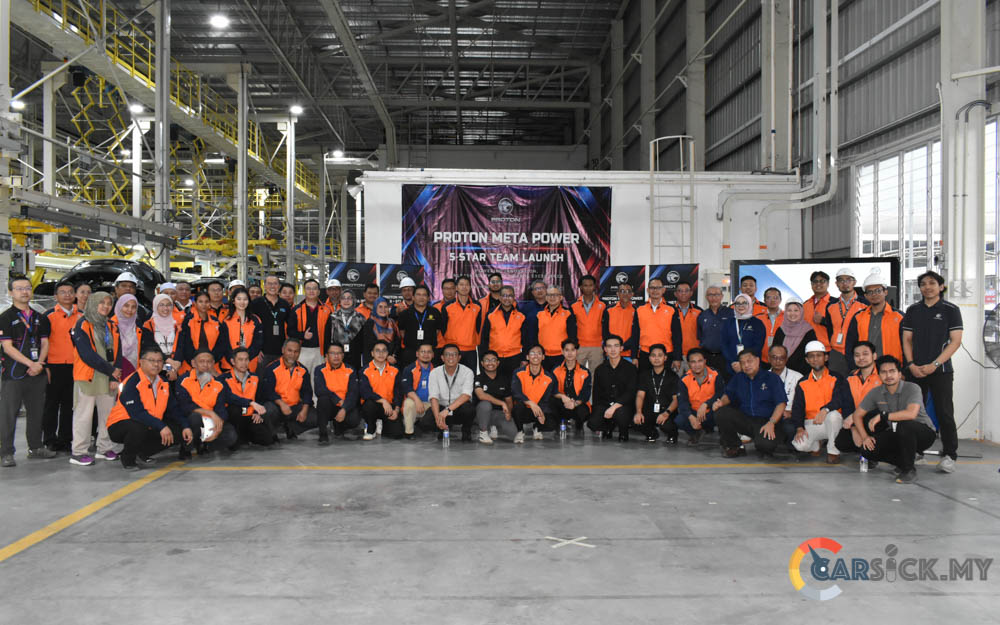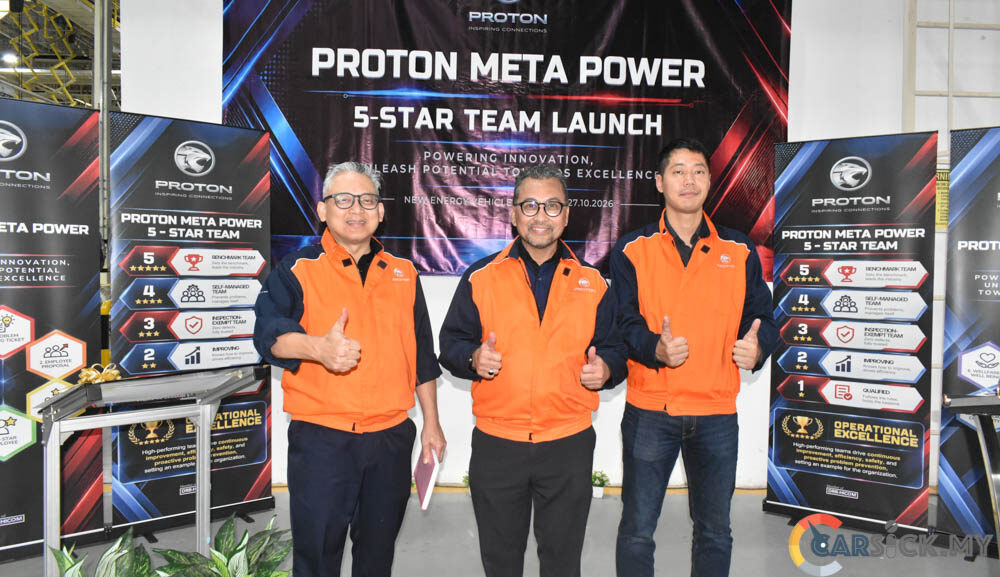

Proton is stepping up efforts to improve its manufacturing capabilities with the introduction of the Proton META POWER (PMP) 5-Star Programme, an initiative aimed at developing employee skills, strengthening teamwork and promoting continuous improvement across its production operations. Launched at the company’s Electric Vehicle (EV) Plant in Tanjung Malim, the programme will initially use the facility as a pilot site before being progressively rolled out to other manufacturing operations.
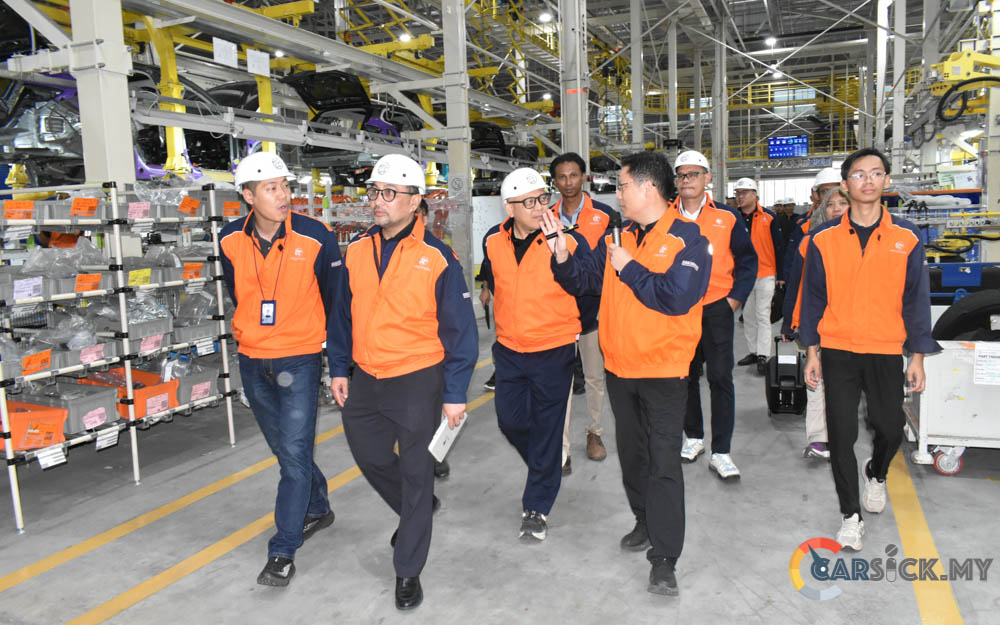 Through a structured system of team development, performance assessment and recognition, Proton hopes to build a more capable and engaged workforce while improving its overall manufacturing competitiveness. Operating under the theme of Building a Stronger Proton Through People, Performance and Continuous Improvement, PMP places employees at the centre of the company’s efforts to improve productivity and manufacturing standards.
The initiative encourages workers at every level to take greater responsibility for their respective work areas, including checking their own work, identifying potential defects before they move to the next production station, maintaining equipment and helping colleagues develop their skills. It also promotes a more proactive working environment where employees are encouraged to raise concerns, identify problems and suggest solutions rather than simply accepting existing processes.
“Advanced technology supports us, but our success ultimately depends on our people – their skills, care and commitment to doing every job well. Proton META POWER builds on our existing foundation by developing our people and teams, strengthening problem-solving and recognising progress,” said Proton Chief Executive Officer Dr Li Chunrong.
The new programme builds on the foundation established by the Proton Production Way (PPW), the company’s broader manufacturing strategy designed to develop a world-class production system. PPW is structured around five key performance objectives: Safety, Quality, Cost, Delivery and Morale (SQCDM). These are supported by employee development, lean management practices and performance measurement.
Its framework covers eight key areas, namely Area Management, Safety and 5S, Skill Development and Evaluation, Operation Standard, Continuous Improvement Initiatives, Equipment Control, Quality Control and Built-in Quality. While PPW establishes the operating standards and processes required for consistent manufacturing performance, PMP adds another layer by placing greater emphasis on employee ownership, teamwork and the consistent application of improvement practices on the production floor.
Central to this approach is the 5-Star Team system, which allows individual teams to progressively develop their capabilities against clearly defined standards. Their progress will be monitored through regular assessments, with recognition given as teams achieve higher levels of performance. The assessment process is guided by three principles: business results and employee development must progress together, improvement requires regular evaluation, and assessments must be conducted fairly and transparently.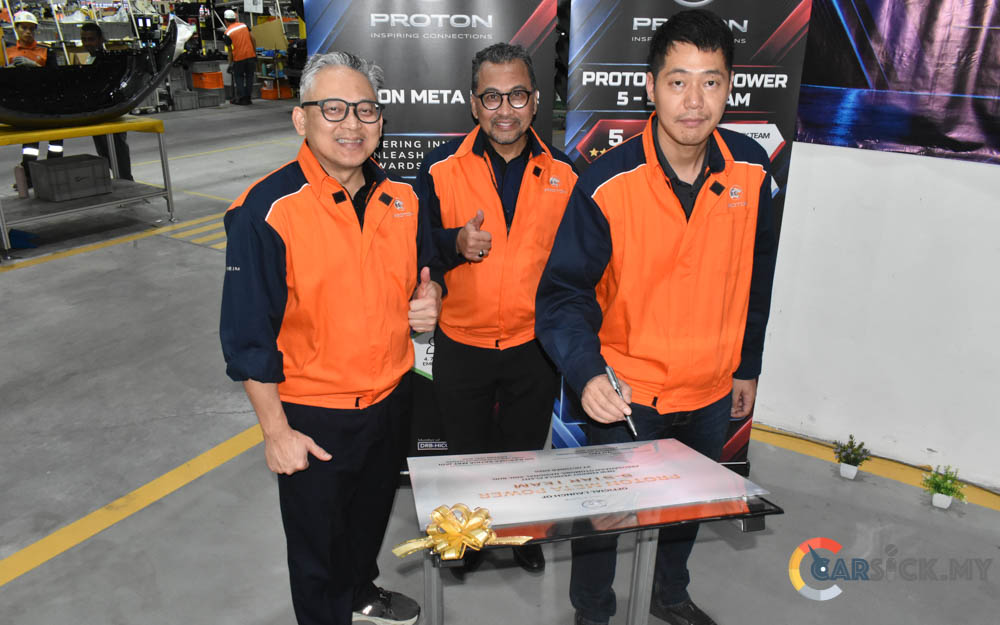
Performance will be measured across several areas, including workplace safety, product quality, cost efficiency, equipment reliability, delivery performance and employee skills. Managers and supervisors will also play an important role in the programme, with expectations for them to lead by example, coach their teams, encourage new ideas and help employees resolve operational challenges. Li said the programme is intended to ensure that production targets are achieved alongside the development of employees, while regular assessments help identify weaknesses and maintain consistent improvement standards.
PMP will also strengthen Proton’s existing employee-driven improvement initiatives, including Innovative and Creative Circle (ICC), Kaizen, 5S and Autonomous Maintenance (A.M.). Employees can highlight operational issues through Problem-Solving Tickets and Employee Proposal & Problem Solving, providing structured channels for identifying inefficiencies and recommending practical solutions.
Another component is the Heart & Voice Community, which gives employees an avenue to communicate concerns and share suggestions directly with management. Importantly, issues raised through these platforms are expected to receive feedback, with management responsible for taking appropriate action and communicating the outcomes to employees.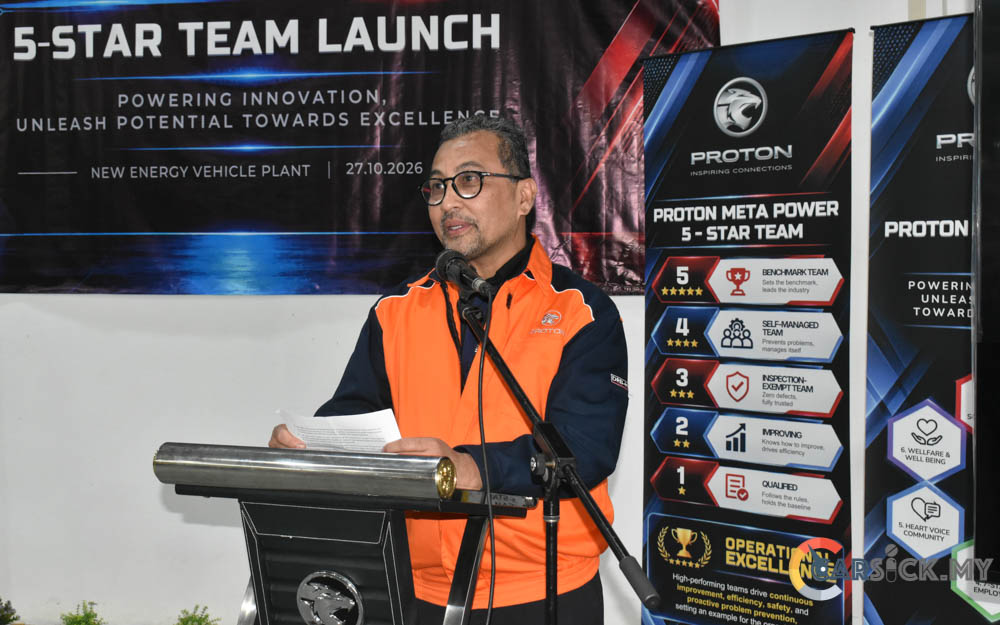
Beyond improving production quality and efficiency, the initiative also supports the government’s wider talent development agenda, particularly in Technical and Vocational Education and Training (TVET). By investing in employee upskilling and capability development, Proton aims to prepare a workforce better equipped to support the manufacturing requirements of increasingly advanced vehicles and future automotive technologies.
Proton’s implementation roadmap will begin with the EV Plant pilot, with the first 5-Star Team assessment targeted for completion by December 2026. From 2027, the programme will gradually expand to other manufacturing operations in Tanjung Malim, with the company targeting the establishment of 5-Star capability across these areas by October 2027.
The expansion will involve replicating successful practices established during the initial pilot while encouraging knowledge-sharing and benchmarking across different production areas. Through PMP, Proton hopes to make continuous improvement part of everyday manufacturing activities, extending beyond formal improvement projects to become an integral part of every shift and workstation.
Carrying the slogan Powering Innovation, Unleash Potential Towards Excellence, the programme reflects the national carmaker’s broader ambition to strengthen its workforce as it moves towards more advanced vehicle manufacturing. Ultimately, the initiative highlights Proton’s recognition that manufacturing competitiveness is not determined by technology and machinery alone, but also by the people operating them and their ability to consistently improve the processes behind every vehicle.