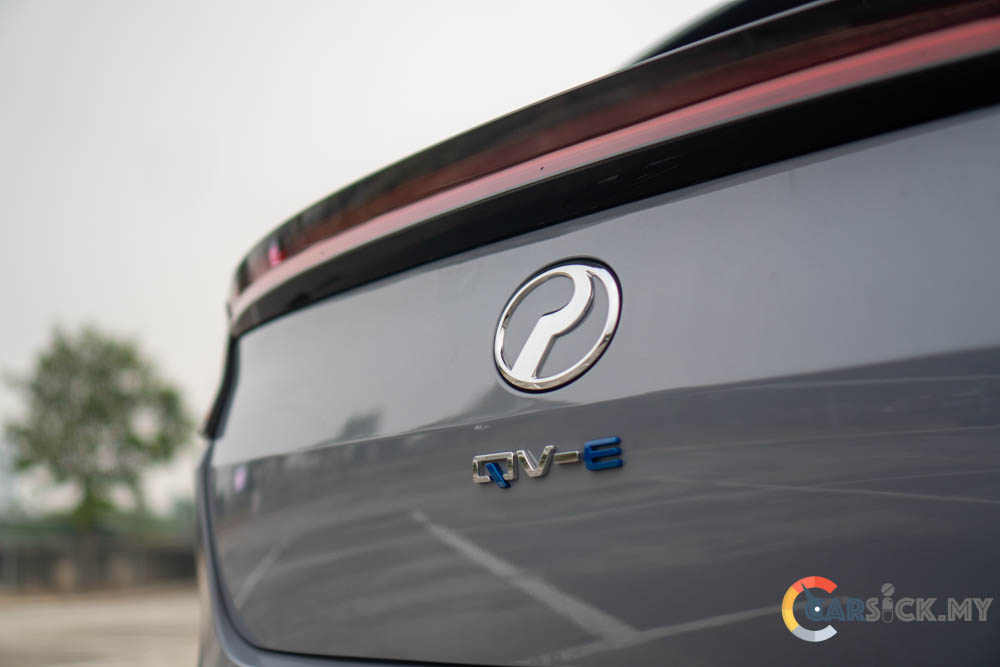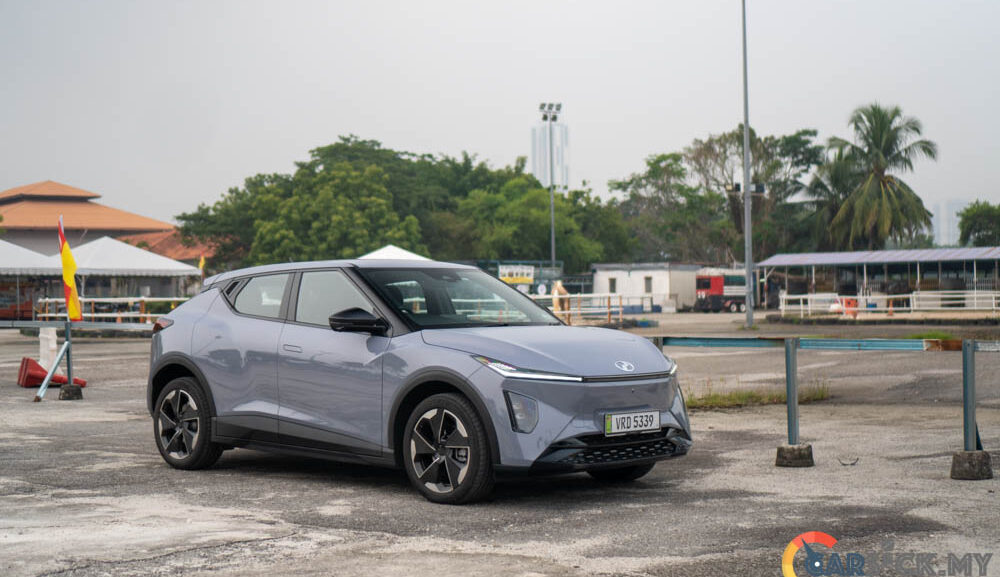

Perodua’s first-ever electric vehicle, the QV-E, has certainly made headlines. Unfortunately, not all of them have been particularly flattering. From its pricing structure to its controversial Battery-as-a-Service (BaaS) subscription plan, everyone seems to have an opinion about Perodua’s electric debut. Yet, despite all the attention, convincing buyers to put their money where their mouths are has been another story. While Perodua works on refining its EV strategy, we in the media have finally had the opportunity to get behind the wheel of its first attempt at cracking the electric car market.
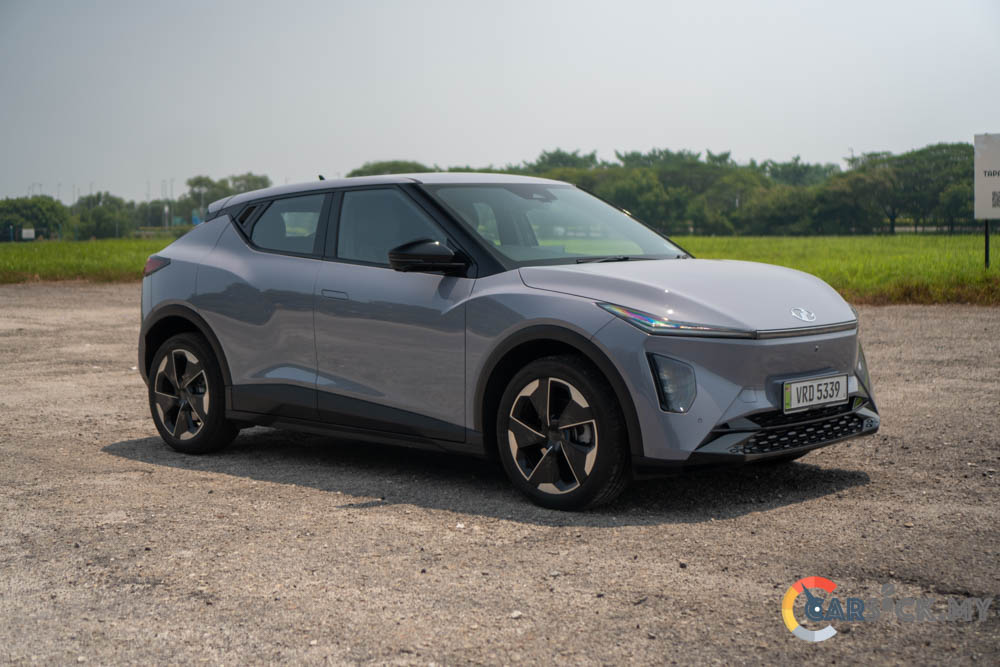
 Now, developing an entirely new car in around two years is no small feat, so credit where credit is due. But the big question remains: has Perodua managed to build an EV that Malaysians actually want, or have we simply been given another electric car to argue about on Facebook? More importantly, as someone who enjoys cars for the way they drive rather than the number of screens they can squeeze into the dashboard, I wanted to find out whether the QV-E had something special hiding beneath its rather controversial exterior. And after spending time with it, I discovered something rather interesting. This little Perodua might have a few tricks up its sleeve.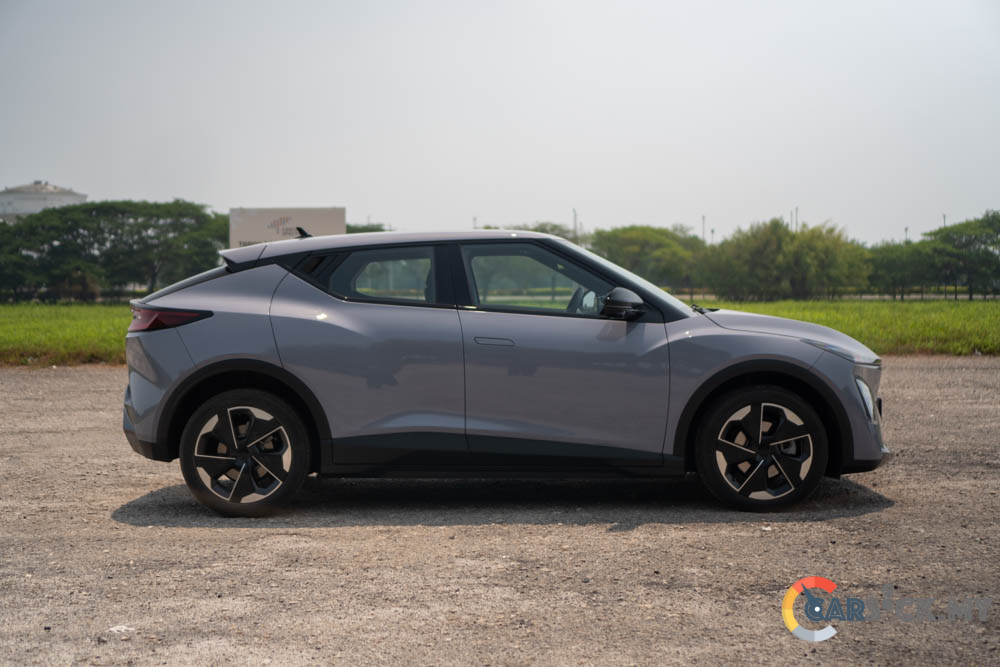
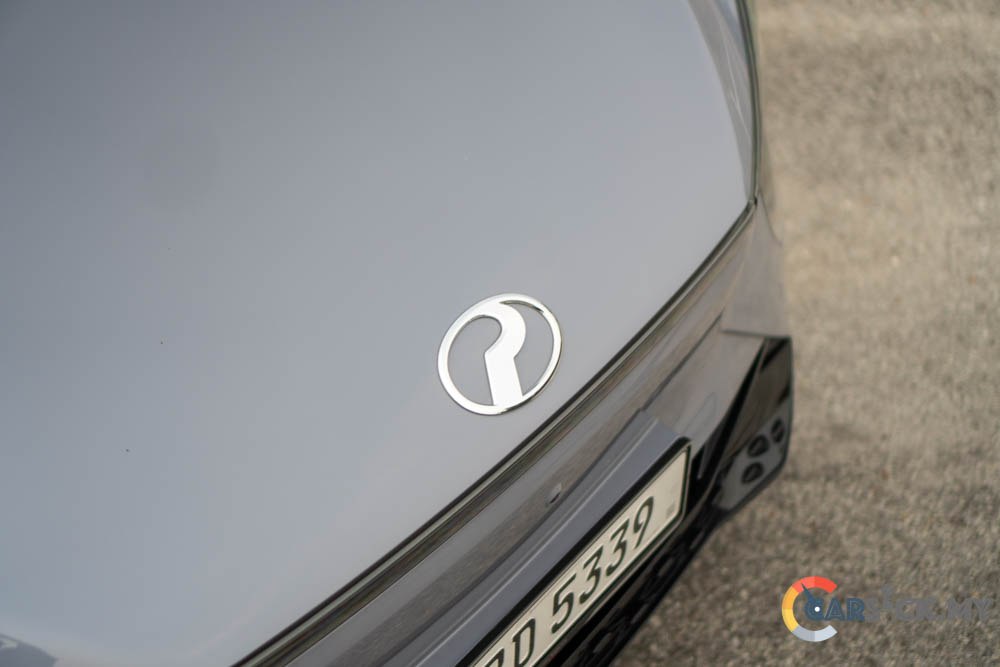
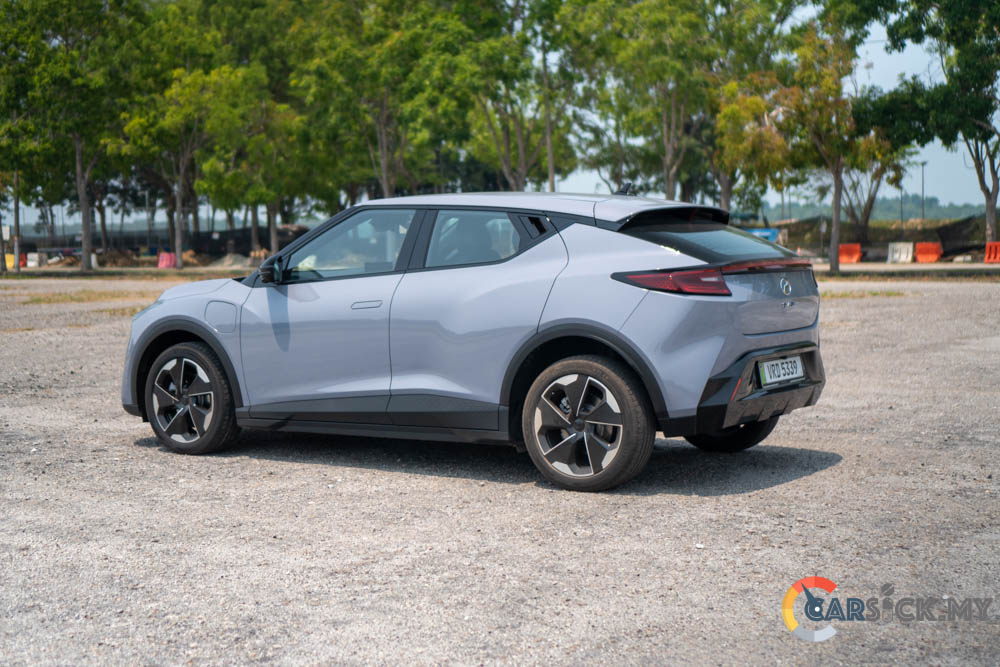
Let’s start with the looks, because the QV-E is certainly not your typical Perodua. Gone is the familiar recipe of a sensible-looking hatchback designed to take you from home to work, the supermarket and perhaps balik kampung once in a while. Instead, the QV-E looks like something that has escaped from a design studio where everyone was told to make the future look cool. And surprisingly, it works. 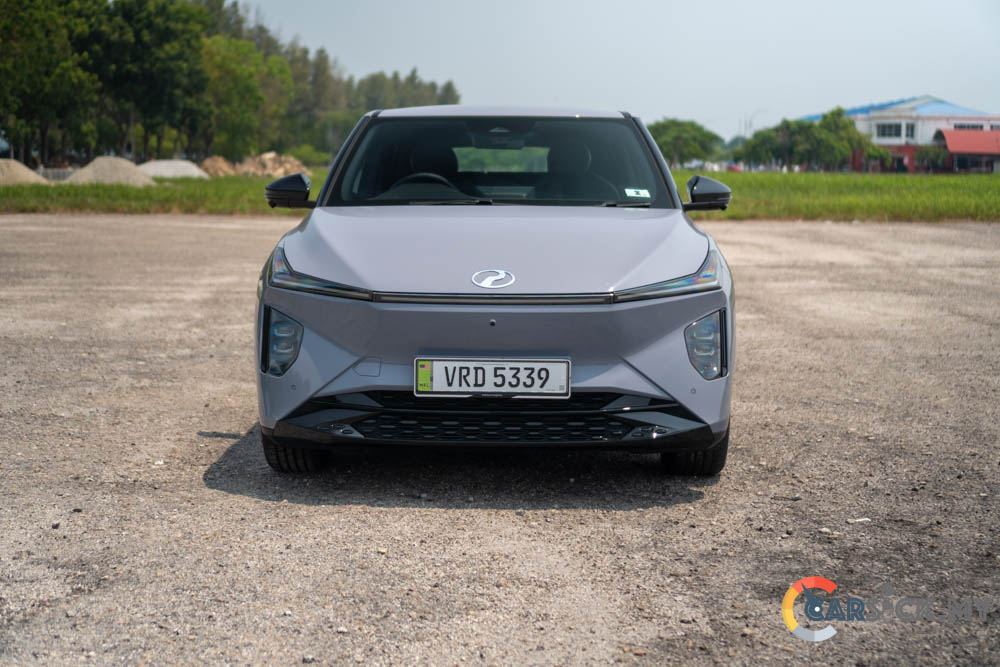
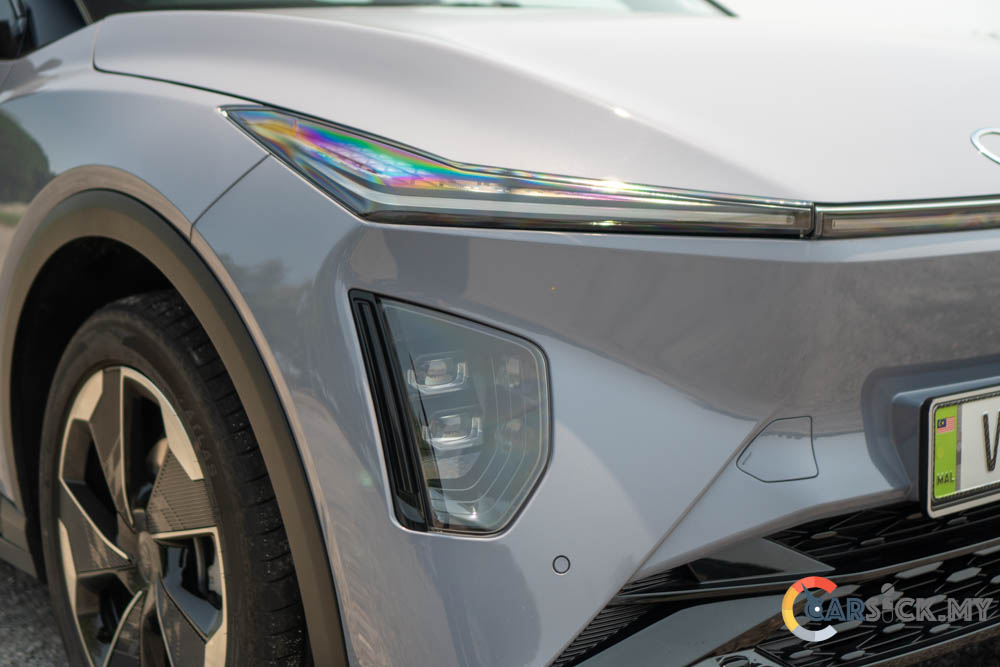
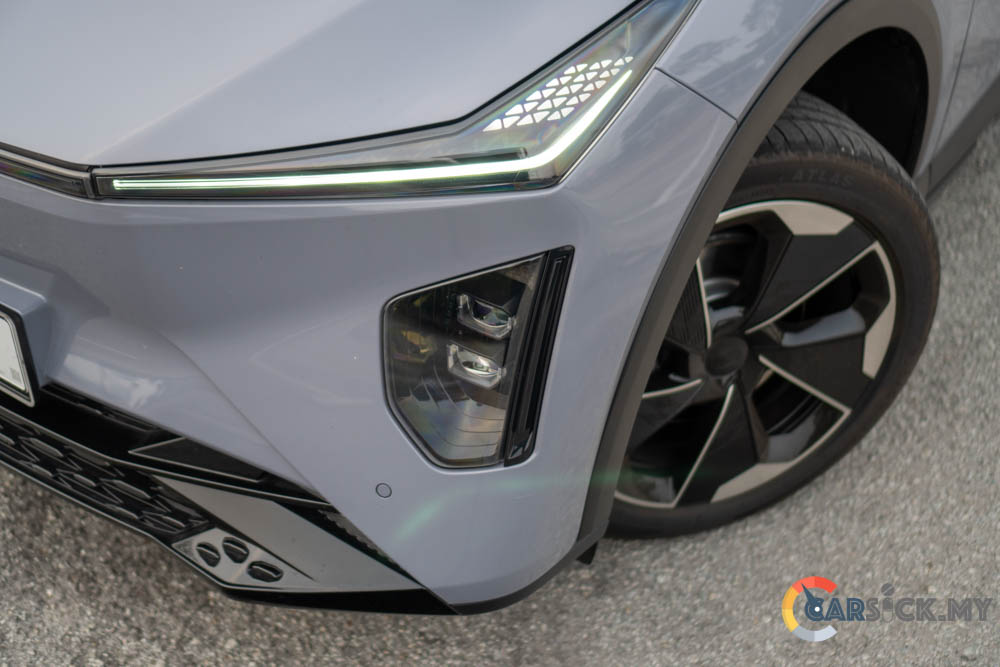
The front end is relatively flat, which makes sense for an EV that doesn’t need a conventional grille to feed air into an engine bay. The sharp headlights and daytime running lights give it a slightly menacing face, almost as if it’s silently judging you for still driving a petrol car. The headlights also come with automatic high beam functionality, which helps prevent you from dazzling oncoming traffic. However, during my time with the car, I noticed that the headlights seemed to point a little too low. I’d appreciate it if they could illuminate further down the road, especially when driving at night. 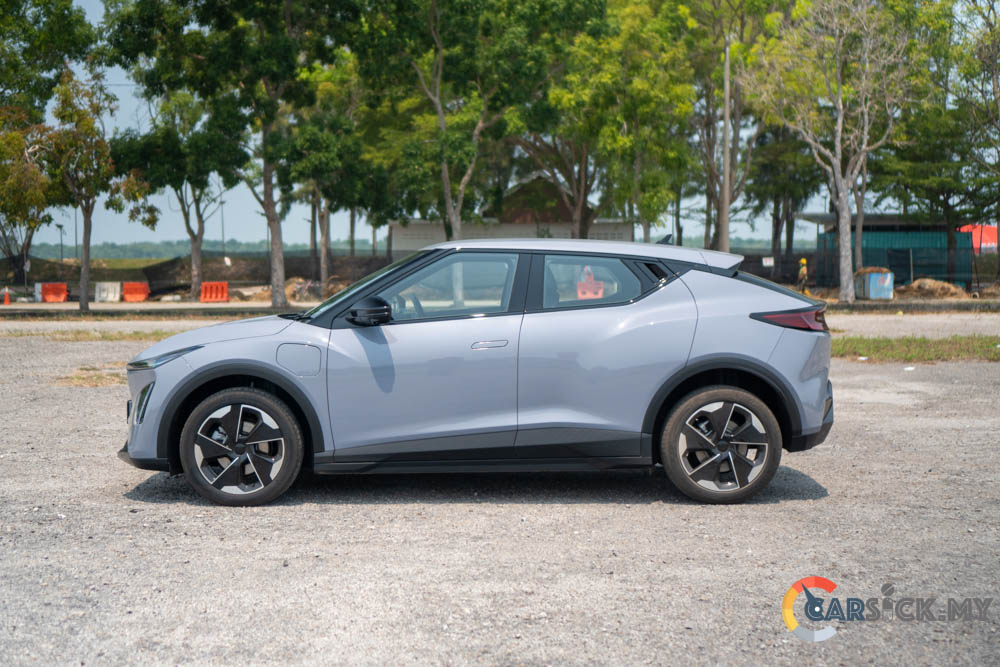
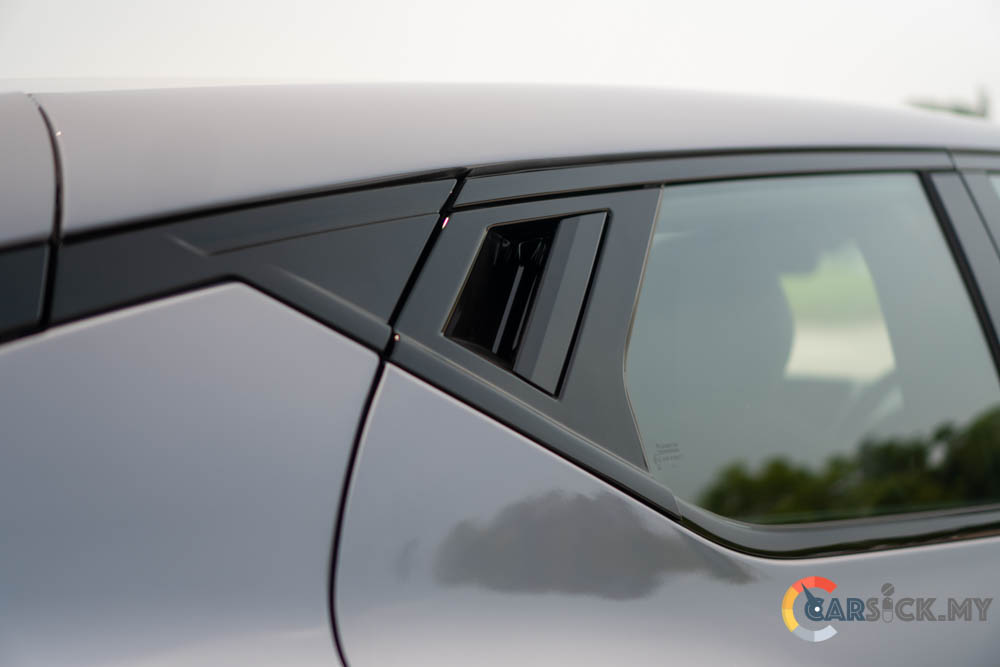
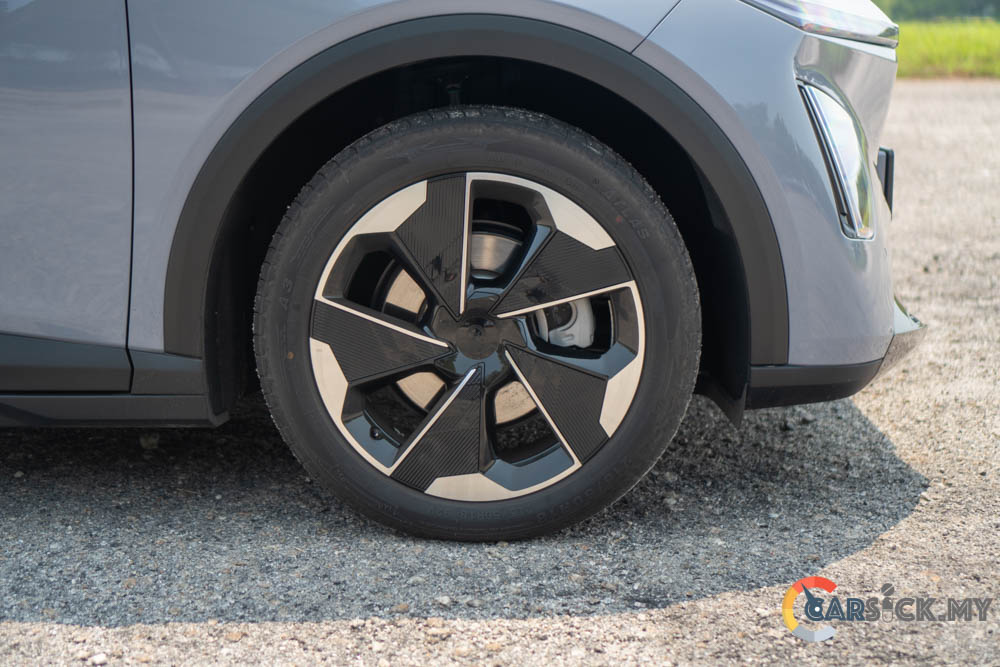
Moving to the side, the QV-E continues to look rather convincing. The body lines are sharp without being overly aggressive, and I particularly like how Perodua has concealed the rear door handles to give the car a coupe-like appearance. It’s a clever little design trick. Who needs a proper two-door coupe when you can have the styling of one with the practicality of rear doors? At the corners, the QV-E sits on a set of 18-inch rims designed to improve airflow and reduce aerodynamic drag. Wrapped around them are 215/50 R18 tyres, making these the largest wheels and tyres Perodua has fitted to one of its vehicles. Unfortunately, the Atlas tyres aren’t exactly my favourite part of the package. The car has plenty of potential when it comes to driving enjoyment, and I can’t help wondering how much better it could feel with a more capable set of tyres. Still, the QV-E looks good from the side, and things don’t fall apart when you reach the rear.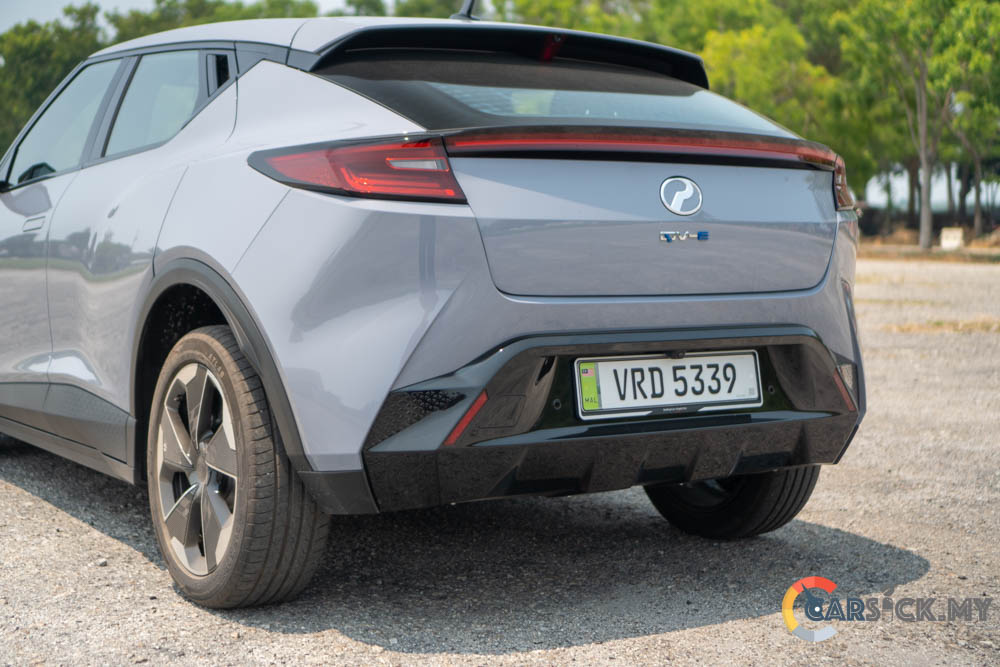
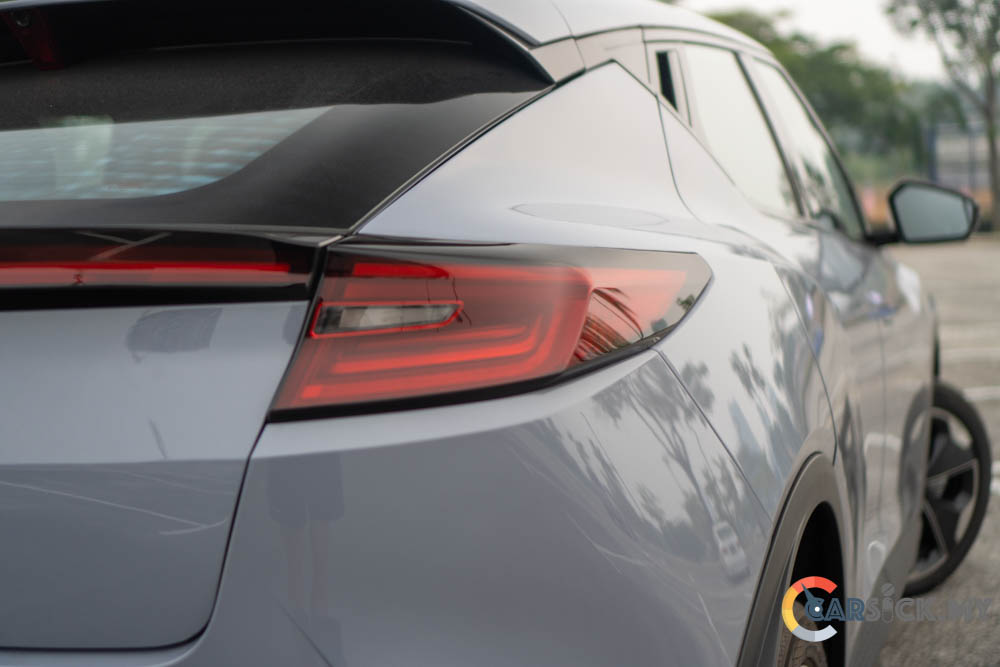
The futuristic styling carries through nicely, with a sloping roofline that gives the car a sportier silhouette. Of course, making a car look like a coupe usually means making a few compromises elsewhere, but we’ll get to those later. Overall, I genuinely like the QV-E’s design. It looks modern and futuristic without falling into the trap of looking like just another Chinese EV. For a first attempt, Perodua has done a pretty good job. In fact, if I were judging the car on looks alone, it would score very highly in my books.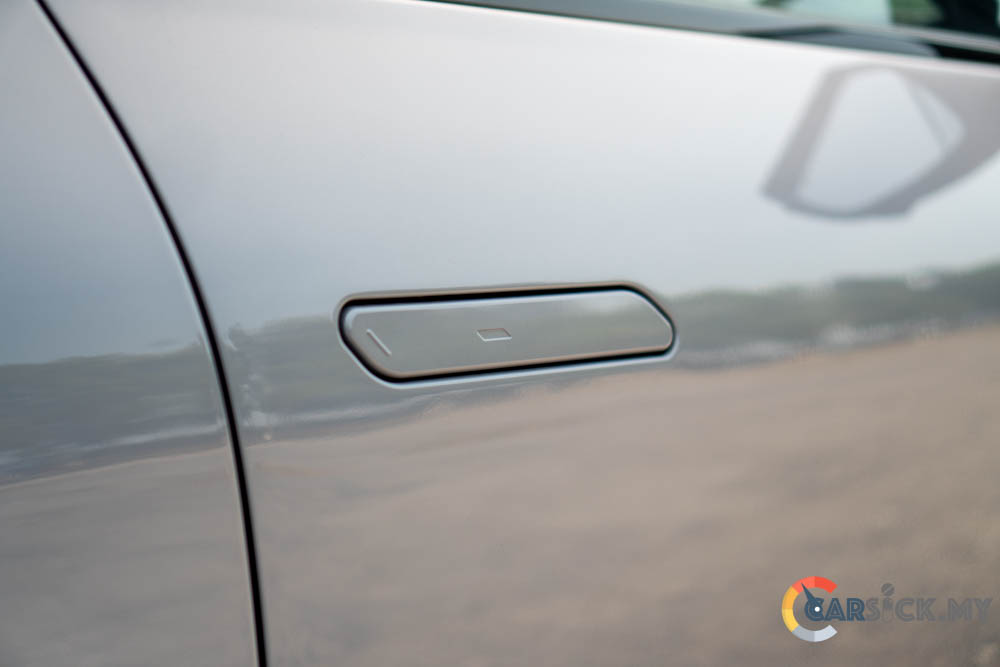
Before we get inside, let’s talk about something rather interesting: the car key. You see, the QV-E gives you three ways to access and operate the car. There’s the conventional physical key, your smartphone and the P-Go smartwatch, which can be purchased from Perodua. Once you’ve set up the P-Go app, you can use your phone to operate the car without carrying the physical key. Alternatively, you can use the smartwatch. During my time with the QV-E, I decided to give the latter two options a go. And yes, I actually left the physical key at home.
I was driving around with nothing but my phone and smartwatch, which made my pockets feel noticeably lighter. It’s a small thing, but it’s rather satisfying when you realise you don’t have to carry another piece of hardware just to drive your car. Of course, there’s a catch. Both devices need battery power, and the last thing you want is for your phone or smartwatch to die on you when you’re halfway through the day. Imagine having to explain to someone that you can’t drive your car because your smartwatch needs charging. Welcome to the future, I suppose.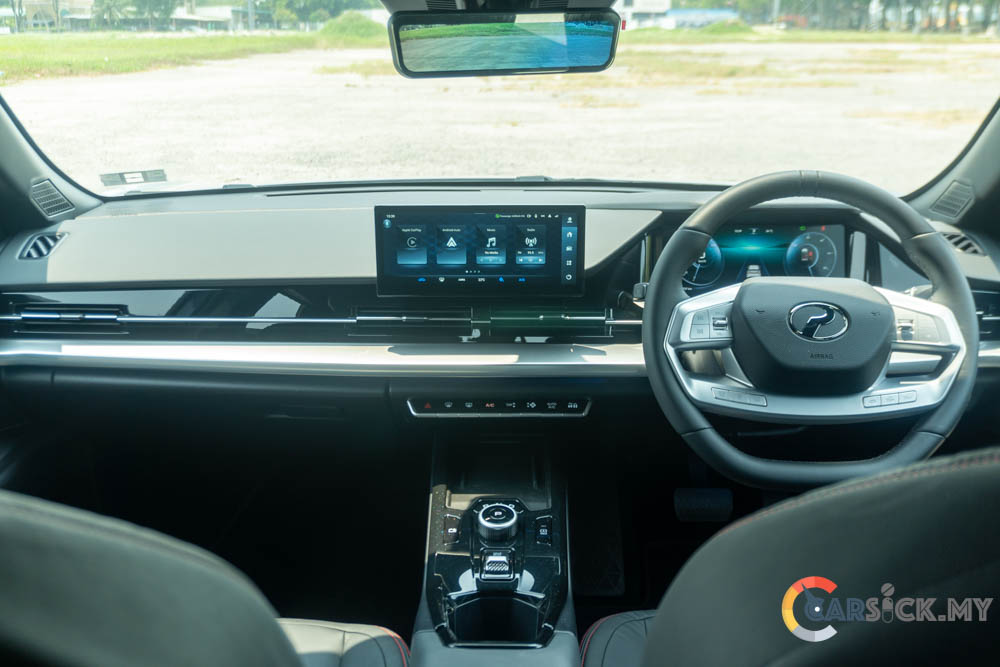
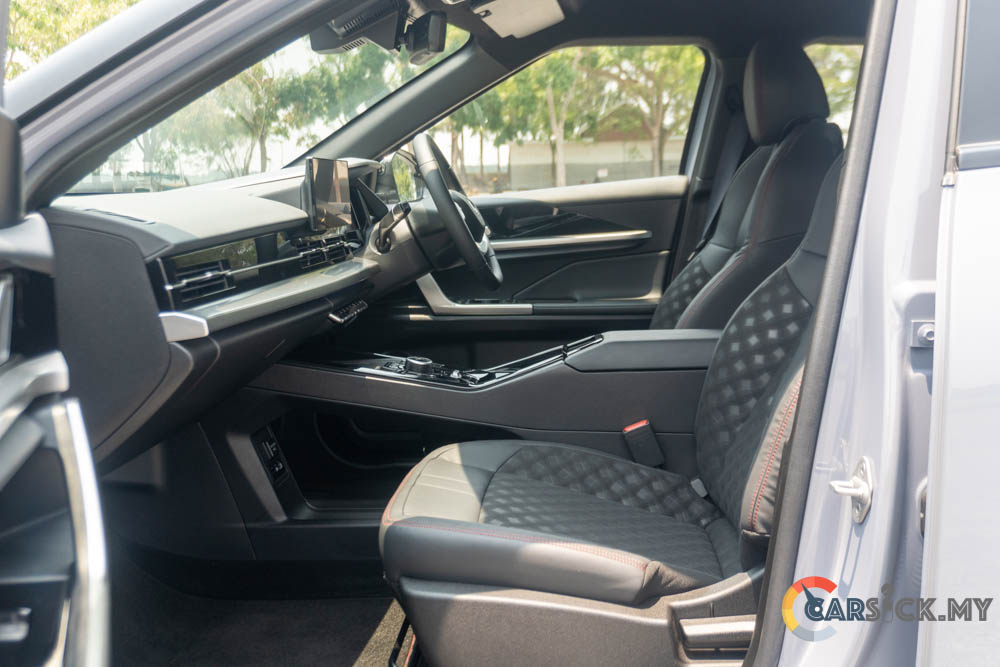
Step inside, and you’ll immediately recognise that this is still a Perodua. That’s not necessarily a bad thing. After all, the company has built its reputation on making affordable cars, and expecting a cabin full of expensive materials at this price would be a little unrealistic. To its credit, Perodua has clearly tried to make the QV-E feel more premium than its budget might suggest. The upper sections of the dashboard and door panels feature soft-touch materials, which help elevate the cabin experience.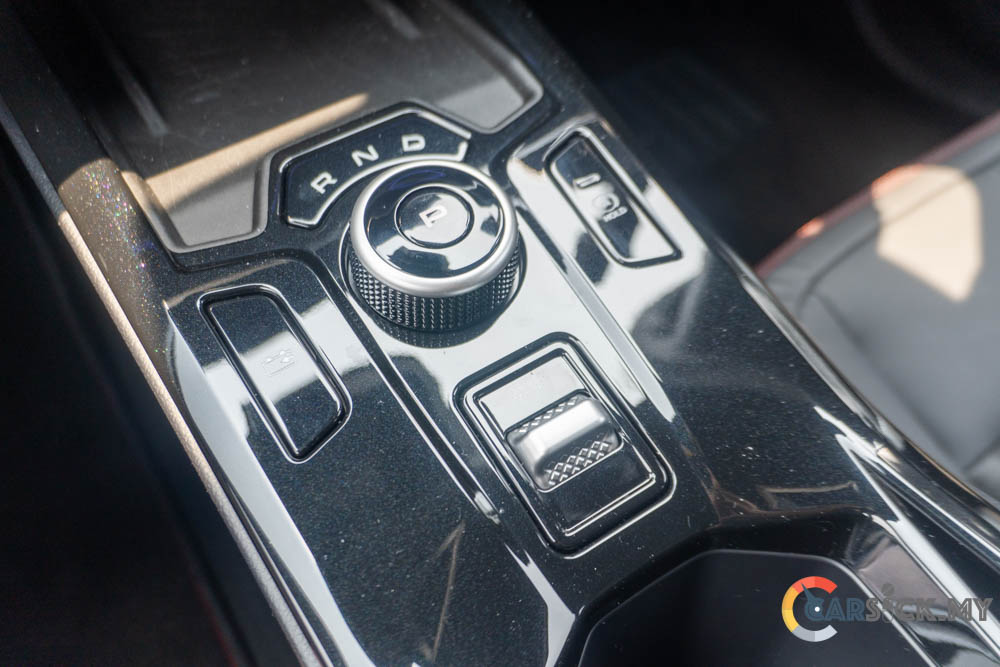
Unfortunately, the good news ends when you start exploring the rest of the interior. Hard plastics remain plentiful, while the glossy black trim is something I could happily live without. It looks a little cheap, attracts fingerprints like nobody’s business and will probably have you reaching for a microfibre cloth more often than you’d like. 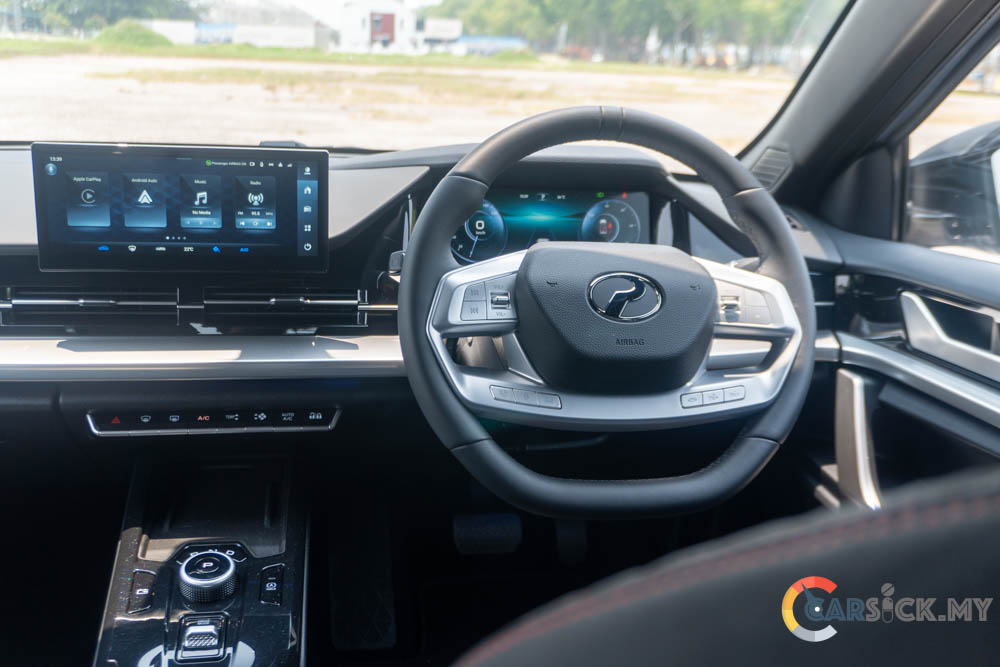
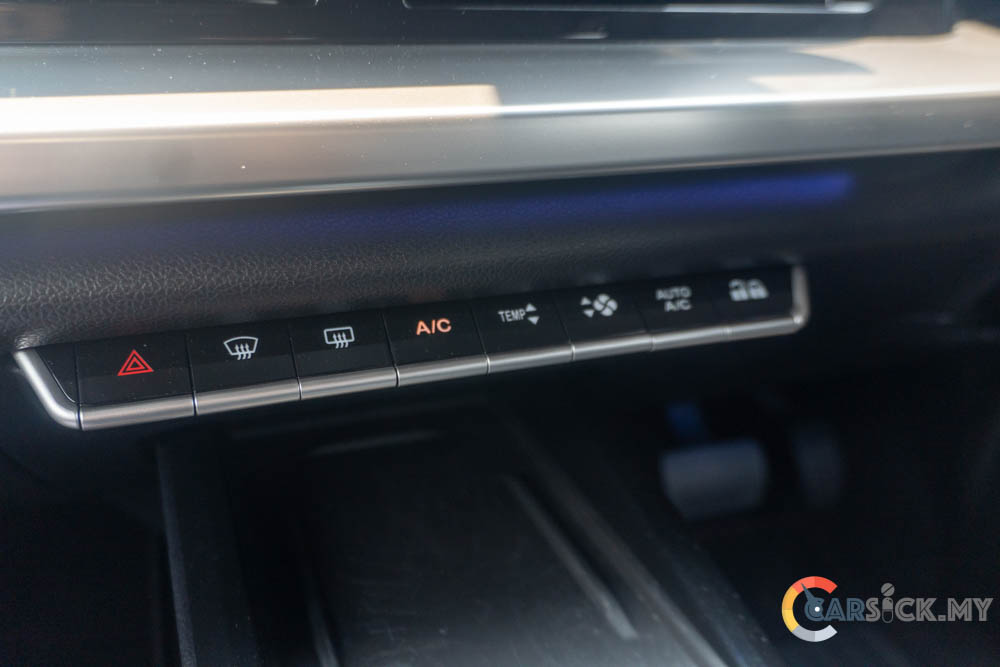
The physical buttons on the dashboard also give the cabin a distinctly Perodua feel. You can tell that the company has tried to make things look modern, but some of the familiar budget-car characteristics are still there. I suspect this is where some buyers might struggle. After all, when you’re spending money on an EV that looks futuristic on the outside, you might expect the interior to deliver a similarly premium experience. Personally, though, I’m not particularly bothered. As a car enthusiast, I’d rather have a car that drives well than one that makes me feel like I’m sitting inside an electronics showroom. 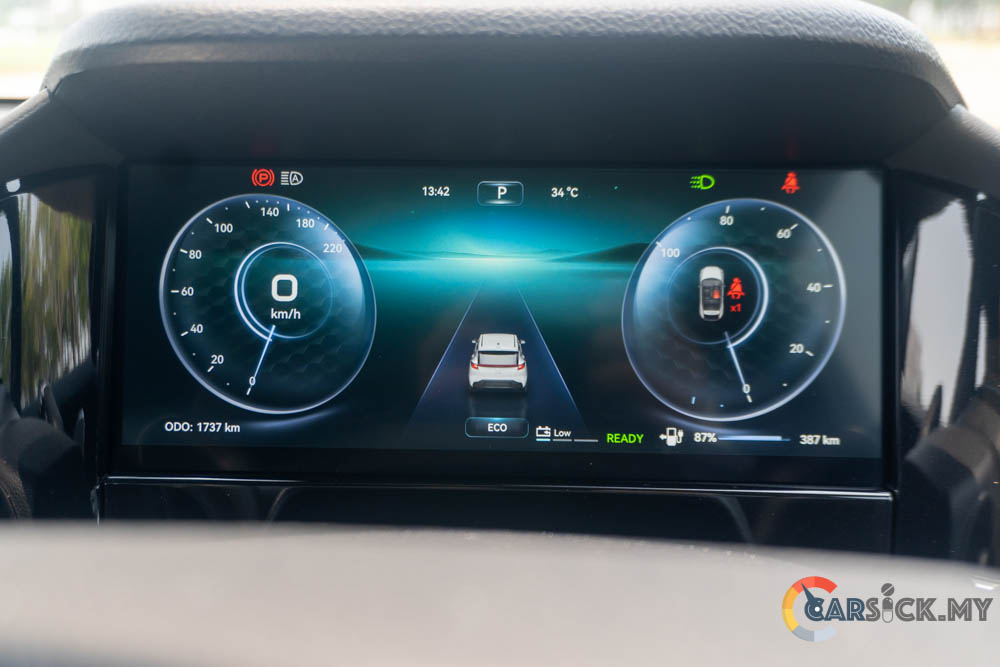
Speaking of electronics, the QV-E comes with a digital instrument cluster and a 10.25-inch infotainment display. There’s also a rear-view camera display positioned centrally to help you see what’s behind the car. The instrument cluster deserves some praise. Compared with the displays found in older Perodua models, this is a considerable departure from the familiar formula. It presents all the essential information, including trip data and energy consumption, without forcing you to navigate through endless menus. Best of all, you don’t have to dig through the infotainment system just to find the information you need. Simple? Yes. Effective? Absolutely. And that’s something more carmakers should remember. Not everything needs to be buried inside a touchscreen. Sometimes, the best technology is the kind that lets you get on with driving.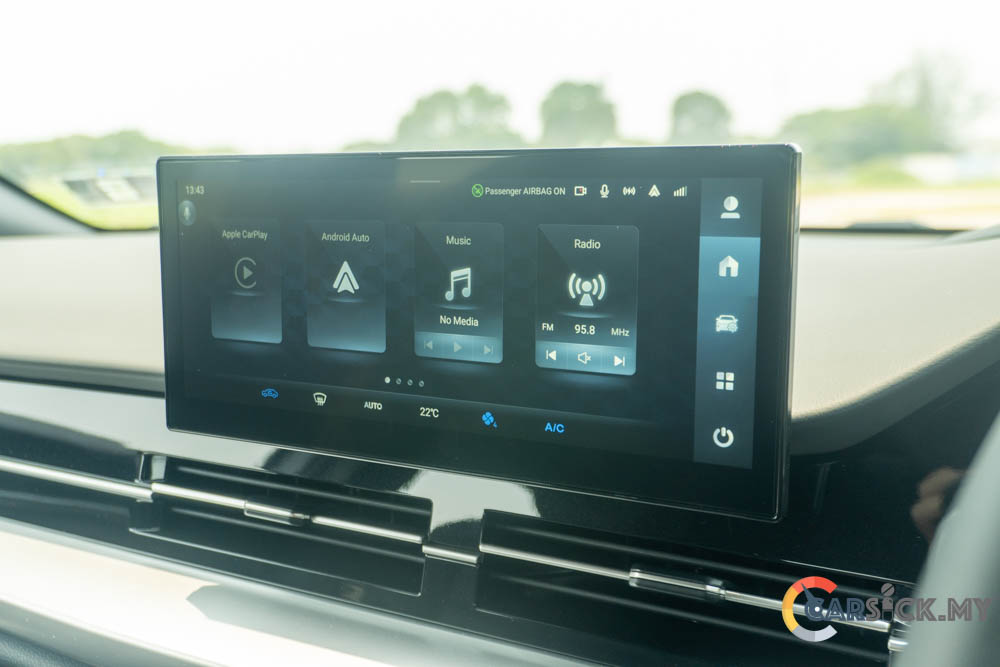
Now, I can already imagine some people looking at the QV-E’s 10.25-inch infotainment display and asking why Perodua didn’t fit something bigger. After all, we live in an era where carmakers seem determined to turn their dashboards into giant televisions. Give it a few more years, and someone will probably introduce a car with a screen that stretches from one door to the other. But personally, I think the QV-E’s display is perfectly adequate.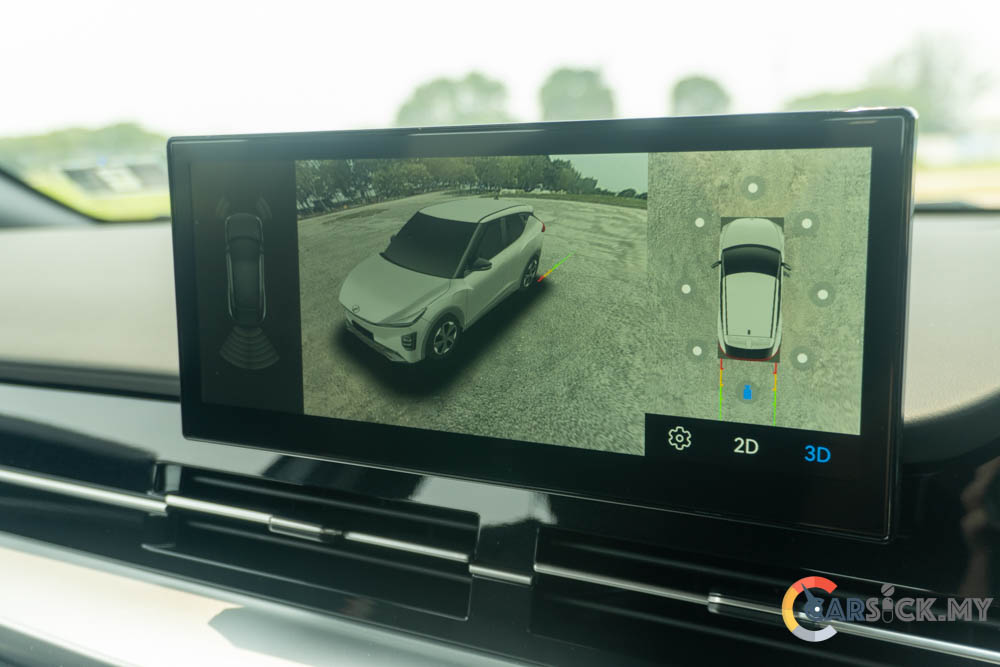
It comes with wireless Android Auto and Apple CarPlay, covering the essentials for everyday driving. Compared with the e.MAS 5 and its larger display, I don’t feel that you’re missing out on much in terms of functionality. You also get a 360-degree camera, which is useful when squeezing into tight parking spaces. Although, to be fair, a car this size shouldn’t exactly require the spatial awareness of a fighter pilot to park. There’s even a built-in dashcam, saving you the hassle and expense of installing an aftermarket unit. So yes, the screen is smaller than what some buyers might prefer. But if it does everything you need it to do, does it really matter? Personally, I’d rather have a smaller screen that works well than a massive display that looks impressive but adds little to the driving experience.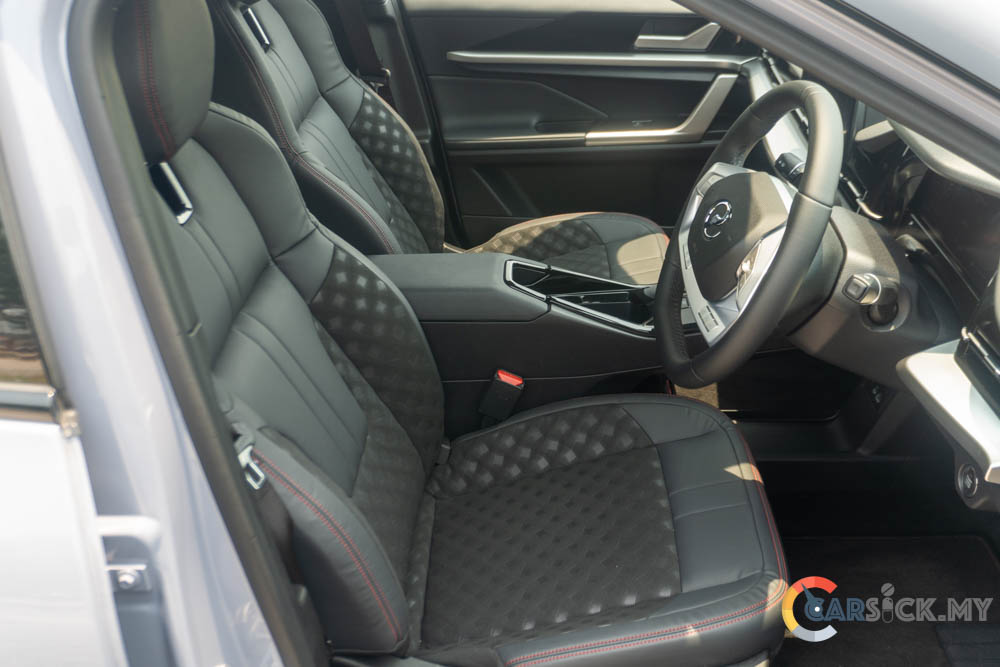
When I first climbed behind the wheel, I found the seating position a little awkward. It wasn’t immediately comfortable, and I needed some time to get used to it. Thankfully, things improved as I spent more time with the car. The seats are upholstered in a combination of leather and cloth, and they’re reasonably comfortable. However, the upholstery quality around the edges felt a little inconsistent. It’s not something that affects comfort, but it’s the sort of detail you might notice when you start examining the cabin more closely. 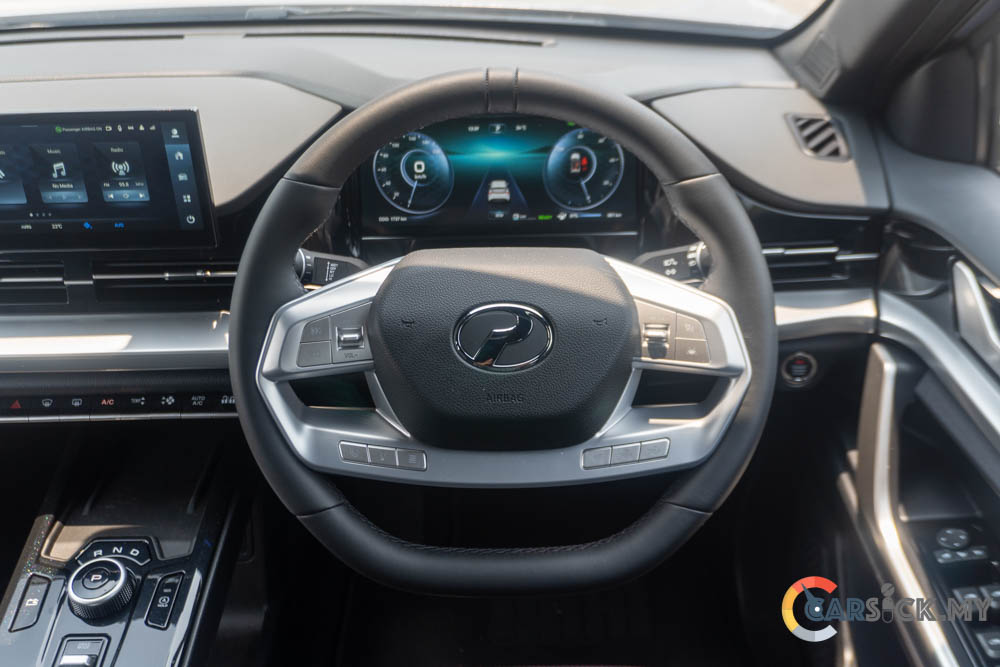
My bigger complaint is the lack of thigh support. For someone who spends a fair amount of time behind the wheel, a little more support beneath the thighs would have made the driving position more comfortable. Then there’s the steering wheel, which has a rather unusual design. The rim sits deeper than the centre of the wheel, whereas I personally prefer the opposite arrangement. It’s not necessarily a flaw, just a matter of personal preference. Still, between the steering wheel and the initial seating position, it took me a little while to settle in. Fortunately, once you’re comfortable, the QV-E starts to reveal its more interesting qualities.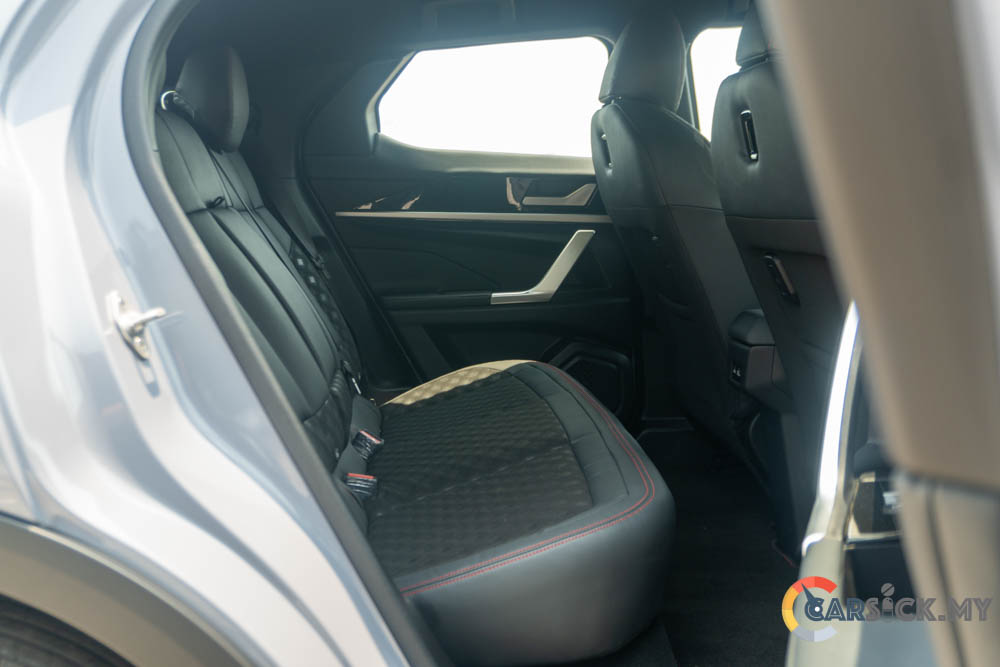
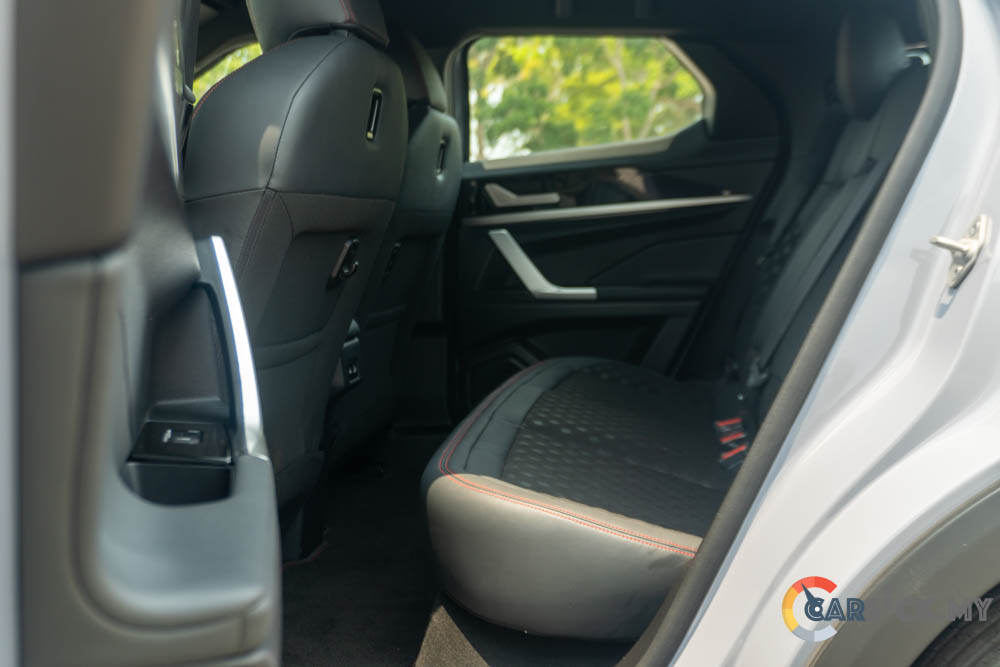
If the front cabin is reasonably convincing, the rear seats are where the QV-E starts reminding you that style doesn’t come free. The small windows and thick C-pillars create a darker, more enclosed atmosphere. Add the black roof lining and sloping roofline, and the rear cabin can feel a little claustrophobic at first. It’s almost as if Perodua’s designers decided that looking like a sporty coupe was worth sacrificing a little of that airy, family-friendly feeling.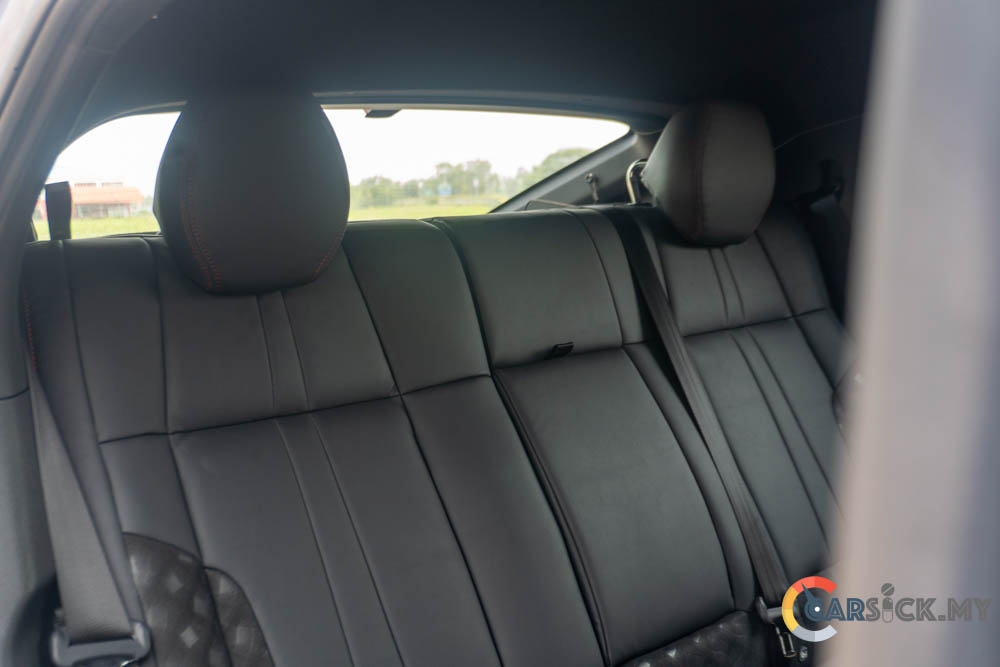
To be fair, headroom is better than the styling might suggest. When I sat in the rear, I found there was still a decent amount of space for someone of my height. Legroom is also acceptable, but there’s one issue I wasn’t particularly fond of: the elevated floor. This forces rear passengers into a slightly squatting position, which might be tolerable for a quick trip to the shops but could become uncomfortable on longer journeys. In other words, your friends probably won’t complain if you’re taking them out for lunch. But if you’re planning a road trip to Penang, you might want to ask them how their knees are doing along the way.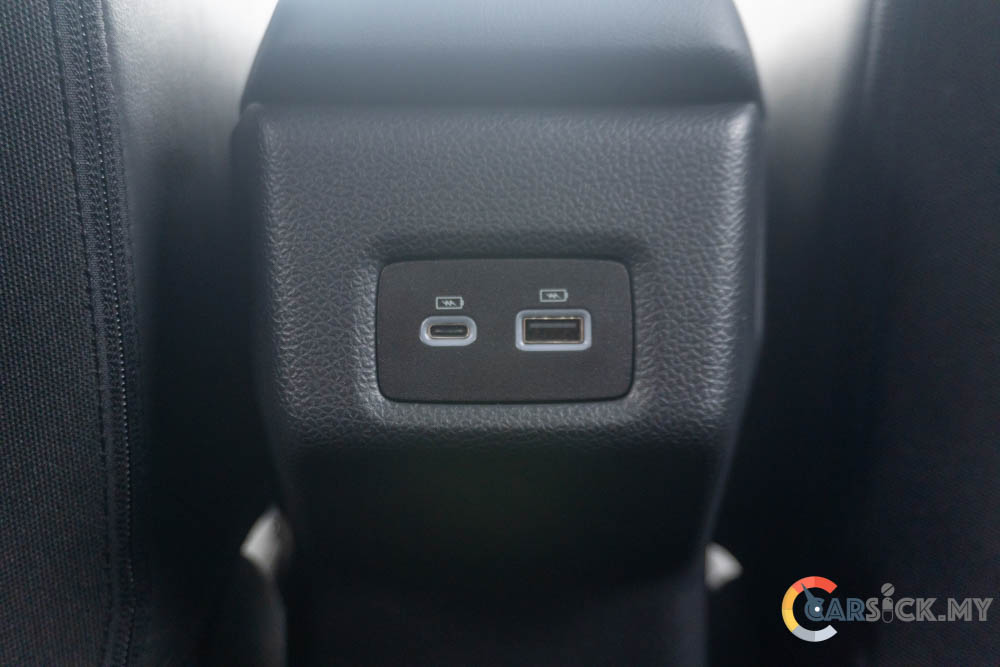
Rear passengers also miss out on dedicated air-conditioning vents. Fortunately, the cabin isn’t particularly large, so the front air-conditioning system still manages to deliver enough cool air to the back. On the plus side, there are USB-A and USB-C charging ports behind the centre console, so your passengers can keep their devices charged while they silently judge your music playlist. 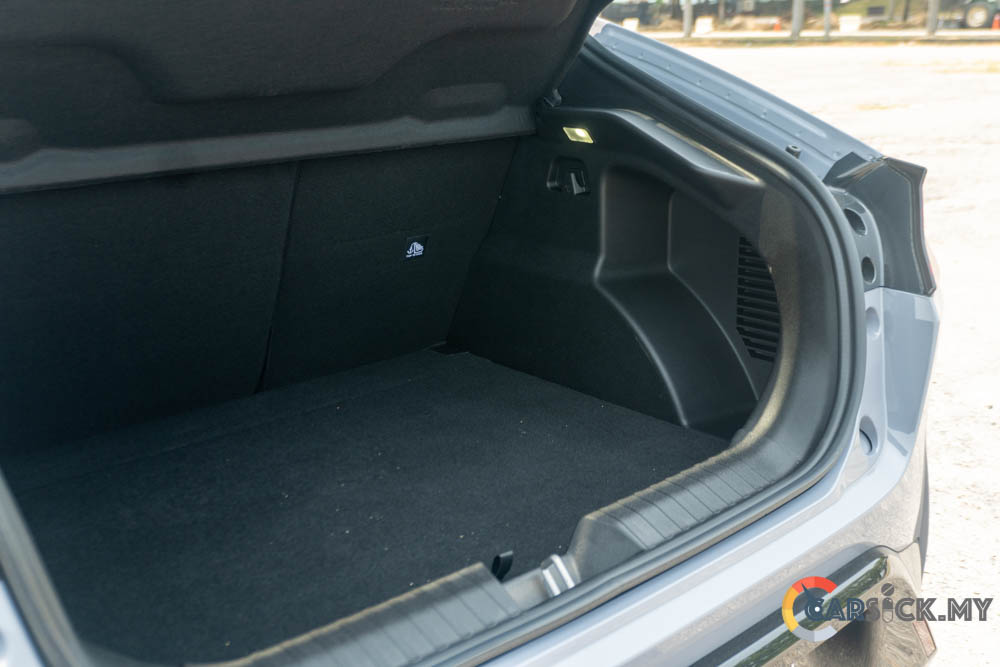
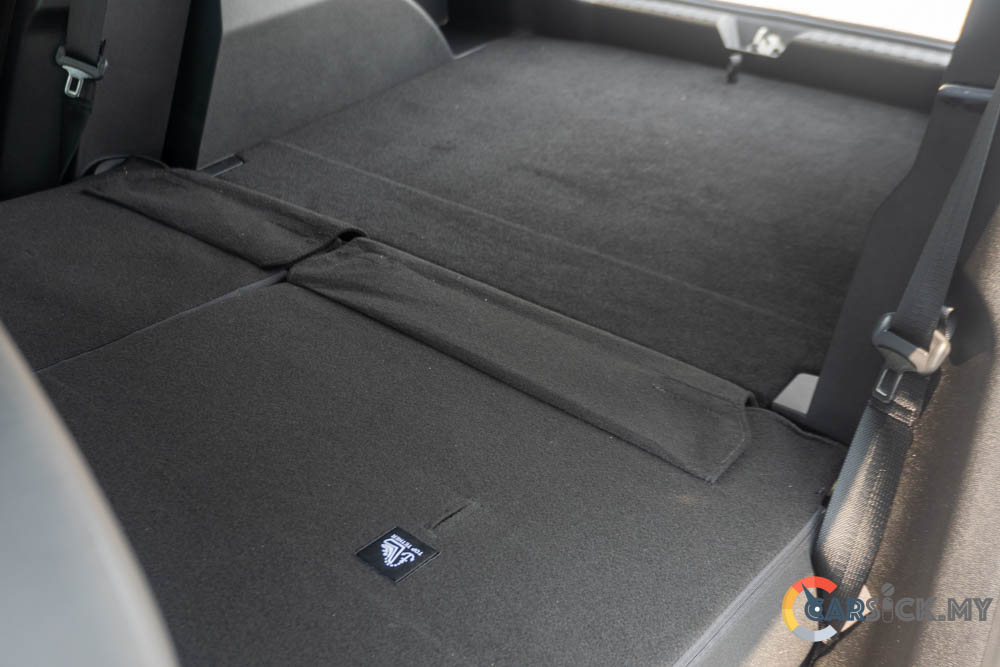
As for luggage, the QV-E offers a 320-litre boot. That’s a reasonably usable amount of space for a car of this size, and the wide opening makes loading bags relatively straightforward. Fold the rear seats down, and you get a flat loading floor that makes carrying longer items easier. So no, the QV-E isn’t exactly a limousine for rear passengers. But if you’re buying one primarily for yourself, the compromises might be easier to accept.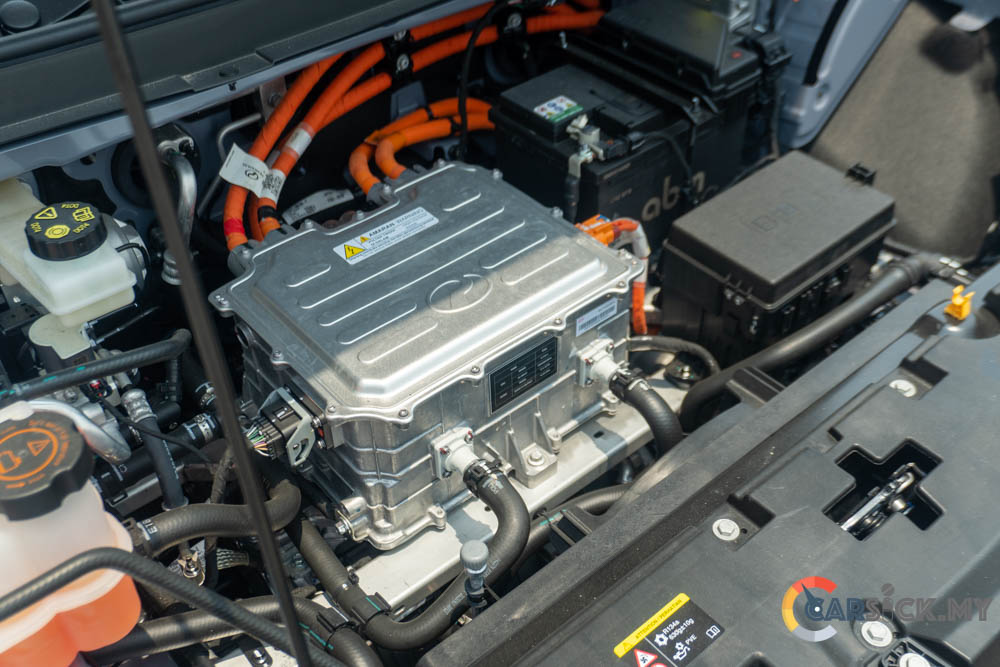
Here’s where things get interesting. The QV-E uses a single electric motor driving the front wheels. It’s a straightforward setup, and Perodua has sensibly stuck with front-wheel drive rather than overcomplicating things for its first EV. The motor draws power from a 52.5kWh battery, giving the car a claimed WLTP driving range of 370km. Power output stands at 150kW, while torque is rated at 285Nm. That’s enough to propel the QV-E from 0 to 100km/h in a claimed 7.5 seconds, with a top speed of 160km/h.
For a Perodua, those are pretty serious numbers. In fact, the QV-E is the most powerful vehicle the company has ever produced. Think about that for a moment. This is the same company known for building affordable, economical cars that prioritise getting you from A to B without emptying your wallet. Now, it has a car that can accelerate like a considerably more expensive machine. 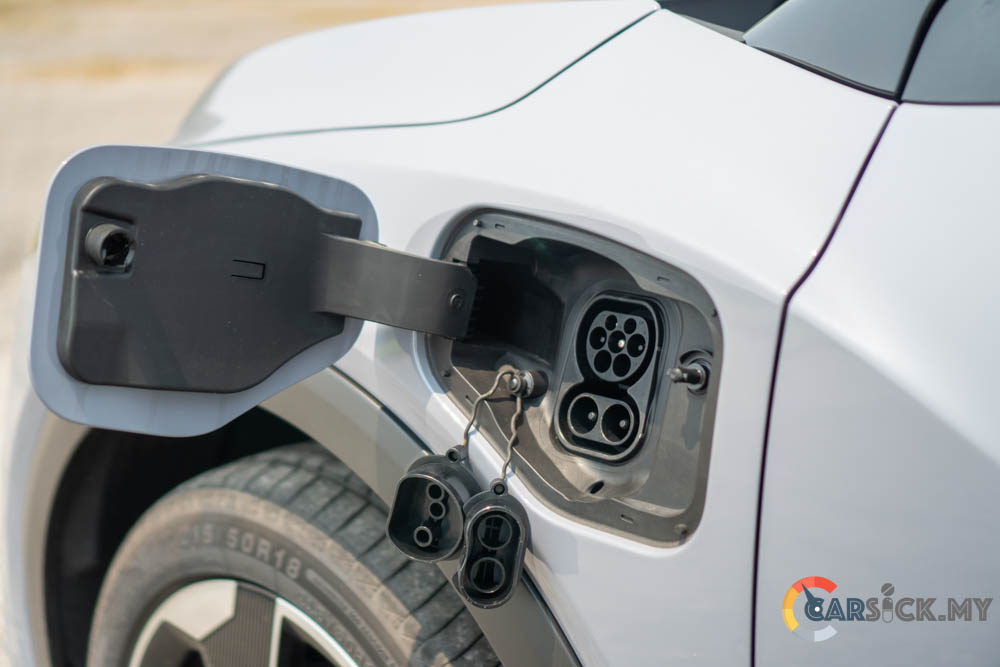
Naturally, having instant electric torque means the QV-E can keep up with traffic without much effort. But what surprised me most wasn’t how quickly it could accelerate. It was how well Perodua managed to control that power. Some EVs can feel overly eager, delivering their torque so abruptly that a small movement of your right foot sends the car surging forward. That might be entertaining for the first few minutes, but it can become tiresome in everyday traffic.
The QV-E takes a more measured approach. The accelerator pedal has a firmer spring, requiring a little more effort to extract the car’s full performance. This helps make the power delivery more manageable, particularly for drivers who aren’t accustomed to the instant response of an electric motor. Feed in the throttle smoothly, and the front end behaves in a civilised manner. Stamp on it, however, and torque steer will still make itself known. Some drivers might find that annoying, but I think Perodua has done a commendable job with the overall calibration. For a car that’s supposed to serve as a daily runabout, the QV-E is surprisingly pleasant to drive. And that, as we’ll discover later, is where this car really starts to win me over.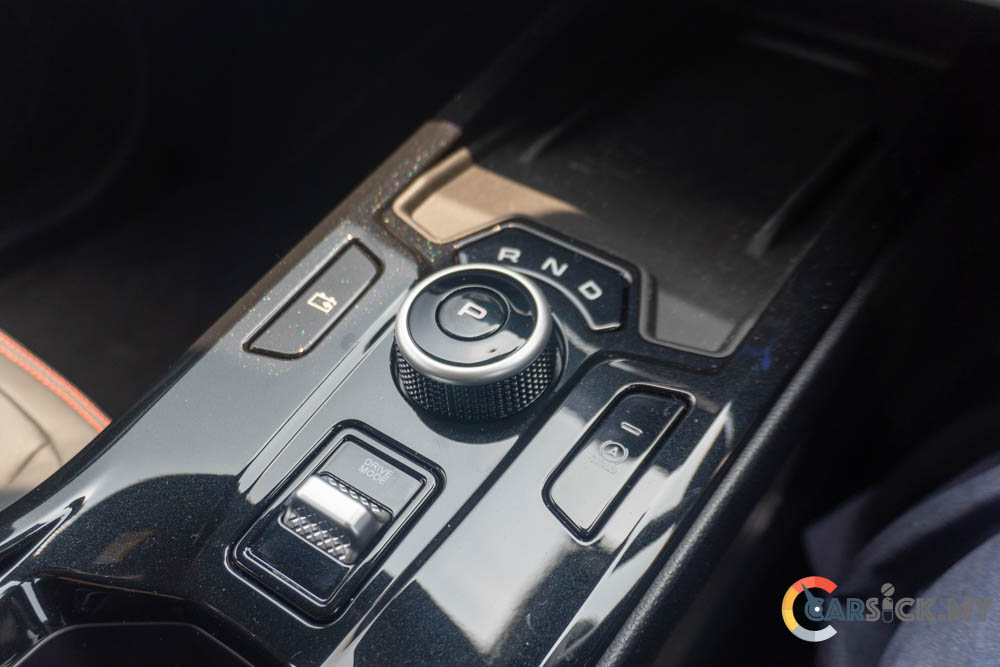
Of course, performance figures and driving impressions only tell part of the story. With an EV, range is always going to be one of the biggest questions. Perodua claims a top speed of 160km/h, although I found that the car was capable of exceeding that figure. You don’t need to test this yourself, but it’s something I discovered during my time with the vehicle. More importantly, I wanted to see how far the QV-E could travel in real-world conditions.
Rather than relying entirely on the claimed WLTP range, I did some basic calculations based on my driving experience. For every 10% of battery charge, I managed approximately 31km under mixed road conditions. That works out to around 310km from a full charge. It’s worth pointing out that this was based on my own driving, and I’m certainly not claiming to be the most efficient driver around. Someone with a lighter right foot could probably achieve better results.
Still, a real-world range of around 310km would be reasonably acceptable for a car primarily intended for city driving and everyday commuting. The important thing is understanding what you’re buying. If you’re expecting to drive from Kuala Lumpur to Penang and back without thinking about charging, you’ll need to plan your journey accordingly. But for the daily commute, grocery runs and occasional weekend outings, the QV-E’s range should be more than adequate for many drivers.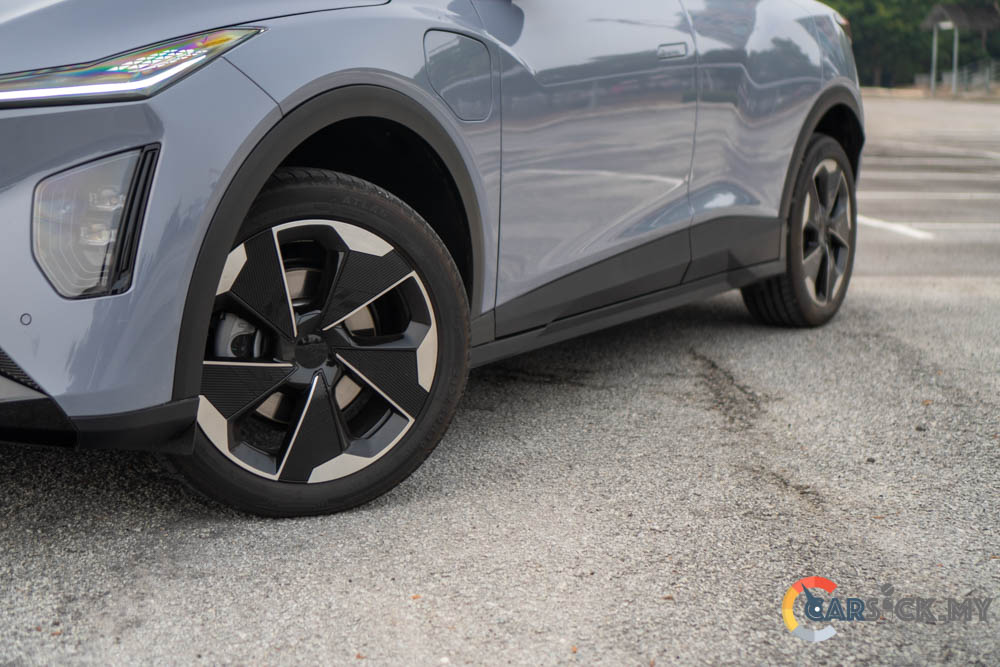
Here’s the thing I wasn’t expecting to say about Perodua’s first EV: it reminds me of a MINI. And no, I’m not talking about the way it looks or the fact that it has four wheels. I’m talking about the way it drives. If you can overlook some of the interior shortcomings, the QV-E has a surprising amount of character on the road. Let’s start with the ride. Perodua has done a commendable job tuning the suspension, striking a balance between comfort and a hint of sportiness.
The car feels composed over bumps and uneven road surfaces, which is particularly important when you’re driving on Malaysian roads. You know the sort I’m talking about: one moment you’re cruising along happily, and the next you’re approaching a speed hump that looks as though it was designed to stop a tank. The QV-E handles these situations rather well. Its stiff chassis helps the car feel solid, while the suspension settles quickly after going over larger humps. There’s no excessive bouncing or lingering body movement to spoil the experience. In fact, the QV-E feels like a much larger vehicle than it actually is. There’s a level of composure and sophistication to its suspension setup that I wasn’t expecting from Perodua’s first electric offering. But the real fun begins when you start paying attention to the steering.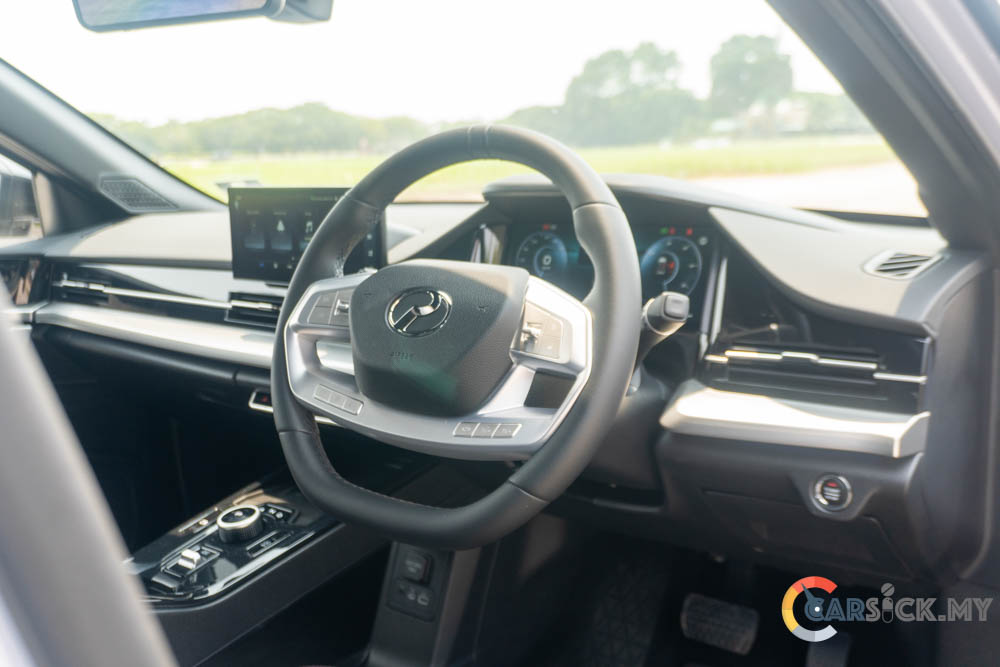
I absolutely love leaving the steering in Sport mode. In this setting, the steering weight feels just right. There’s enough resistance to give you a sense of what the front wheels are doing, but it never becomes so heavy that it feels artificial. Some cars seem to think Sport mode simply means making the steering wheel harder to turn. The QV-E, thankfully, feels more thoughtfully calibrated. If you’d rather have lighter steering for everyday driving, Comfort mode is available too. But for me, Sport mode is where the car comes alive.
The steering is direct, allowing you to place the car precisely where you want it on the road. Combine that with its compact dimensions, and the QV-E feels playful and nimble, even at higher speeds. It doesn’t take long before you start enjoying yourself behind the wheel. This is where the MINI comparison comes in. The QV-E has that eager, slightly cheeky character that makes you want to take the longer route home rather than simply heading straight to your destination.vAnd isn’t that what a good driver’s car should do?
It doesn’t necessarily need ridiculous amounts of power, a complicated suspension system or a badge that costs more than your monthly salary. Sometimes, all it takes is well-calibrated steering, a sorted chassis and a suspension setup that makes sense.vPerodua seems to understand this rather well.vWith its combination of ride comfort, direct steering and playful handling, the QV-E has a character that I feel is missing from many modern EVs.vAnd that might just be its biggest selling point.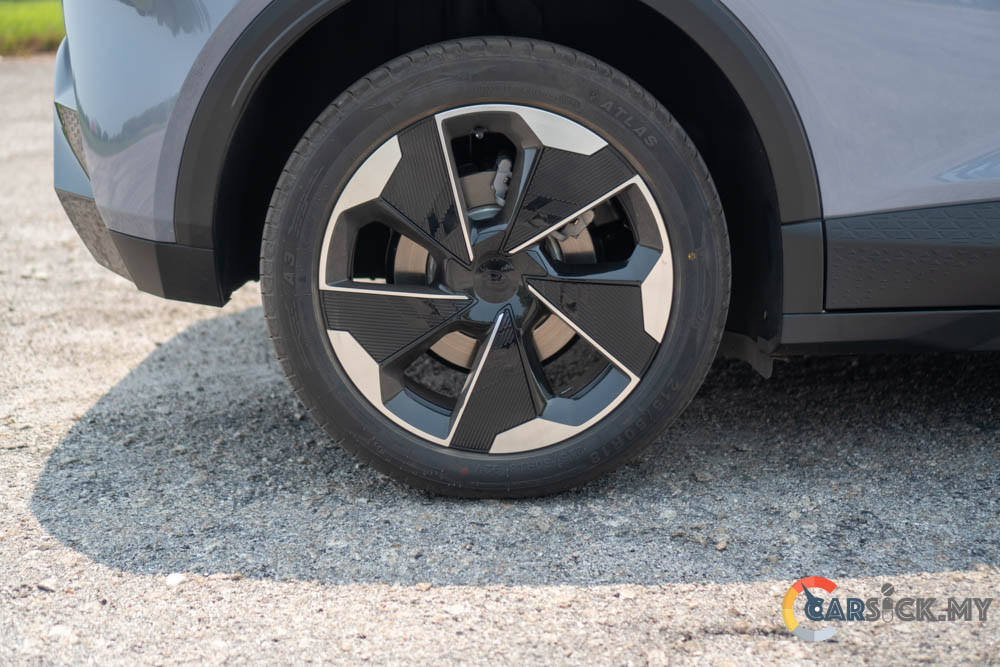
Of course, no car is perfect, and the QV-E still has a few areas that could use improvement. The four-wheel disc brakes do a good job of bringing the car to a stop. However, I found the regenerative braking response through the brake pedal rather vague. The transition between regenerative braking and the conventional friction brakes isn’t particularly easy to identify. As a result, I struggled to use regenerative braking as effectively as I would have liked before the physical brakes stepped in. It’s not a deal-breaker, but it’s something I’d like Perodua to refine in future iterations.
Then there’s the advanced driver assistance systems, or ADAS. The QV-E comes equipped with a comprehensive range of modern driver assistance features, including Forward Collision Warning (FCW), Autonomous Emergency Braking (AEB), Lane Departure Warning (LDW), Lane Keep Assist (LKA), Adaptive Cruise Control (ACC), Highway Assist (HWA), Traffic Jam Assist (TJA), Blind Spot Monitor (BSM), and Rear Cross Traffic Alert (RCTA). 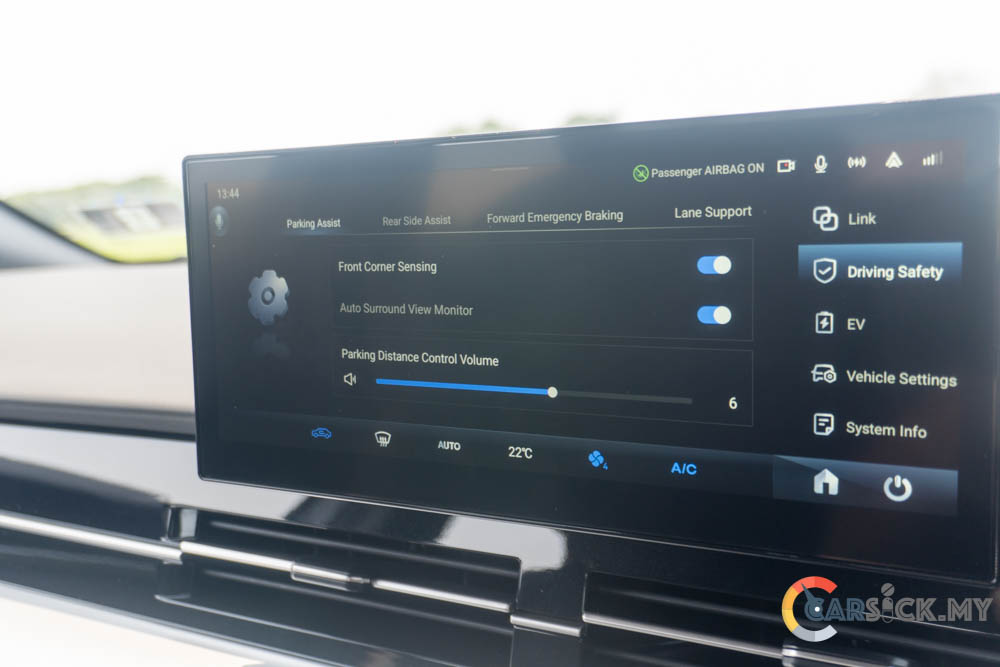
More importantly, Perodua has done a splendid job of making these systems relatively unobtrusive during everyday driving.You know how some driver assistance systems seem to have a personal vendetta against you? They beep, flash warnings and tug at the steering wheel until you start wondering who’s actually in charge of the car. Thankfully, the QV-E doesn’t feel overly annoying in this regard, and you can switch the systems off when necessary. For a first attempt, that’s a pretty good effort.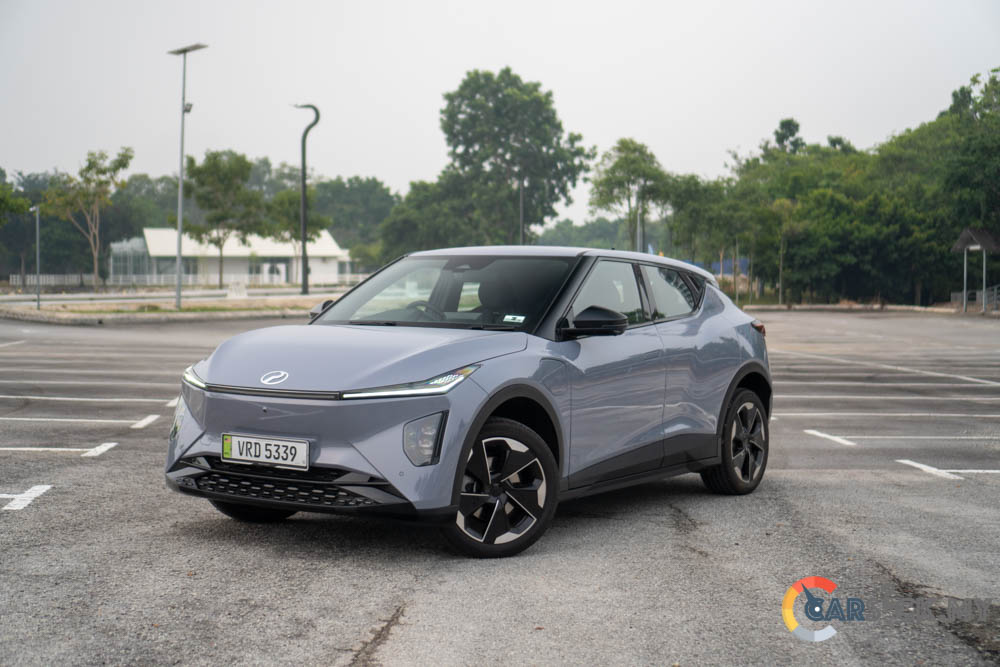
Now we come to the part that has probably generated more discussion than anything else about the QV-E: the price. Perodua recently reduced the car’s price to RM53,499 for buyers who opt for the Battery-as-a-Service package, which costs RM215 per month. At first glance, that makes the QV-E a rather attractive proposition, particularly for first-time car buyers looking to make the switch to electric motoring. The BaaS arrangement also offers some peace of mind regarding the battery’s long-term health and longevity, depending on the terms of the package.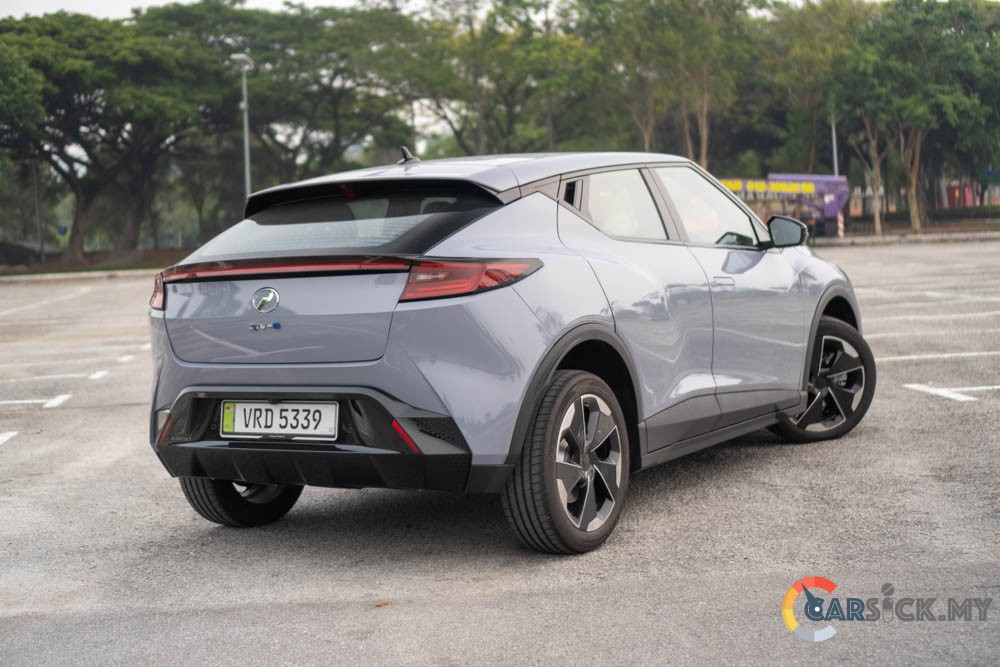
On top of that, buying the car through this arrangement can mean lower insurance costs compared with purchasing the vehicle outright, as well as lower loan interest costs. These are factors worth considering when calculating the overall cost of ownership. However, that RM215 monthly subscription isn’t money that simply disappears from your budget without consequence. You’ll need to factor it into your monthly expenses and compare the total costs of the available ownership options.
Check out the full photo album here.