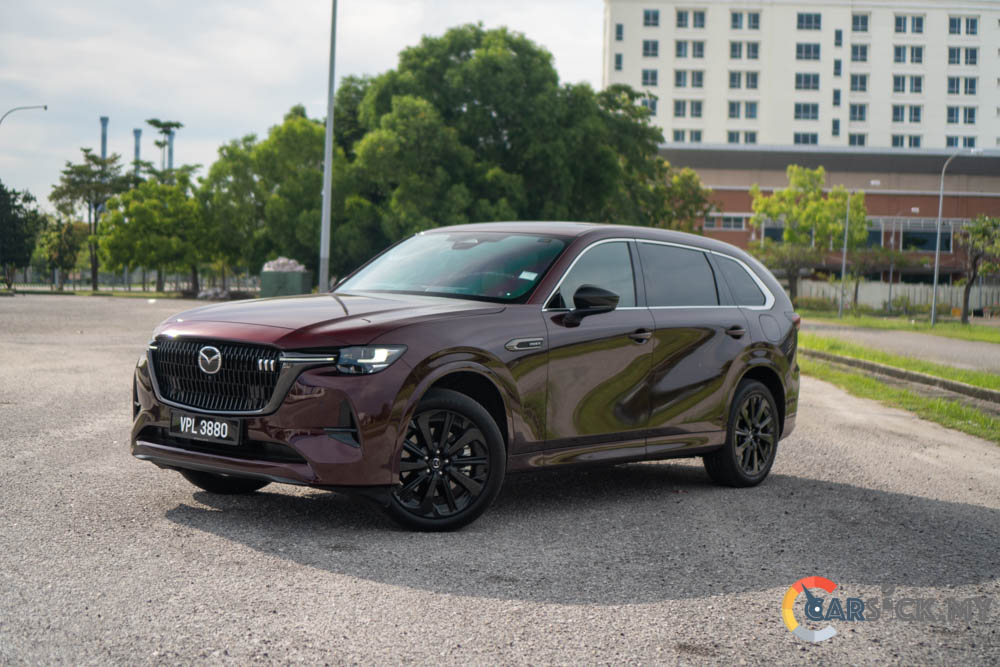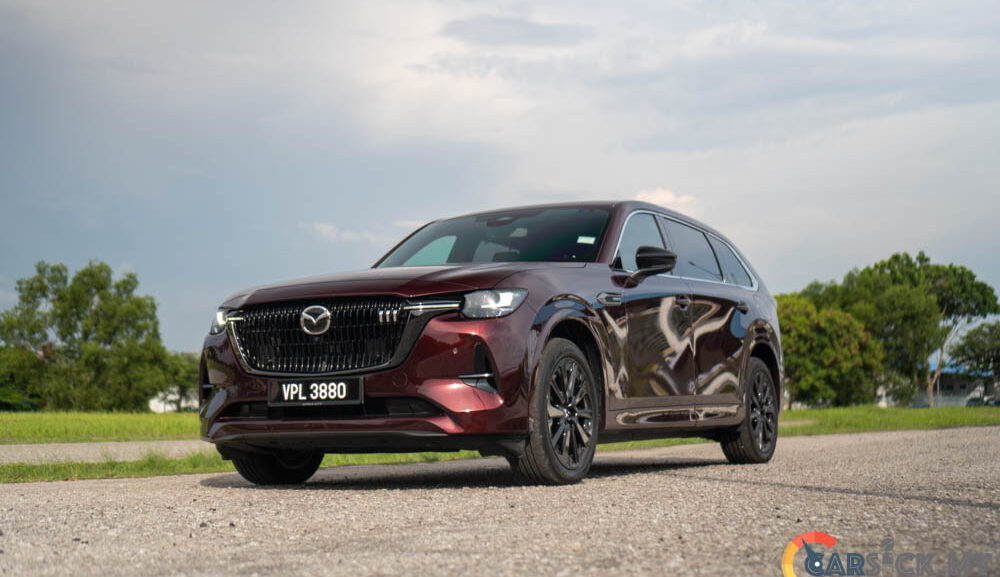

When Mazda Malaysia launched the CX-60, it also brought along its bigger brother, the CX-80. Think of the CX-80 as the CX-60 after a serious growth spurt. It’s longer, taller, has an extra row of seats and, in the Malaysian market, comes with a plug-in hybrid powertrain that packs considerably more punch. But here’s the thing. Making a car bigger is easy enough. Making it bigger without ruining its proportions, comfort or driving experience? That’s where things get interesting. So, apart from the extra seats and the more powerful powertrain, what exactly do you get for your money? And more importantly, is the CX-80 a worthy successor to the old CX-9, or is it simply a stretched CX-60 wearing a fancier suit? Let’s find out.
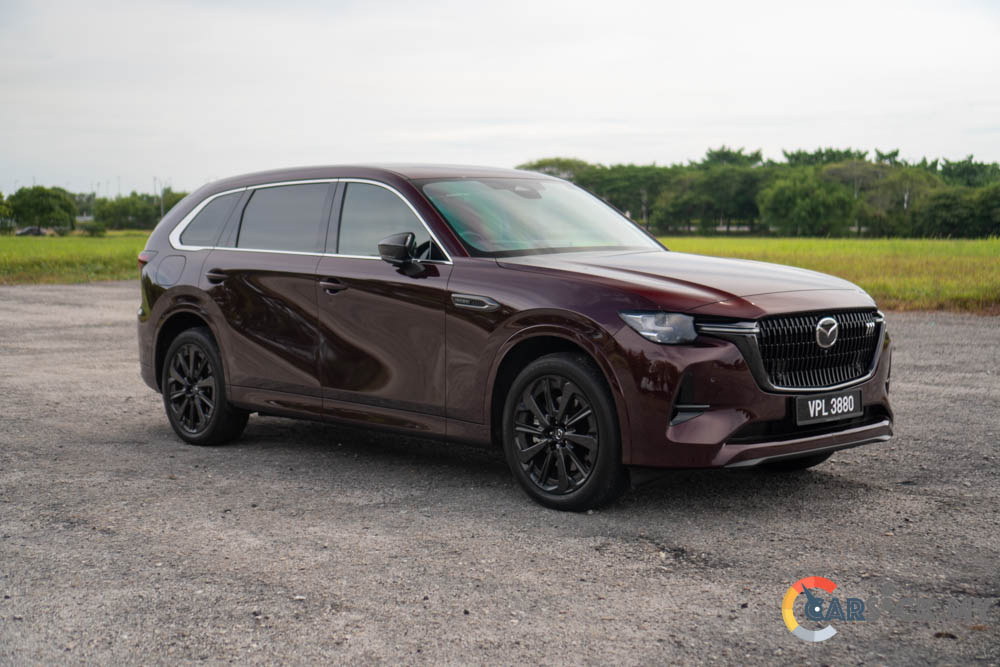
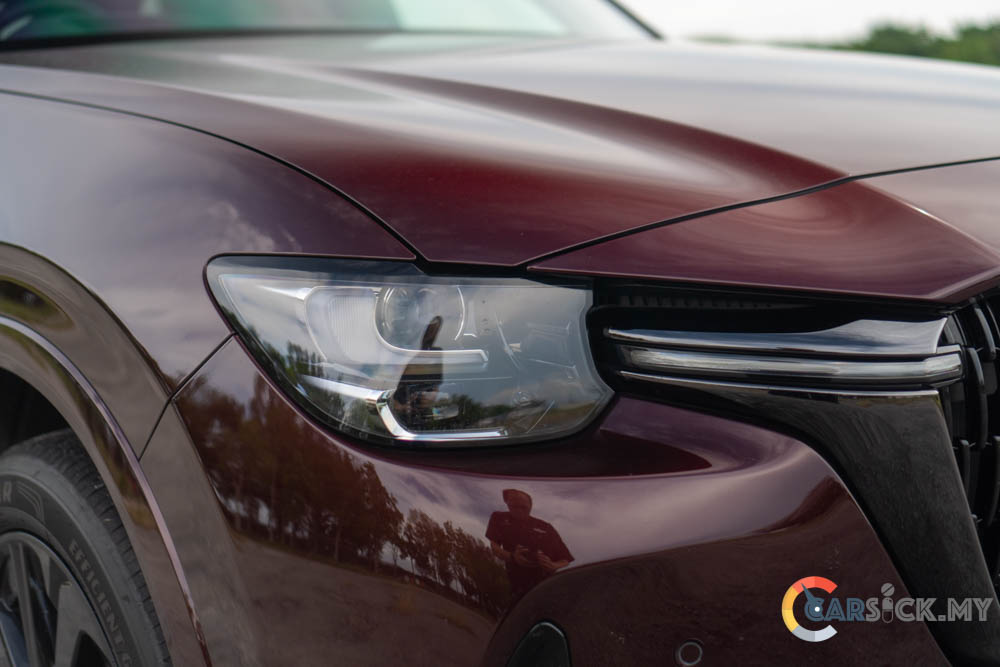
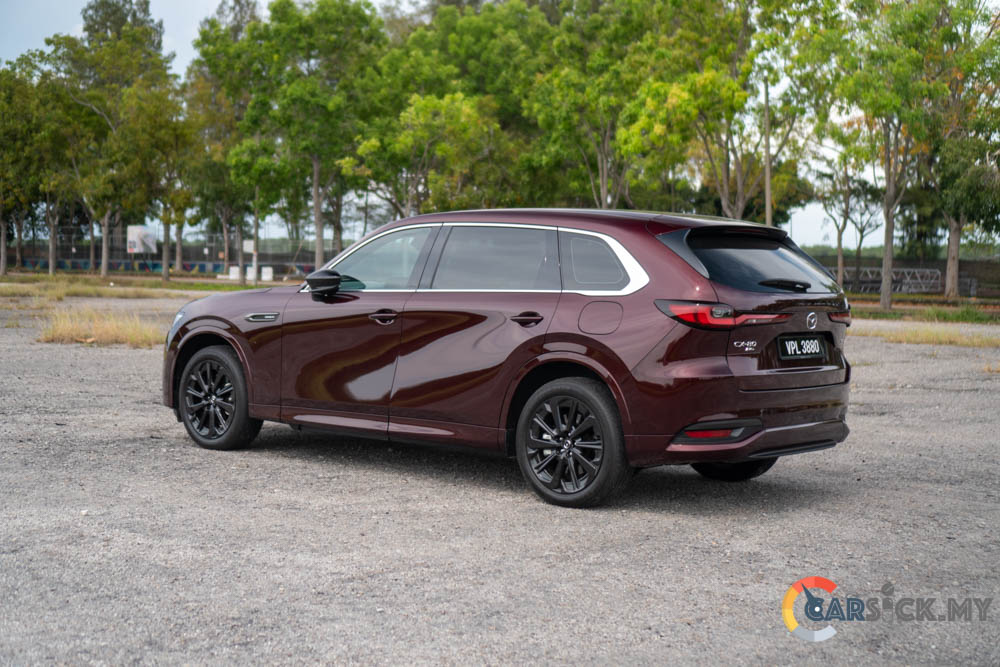 If you’ve seen the Mazda CX-60, you’ll probably need a second look to tell the CX-80 apart. From the front, the two SUVs look remarkably similar, sharing Mazda’s latest interpretation of its Kodo design language. And that’s not a bad thing. Mazda has always been rather good at making its cars look elegant without trying too hard. Even the older CX-5 and CX-8 managed to strike that balance between looking sporty and sophisticated. The CX-80 continues that tradition, although it has clearly been hitting the buffet a little harder than its smaller sibling. Measuring 250mm longer than the CX-60, the CX-80 needs that extra length to accommodate its third row of seats. It’s also approximately 30mm taller, helping it maintain a more balanced appearance instead of looking like someone simply stretched a CX-60 in Photoshop.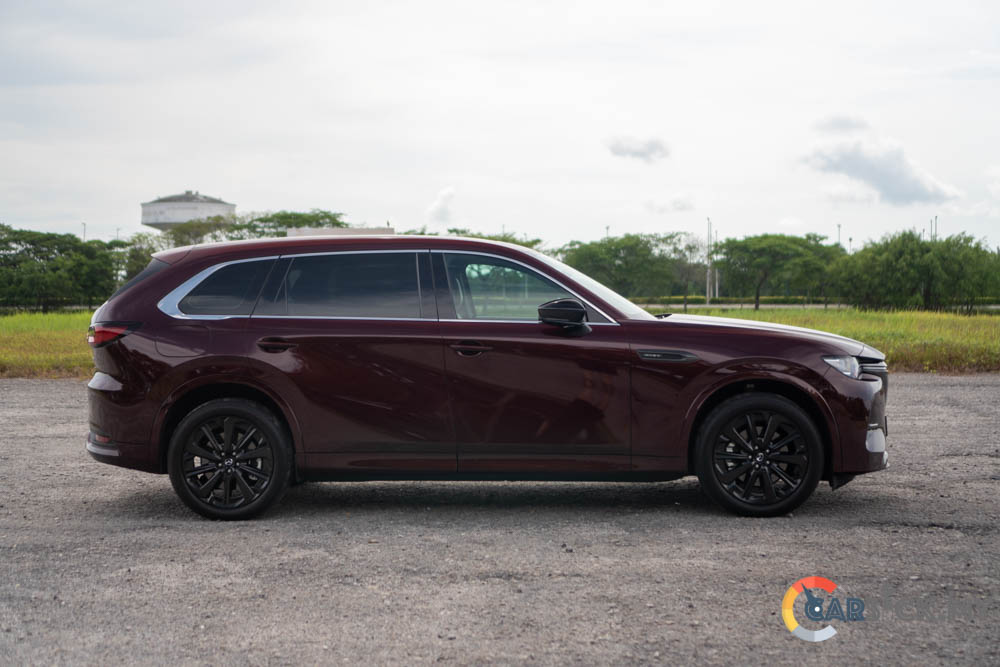
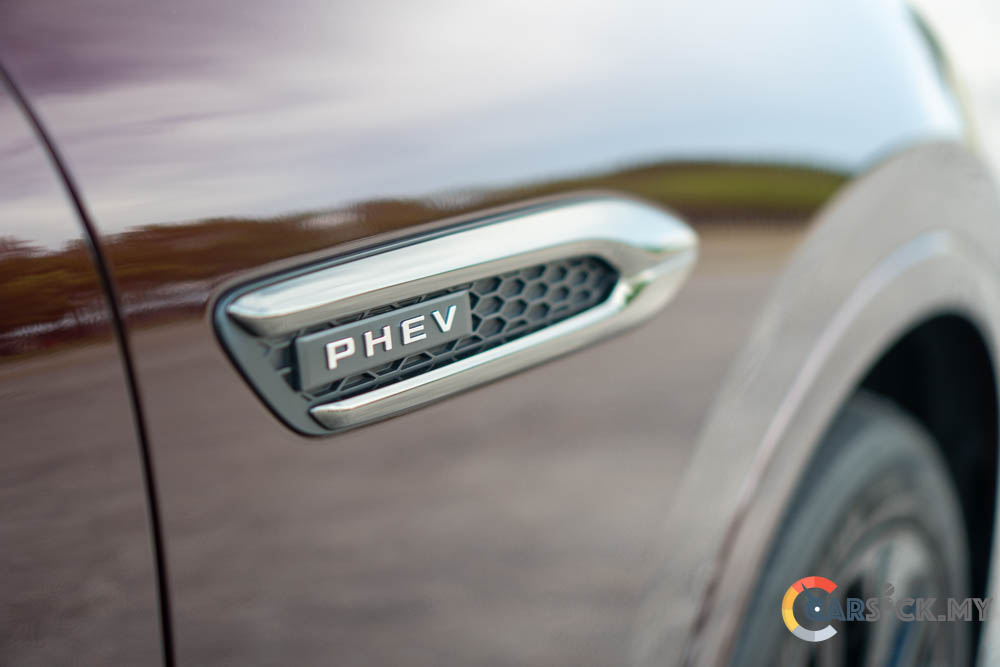
Look closely at the front grille, and you’ll spot three small chrome pieces that distinguish the CX-80 from its smaller sibling. They’re subtle additions, but they give the front end a slightly more upmarket appearance. Move to the side, and the differences become more obvious. The CX-60’s relatively plain fender trim has been replaced with a piece featuring PHEV lettering, reminding everyone that this isn’t just another conventional petrol-powered SUV. The rear doors are also significantly longer, which makes sense when you consider that passengers need to climb into the third row. Thankfully, Mazda hasn’t sacrificed the wide-opening doors, so getting in and out shouldn’t require the flexibility of a yoga instructor. 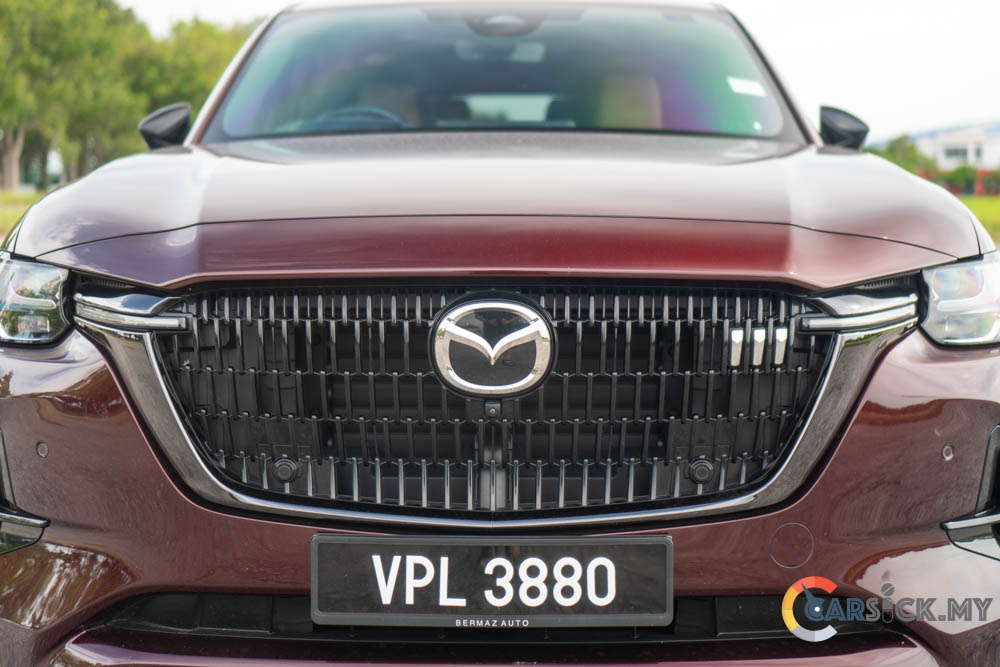
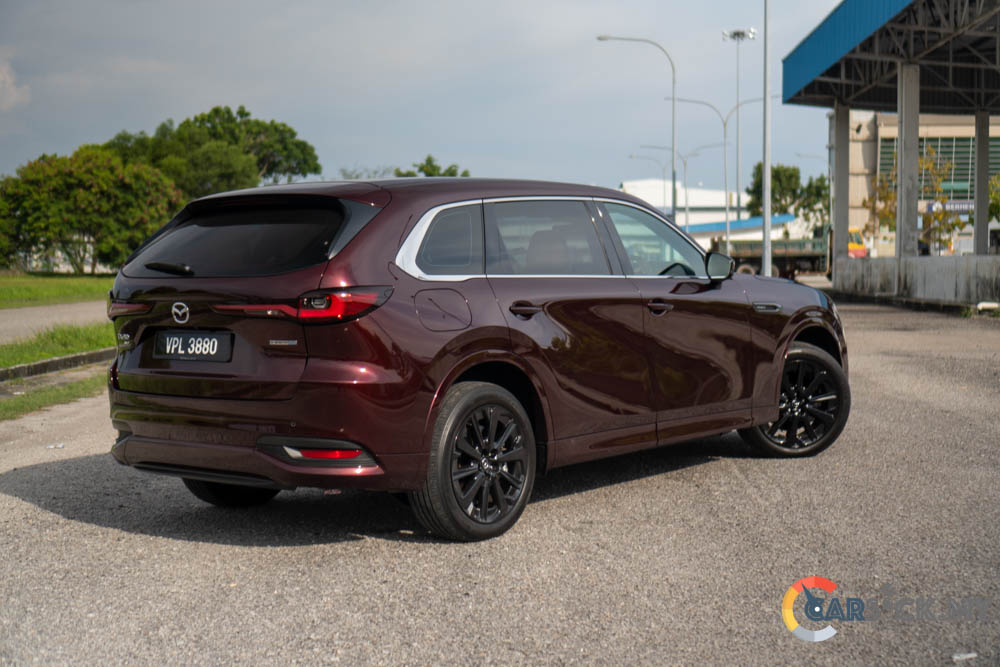
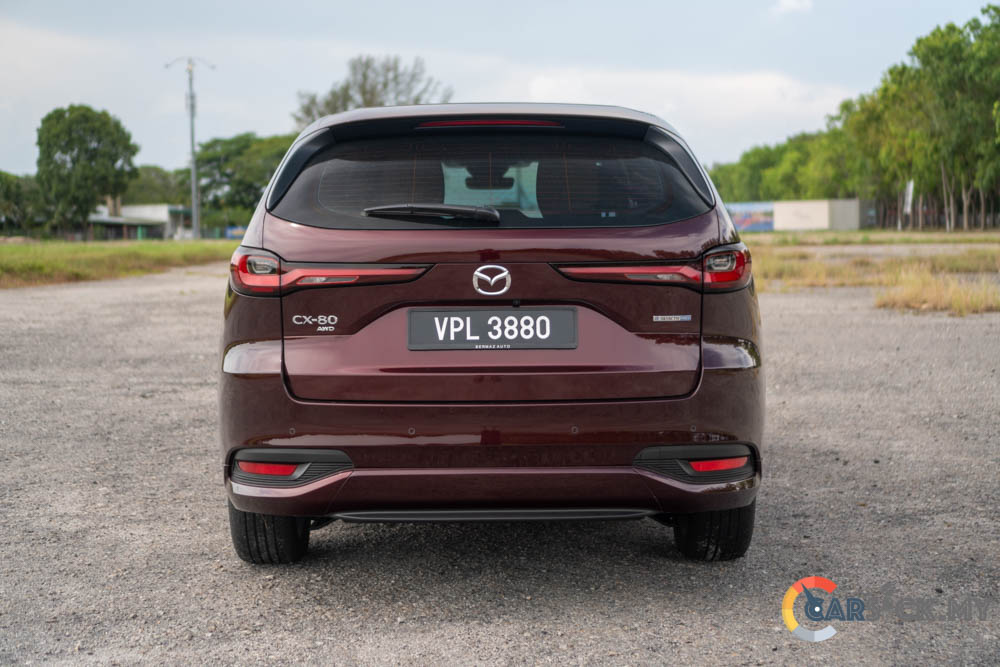
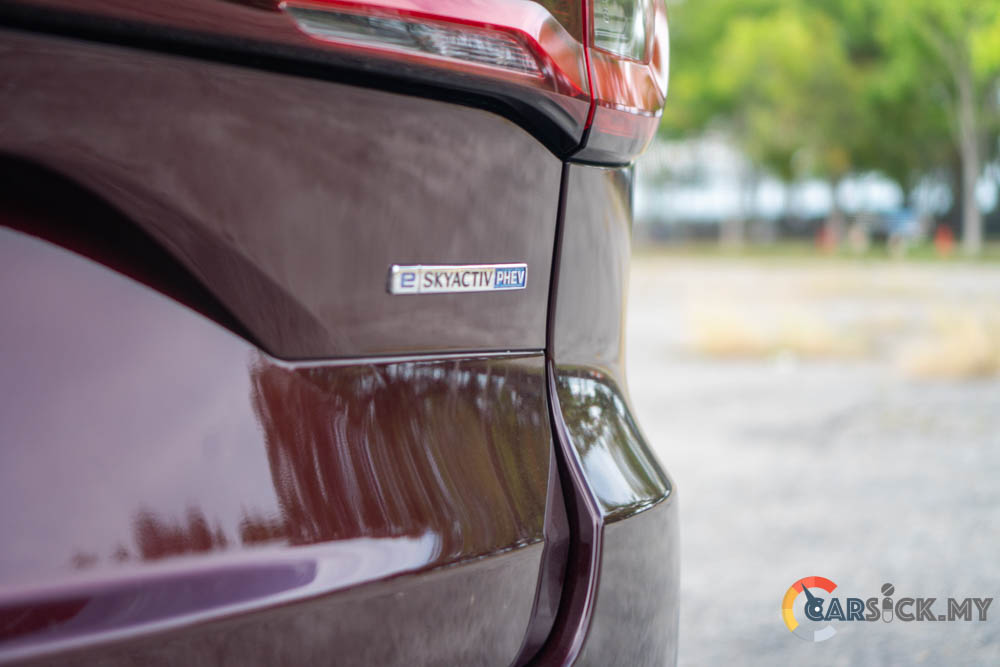
At the rear, you’ll find two separate flaps on either side of the vehicle. One houses the conventional fuel filler, while the other conceals the charging port. It’s a neat solution that keeps the design clean without forcing Mazda to squeeze everything into one awkward location. The rear end itself looks familiar, although the e-Skyactiv PHEV and CX-80 badges help distinguish it from the CX-60. Then there are the 20-inch alloy wheels, wrapped in 235/50 R20 tyres and finished in black. They give the CX-80 a sportier appearance, adding just enough visual aggression to prevent it from looking like a luxury shuttle bus. Overall, Mazda has done a commendable job of stretching the CX-60 into a larger SUV. The proportions still work, the design remains elegant, and nothing looks as though it was added at the last minute. So far, so good. 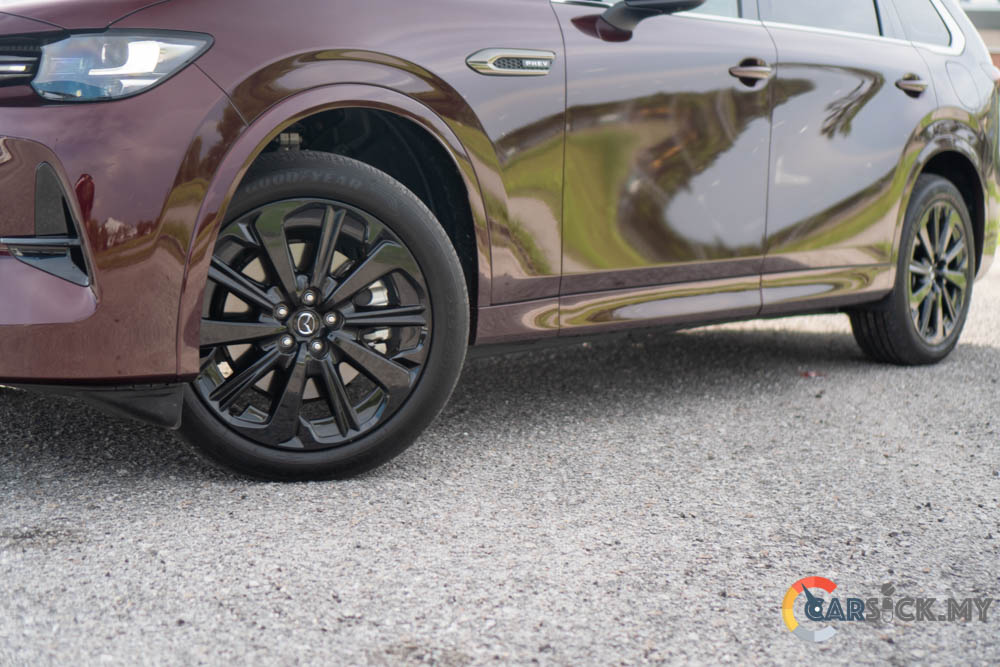
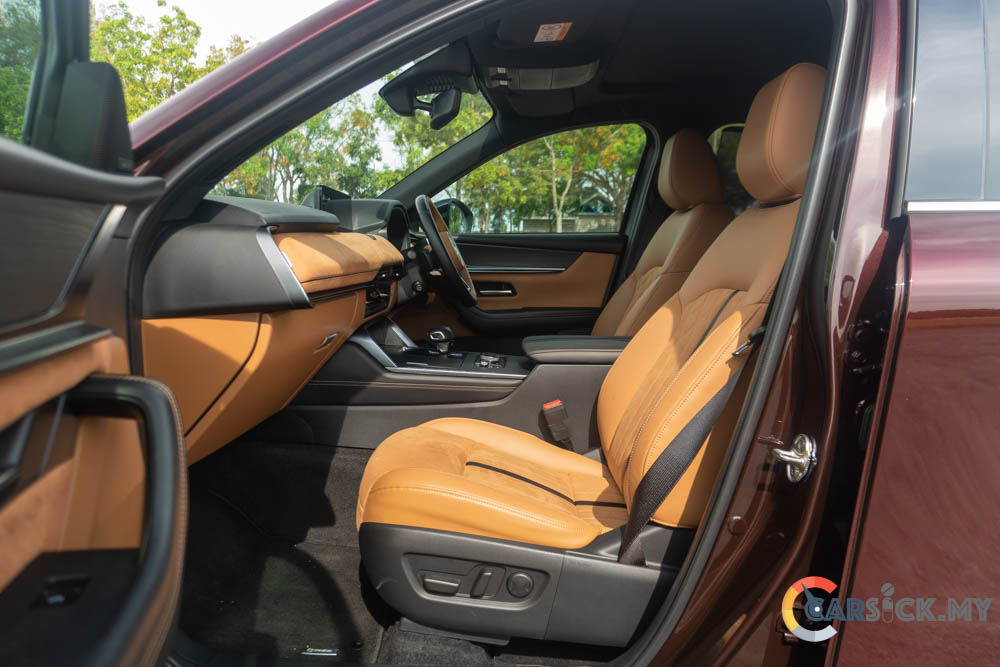
Open the front door, and you’ll immediately recognise the cabin. That’s because the CX-80 shares most of its interior with the CX-60. Now, normally, when a manufacturer tells you that its more expensive model shares the same interior as the cheaper one, you might start wondering where your extra money is going. But in this case, I’m not complaining. The CX-60 already has a rather tasteful cabin, and the CX-80 builds on that foundation with a more luxurious colour scheme. While the CX-60 comes with a black interior, the CX-80 gets a beautiful tan finish that makes the cabin feel considerably more inviting. Add the soft Nappa leather, and the whole place starts to feel like somewhere you’d happily spend a few hours travelling in. In fact, the colour scheme reminds me of the 20th Anniversary Edition of the Mazda6, which I absolutely loved. It’s the sort of interior that makes you want to take the longer route home just to spend more time inside.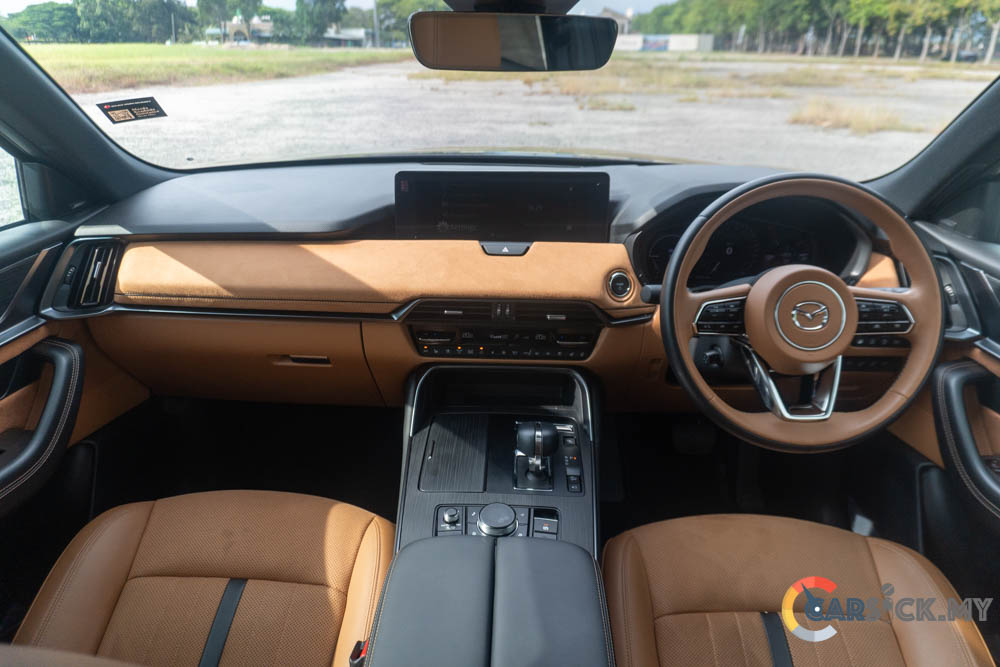
And if the lighter upholstery isn’t enough to brighten things up, there’s a large sunroof overhead to let more natural light into the cabin. Of course, the dashboard itself remains largely unchanged. You still get a 12.3-inch instrument cluster and a matching 12.3-inch infotainment display, both familiar from the CX-60. However, Mazda has made one small but useful addition to the instrument cluster: a battery gauge. Since the CX-80 is a plug-in hybrid, knowing how much battery you have left is rather important. Thankfully, the gauge blends neatly into the display instead of looking like an afterthought.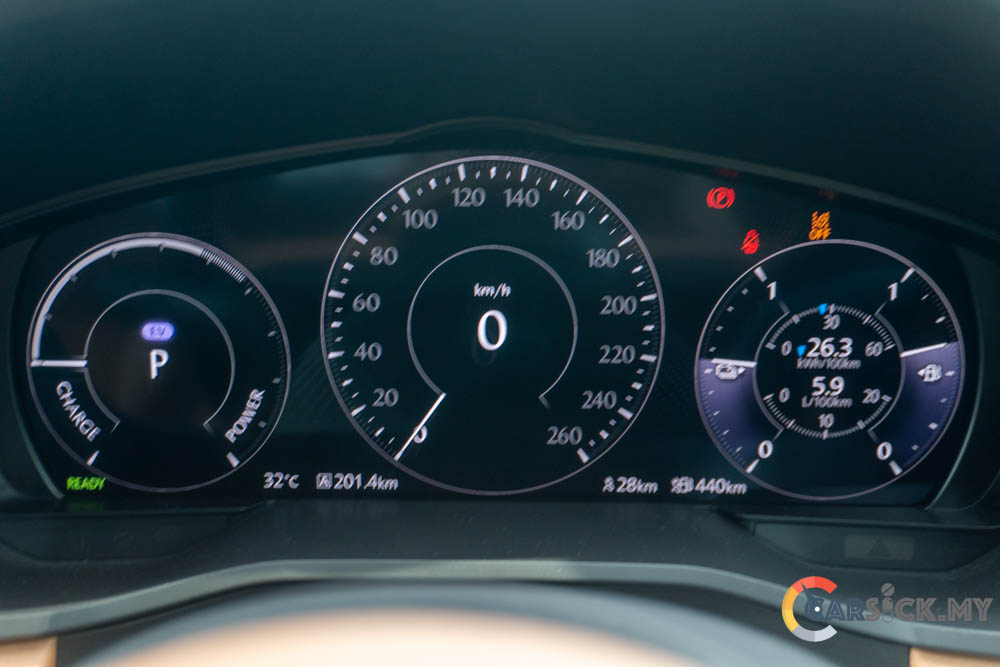
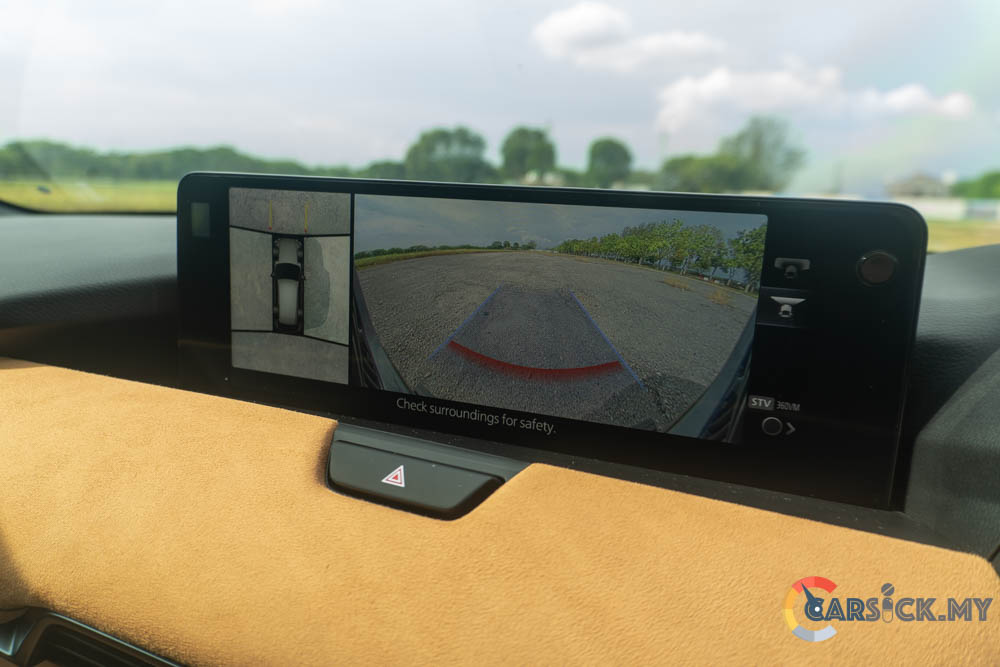
The infotainment system, meanwhile, offers the usual essentials, including Android Auto, Apple CarPlay, a 360-degree camera and a 12-speaker Bose sound system. Everything is present and accounted for, although there’s one thing I still can’t quite forgive at this price point: Android Auto requires a wired connection. Yes, you still have to plug your phone in. In 2026, when we’re surrounded by wireless technology, having to dig out a cable every time you get into a premium SUV feels a little like being handed a DVD player in the age of streaming. It’s hardly a deal-breaker, but wireless Android Auto would have made the experience feel that little bit more complete. 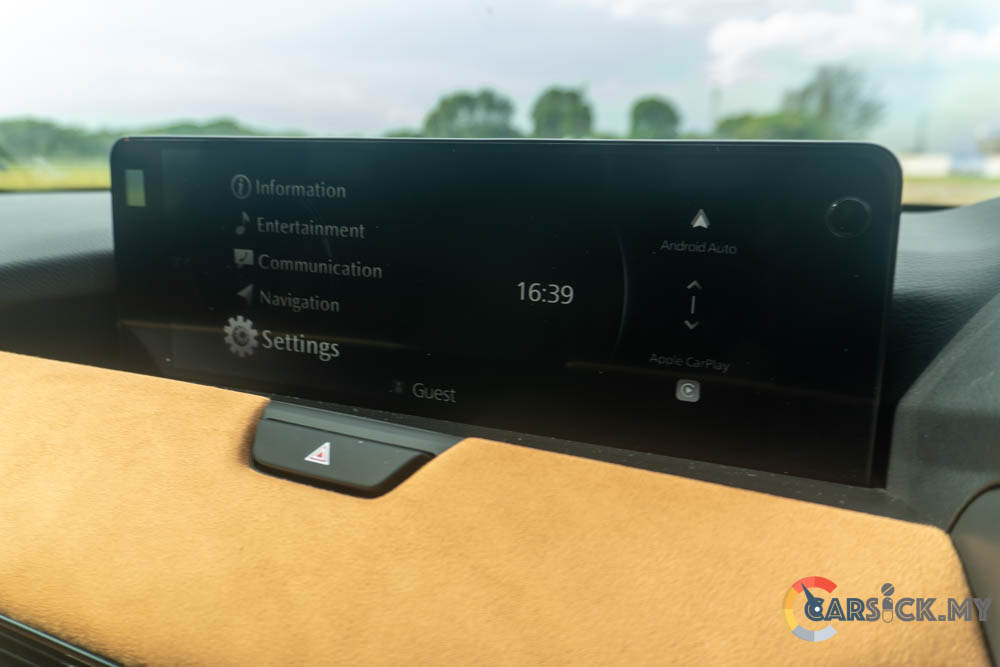
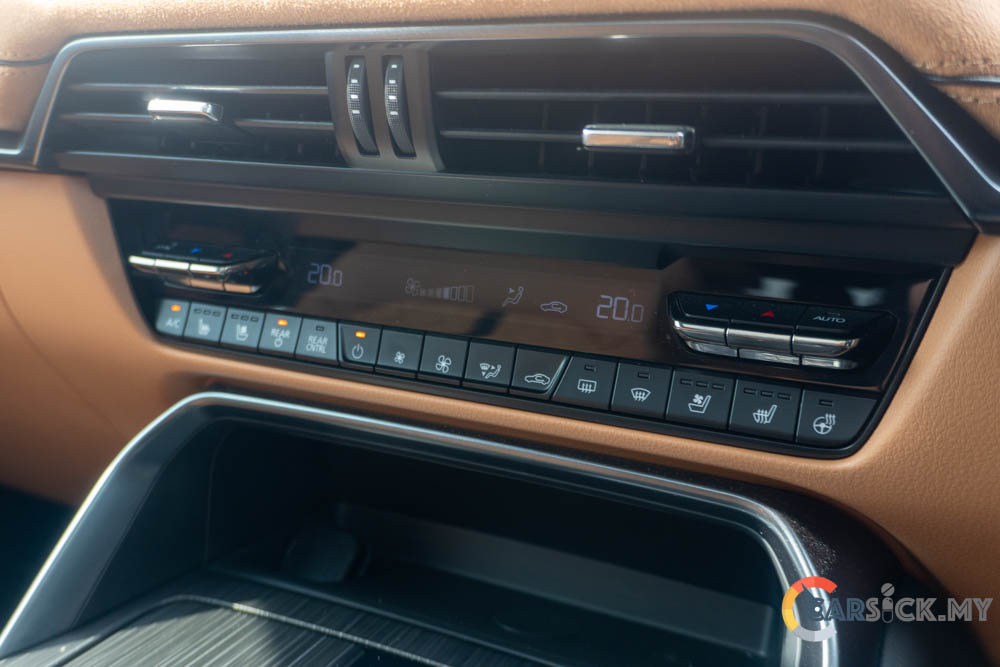
Up front, the seats are largely identical to those in the CX-60. So, if you already find the smaller SUV comfortable, you’ll feel right at home here. However, the CX-80 gets a few extra tricks up its sleeve. Both front seats come with heating and ventilation functions, helping you stay comfortable whether the weather is scorching hot or you simply prefer your seat to feel a little less tropical. The steering wheel also gets a heating function. Admittedly, in Malaysia, this might sound about as necessary as heated swimming pools. Still, it’s a nice premium touch, and there’s no harm in having it available. More importantly, the front cabin feels properly luxurious. You get the impression that Mazda wants you to see the CX-80 as something more than a family SUV. It wants you to see it as a vehicle that can comfortably ferry important people around without feeling out of place outside a five-star hotel. And honestly, with this interior, Mazda is making a fairly convincing argument. 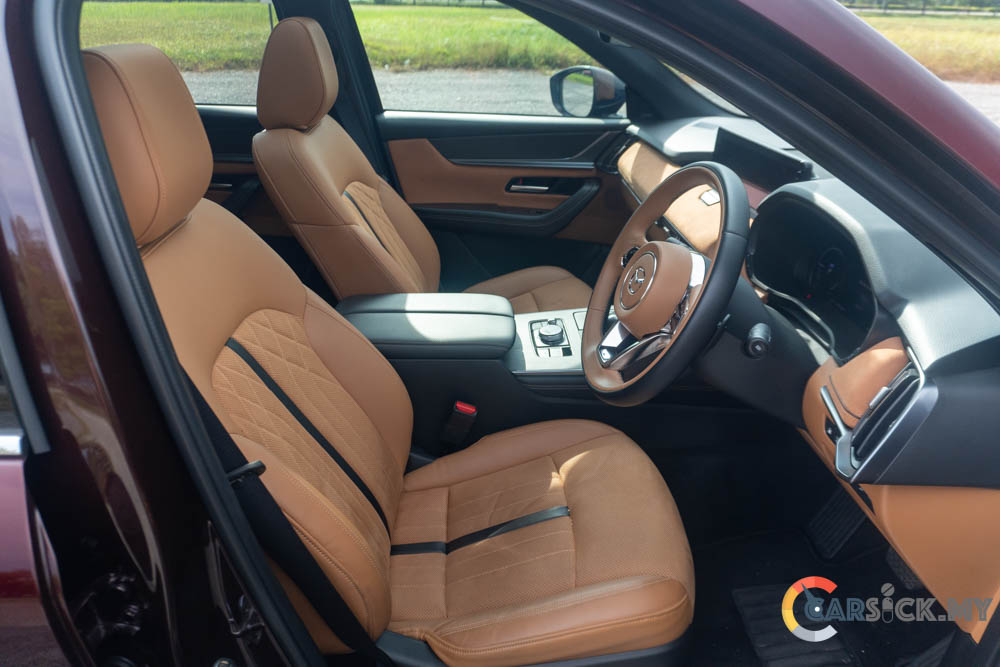
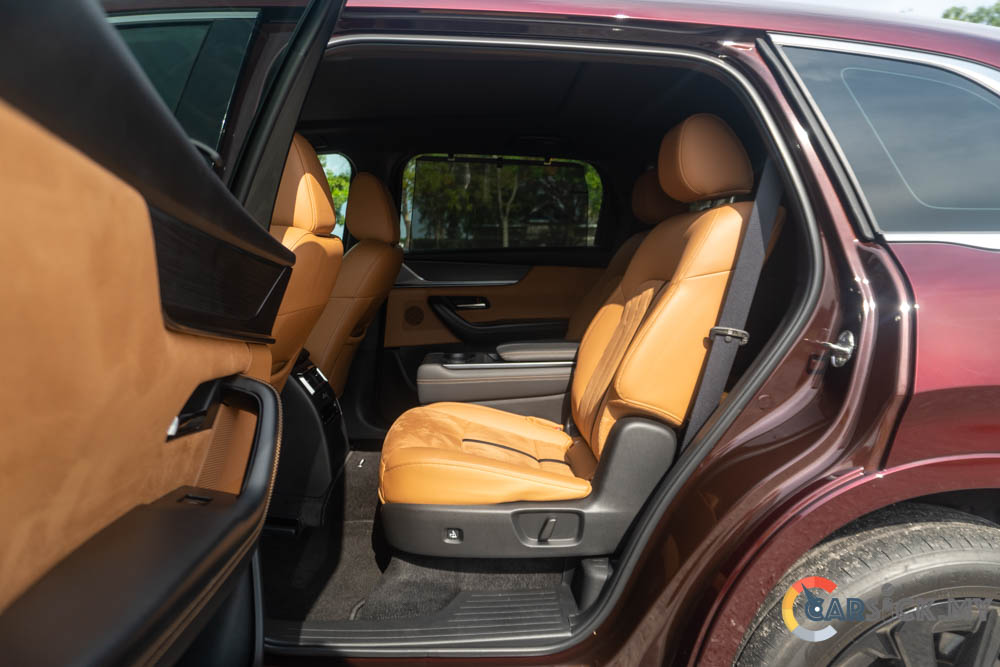
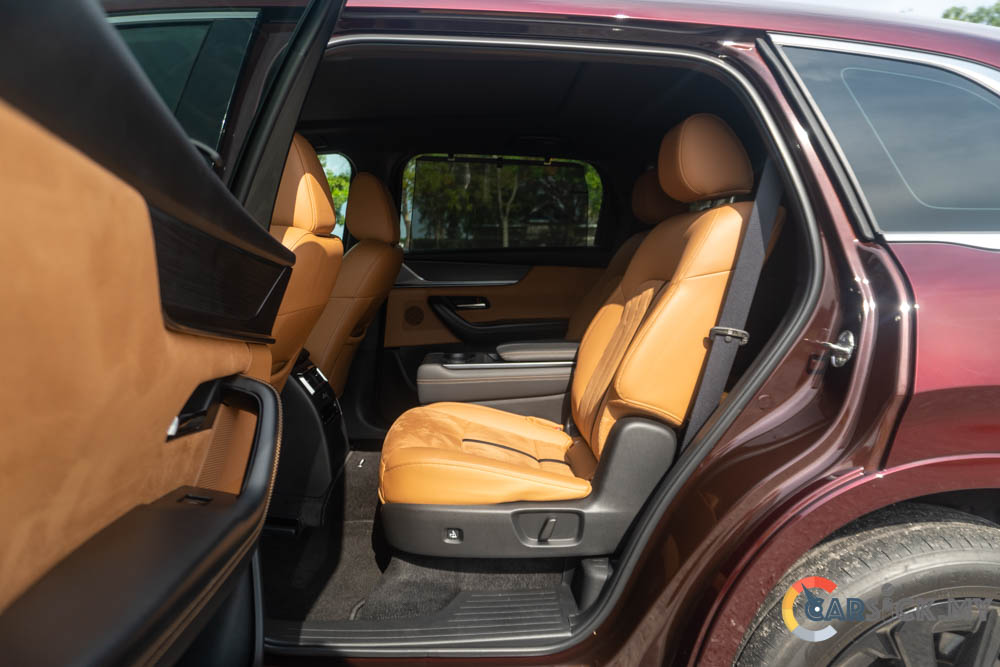
Here’s where the CX-80 starts to justify its existence. While the front cabin is familiar, the second row is where the extra length really pays off. You get proper, full-size seats with generous legroom and headroom, allowing passengers to stretch out rather than negotiate for personal space. The seats also sit slightly higher than those in the front, giving rear passengers a better view of the road ahead. That’s great if you enjoy watching the scenery go by, although it might also mean you’ll have fewer excuses to fall asleep before reaching your destination. The CX-80 continues the captain’s-chair layout seen in the CX-8, with two individual seats separated by a large centre armrest. This gives the second row a distinctly executive feel. In other words, if you’re the sort of person who spends more time being driven than driving, this is the row you’ll want to be sitting in. 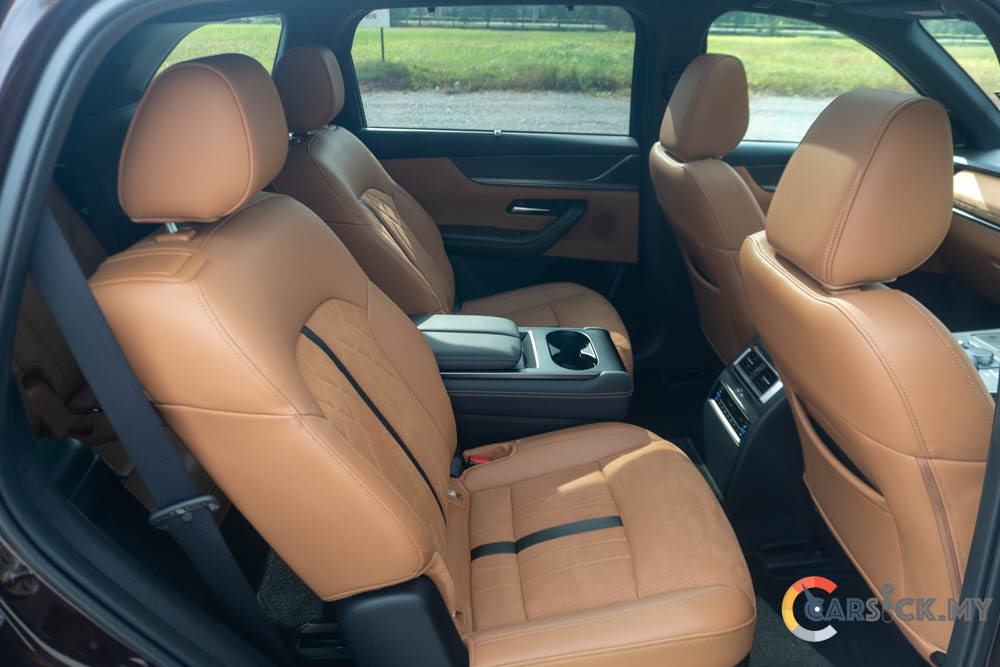
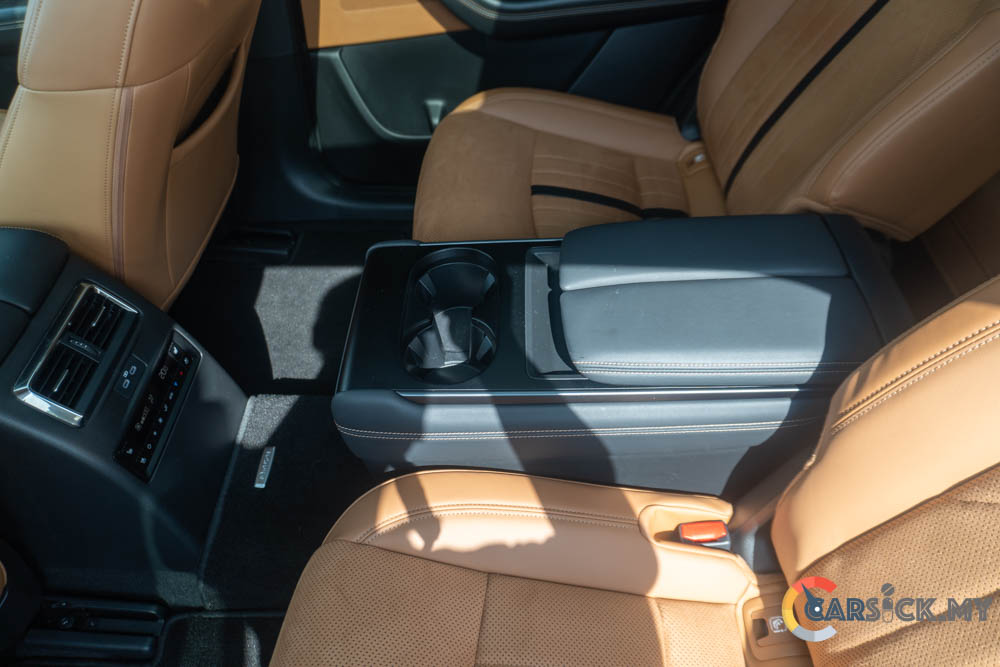
Mazda has also equipped the second-row seats with heating and ventilation, while rear passengers get their own climate controls and USB-C charging ports. It’s a rather comprehensive package, and the combination of individual seats, extra space and premium features makes the CX-80 feel more like a chauffeur-friendly SUV than a conventional family hauler. However, there is one small catch. The air-conditioning vents are positioned in the centre of the vehicle rather than on the roof or B-pillars. As a result, cooling might not be as effective for rear passengers, particularly when the Malaysian sun decides to turn the cabin into a greenhouse. It’s a little disappointing because, otherwise, the second row is easily one of the CX-80’s strongest selling points. 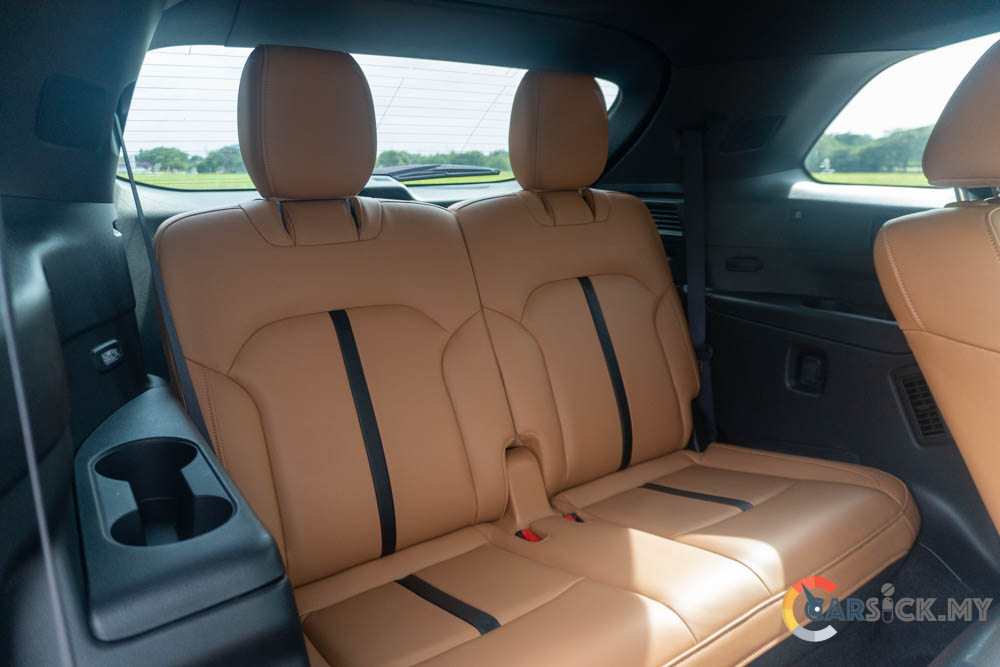
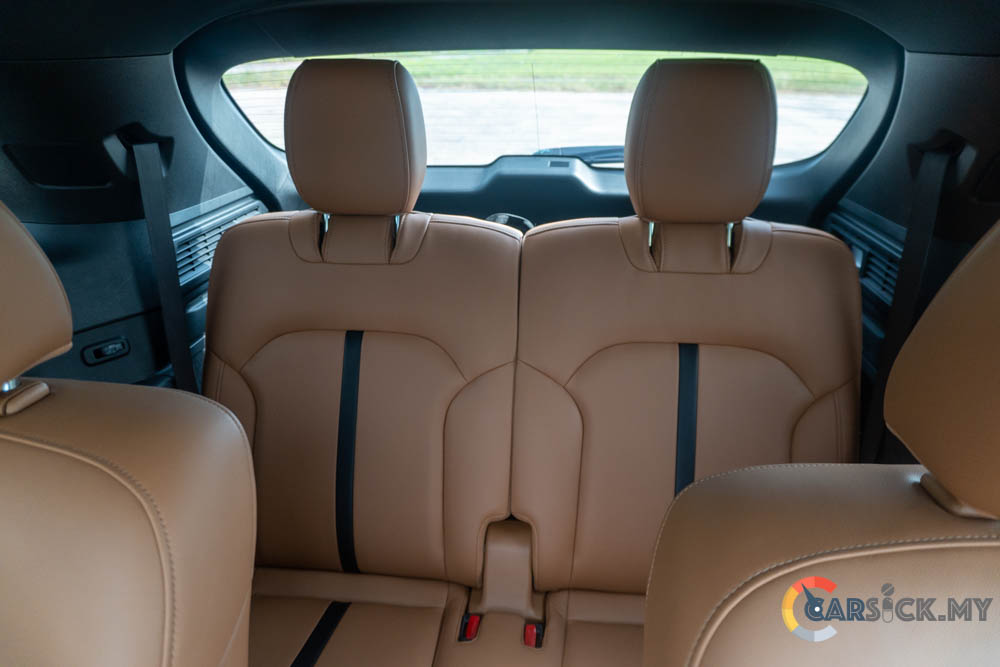
Now, let’s talk about the third row. This is where the CX-80 reminds you that physics is still very much in charge. Getting an additional row of seats into an SUV is one thing. Making those seats comfortable for actual human beings is another. To be fair, the CX-80’s third row is usable. If you need to ferry a few extra passengers over a short distance, it’ll do the job. But if you’re a tall adult expecting to spend several hours back there, I’d suggest negotiating for a seat in the second row instead. Like many three-row SUVs, the CX-80 places third-row passengers in a rather crouched position, with their knees sitting higher than ideal. It’s not exactly the sort of posture that encourages you to settle in and enjoy a cross-country road trip. After a while, you might find yourself wondering whether the journey would be more comfortable on foot.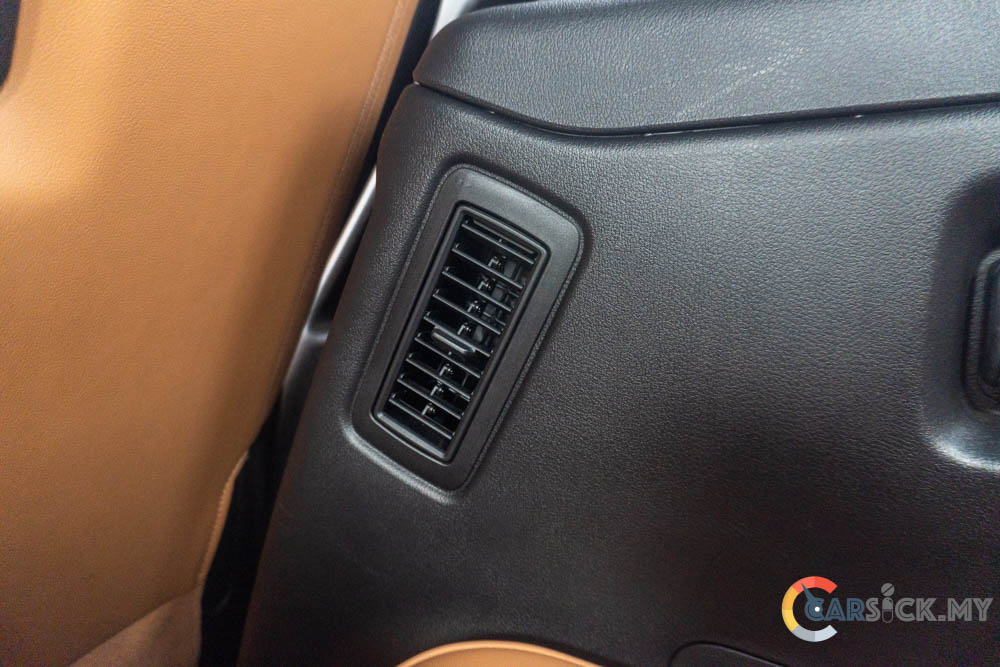
At least Mazda hasn’t completely forgotten about those sitting at the back. The third row gets its own air-conditioning vents and two USB-C charging ports, so passengers can keep cool and charge their devices. However, the vents seem better at cooling their legs than their entire bodies. It’s a curious arrangement, especially when the people sitting back there are already making the biggest compromise in comfort. Ultimately, the third row is best treated as an occasional-use feature. It’s useful to have when you need it, but I wouldn’t make it my preferred place to spend a long journey. 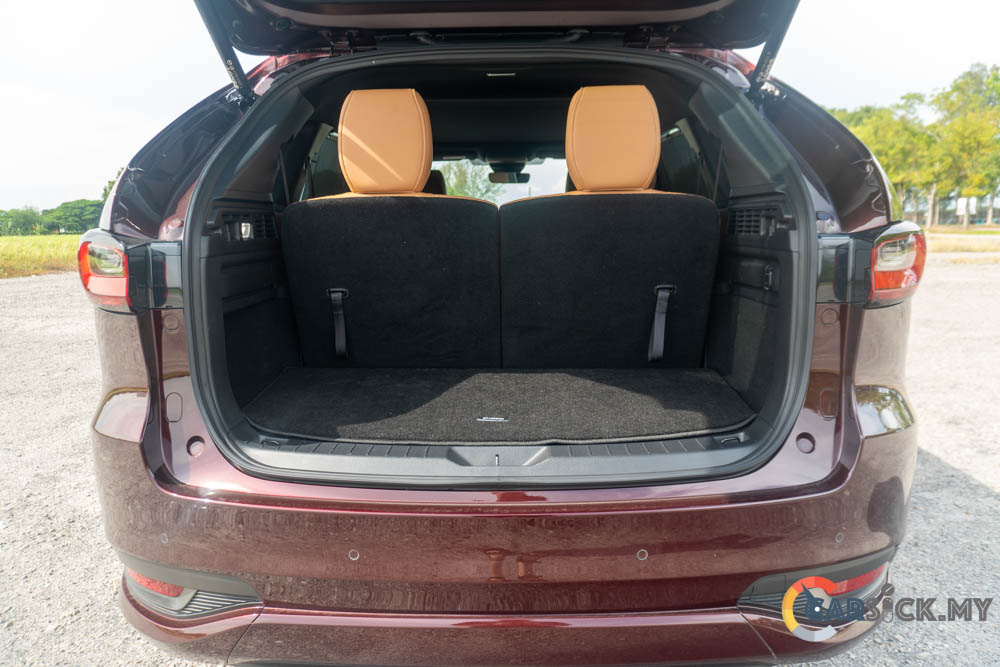
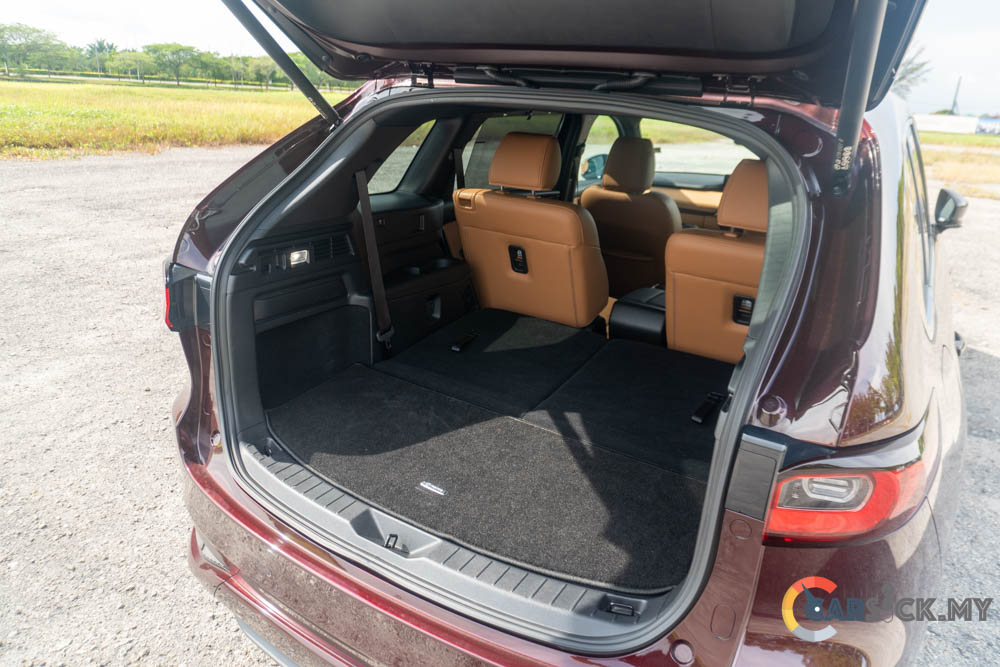
With all three rows in use, the CX-80 offers approximately 258 litres of boot space. That’s not exactly cavernous. You could probably manage a few shopping bags or some overnight luggage, but a family holiday involving seven people and their suitcases might require a little strategic packing. Still, there’s some good news. Compared with the older CX-8, the CX-80 offers an additional 49 litres of luggage capacity with all seats in place. Fold the third row away, and the available space increases to 697 litres. Now we’re talking. That’s a much more useful figure for carrying luggage, groceries or the usual collection of things that somehow accumulate whenever you go on a road trip. The catch, of course, is that folding the third row away means sacrificing those extra seats. And since the CX-80 uses second-row captain’s chairs, you’ll have to decide whether you need to carry more passengers or more luggage. It’s the classic SUV dilemma: everyone wants more space, but nobody wants to be the one left behind.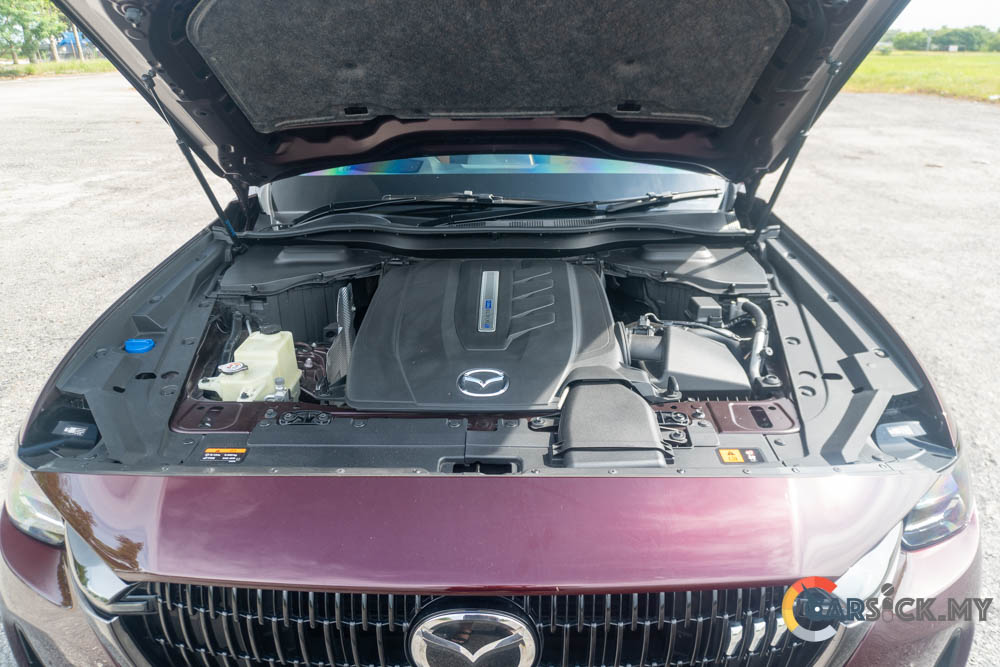
For Malaysia, the CX-80 comes exclusively with a plug-in hybrid powertrain, setting it apart from the conventional naturally aspirated engine offered in the CX-60. Under the bonnet sits a 2.5-litre petrol engine paired with an electric motor. Power is sent to all four wheels through an eight-speed automatic transmission. Combined output stands at 323hp and 500Nm of torque, with a top speed of 195km/h. For a vehicle this size, those are respectable numbers. More importantly, the CX-80 has the sort of powertrain that promises two different personalities: an electric-powered commuter during the week and a powerful long-distance cruiser when the occasion calls for it. But there’s an interesting quirk to the way it drives.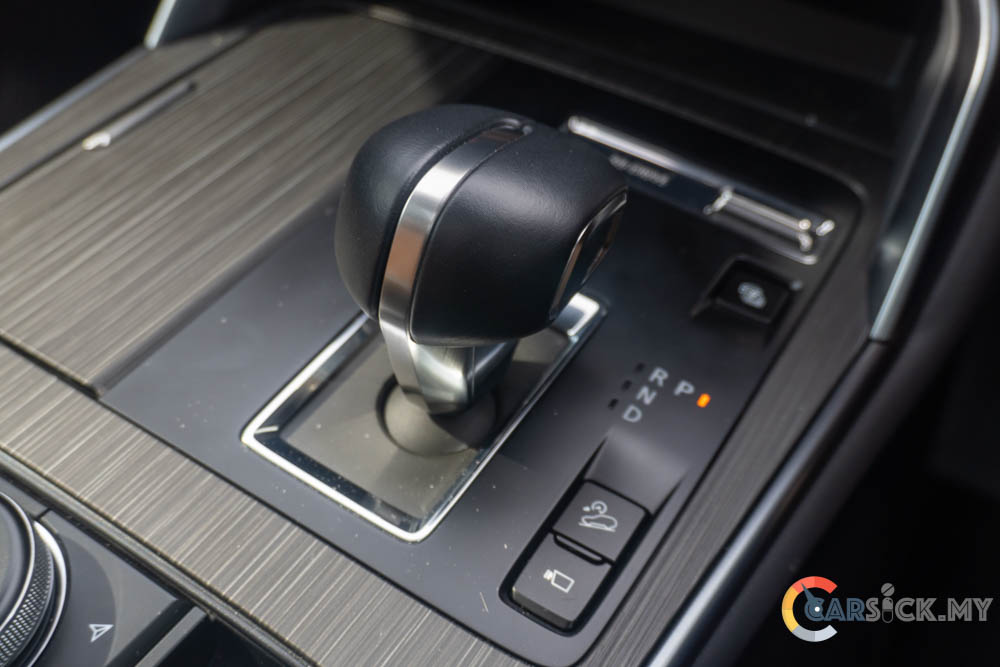
The CX-80 offers four driving modes, each changing how the powertrain behaves. If your priority is electric driving, EV mode is the obvious choice. Normal mode allows the vehicle to manage its power sources more conventionally, while Sport and Off-Road modes keep the engine running and use the electric motor to provide additional assistance. Interestingly, when driving on electric power alone, I could still feel the transmission doing its thing. It gives the CX-80 a slightly unusual sensation compared with some other PHEVs, where electric propulsion feels more disconnected from the conventional gearbox. It’s not necessarily a bad thing, but it does remind you that the CX-80’s electric motor is part of a more conventional mechanical arrangement rather than an entirely separate driving system.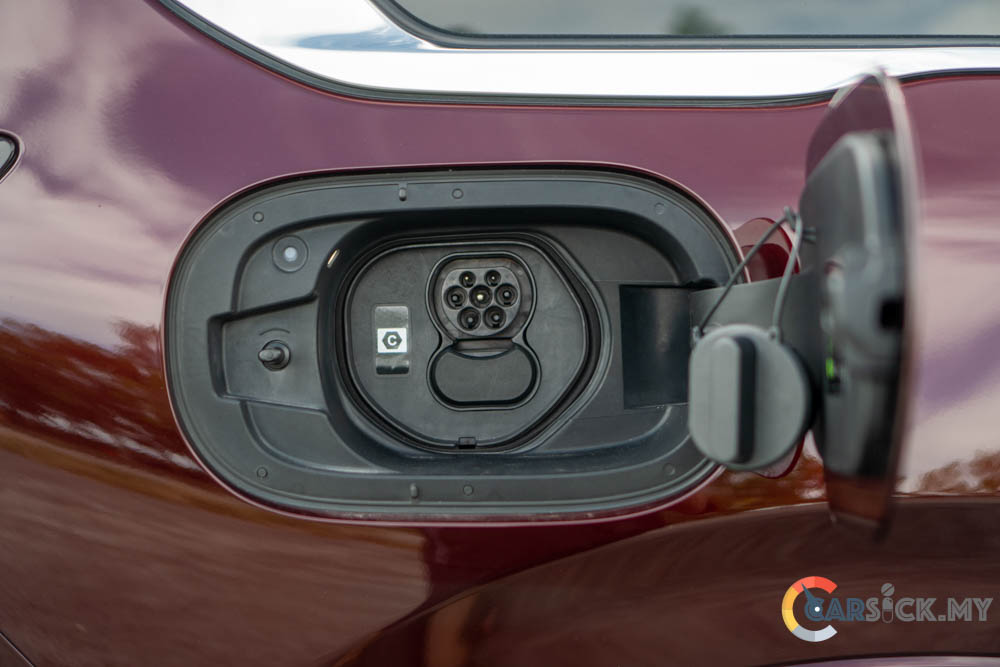
On a full charge, Mazda claims an electric driving range of approximately 50km. It’s not going to win any electric-range competitions, but it should be enough to cover some shorter daily journeys, depending on your driving conditions. You can also travel at relatively high speeds using electric power alone, provided the system’s operating conditions are met. However, ask for more acceleration than the electric motor can provide, and the petrol engine will wake up to lend a hand. If you prefer to keep the engine running, Sport and Off-Road modes are available. Sport mode holds lower gears for longer, allowing the engine to rev higher when you want more performance. Off-Road mode, meanwhile, prioritises traction and maintains all-wheel-drive operation. In other words, the CX-80 can be a quiet electric cruiser when you want to save fuel, but it can also deliver a healthy dose of petrol-powered performance when you need it.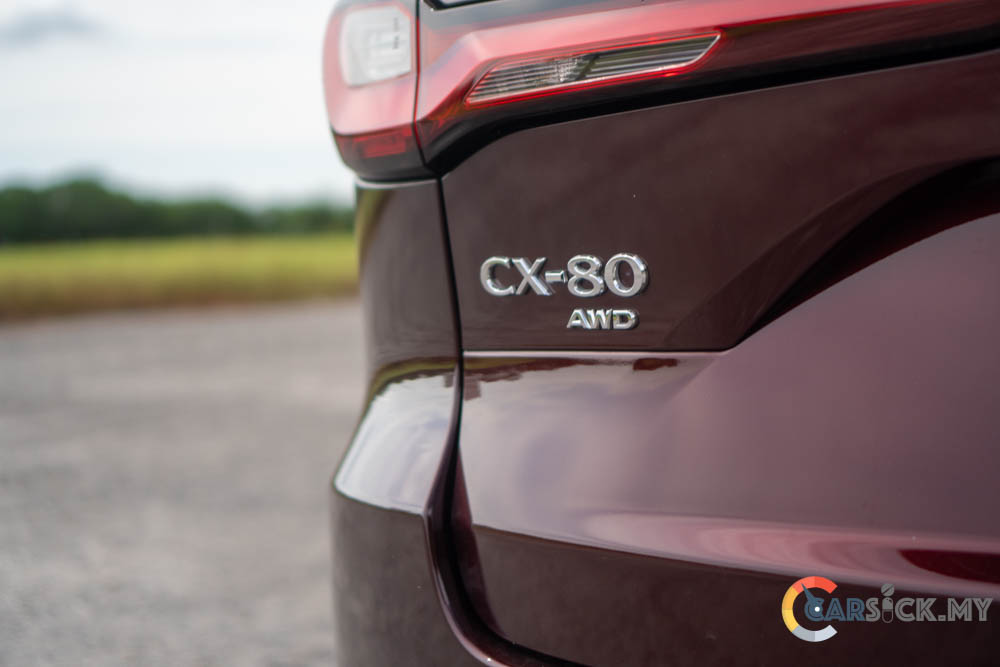
Once the petrol engine is running, the CX-80 really comes alive on the highway. Its in-gear performance is impressive, making overtaking feel remarkably effortless. As long as you’re already moving, a quick press of the accelerator is usually enough to get the SUV moving past slower traffic. There’s no need to plan an overtaking manoeuvre three business days in advance. Put your foot down, and the speedometer climbs with surprising enthusiasm. Of course, it’s still a large SUV, so don’t expect it to suddenly behave like a lightweight sports car. But for long-distance cruising, the combination of petrol power and electric assistance works rather well. Fuel consumption was another pleasant surprise.
During my time with the CX-80, I recorded an average of 5.9 litres per 100km. For a large, all-wheel-drive SUV producing 323hp, that’s an impressive figure. However, there’s an important footnote: I charged the vehicle every night. That’s the thing about owning a PHEV. If you have somewhere convenient to charge it, you can make good use of its electric capabilities and reduce how often the petrol engine needs to run. If you never plug it in, you’re effectively carrying around a battery that isn’t being used to its full potential. So yes, the fuel consumption is impressive. Just remember that the charging cable is part of the ownership experience, not an optional accessory gathering dust in the boot.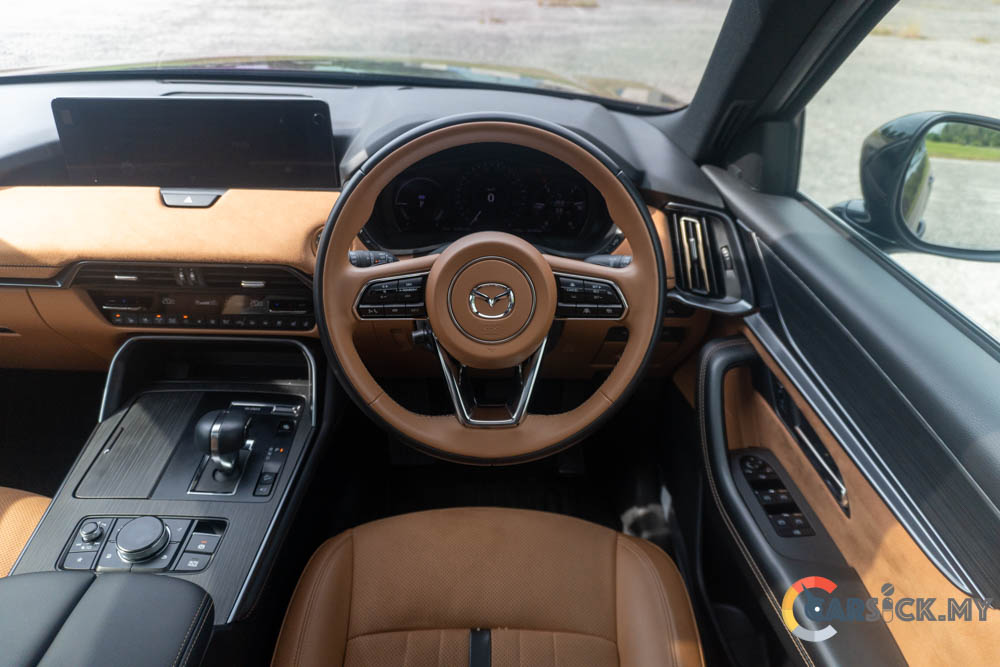
Unfortunately, the CX-80 isn’t quite as convincing when the road gets rough. On the highway, it feels planted and stable, giving you the confidence to cruise at higher speeds. But once you encounter uneven surfaces or painted road markings, the suspension starts sending more jolts into the cabin than I’d like. At times, it feels as though the suspension is working overtime to keep the vehicle’s substantial weight under control. The rear end is particularly noticeable. Go over a speed hump, and the suspension seems to settle back down rather quickly, almost as if the rear axle is carrying a particularly heavy backpack. Take a speed hump a little too quickly, and the resulting movement can be rather jarring. It’s not the sort of ride you’d expect from an SUV that wants to be taken seriously as a premium family and executive vehicle. To be fair, the CX-80 still feels reassuringly stable on the highway. But on imperfect roads, I found myself wishing Mazda had given it a little more compliance and composure. After all, when you’re spending nearly RM300,000 on an SUV, you want it to absorb the road’s imperfections rather than remind you of every single one.
Mazda has built its reputation on making cars that are enjoyable to drive, and the CX-80 retains some of that character. The steering is nicely weighted, and there’s still a reasonable connection between the driver and the front wheels. You don’t feel completely disconnected from what’s happening beneath you, which is something I appreciate. However, the CX-80’s weight is impossible to ignore. When you turn into a corner, the added mass and inertia make the front end feel a little lazy to respond. Rather than immediately following your steering input, the SUV needs a moment to settle and find its footing. You’ll want to slow down before entering a corner, allowing the front tyres to find enough grip before asking the vehicle to change direction. Once you adjust your expectations, the CX-80 is perfectly manageable. But if you’re expecting the agility of a Mazda3 or even the smaller CX-60, you’ll need to recalibrate your expectations. This is a big SUV, and it behaves like one. Thankfully, the steering remains a highlight. Mazda has done a good job of tuning its weight, giving you enough feedback to understand what the front wheels are doing. It might not be the sort of SUV that encourages you to attack every corner, but at least it doesn’t leave you feeling completely disconnected from the road. 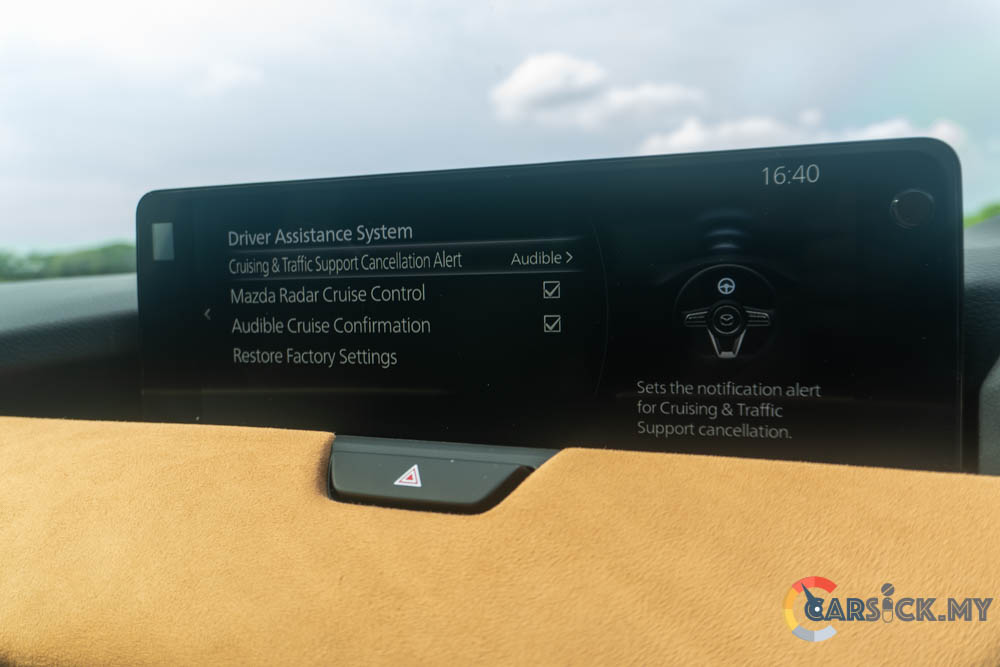
With a vehicle this large and heavy, having good brakes is just as important as having a powerful engine. Thankfully, I found the CX-80’s braking system better calibrated than the one in the CX-60. The regenerative braking seems to engage more naturally when you press the pedal, allowing the vehicle to slow down without requiring you to push the pedal excessively far before feeling the effect. It’s a small detail, but it makes a difference to the overall driving experience. After all, a heavy SUV that accelerates effortlessly should also inspire confidence when it’s time to slow down. Braking performance feels reassuring, and the system seems well equipped to deal with the vehicle’s weight. Safety equipment is comprehensive, too. The CX-80 gets a suite of advanced driver assistance systems similar to those offered in the CX-60, and I found them relatively unobtrusive during my time behind the wheel.
Standard features include:
- Adaptive LED Headlamps (ALH)
- Blind Spot Monitoring (BSM)
- Rear Cross Traffic Alert (RCTA)
- Front Cross Traffic Alert (FCTA)
- Lane Departure Warning System (LDWS)
- Lane-Keep Assist System (LAS)
- Driver Attention Alert (DAA)
- Smart Brake Support (SBS)
- Mazda Radar Cruise Control (MRCC)
- Cruising & Traffic Support (CTS)
It’s a comprehensive list, giving the CX-80 the technology you’d expect from a modern premium SUV without making the driver feel as though the car is constantly trying to take over. 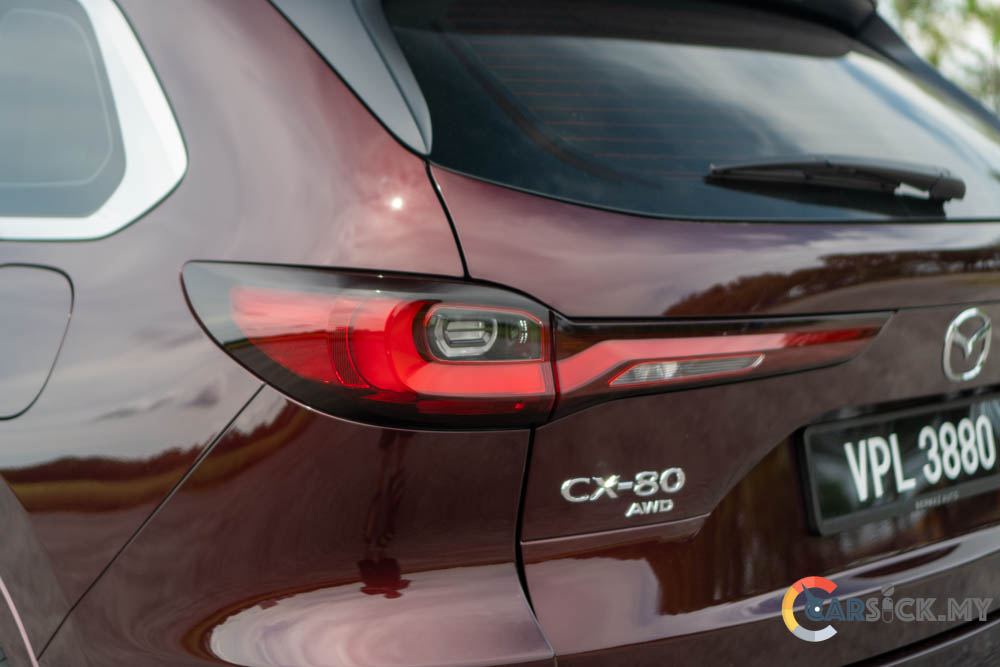
At RM295,000, the Mazda CX-80 is certainly not an impulse purchase. That’s a lot of money to spend on an SUV, even one with a plug-in hybrid powertrain and enough room for seven people. But then again, the old CX-9 was positioned around a similar price point, so the CX-80 isn’t entering entirely unfamiliar territory. Compared with its predecessor, the CX-80 feels like a more sophisticated proposition. The interior is more luxurious, the powertrain is more advanced, and the second row offers the sort of comfort that makes you wonder whether you should be sitting behind the steering wheel at all. In fact, I think the CX-80’s biggest strength is that it feels less like a conventional family SUV and more like an executive vehicle.
The second-row captain’s chairs, premium upholstery and additional comfort features make it particularly appealing for business owners who want something a little more distinctive for transporting clients or VIPs. Of course, it isn’t perfect. The third row is best reserved for shorter journeys, boot space becomes limited when all seven seats are occupied, and the ride could be more composed over rough roads. Its weight also means that, despite Mazda’s reputation for building engaging cars, the CX-80 isn’t exactly eager to attack corners. But no vehicle gets everything right, and the CX-80 does have a clear identity. It offers strong highway performance, respectable fuel consumption when charged regularly, a luxurious cabin and the flexibility of three rows of seats. More importantly, it feels like a genuine step towards a more premium direction for Mazda. 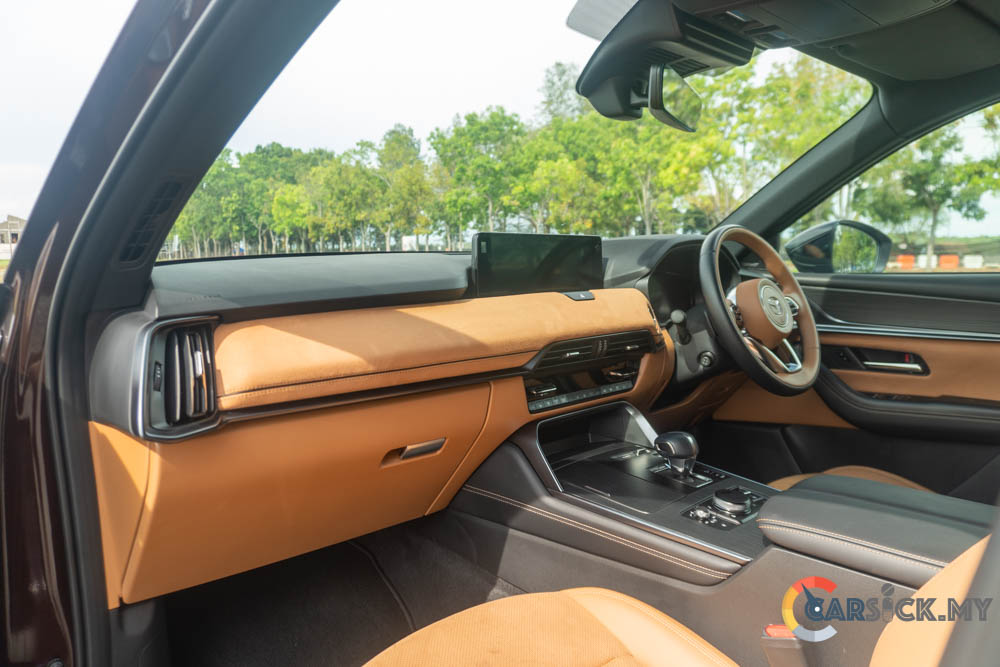
So, is it simply a stretched CX-60? In some ways, yes. The shared design and interior make that obvious. But spend some time in the second row, experience the PHEV powertrain and look at the overall package, and you’ll realise that the CX-80 is trying to do something slightly different. It’s not necessarily the SUV I’d recommend to someone who wants the most engaging driving experience or the most comfortable third row. But if you’re after a premium SUV that can double as a family vehicle and an executive shuttle, it makes a fairly compelling case for itself. And if you’re a boss who’s tired of arriving at meetings in the usual suspects, perhaps it’s time to give the CX-80 a chance. After all, not every executive SUV needs to wear a German badge to make an impression.
Check out the full photo album here.