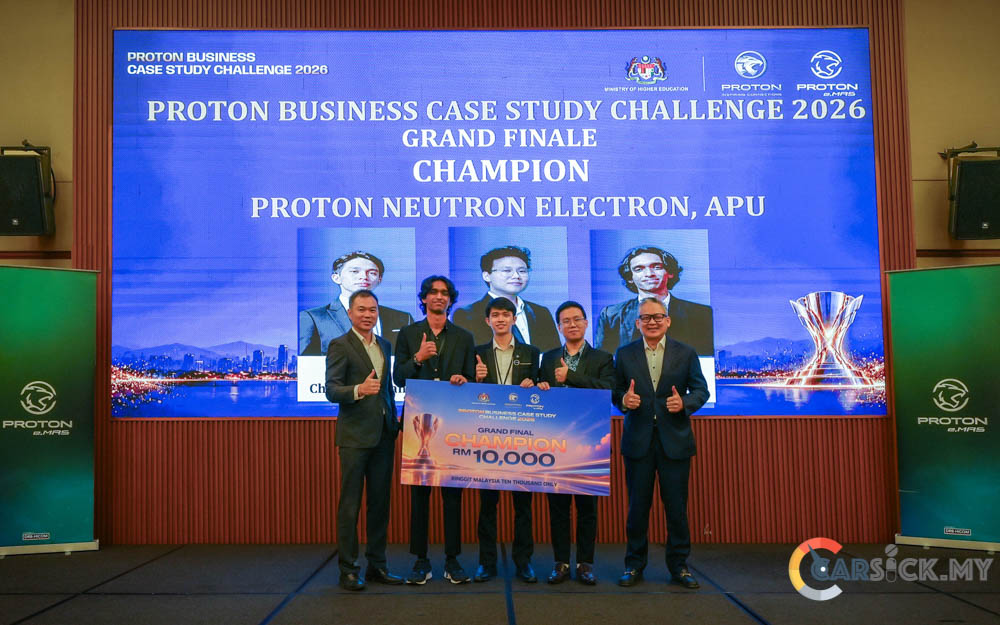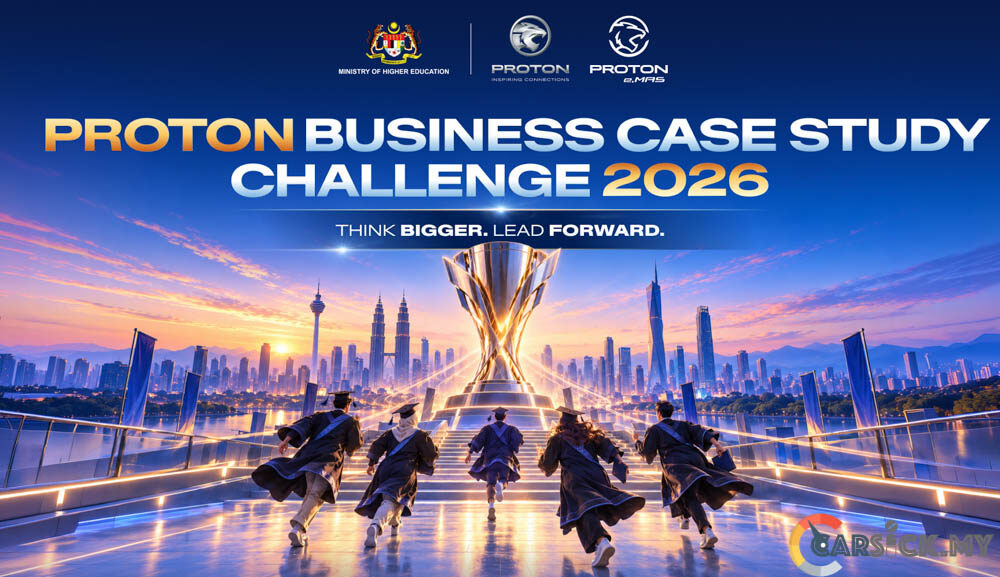

Team Proton Neutron Electron from Asia Pacific University of Technology & Innovation (APU) has emerged victorious in the Proton Business Case Study Challenge (PBCSC) 2026, beating a record number of university teams in a competition focused on making electric vehicles (EVs) more appealing to Gen Z buyers. Organised by Proton in partnership with the Ministry of Higher Education (MOHE), the fourth edition of the competition attracted 56 teams from public and private universities, marking a 33% increase in participation compared with 2025.
 This year, participants were tasked with addressing a key question for the automotive industry: how can EVs become the first-car choice for Gen Z consumers? The challenge encouraged students to develop practical business strategies that could help accelerate EV adoption among younger Malaysians.Following the preliminary rounds, 18 teams progressed to the grand final, where they presented their proposals to a judging panel comprising representatives from Proton’s Research and Development (R&D), PRO-NET, Human Capital & Administration, MOHE and the Malaysia Automotive, Robotics and IoT Institute (MARii).
Team Proton Neutron Electron claimed the top prize of RM10,000, while Team Malaya Tigerz from Universiti Malaya (UM) secured second place and RM8,000. Team Emas 3 from Monash University Malaysia finished third, taking home RM5,000. The competition also recognised individual talent, with Topaz Lim Jing Tai from APU receiving the PBCSC Best Individual Presenter Award and RM1,000 for outstanding presentation skills. Meanwhile, a new PBCSC Influencer Award was introduced this year to recognise individuals who demonstrated creativity, digital engagement and an ability to promote the competition to a wider audience. Three winners received prizes under the new category.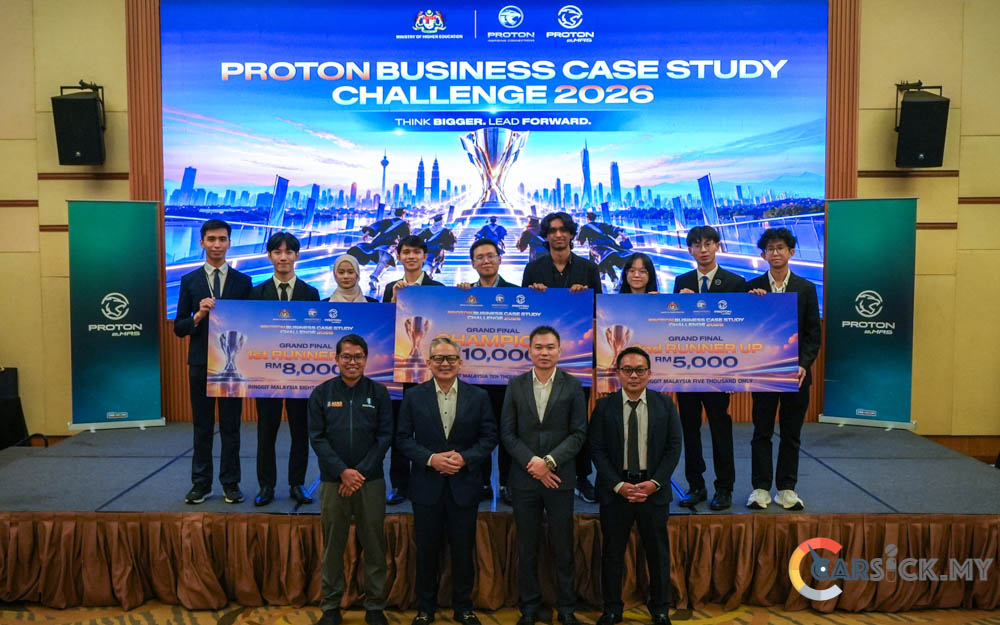
PBCSC is designed to bridge the gap between academic learning and the demands of the business world. Each participating team consists of three final-year students, including a team leader, with each university permitted to nominate up to two teams. The initiative began in 2023 through a collaboration with the Association of Malaysian Students Studying in Beijing (AMSIB) before expanding into a nationwide university competition in 2024. In 2025, the challenge introduced case studies covering both EVs and internal combustion engine (ICE) vehicles.
For its 2026 edition, PRO-NET, Proton’s new energy vehicle subsidiary, continued its involvement for a second consecutive year, supporting the focus on EV adoption. The strategic partnership with MOHE also marked a significant development, strengthening engagement between the automotive industry and universities while helping Proton identify promising young talent. MOHE welcomed the initiative, highlighting the value of exposing final-year students to real business challenges before they enter the workforce. Such experiences allow students to develop practical skills, build confidence and better prepare themselves to contribute effectively at the beginning of their careers.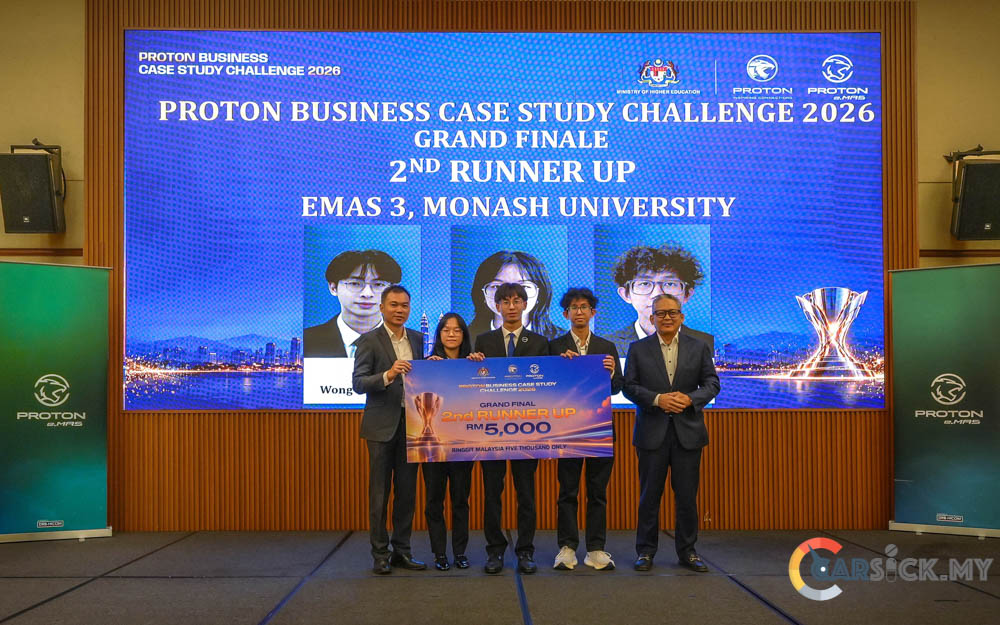
Beyond the competition, PBCSC forms part of Proton’s broader efforts to build a skilled workforce capable of supporting Malaysia’s evolving automotive industry. The company’s talent development initiatives cover several stages of education and career preparation, including the donation of engines to educational institutions and skills training centres for practical learning.
Proton also works with Proton Institute, formerly known as ADTEC Melaka, under the Department of Manpower (JTM), on job placement initiatives that support Technical and Vocational Education and Training (TVET) and contribute towards the National TVET 2030 Policy. At the graduate level, the Proton Young Talent (PYT) programme has groomed approximately 350 graduates to date, preparing them for future roles as automotive professionals and industry leaders.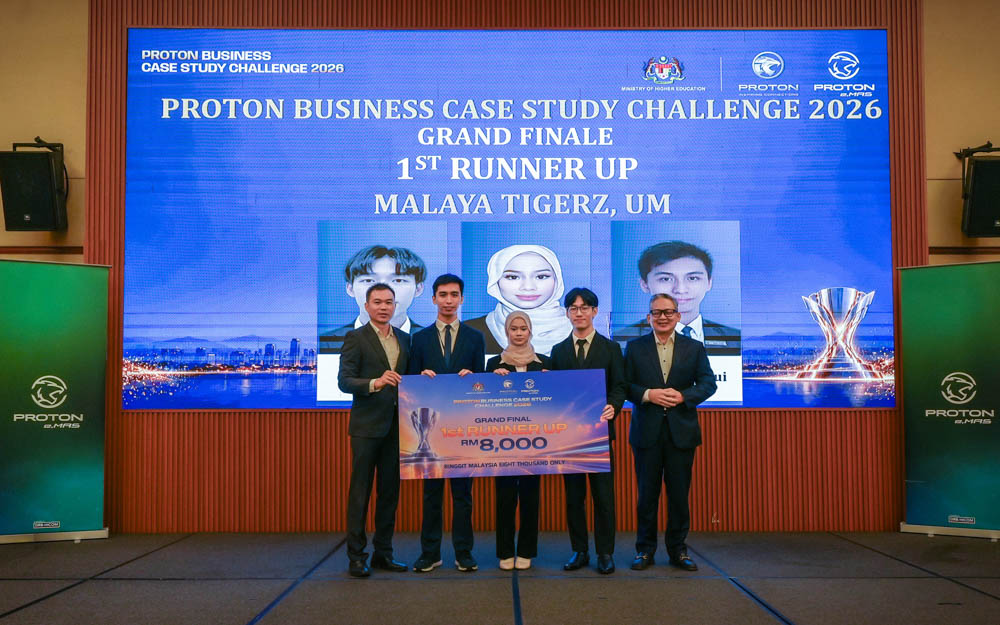
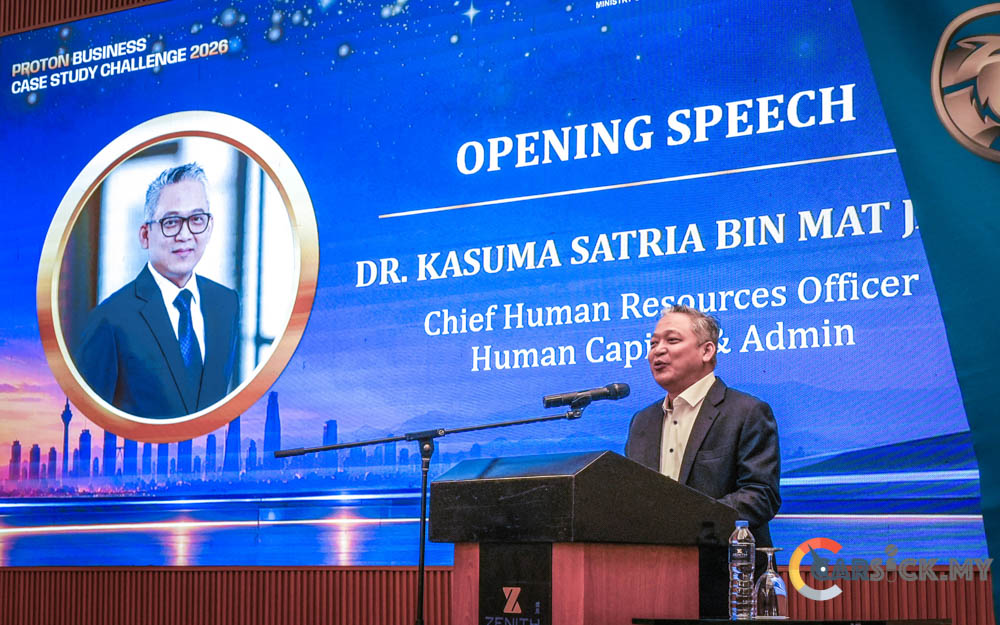
Dr Kasuma Satria, Chief Human Resources Officer of Proton, said developing young Malaysians was essential to the long-term success of the country’s automotive sector. “The future of Malaysia’s automotive industry will be shaped by the people we develop today. Through PBCSC, we want young Malaysians to ask bold questions, bring fresh ideas and discover what they can contribute,” he said.
He added that the competition gives students an opportunity to tackle genuine business issues and build the confidence to present and defend their ideas, while encouraging them to consider a future in the automotive industry. Dr Kasuma also thanked MOHE for its support as a strategic partner, expressing hope that the collaboration would create further opportunities for young talent and inspire similar initiatives in other sectors.