
Sometimes, you don’t get the car you were expecting. And sometimes, the replacement turns out to be quite an interesting surprise. During one of the recent festive seasons, Mercedes-Benz Malaysia was supposed to loan me a GLA 200. But due to some unforeseen circumstances, the GLA 200 was swapped for an A250 sedan instead. I wasn’t complaining. The A250 sedan isn’t exactly a new model anymore, but this was the updated version that I had yet to spend some proper time with. More importantly, this latest A250 comes with something that the previous version didn’t have: 4MATIC all-wheel drive. So, after spending some time with it, here’s what I think about the updated Mercedes-Benz A250 sedan.
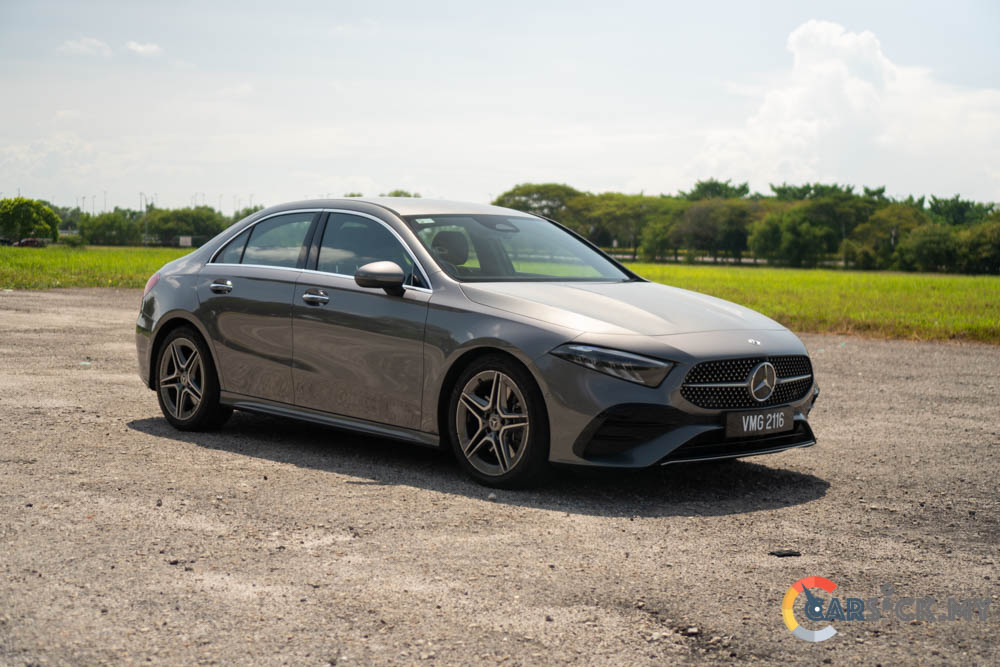
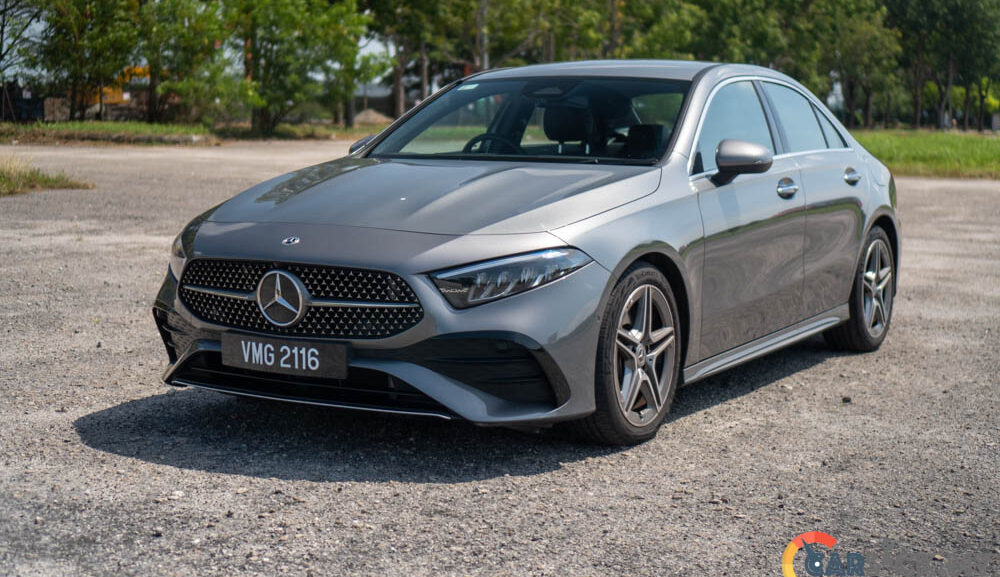
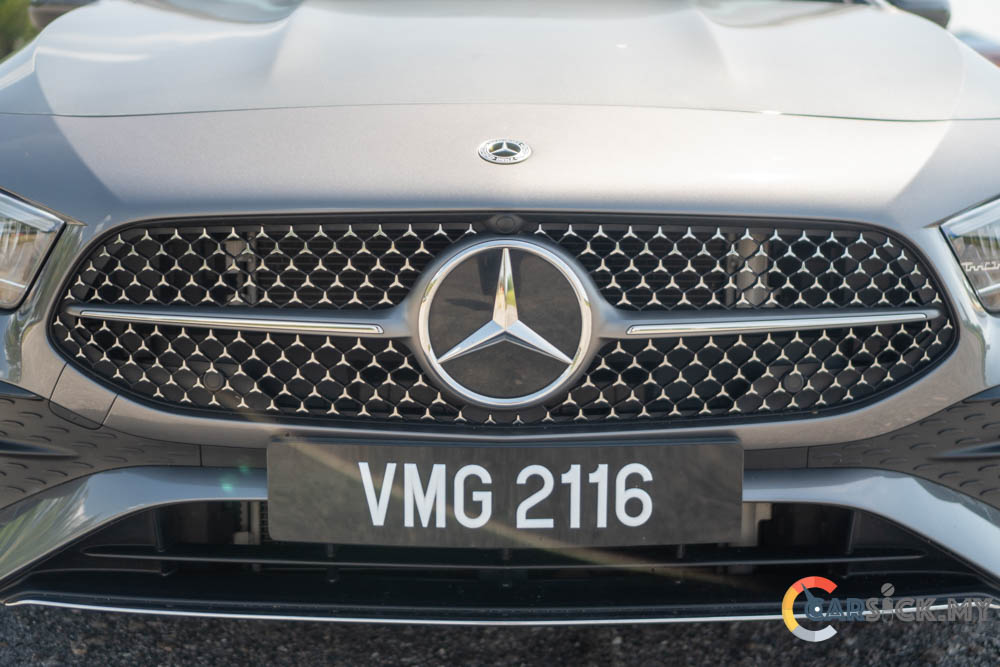
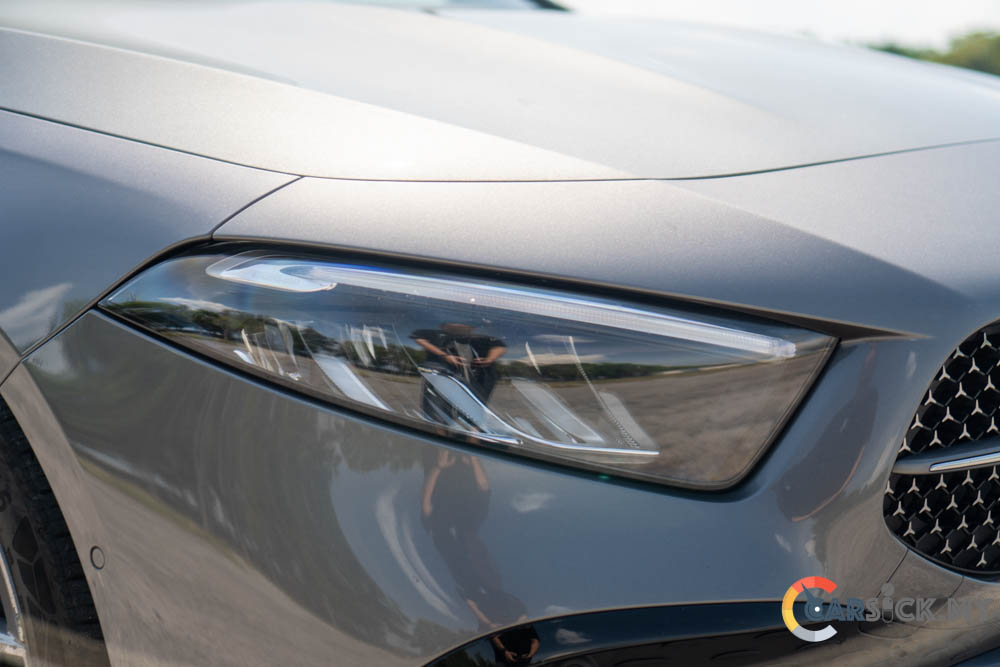
 As mentioned earlier, the A250 isn’t exactly a brand-new car. In fact, it shares many of its updates with the A200 sedan. But that doesn’t mean the A250 is simply an A200 with a bigger engine. Look a little closer and you’ll start to notice the differences. Up front, the A250 gets an AMG-style grille as part of its AMG package. It gives the car a more aggressive appearance compared with the A200, although the overall design remains unmistakably A-Class. The headlights have also been updated to the reflector-style units shared with the A200. And honestly, this is one area where I think the facelift feels like a bit of a downgrade. The pre-facelift A250 came with projector-style headlights, which, in my opinion, looked more sophisticated. The newer reflector-style units don’t quite have the same visual appeal. But hey, there is a silver lining. If you ever need to replace them, they should hopefully be kinder to your wallet.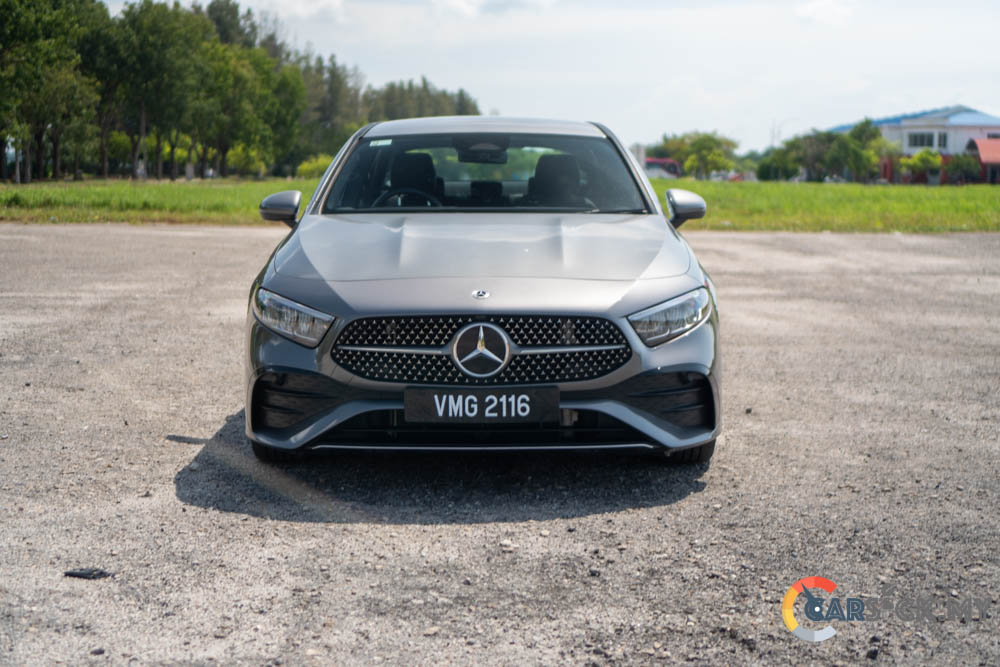
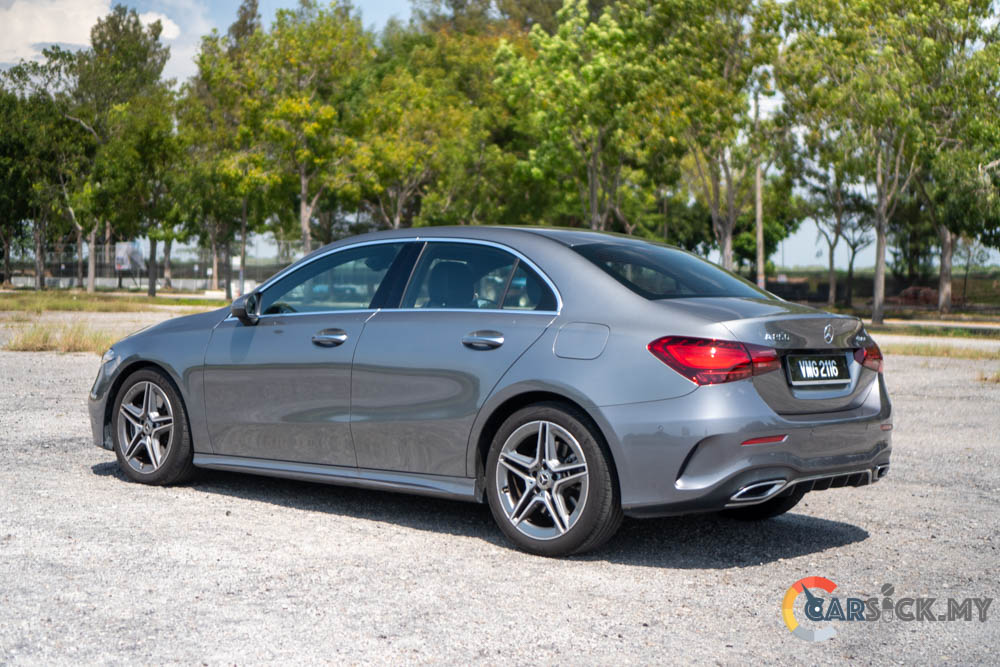
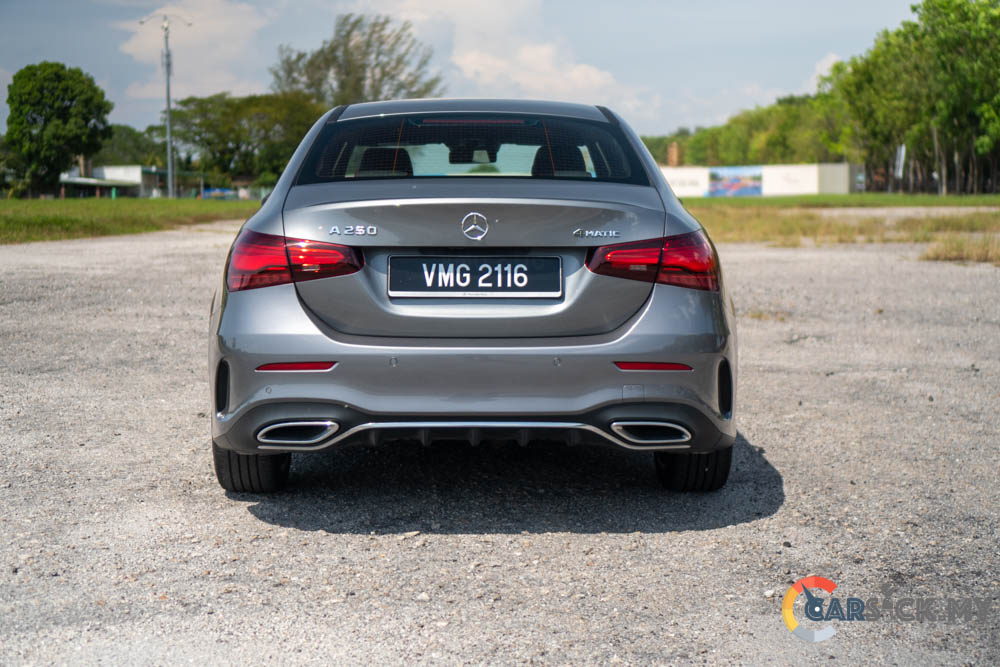
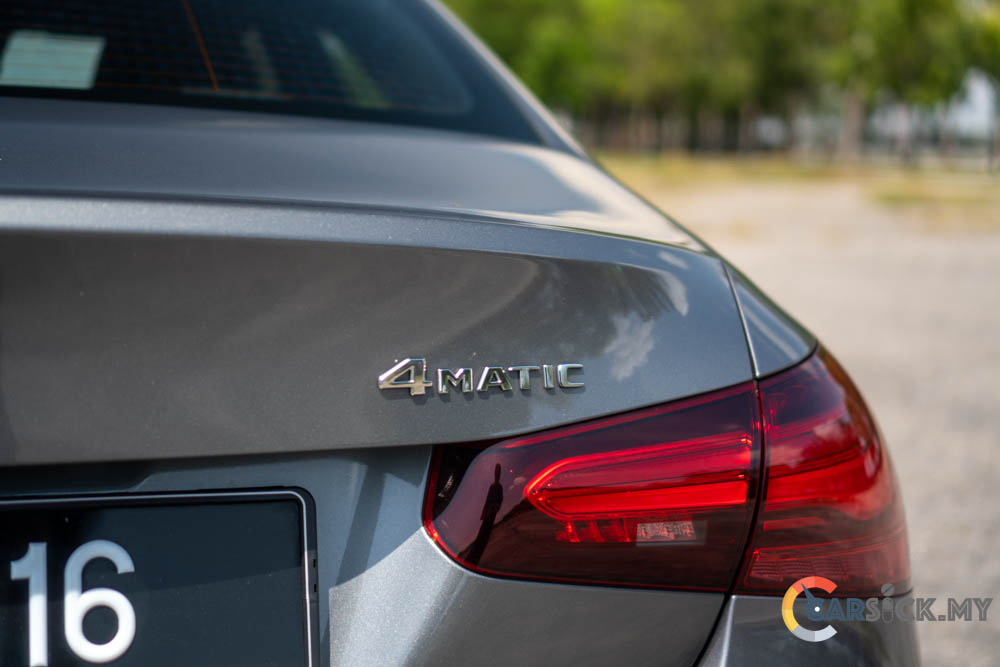
Moving further down the car, one of the more obvious differences is the wheels. The A250 gets AMG-design 18-inch wheels, one size larger than those fitted to the A200. Then there’s the badging. The ‘A250’ badge sits proudly on the boot, while the ‘4MATIC’ badge on the opposite side tells you that this isn’t just another front-wheel-drive A-Class. There are also some subtle changes to the rear bumper. The A250 gets additional vent-like panels on the sides, which don’t necessarily do much in terms of aerodynamics, but they do make the rear end look a little more sporty. And that’s really what the A250 is about. It takes the familiar A-Class design and adds just enough aggression to remind you that this isn’t the entry-level version. 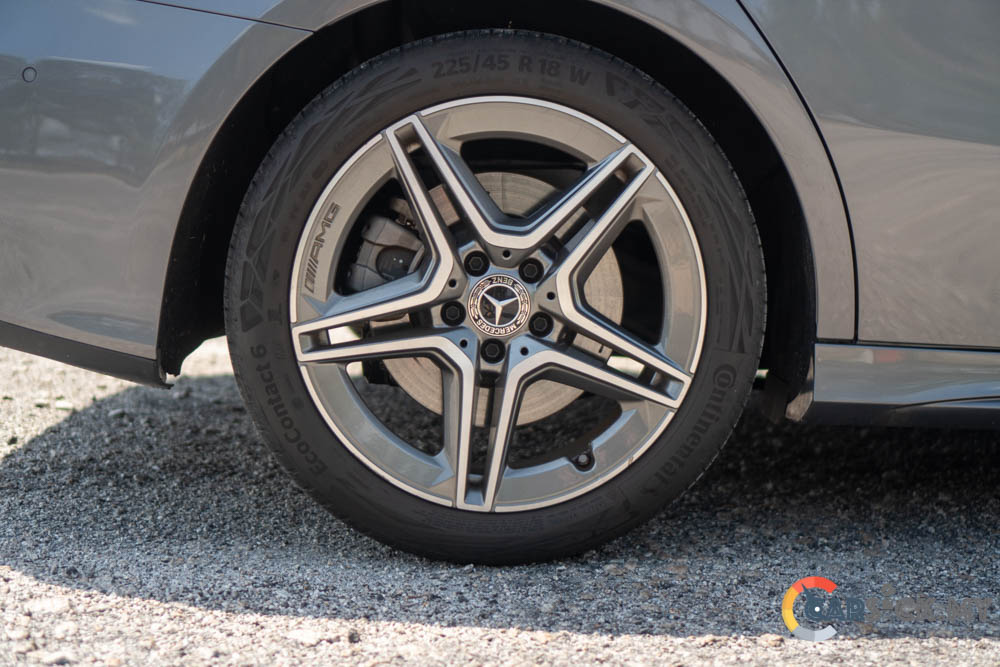
Step inside and the differences become a little more obvious. The biggest one is probably the steering wheel. Thanks to the AMG Sport package, the A250 gets Mercedes-Benz’s sportier ‘dragonfly’ style steering wheel. Between the two steering wheel designs used in the A-Class, I personally prefer this one. It’s thicker, feels more substantial and simply sits better in your hands. Then you notice the seats. The A250 gets suede inserts, and these immediately add a bit more drama to the cabin. Suede has a funny way of making almost anything look sportier, and the A250 is no exception. Mercedes-Benz also uses the same material on the door panels. It feels nice to the touch and gives the cabin a more special feel compared with the A200.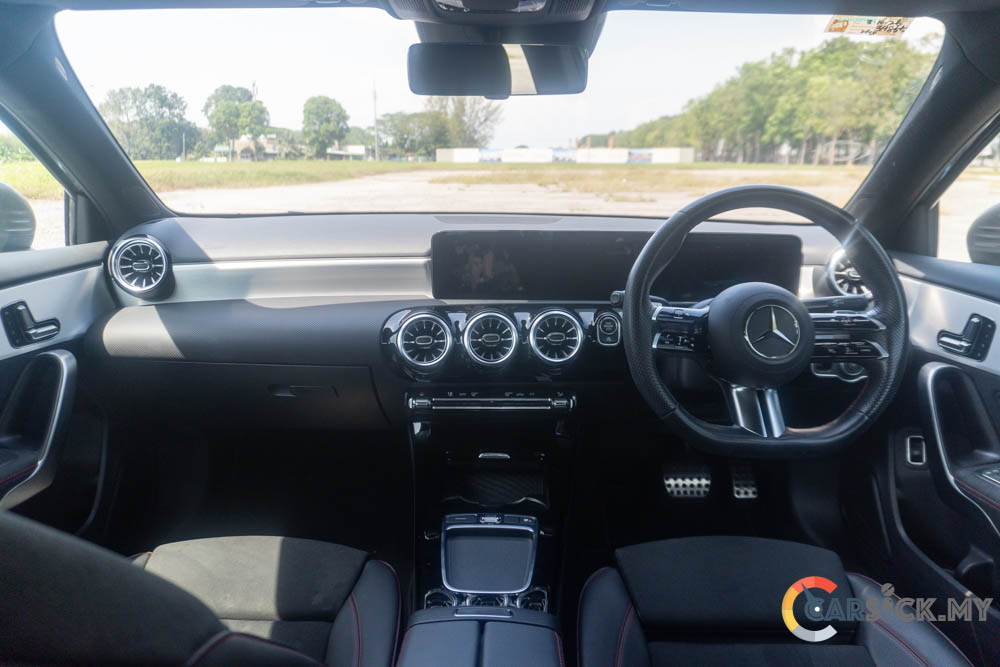
But there are some less obvious differences too. The dashboard layout remains largely the same, but the A250 gets aluminium trim instead of the faux carbon-fibre trim found in the A200. Personally, I think the carbon-fibre look on the A200 looks sportier. But once you actually touch the materials, the aluminium trim feels more premium. The carbon-fibre trim does feel more like plastic, while the aluminium gives you that satisfying cool-to-the-touch sensation. And then there are the aluminium pedals. Do they make the car faster? No. Do they make you feel like you’re driving something sportier? Absolutely. And sometimes, that’s all that matters.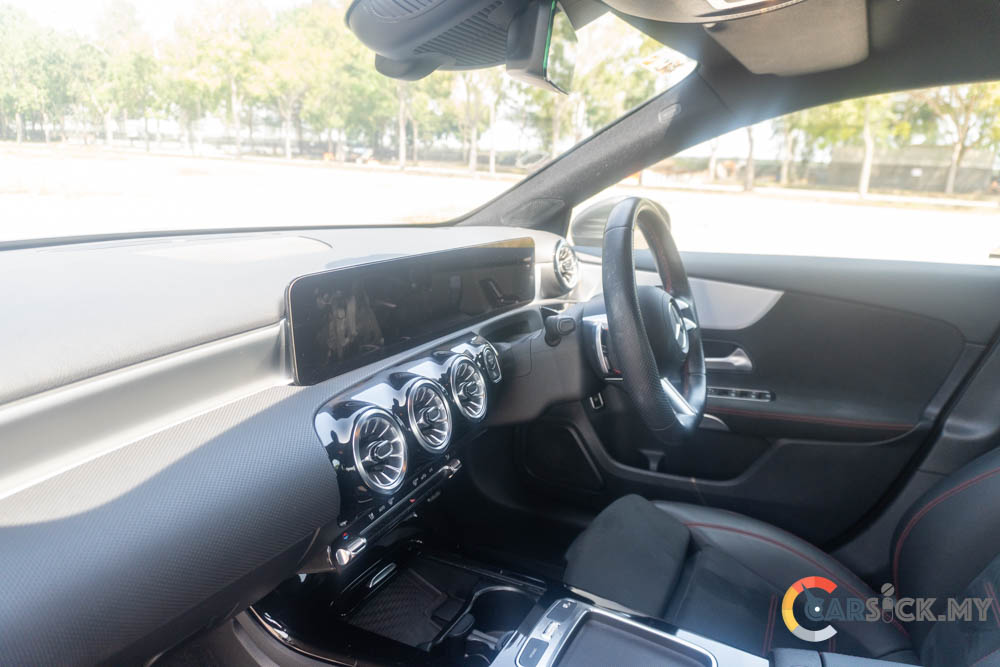
Of course, none of the above really matters if the car isn’t interesting to drive. And this is where the A250 starts to earn its badge. Under the bonnet is a 2.0-litre turbocharged engine producing around 221 hp and 350 Nm of torque. The engine itself is carried over from the pre-facelift model, but the big change is what happens underneath it. Power is sent through an eight-speed DCT to all four wheels via the 4MATIC system. The result is a 0-100 km/h sprint in 6.4 seconds and a claimed top speed of 250 km/h.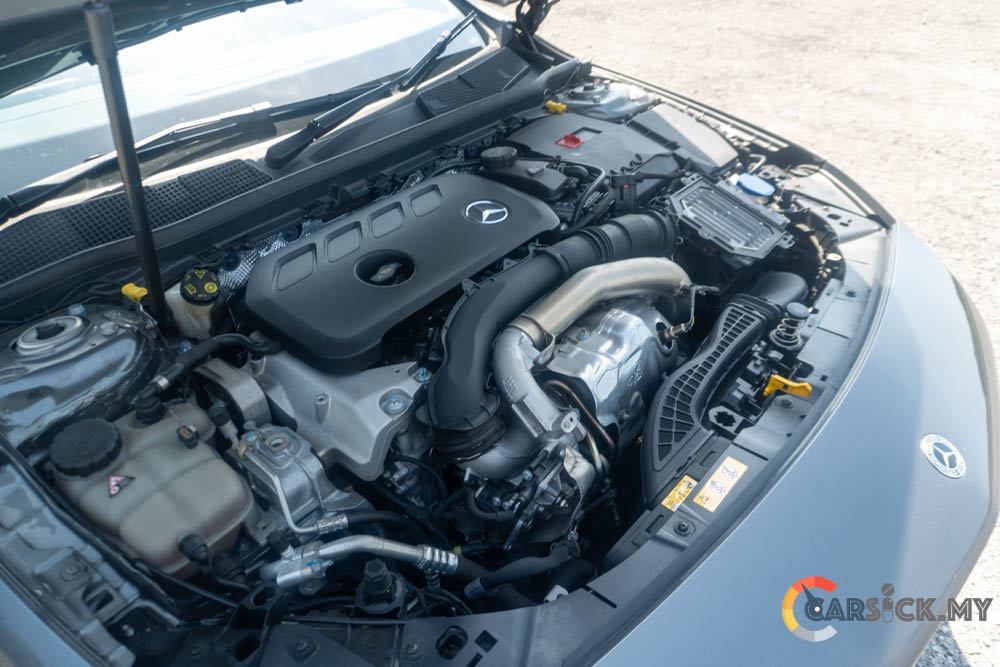
On paper, those numbers are already pretty decent. But behind the wheel, you can immediately feel that this isn’t quite the same A250 as before. From the get-go, there is a sense that the drivetrain has a little more weight to move around. The powertrain takes a moment longer to get going, which isn’t particularly surprising when you’re now asking it to send power to all four wheels. The turbo lag also feels slightly more noticeable compared with the pre-facelift car. But once everything gets moving, things become much more interesting.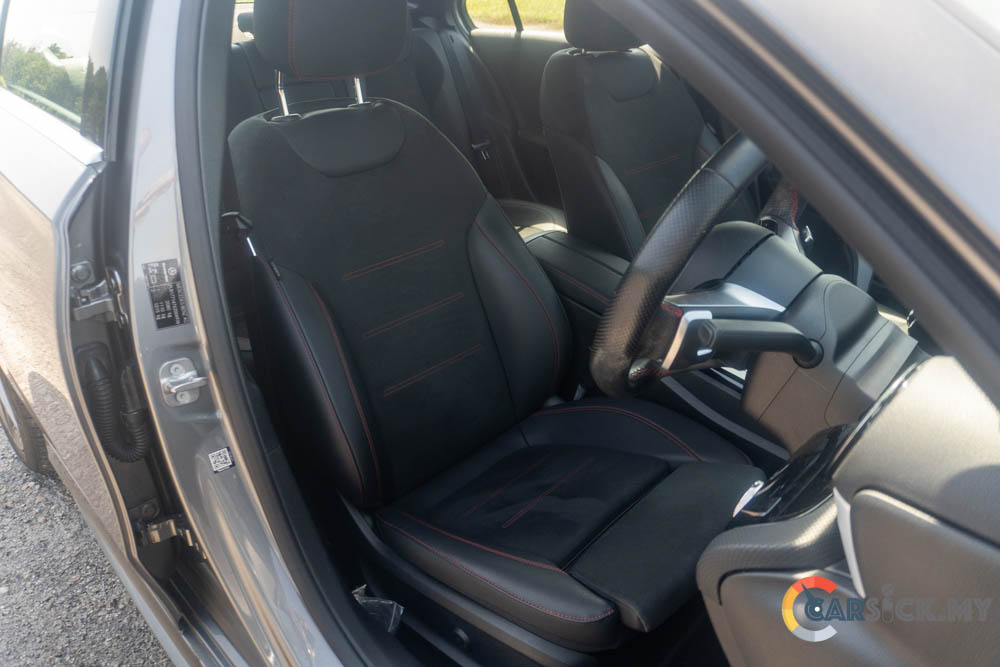
The big advantage of 4MATIC is how effectively it puts the engine’s power onto the road. Instead of simply relying on the front wheels to deal with all 350 Nm of torque, the system gives the A250 a much more planted feeling. Plant your foot and the car just goes. No unnecessary drama. No excessive wheelspin. Just forward momentum. And that’s probably one of the biggest differences you’ll notice compared with the previous A250.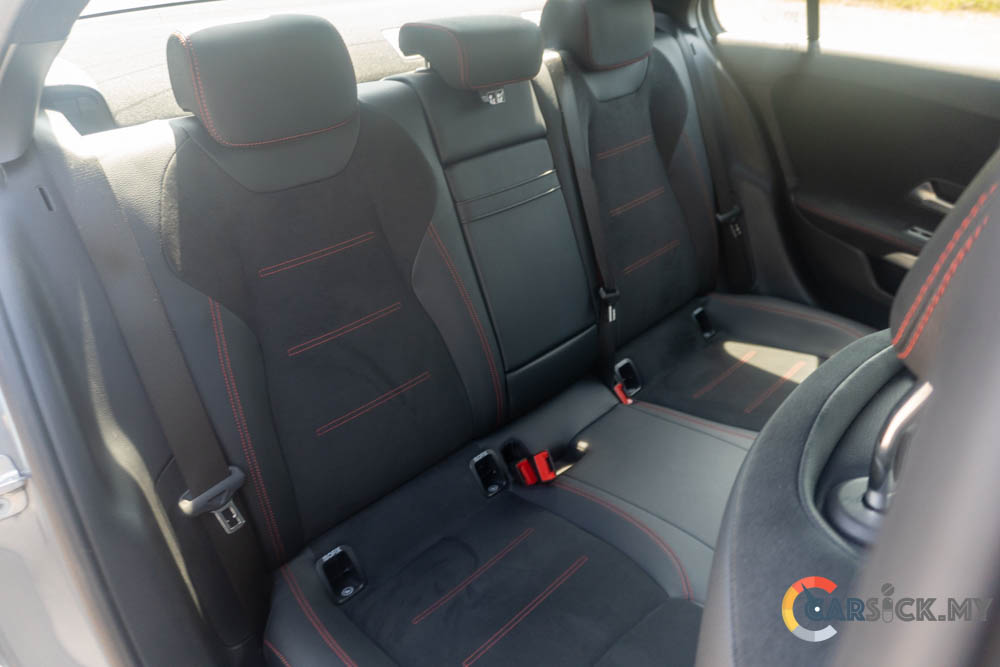
The A-Class has always been a pretty entertaining car when the road starts getting twisty, and the A250 doesn’t lose that character. In fact, with 4MATIC, it feels even more confident. When powering out of a corner, you’ll really have to work hard to break traction. The car feels planted and composed, allowing you to carry quite a bit of confidence through the bends. Of course, don’t mistake that confidence for invincibility. If you become too confident in your own abilities, the car isn’t going to magically save you from a bad decision. Physics still wins. But within its limits, the A250 is a very confidence-inspiring car, even when the road gets wet. Add in the sharp steering and you get something that feels like a baby sports sedan. It’s not a full-blown sports car, of course. But it gives you enough of that experience without asking you to sacrifice the practicality of a Mercedes-Benz A-Class.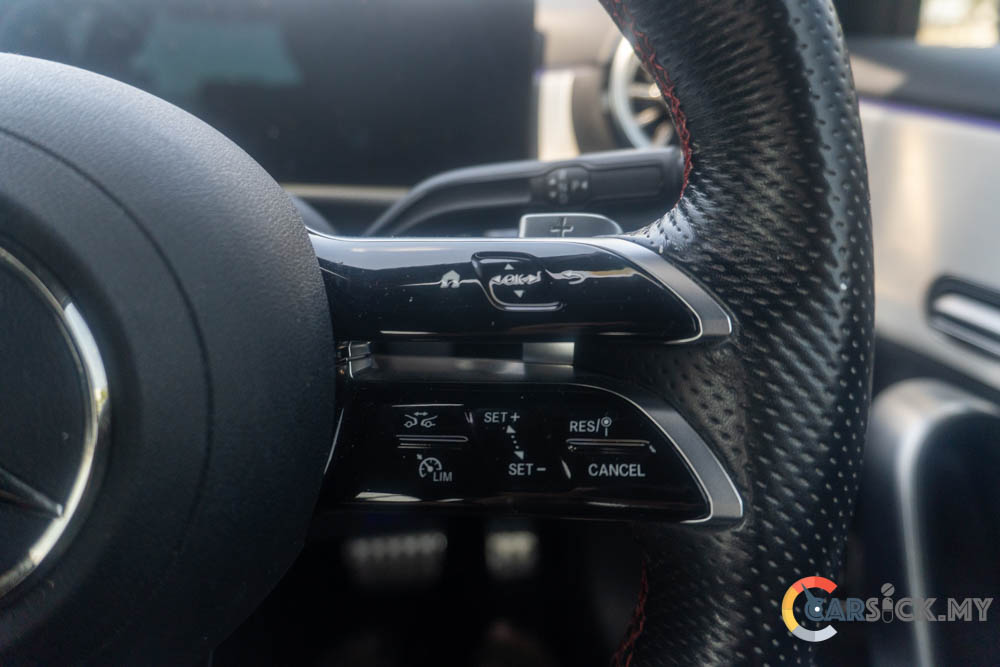
Despite all that sportiness, the A250 isn’t an uncomfortable car. The suspension is definitely on the firmer side, but there’s still a sense of sophistication to the way it deals with road imperfections. You can feel the stiffness underneath you, but it doesn’t feel crude. Instead, the A250 manages to absorb bumps and imperfections without constantly reminding you that you’re driving a sporty version of the A-Class. And that’s something Mercedes-Benz has always been pretty good at. It gives you the sporty bits when you want them, but it doesn’t completely punish you when you’re simply trying to get from point A to point B.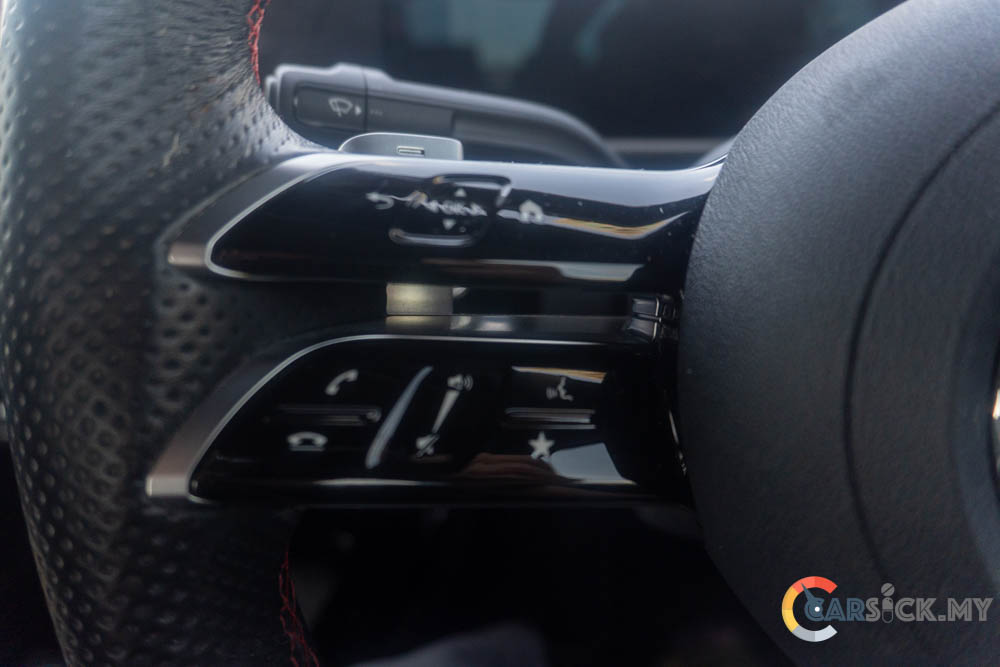
After spending some time with the updated A250, I came away feeling that the car has become a more complete package. The biggest change isn’t something you can see from the outside. It’s the addition of 4MATIC. Yes, the all-wheel-drive system adds some weight, and you can feel that when you first get moving. But once you’re up to speed, the extra traction gives the A250 a much more planted character. And that makes the car easier to drive quickly and, more importantly, gives you more confidence behind the wheel.
At RM263,888, the A250 isn’t exactly an impulse purchase. But if you’re looking for a relatively compact Mercedes-Benz that can offer a little bit of everything, it’s a pretty compelling package. You get the badge, the premium interior, the AMG-inspired styling, decent performance, sharp handling and now, the added security of all-wheel drive. And let’s not forget one other advantage of going for an A-Class. Compared with some of the larger and more complicated Mercedes-Benz models, owning one should be a little easier on the wallet when it comes to maintenance. So, while the A250 sedan may no longer be the newest kid on the block, it certainly hasn’t forgotten how to have fun. And sometimes, that’s exactly what you want from a Mercedes-Benz.
Check out the full photo album here.