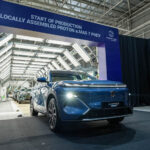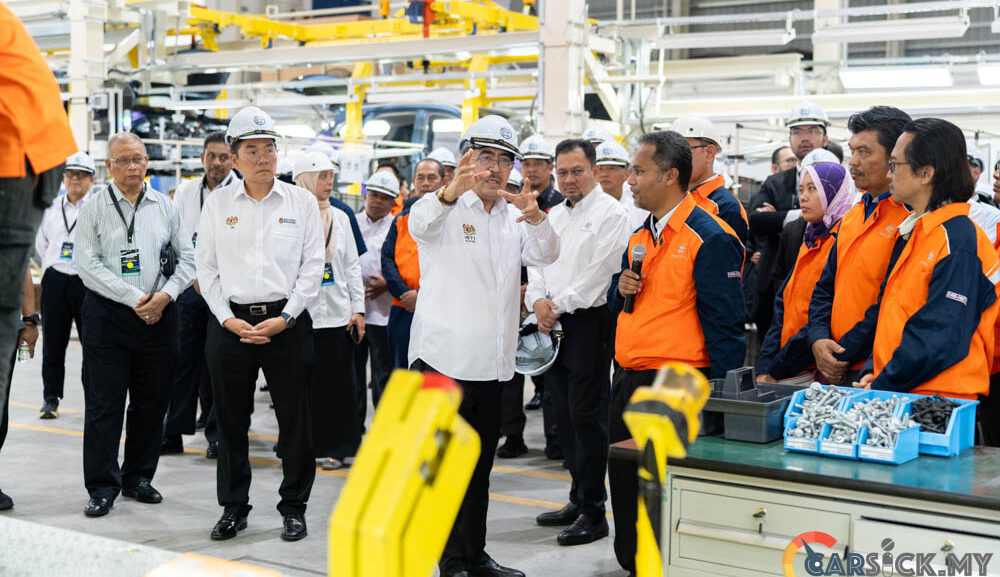

Proton has reaffirmed its role in driving the transformation of Malaysia’s automotive industry following a working visit by the Ministry of Investment, Trade and Industry (MITI) to the company’s manufacturing complex in Tanjung Malim. The visit highlighted the national carmaker’s continued investment in advanced manufacturing, local supplier development and electrified vehicle technologies as Malaysia pushes to establish itself as a regional hub for Next-generation Vehicles (NxGV).
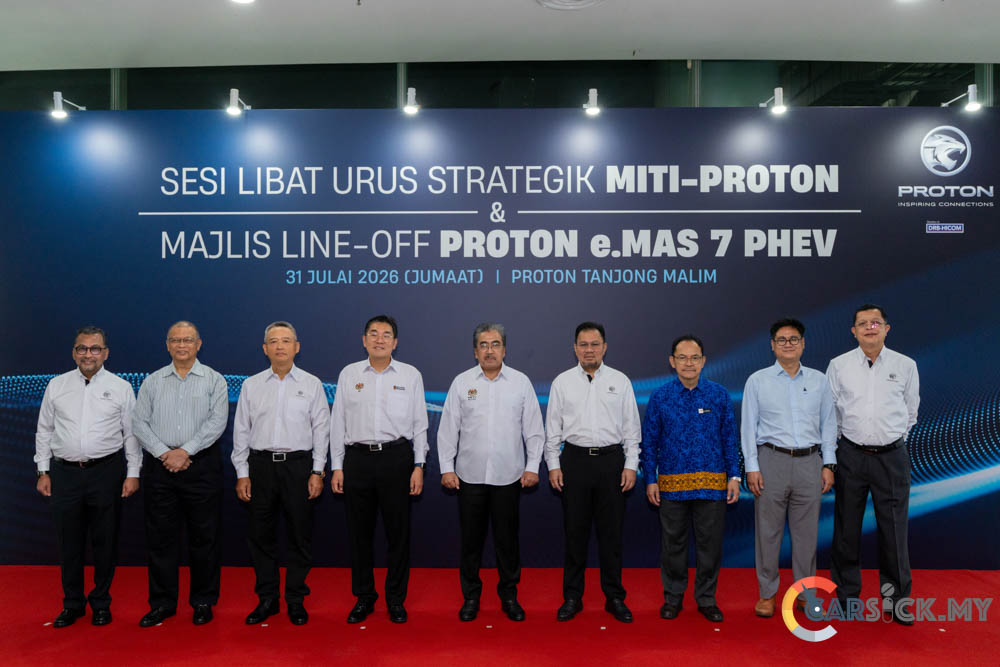 Led by MITI Minister Datuk Seri Johari Abdul Ghani and Deputy Minister Sim Tze Tzin, the delegation received an update on Proton’s latest business developments and long-term strategy, including a preview of upcoming initiatives built around the company’s proprietary Advanced Modular Architecture (AMA) platform. The visit concluded with a tour of the production facilities, where the Minister officially marked the start of local production for the dedicated hybrid transmission (DHT) and electric drive unit (EDU) at Proton’s Powertrain Plant.
The milestone represents a significant step for Malaysia’s automotive sector, as Proton becomes the country’s first vehicle manufacturer to locally produce both the DHT and EDU—two key components for electrified vehicles. Local production of these systems also increases domestic content for the Proton e.MAS 7 PHEV while reinforcing the nation’s growing xEV supply chain.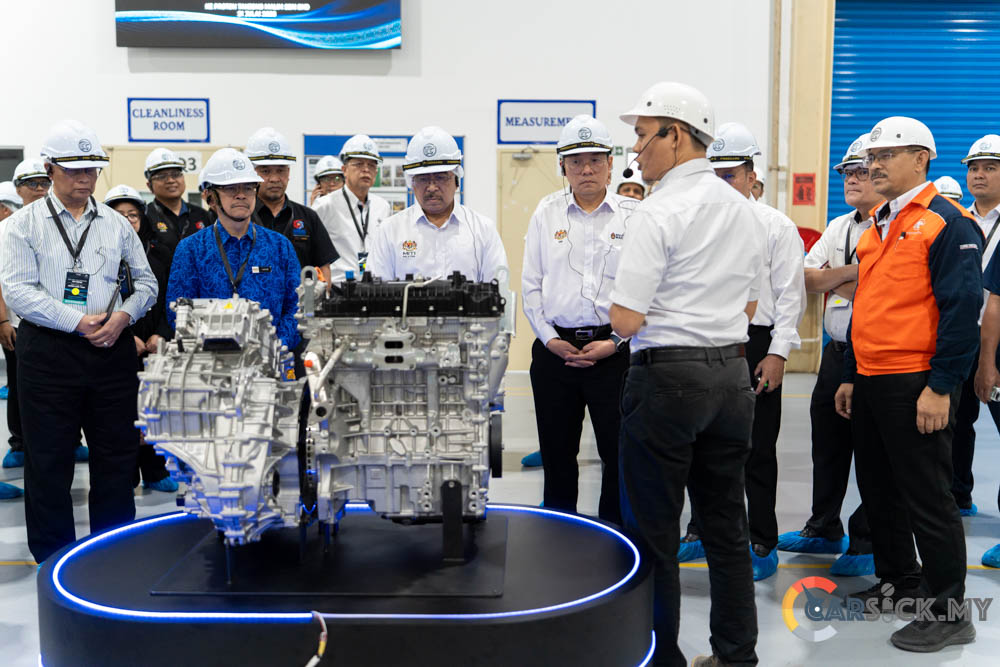
The RM121 million production facility is expected to further strengthen Malaysia’s automotive ecosystem, with half of its 16 supporting suppliers comprising local companies. Beyond expanding industrial capabilities, the investment is also set to create more skilled employment opportunities while enhancing the potential for future export growth.
Speaking during the visit, Datuk Seri Johari Abdul Ghani commended Proton’s progress in localising vehicle production and emphasised the importance of encouraging greater domestic sourcing across the automotive industry.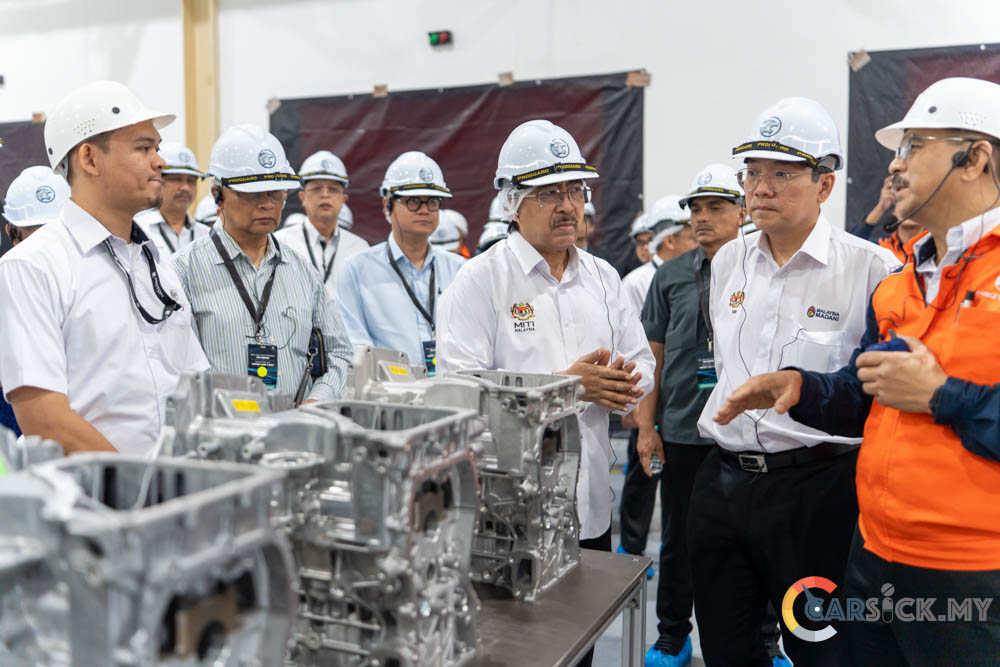
He noted that Proton has evolved considerably over the years, highlighting the company’s ability to develop its own technology intellectual property alongside strategic partner Geely. The Minister added that the partnership has revitalised the national carmaker, enabling it to employ approximately 9,700 people while producing over 150,000 vehicles annually.
Johari also urged other automotive manufacturers operating in Malaysia to expand their focus beyond vehicle assembly by investing in local parts manufacturing, introducing advanced technologies and working closely with domestic suppliers. According to him, such collaborations will generate long-term economic value through increased industrial activity, stronger local capabilities and job creation.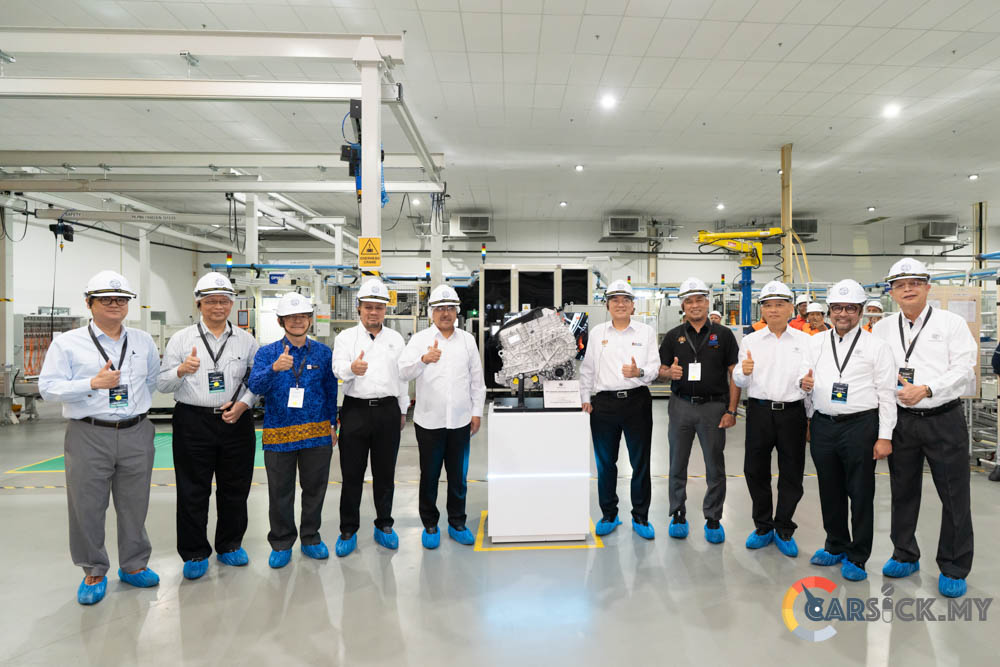
Echoing these sentiments, Proton Deputy Chief Executive Officer Dato’ Ir. Abdul Rashid Musa said the company’s contribution to Malaysia’s automotive sector now extends well beyond vehicle manufacturing.
He explained that since introducing its first ground-up developed model, the Proton Waja, more than two decades ago, Proton has continued to expand its capabilities in engineering, advanced manufacturing and supplier development. These investments, he said, are designed to ensure Malaysia remains competitive as the global automotive industry shifts towards electrified and intelligent mobility.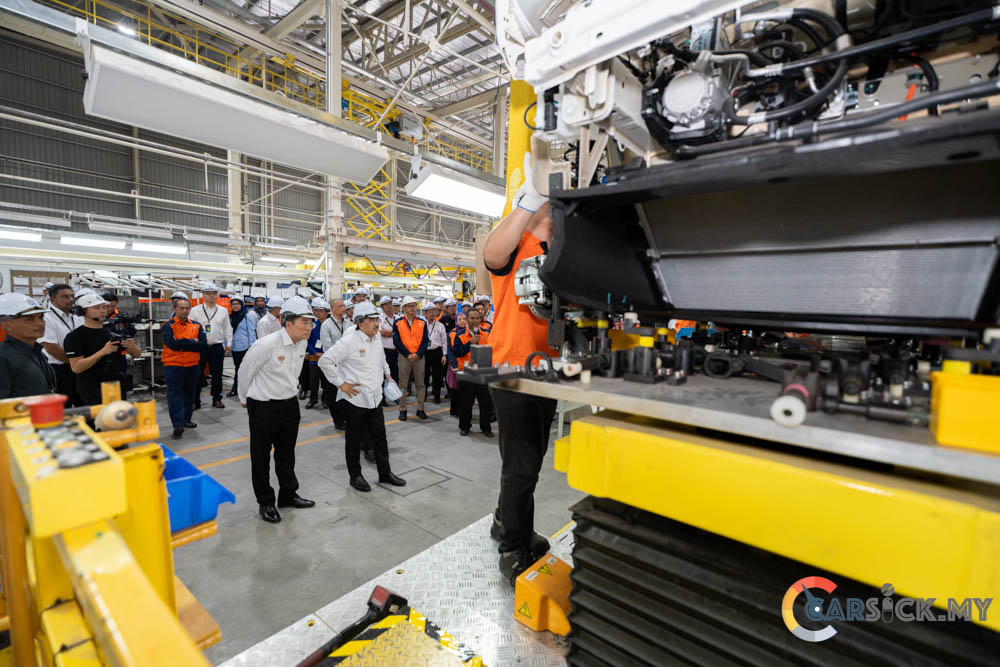
Abdul Rashid described the commencement of local DHT and EDU production as another key milestone in Proton’s long-term transformation, adding that initiatives such as the Automotive High-Tech Valley (AHTV) demonstrate the value of close collaboration between Proton, MITI and industry partners.
Together, these efforts are expected to accelerate higher-value manufacturing activities, strengthen Malaysia’s automotive supply chain and create new opportunities for local talent as the nation positions itself at the forefront of next-generation mobility.