
After a nine-year absence, Formula 1’s return to Sepang brought back the excitement of world-class motorsport, uniting generations of Malaysian fans eager to see the circuit roar to life once again. Behind the scenes, Grab played a key role in keeping the crowds moving, combining technology, shuttle services and on-ground support to help racegoers travel to and from the Sepang International Circuit (SIC).
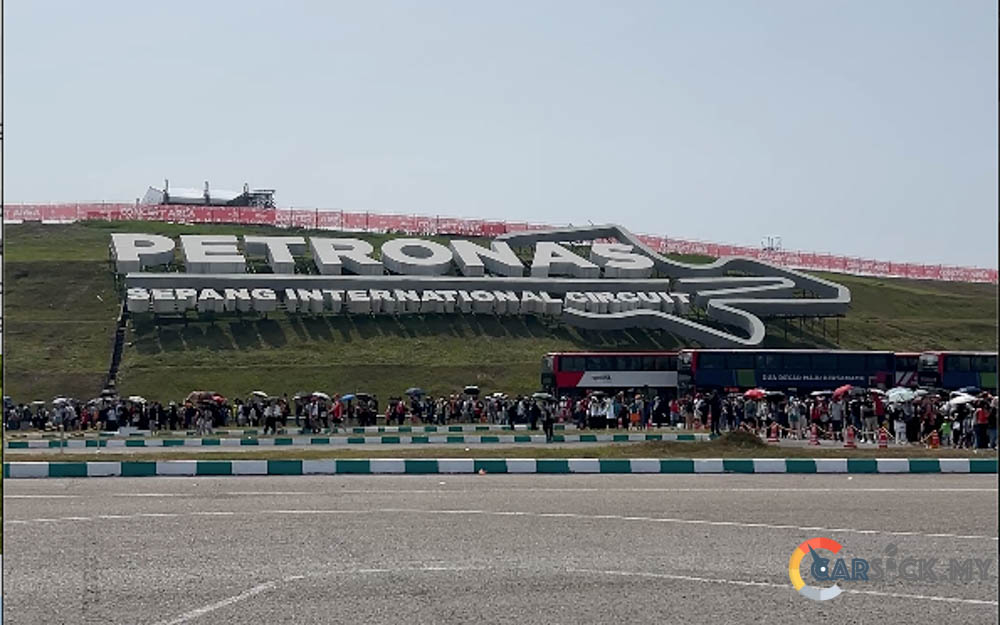 With thousands of fans converging on the venue, managing traffic flow and passenger pick-ups was just as important as the action on the track. Grab deployed its mapping technology, introduced a dedicated ride-matching system and mobilised a fleet of shuttle buses to improve the overall experience throughout the race weekend.
Putting Sepang on the map
Before the first engines fired up, Grab’s engineering and mapping teams updated GrabMaps with customised drop-off points, designated pick-up zones and optimised routes around the circuit. These adjustments helped racegoers identify the appropriate locations for their rides while giving driver-partners clearer guidance on where to pick up passengers and which routes to follow. With large crowds expected throughout the weekend, the preparations were designed to make getting around the venue more organised and efficient.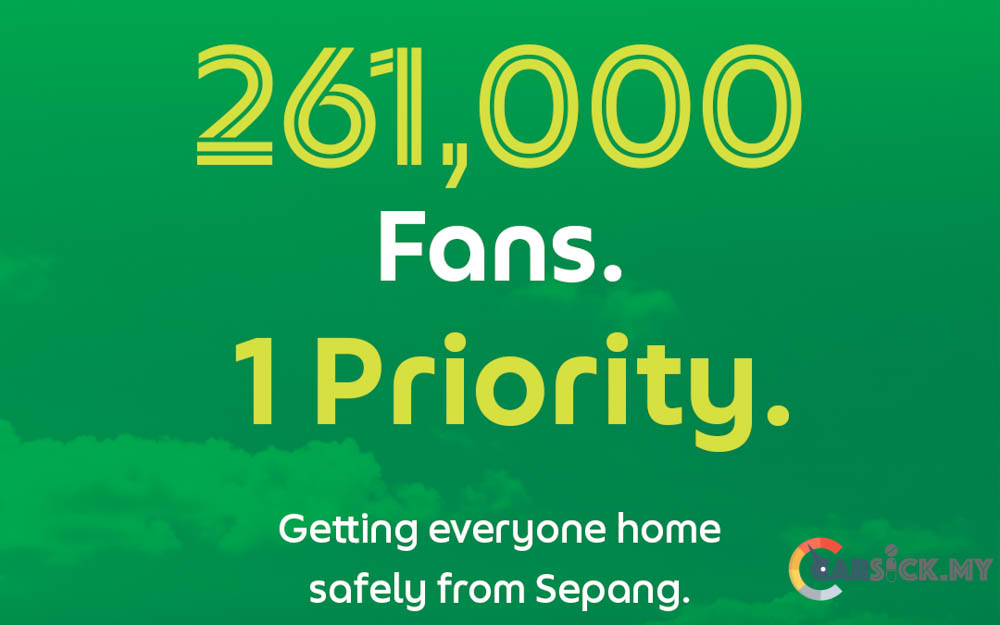
A four-digit PIN to simplify ride-hailing
Finding the right vehicle in a crowded pick-up area can be a challenge, particularly when thousands of people are leaving an event at the same time. To address this, Grab introduced its PIN & RIDE system during race week. The queue-management solution organised passengers into a more structured pick-up process, matching them with available driver-partners while helping to reduce congestion and waiting times.
Rather than searching through rows of vehicles or trying to identify a car by its number plate, passengers simply provided their driver-partner with a four-digit PIN displayed in the app. The straightforward process helped make the connection between passengers and drivers easier amid the crowds.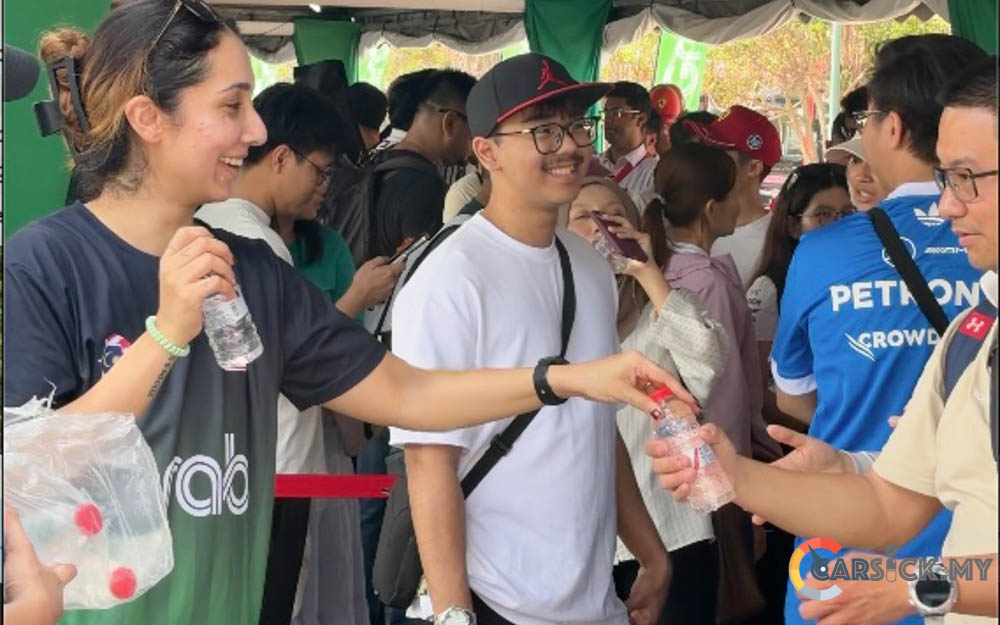
50 shuttle buses covered 39,000km in three days
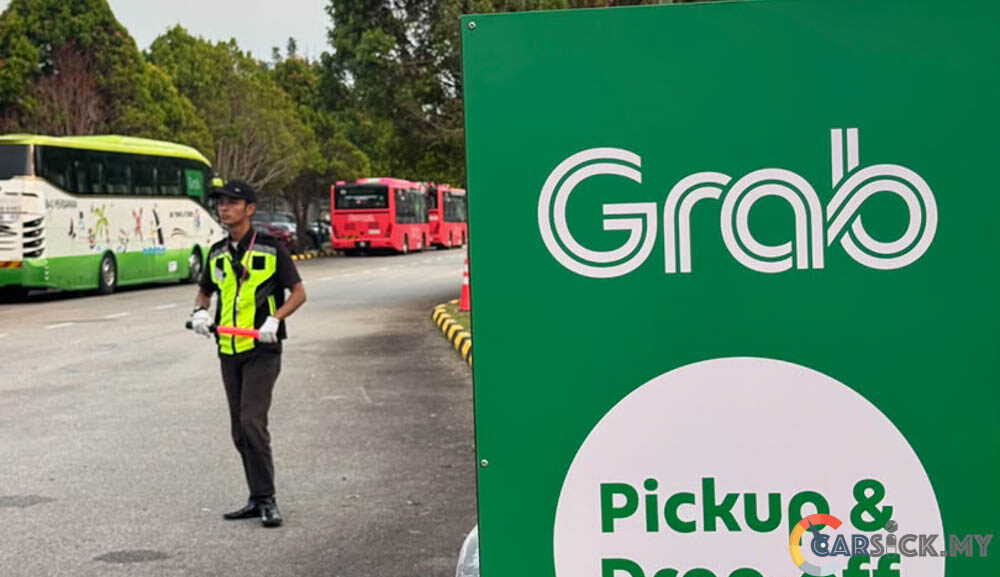
One of Grab’s biggest operational efforts involved running 50 shuttle buses between the Long Term Car Park (LTCP) and Sepang International Circuit. Operating from 7am on Friday until past midnight on Sunday, the buses made repeated trips to transport racegoers between the two locations. Over three days, the fleet covered a combined distance of 39,000km, equivalent to more than 140 laps of the Sepang circuit. The service transported more than 50,000 racegoers, underlining the scale of the transport operation needed to support the returning F1 crowds.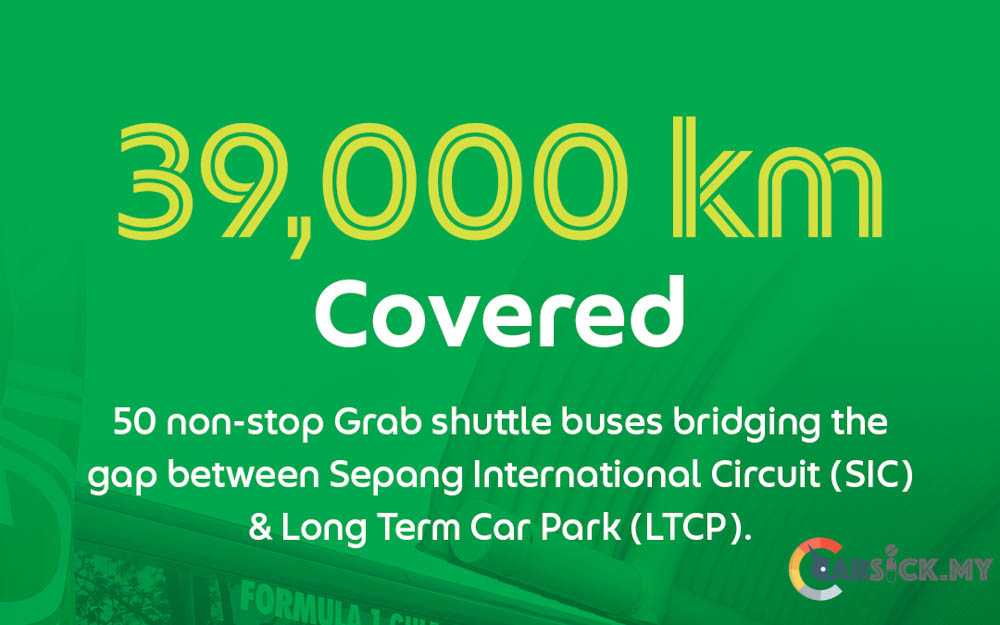
An off-track pit crew with Malaysian hospitality
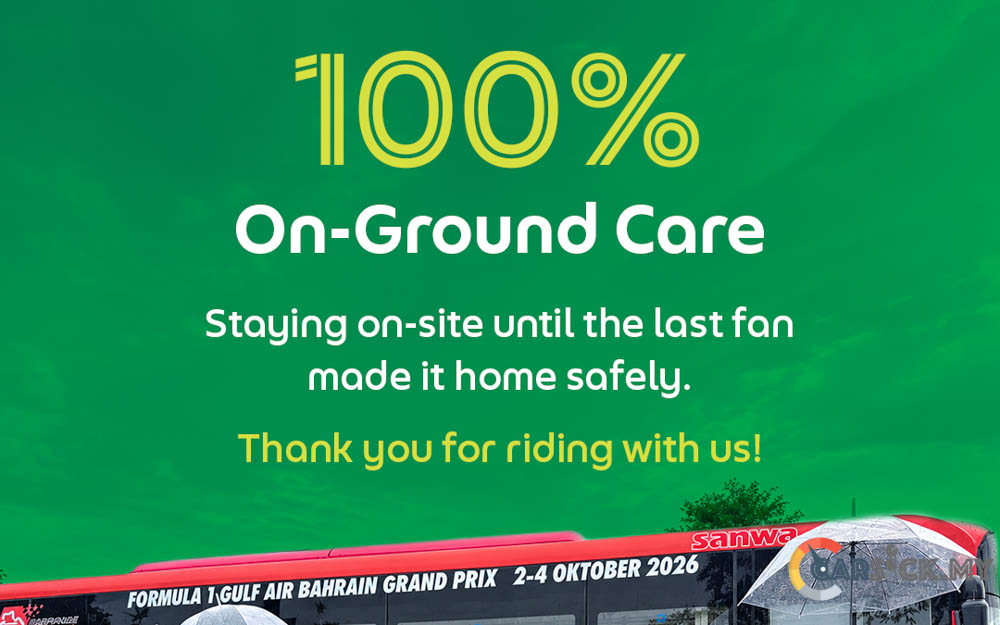
While F1 teams rely on precision and teamwork in the pit lane, Grab assembled its own crew to keep the transport operation running smoothly. Grab staff, known as Grabbers, helped organise queues, guide passengers towards their buses and brief racegoers on arrangements for their return journeys. Their role extended beyond simply directing crowds, with the team also working to maintain a welcoming atmosphere throughout the weekend.
Sepang’s famously unpredictable weather provided another test. When rain arrived, Grabbers formed a line with umbrellas to shelter racegoers as they made their way to the buses, offering a practical demonstration of the people-first service that helped support the event.
Keeping fans refreshed between races
Transport was not the only priority. With spectators spending long hours at the circuit, Grab also helped keep them hydrated by distributing more than 30,000 bottles of water supplied by JayaGrocer. Across the three-day event, the team handed out approximately 9,000 litres of water, giving racegoers some welcome relief as they navigated the crowds and enjoyed the motorsport festivities.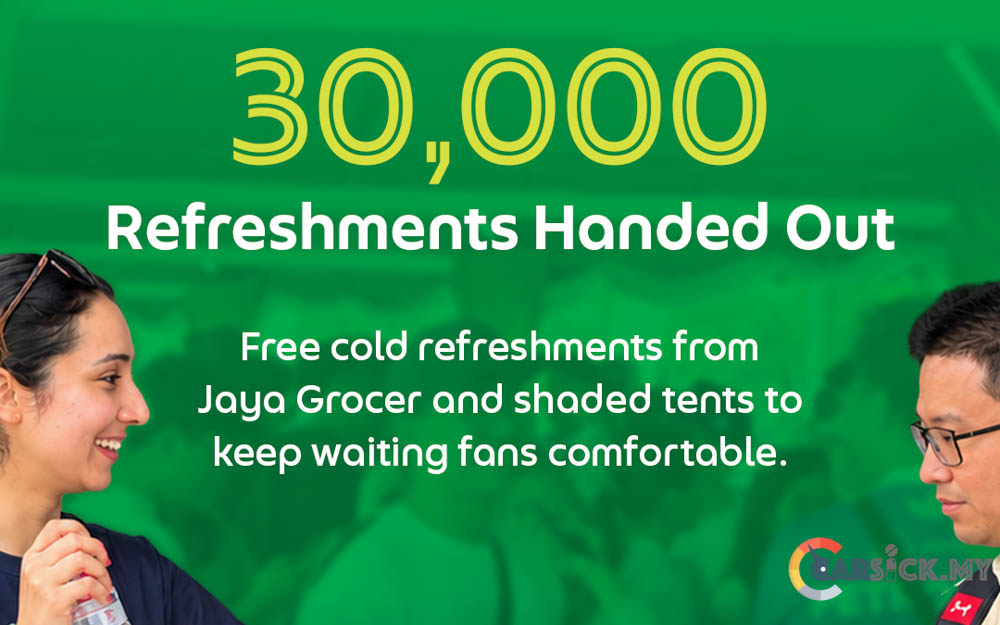
Driver-partners complete 84,000 rides
Beyond the dedicated shuttle service, Grab’s wider driver-partner network played an equally important role in connecting the circuit with surrounding transport hubs and the airport. More than 20,000 Grab driver-partners operated across the broader Sepang and airport areas throughout the race weekend, helping passengers travel between Kuala Lumpur International Airport (KLIA), transit connections and the circuit. By the end of the weekend, Grab driver-partners had completed a combined 84,000 rides, highlighting the scale of demand generated by the event and the importance of ride-hailing services in supporting large-scale gatherings.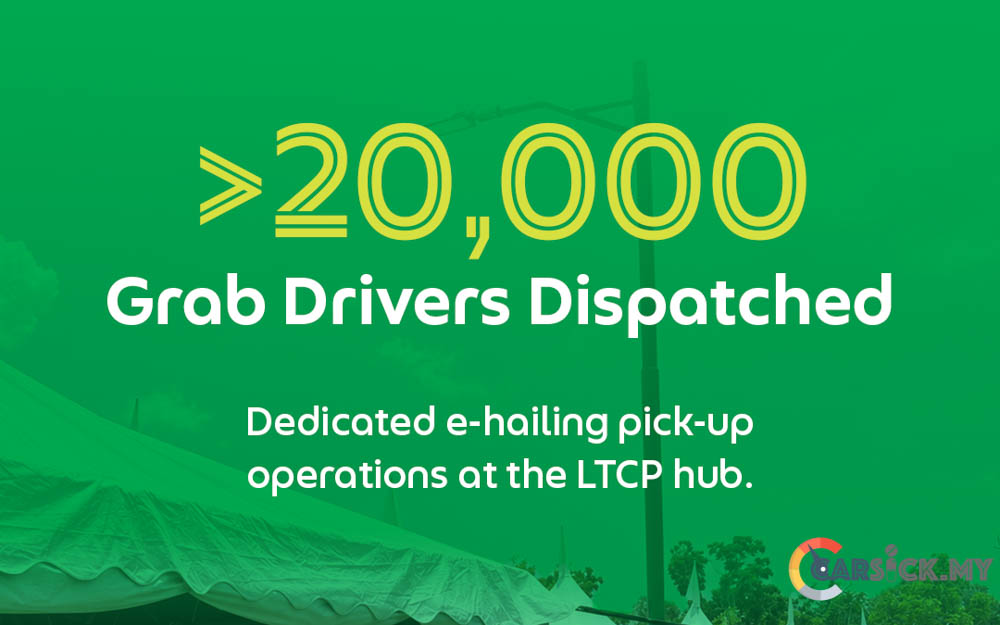
More than just getting fans to the race
The return of Formula 1 to Sepang was about more than the sound of racing engines and the excitement of seeing the world’s best drivers compete. It was also an opportunity for Malaysians from different backgrounds to come together and deliver an experience worthy of the occasion. For Grab, the weekend demonstrated how technology, transport infrastructure and on-ground teamwork could work together to move large crowds more efficiently. From improved mapping and PIN-based ride matching to shuttle buses, hydration support and the dedication of its driver-partners, the operation relied on the combined efforts of thousands of people.