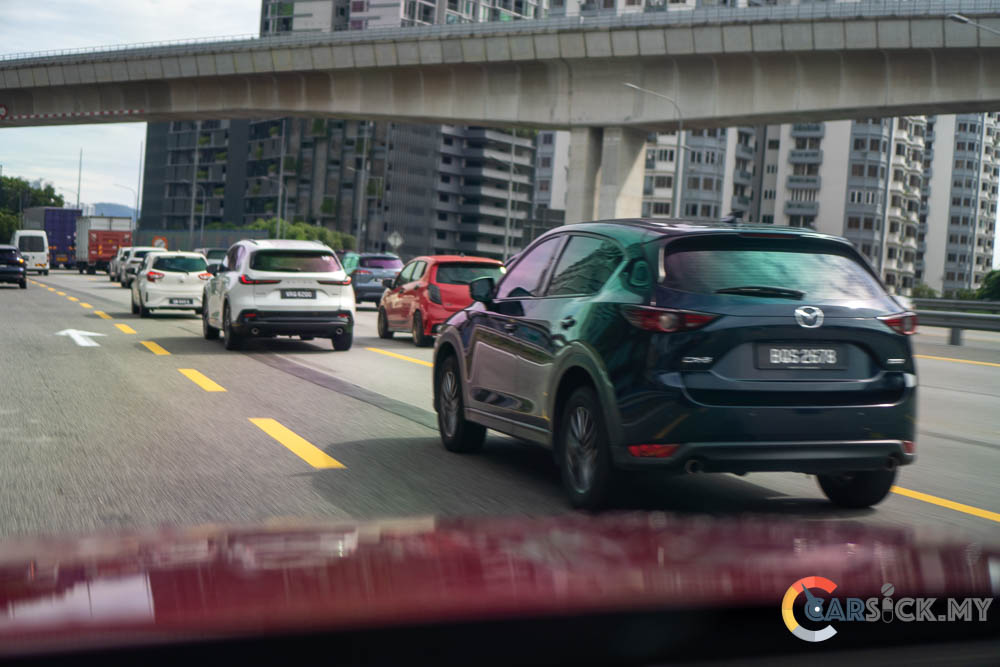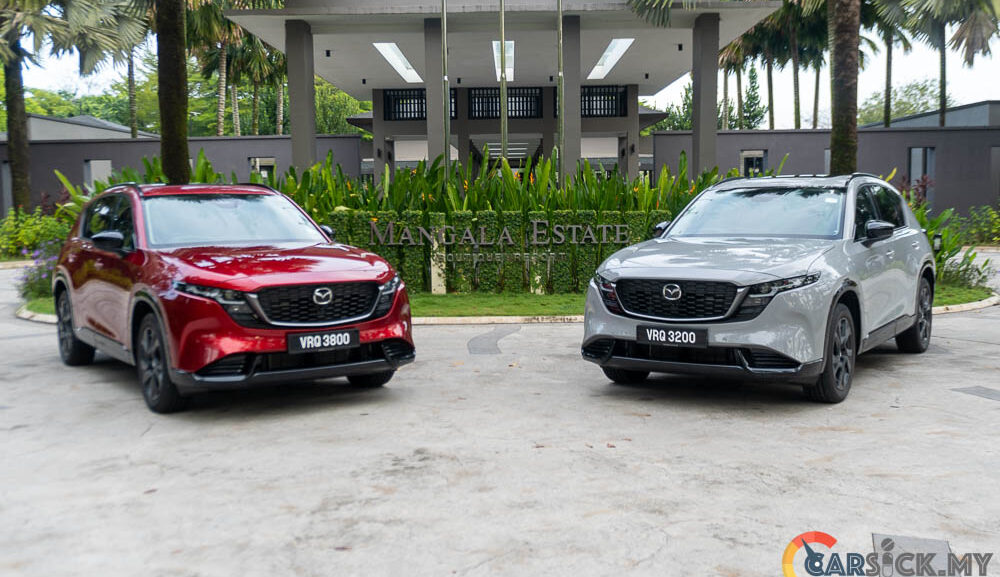

There was a time when the Mazda CX-5 was one of those SUVs that made you wonder whether you really needed a sports sedan. It looked good, handled surprisingly well for an SUV and offered just enough practicality to keep the family happy. In other words, it was a rather sensible vehicle that didn’t feel particularly sensible when you got behind the wheel. But things have changed. Recently, Mazda Malaysia invited us to experience the latest third-generation Mazda CX-5. And this time around, Mazda seems to have a different agenda. Instead of putting so much emphasis on driving dynamics and sporty characteristics, the Japanese carmaker has shifted its attention towards making the CX-5 a more family-friendly vehicle.
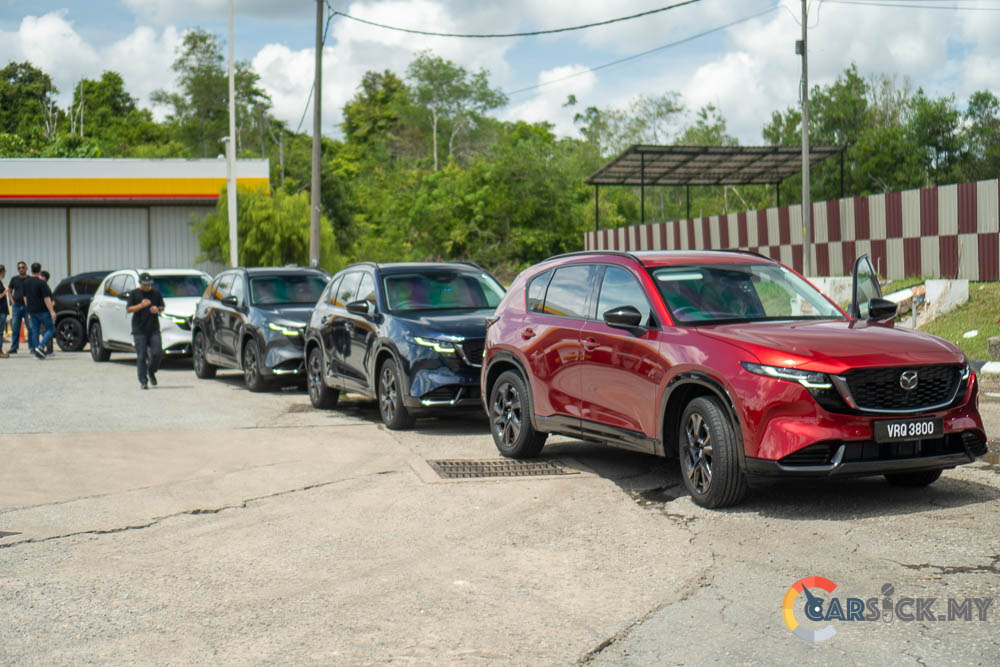 That means more attention has been given to passenger comfort, rear-seat practicality and the overall experience of living with the vehicle. Essentially, Mazda wants to make sure that the people who aren’t sitting behind the steering wheel have just as much to enjoy. Now, that’s an interesting direction to take, especially considering how much of the previous CX-5’s appeal came from its driving characteristics. So, has Mazda managed to improve the family experience without taking away what made the CX-5 special in the first place? That’s exactly what we wanted to find out.
For those unfamiliar with the CX-5, it remains one of Mazda’s most recognisable SUVs. Its Kodo design language gives it an elegant Japanese appearance, while its Skyactiv technology and Jinba Ittai philosophy have traditionally helped distinguish it from other family-oriented SUVs. The idea behind Jinba Ittai is simple: creating a closer connection between the car and its driver. However, with this latest generation, it seems Mazda is also paying considerably more attention to the passengers.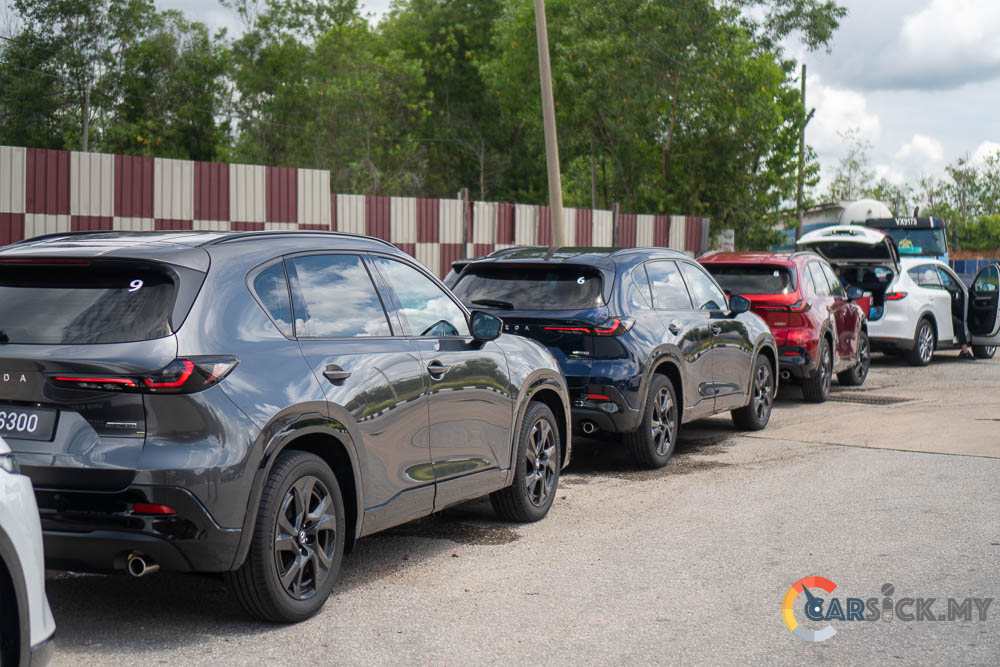
For this particular drive, we would be taking the new CX-5 from Mazda’s headquarters in Glenmarie all the way to Kuantan. And rather than having just one person behind the wheel throughout the journey, we would be rotating between three drivers. This also meant we would get to experience the vehicle from different seating positions and across a variety of road conditions. Our route would include highways, B-roads, city traffic and, for good measure, some rather questionable stretches of tarmac.
Mazda wanted us to experience the CX-5 in different driving environments, and I was particularly interested in three things. First, how comfortable would it be during long-distance highway cruising? Second, would it still retain some of its driving enjoyment when tackling twisty B-roads? And finally, how much of an improvement had Mazda actually made to the suspension, considering Bermaz had highlighted passenger comfort as one of the key areas of development? With that in mind, let’s get the journey started.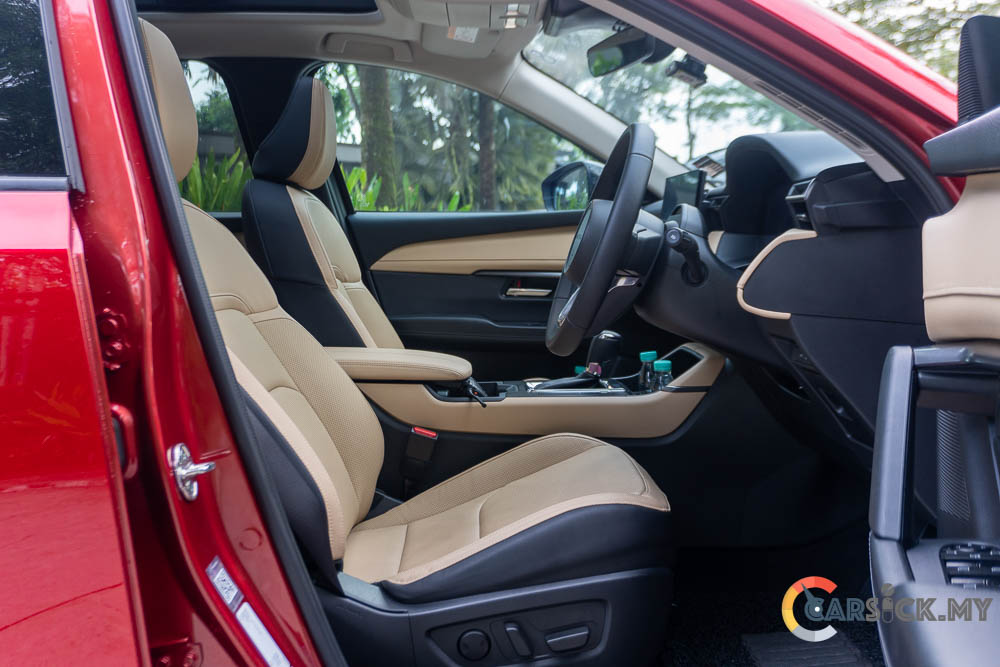
At the beginning of the journey, I was assigned to the front passenger seat. This gave me some time to explore the cabin before my turn to drive. The first thing that caught my attention was the champagne-coloured interior. Personally, I’m a big fan of brighter-coloured interiors, and the CX-5 certainly gets it right here. It gives the cabin a much more welcoming atmosphere, while making the overall interior feel considerably more upmarket.
In fact, if you didn’t know you were sitting inside a CX-5, you might initially think you were in something from a more expensive segment. The materials and overall presentation certainly help create that impression. However, there was one particular design decision that I wasn’t entirely convinced by. Mazda has opted for a large rectangular display mounted in the centre of the dashboard. Now, there’s nothing wrong with the display itself. It worked perfectly fine throughout our drive, and I didn’t encounter any hiccups while using it.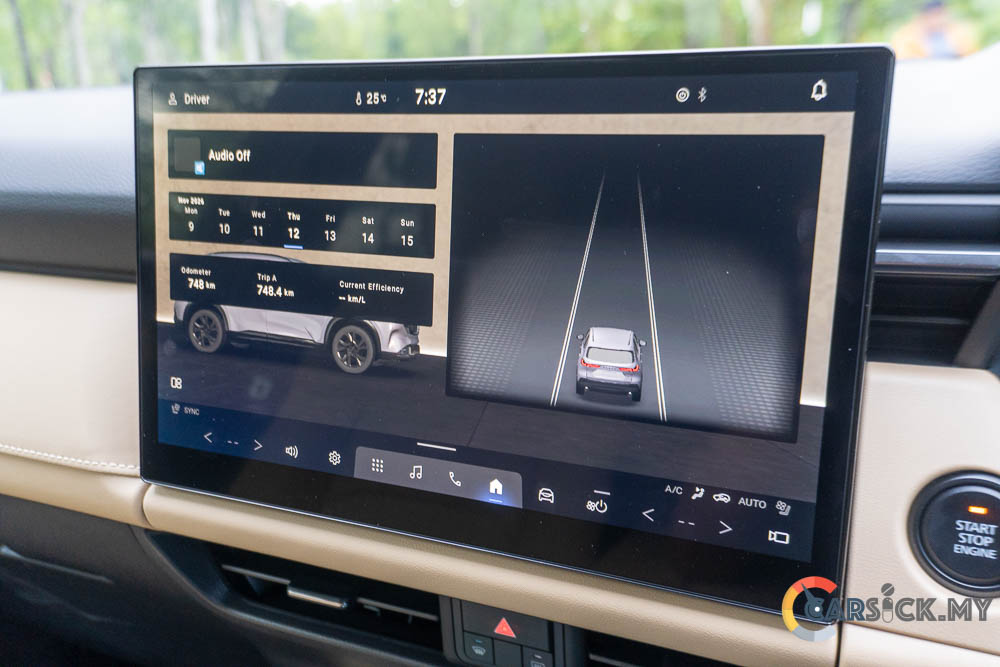
My issue is more about the design approach. It reminds me of the current trend among Chinese carmakers, where almost every new vehicle seems to come with a large tablet-like display stuck onto the dashboard. Personally, I think it takes away some of the character that traditional Mazda interiors used to have. It almost feels as though the designers decided to follow a trend rather than come up with something more distinctive. But that’s just my personal preference. After all, some people love having a massive screen in front of them. Thankfully, there’s more to the infotainment system than just its appearance.
The new CX-5 comes with modern conveniences such as wireless Android Auto and Apple CarPlay. Previous Mazda models typically offered wireless connectivity only for Apple CarPlay, so it’s good to see Android users finally getting the same treatment. And here’s something I particularly appreciate about Mazda’s infotainment system: even when you’re using Android Auto, the climate control information remains visible on the display.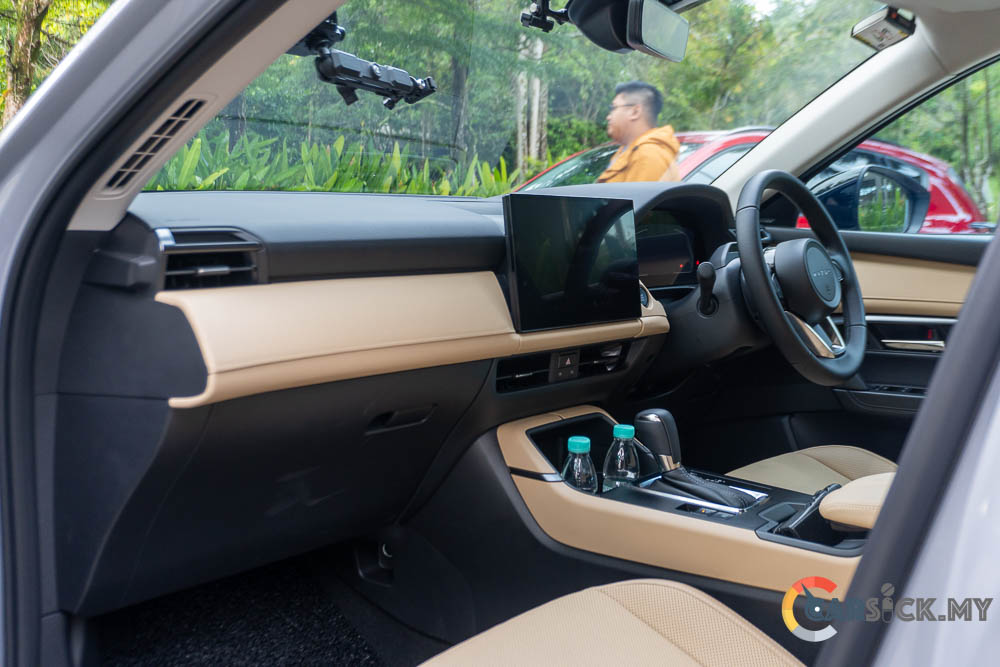
This might sound like a small detail, but it’s actually rather important. Nobody wants to dig through multiple menus just to adjust the air-conditioning, especially when you’re driving in Malaysia’s lovely tropical weather. The new 360-degree camera system is also a welcome improvement, with noticeably clearer images than before. And for those who enjoy their music during long drives, the Bose sound system is another treat. After all, what’s a road trip without some decent tunes?
For the second stint, it was finally my turn to take the driver’s seat. And this was where things started getting interesting. This part of the journey involved some highway cruising before moving on to a series of B-roads. Under the bonnet, the Malaysian-spec CX-5 gets a 2.5-litre naturally aspirated four-cylinder Skyactiv-G petrol engine, producing 185 hp at 6,000 rpm and 257 Nm of torque at 4,000 rpm. Power is sent to the front wheels through a six-speed Skyactiv-Drive automatic transmission.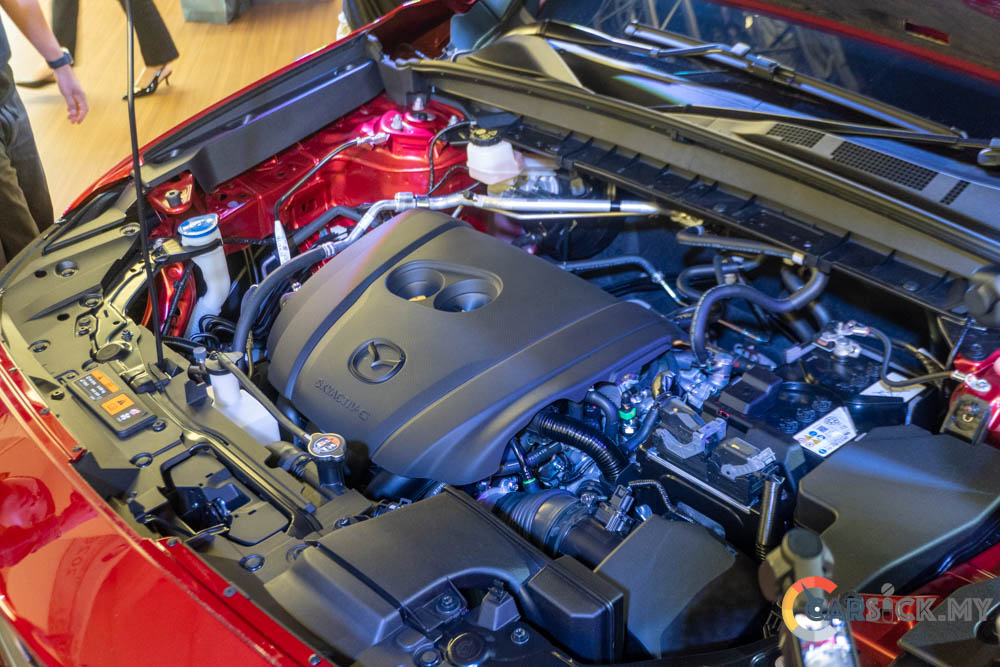
On paper, these figures are perfectly respectable for a family-oriented SUV. However, if you’re expecting the CX-5 to deliver the sort of explosive acceleration you’d get from a turbocharged engine, you might want to adjust your expectations. The naturally aspirated engine prefers a more progressive approach to acceleration. Try flooring the accelerator and you’ll notice that it doesn’t quite deliver the immediate punch you might expect. In fact, abrupt acceleration can make the engine feel somewhat strained, without necessarily giving you the performance you’re looking for.
Instead, the trick is to be a little more patient with the throttle. Feed in the power progressively, and you’ll find that the engine makes better use of its mid-range torque. Although the acceleration feels more gradual, the CX-5 actually pulls quite strongly as it builds speed. Once you’re cruising along the highway, things become even more relaxed. The engine barely breaks a sweat, and the vehicle settles into a comfortable cruising pace without much fuss. It’s not the sort of powertrain that will have you hunting for every opportunity to accelerate hard, but for everyday driving and long-distance journeys, it gets the job done rather well.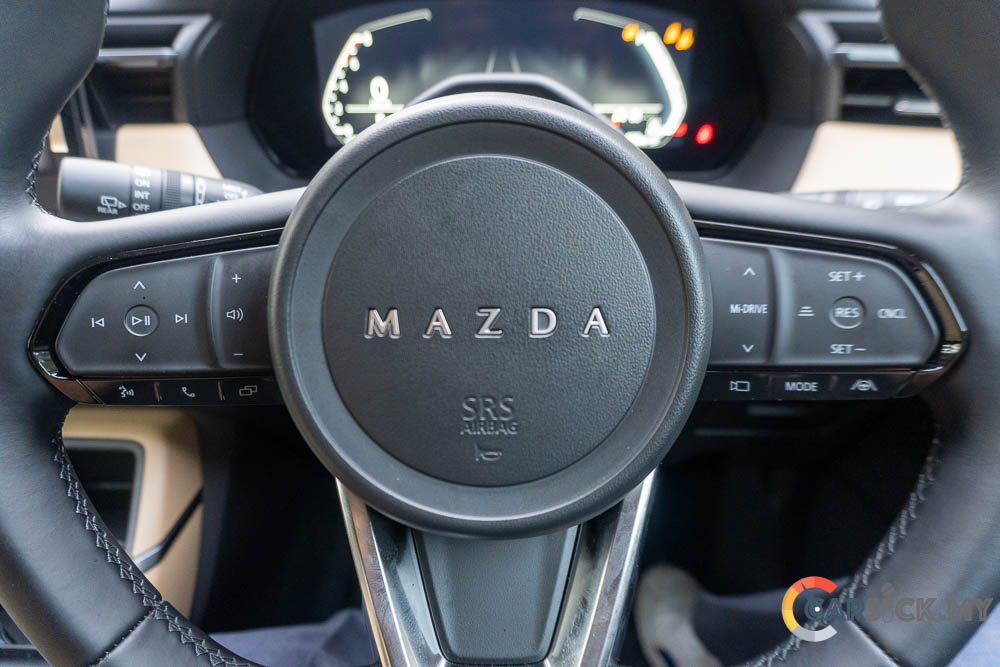
Moving on to the B-road section, this is where the CX-5 started to impress me. As Malaysians, we’re all familiar with the condition of our B-roads. Some are perfectly smooth, while others look as though they’ve survived several generations of roadworks. Uneven surfaces, patchy tarmac and unexpected potholes are all part of the experience. And if you’re driving a vehicle with an overly firm suspension setup, these roads can quickly turn an enjoyable drive into a rather uncomfortable experience. Thankfully, the new CX-5 handles these conditions remarkably well.
The suspension does an excellent job of absorbing road imperfections, isolating much of the jolts and vibrations before they reach the cabin. Even when travelling over rougher sections, the vehicle remains comfortable, making it easier for passengers to relax and enjoy the journey. Now, here’s where things get interesting. There are plenty of SUVs in the market that offer a similarly soft suspension setup. However, some of them can feel a little too soft, particularly when you start pushing them through corners. While the initial ride comfort might be impressive, the lack of body control can sometimes make the driver lose confidence. The CX-5, on the other hand, strikes a rather interesting balance.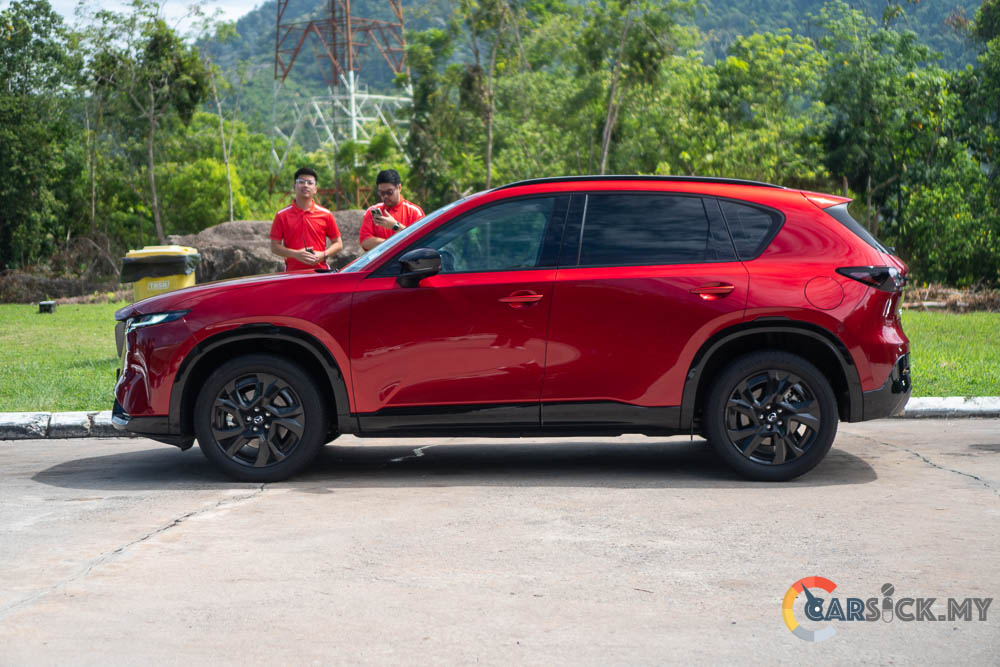
Despite the softer suspension setup, I could still feel what the front wheels were doing while driving. There’s enough feedback coming through the steering wheel to give you a sense of how the vehicle is behaving. In other words, Mazda hasn’t completely forgotten about the driver. This is particularly important because the previous CX-5 built much of its reputation around offering a more engaging driving experience than your typical family SUV. And while this latest generation clearly prioritises comfort, it’s reassuring to know that some of that familiar driving character is still there.
For the third stint, I decided to do something slightly different. Instead of taking another turn behind the wheel, I volunteered to sit in the back. Why? Because I was particularly curious about the changes Mazda’s engineers had made to the rear passenger area. After all, Mazda had repeatedly highlighted its renewed focus on passenger comfort. And if there’s one area where the previous CX-5 could have done better, it would be rear-seat accommodation.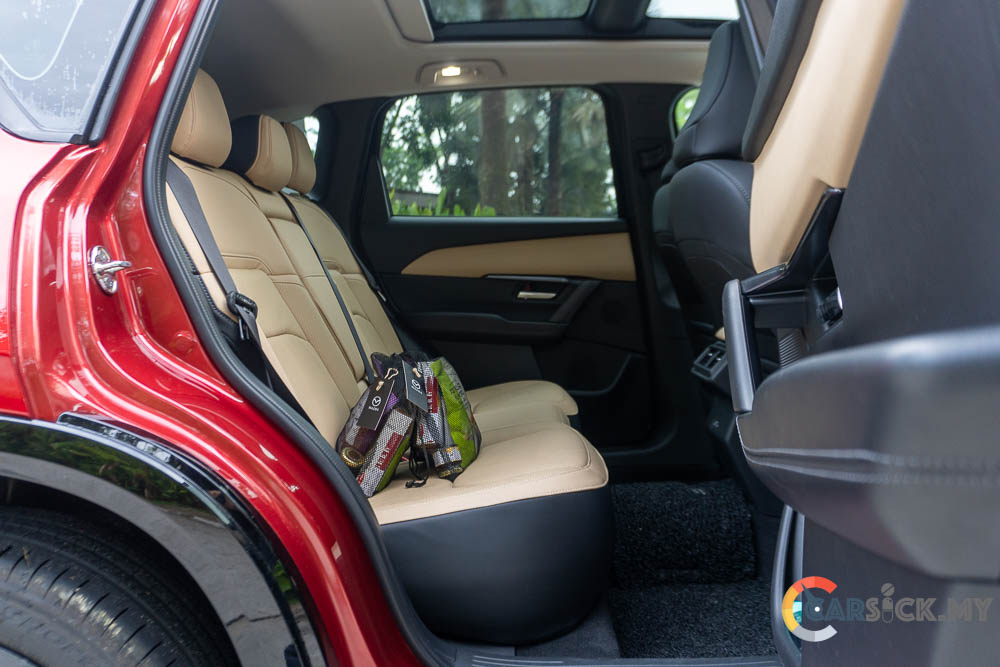
The moment I settled into the rear seats, the improvement was immediately noticeable. There’s considerably more legroom than before, making the cabin feel much more accommodating for rear passengers. The previous-generation CX-5 used to fall behind some of its competitors in this department, especially when it came to rear-seat space. For buyers who loved the CX-5’s styling and driving characteristics but needed something more accommodating for their families, this was one of the compromises they had to live with. Thankfully, it seems Mazda’s engineers have finally addressed that concern.
Another family-friendly improvement is the larger rear door opening. The rear doors now open considerably wider, making it much easier for passengers to get in and out of the vehicle. This is particularly useful for families with young children. Anyone who has ever struggled to squeeze a child into a car seat through a narrow door opening will understand why this seemingly minor detail can make such a big difference. And it’s not just about getting children into the vehicle. A wider opening also makes installing and removing child seats considerably less troublesome.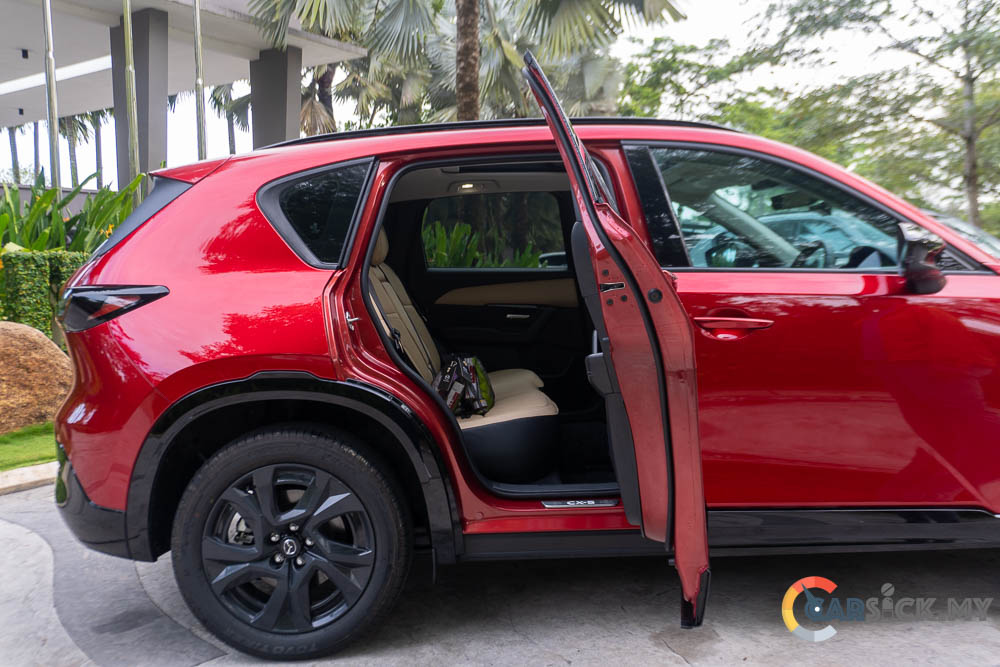
As for my own experience, I genuinely enjoyed my time in the rear seats. In fact, I was comfortable enough to spend more than two hours back there during the return journey from Kuantan. Now, that’s saying something. I’m usually more than happy to get back behind the steering wheel, but the new CX-5 made the rear passenger experience surprisingly enjoyable. Perhaps Mazda’s engineers have finally convinced me that sitting at the back isn’t necessarily a punishment!
After completing our third stint, we headed straight to our lunch stop. There’s not much to report about lunch itself, but the journey afterwards came with an unexpected bonus. I got behind the wheel once again, this time for a short drive to a nearby waterfall where we were supposed to enjoy some cendol. Sounds like a rather relaxing way to end the drive, doesn’t it? Well, not quite.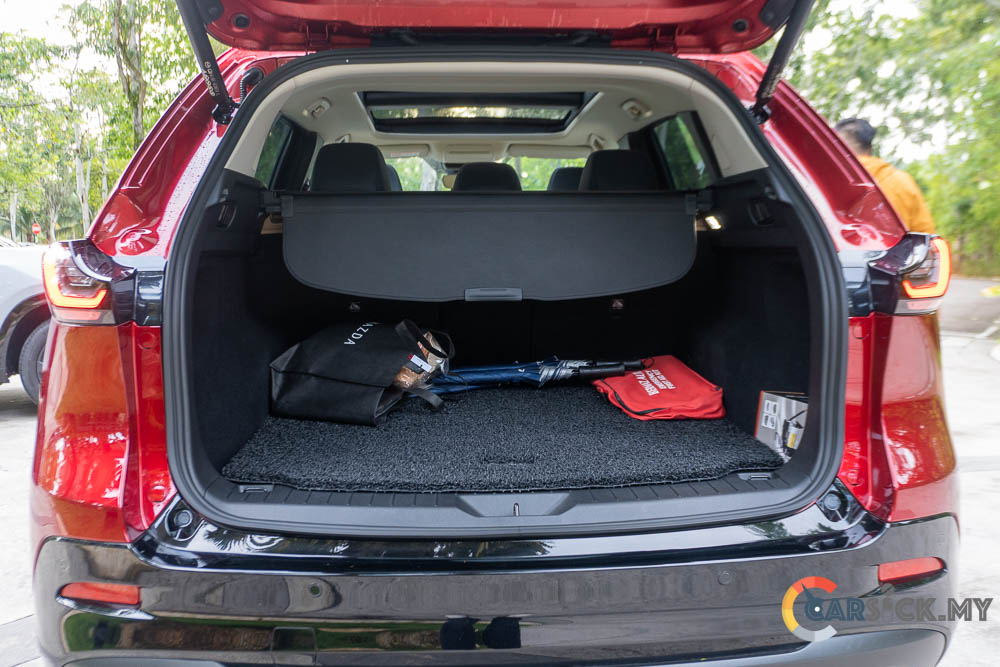
The interesting part was actually the road leading to the waterfall. Upon reaching the access road, we had to navigate some seriously rough terrain. This particular road was mainly used by trucks transporting soil and stones in and out of the area, so you can probably imagine the condition of the surface. It certainly wasn’t the sort of road you’d normally choose when taking a family SUV out for a leisurely drive.
But since we had the CX-5 with us, this was another opportunity to see what its suspension could handle. And once again, it impressed. The softer suspension setup did an excellent job of soaking up the various road imperfections, while keeping the tall SUV relatively composed even when travelling over uneven surfaces. There was a noticeable level of comfort throughout the drive, and the cabin remained reasonably isolated from the constant bumps and jolts coming from the road.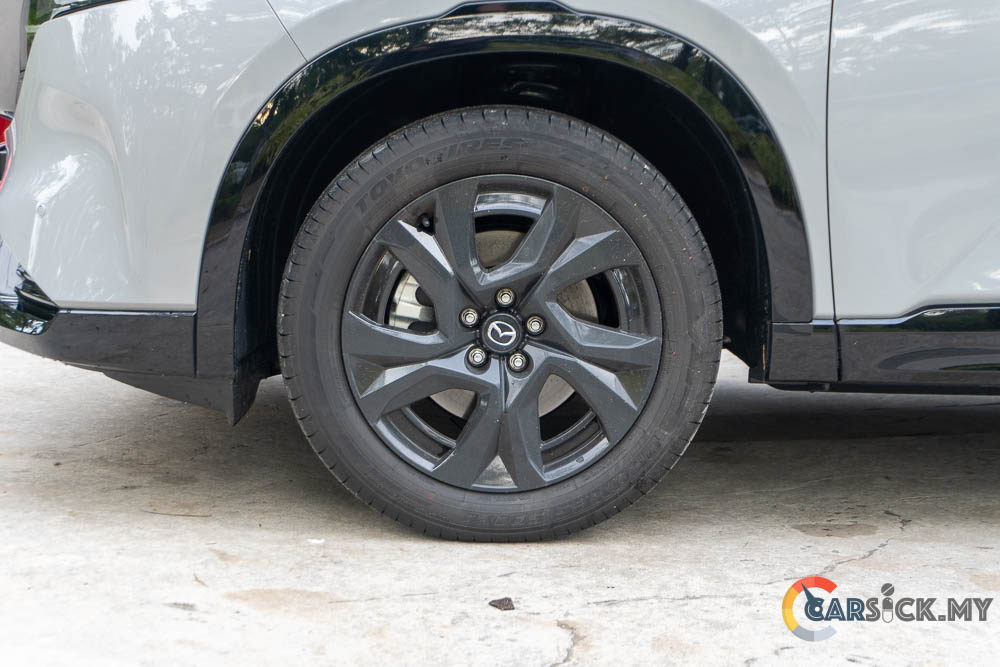
Compared to the previous generation, the new CX-5 is undoubtedly the more comfortable vehicle. Having experienced it on highways, B-roads and some particularly rough surfaces, the improvement is quite evident. If Mazda’s intention was to make the CX-5 a more comfortable family SUV, I’d say this part of the journey gave us a pretty convincing demonstration. And the best part? We still had that cendol waiting for us at the end of the road. Unfortunately, the weather had other plans. It started raining, and we eventually decided not to continue to our intended destination. So, no waterfall and, sadly, no cendol for us.
The new Mazda CX-5 is priced at RM169,900, which remains relatively affordable for a vehicle fully imported from Japan. But more importantly, this latest generation represents a noticeable shift in Mazda’s priorities. The previous CX-5 was a family SUV that placed considerable emphasis on driving enjoyment. It was one of those vehicles that could keep the driver entertained while still being practical enough for everyday family duties. The new model, however, feels like Mazda has finally decided to give the passengers a bigger say in the development process. And honestly, that’s not necessarily a bad thing.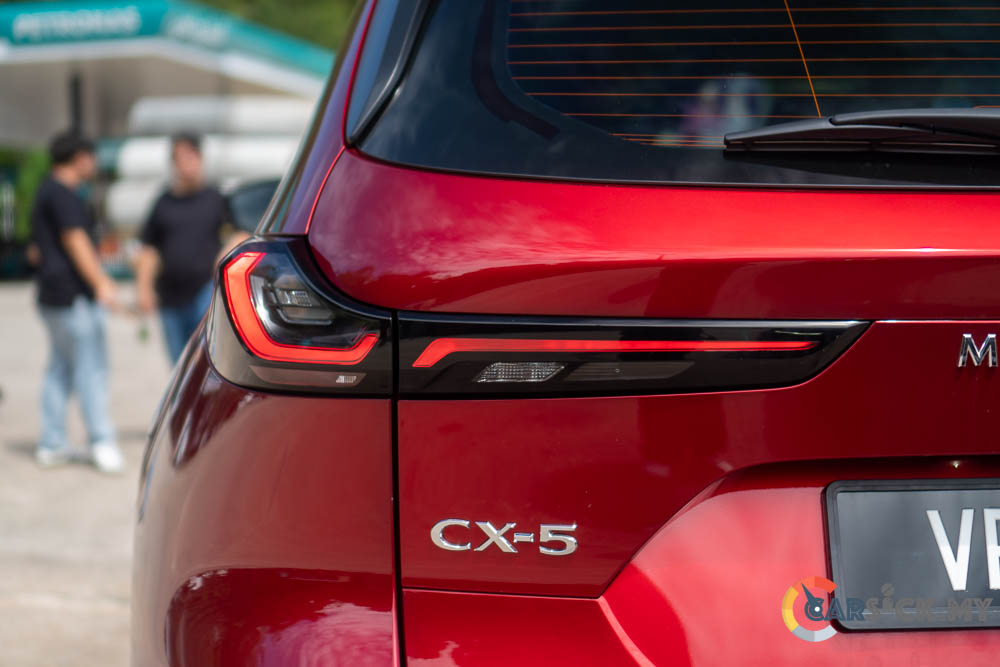
The improved rear-seat accommodation, wider rear door openings and more comfortable suspension setup make the new CX-5 a much more appealing proposition for families. These aren’t just changes that look good on a specification sheet; they’re improvements that you can genuinely appreciate when spending time inside the vehicle. Of course, the CX-5 hasn’t completely abandoned its driving DNA. The 2.5-litre naturally aspirated engine might not deliver turbocharged levels of excitement, but it provides sufficient performance for everyday use. More importantly, the chassis still offers a reassuring level of feedback, meaning the driver hasn’t been completely forgotten.
After spending a day driving and riding in the new CX-5, I came away with the impression that Mazda has created a more well-rounded SUV. It might not be quite as focused on sporty driving as its predecessor, but it has become a considerably better companion for long-distance journeys and family outings. For those who previously loved the CX-5 but found its rear seats a little too cramped, this latest generation could finally be the answer. And for existing CX-5 owners who have been waiting for a meaningful upgrade, I’d say this new generation is certainly worth checking out.