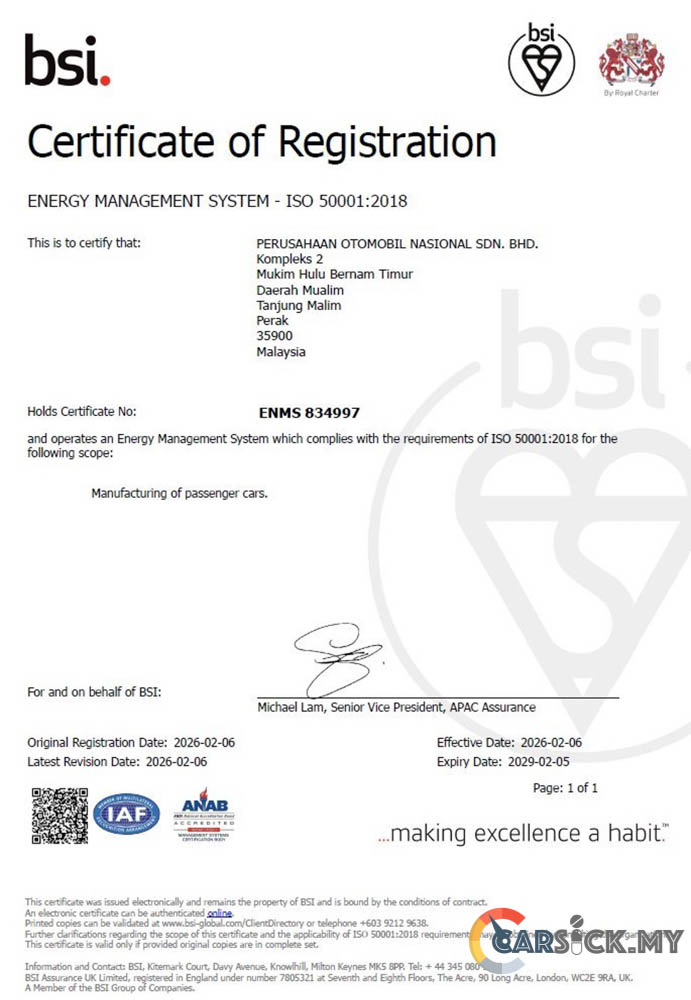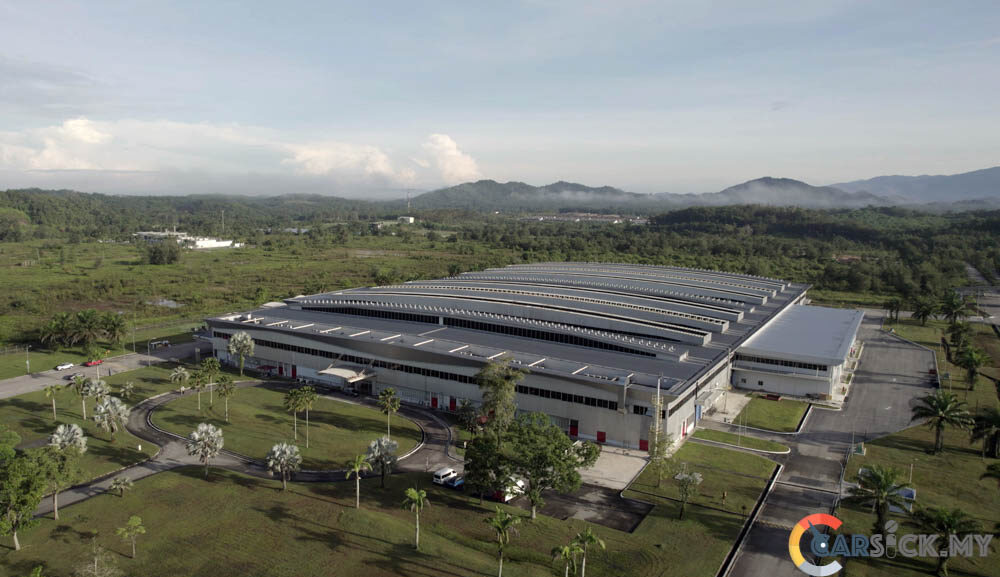

Proton Holdings Berhad has reached a significant milestone in its sustainability journey, becoming the first passenger vehicle manufacturer in Malaysia to secure ISO 50001 certification for its Energy Management Systems (EnMS). This achievement highlights the company’s growing commitment to energy efficiency while supporting the nation’s shift toward a low-carbon future.
 The certification aligns closely with Malaysia’s evolving regulatory and sustainability landscape, particularly under the Energy Efficiency & Conservation Act 2024 (EECA 2024). It also complements broader national frameworks such as the National Energy Transition Roadmap (NETR), while reinforcing the environmental ambitions of Proton’s parent company, DRB-HICOM.
Awarded by the British Standards Institution (BSI), the ISO 50001:2018 certification reflects Proton’s structured and data-driven approach to energy management. The framework enables the company to monitor, control, and continuously improve energy performance across its operations. Central to this effort is the Tanjung Malim manufacturing plant in Perak, a key facility with an annual production capacity of up to 250,000 vehicles. At such scale, even small gains in energy efficiency per vehicle can translate into substantial overall reductions in energy consumption.
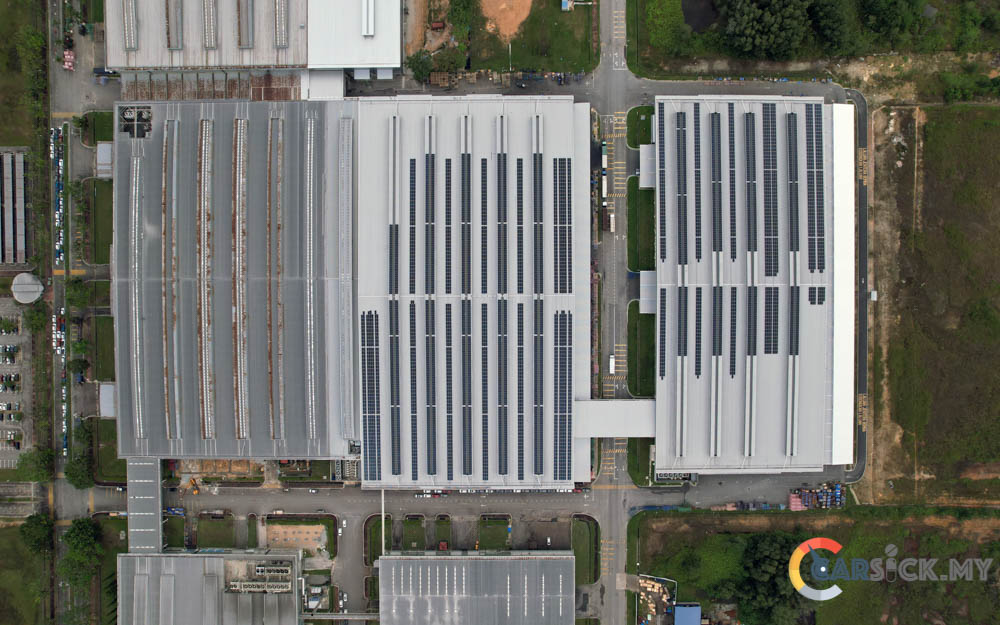
To drive these improvements, Proton has implemented a comprehensive, multi-phase energy roadmap at the plant. The company is targeting a 2% annual improvement in energy efficiency, supported by initiatives such as large-scale solar photovoltaic deployment, digitalised energy monitoring systems, LED lighting upgrades, and optimisation of cooling and compressed air systems. Future plans also include the adoption of Battery Energy Storage Systems (BESS) to better manage peak energy demand.
In addition to plant-wide measures, Proton continues to refine efficiency at the production level. Ongoing shopfloor programmes span key manufacturing stages including stamping, bodywork, painting, trim and final assembly, ensuring that sustainability is embedded throughout the production lifecycle.
This milestone also underscores Proton’s broader role in shaping Malaysia’s industrial future. As the Automotive High-Tech Valley (AHTV) in Tanjung Malim develops into a regional hub for advanced manufacturing, the company is positioning itself as a leader in integrating sustainability into large-scale industrial growth.
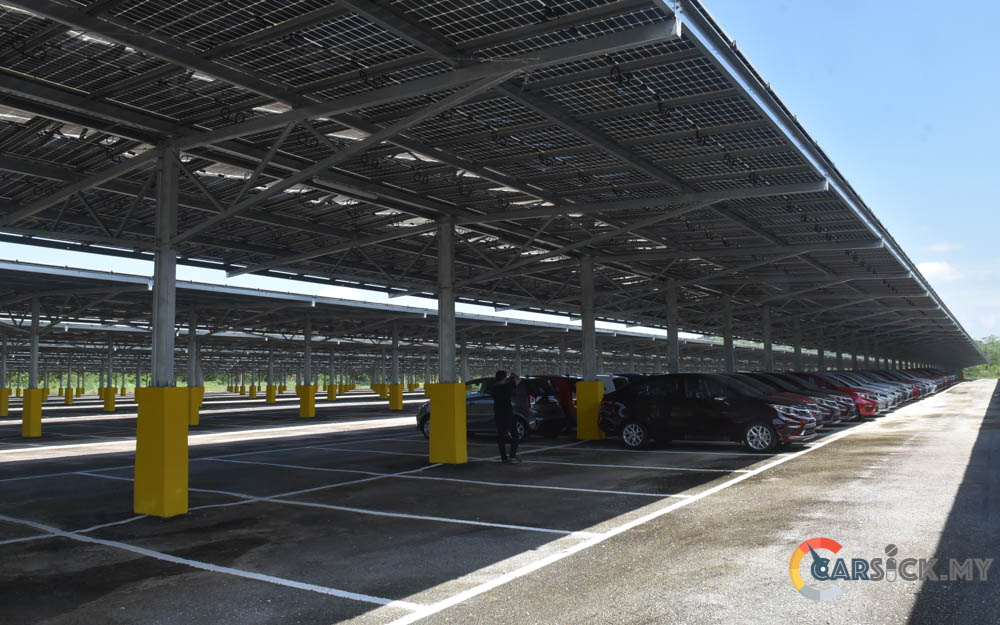
The ISO 50001 certification builds on earlier green initiatives, including the installation of Malaysia’s largest bi-facial solar panel system in a parking facility at the Tanjung Malim plant in 2021. By December 2025, this solar array had reduced carbon dioxide emissions by approximately 48,450 tonnes—equivalent to taking around 10,500 internal combustion engine vehicles off the road for a full year.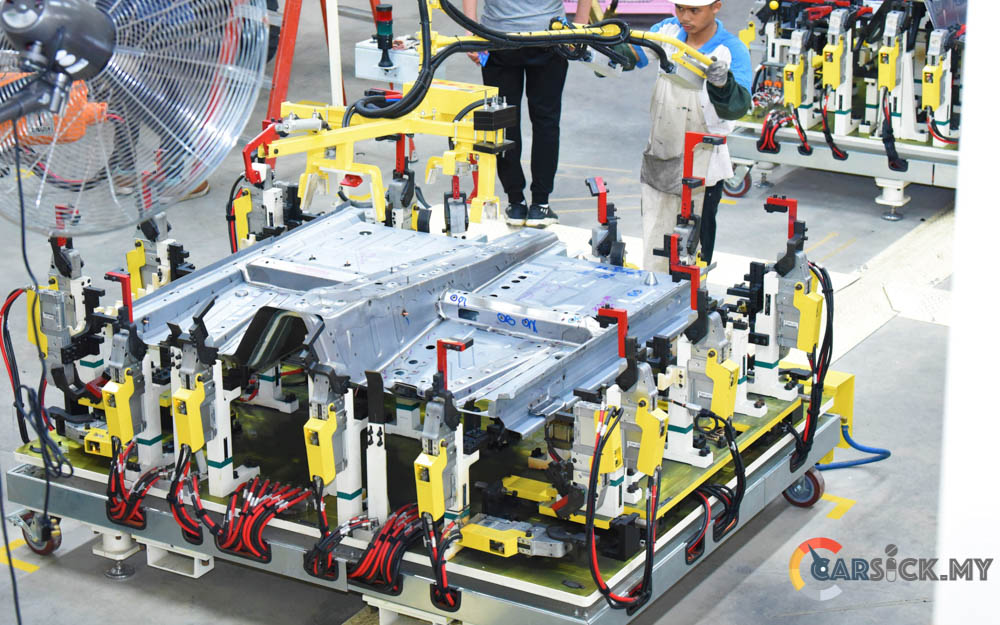
According to Deputy CEO Abdul Rashid Musa, the achievement is not just about compliance, but about future readiness. As the automotive industry continues to evolve, Proton aims to strengthen its operational capabilities while setting higher standards for energy performance across the wider automotive ecosystem.
With this certification, Proton is not only enhancing its own sustainability credentials but also contributing to Malaysia’s broader ambition of building a more energy-efficient and environmentally responsible industrial sector.