
Whenever someone mentions the Volkswagen Golf, there’s a very good chance the first thing that comes to mind is the GTI. After all, the GTI has been the poster child of the Golf family for decades, earning itself a reputation as one of the most entertaining hot hatches around. But here’s something you might have overlooked: Volkswagen Malaysia actually offers three different flavours of the Golf, each catering to a slightly different type of buyer. And sitting at the bottom of the lineup is the Golf R-Line.
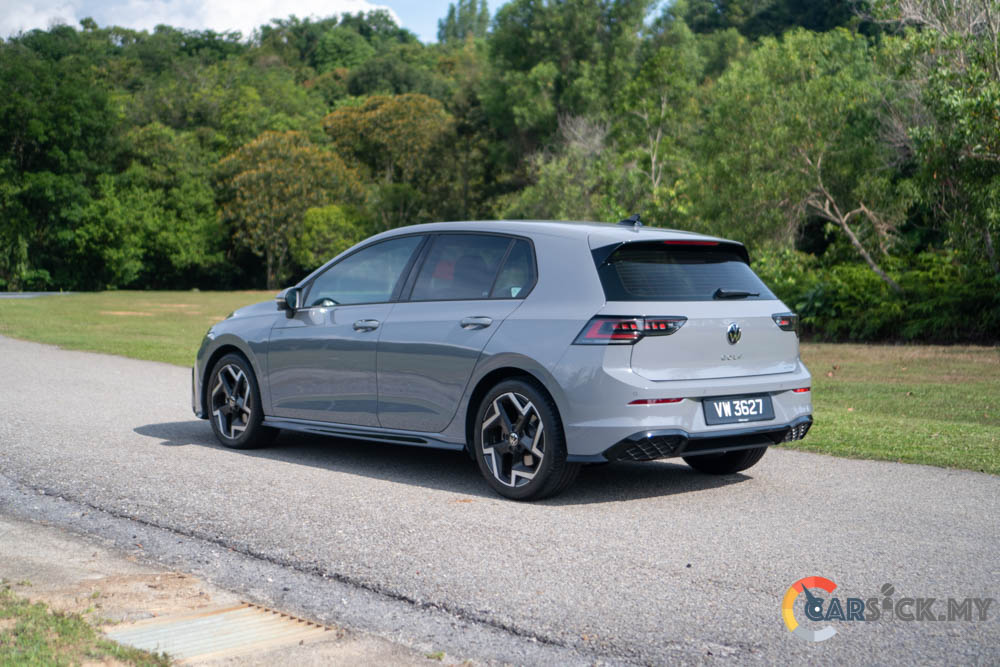 Now, don’t let the entry-level positioning fool you. This isn’t exactly a budget-friendly hatchback. In fact, at its price point, it has quite a bit of competition to deal with. However, the latest Mk 8.5 Golf R-Line has something rather interesting going for it. Underneath that familiar bodywork sits an all-new 1.5-litre turbocharged engine with mild-hybrid technology. So, while the GTI gets all the attention for its performance, could the humble R-Line actually be the smarter Golf to live with? More importantly, does it still have that special Golf charm? Let’s find out.
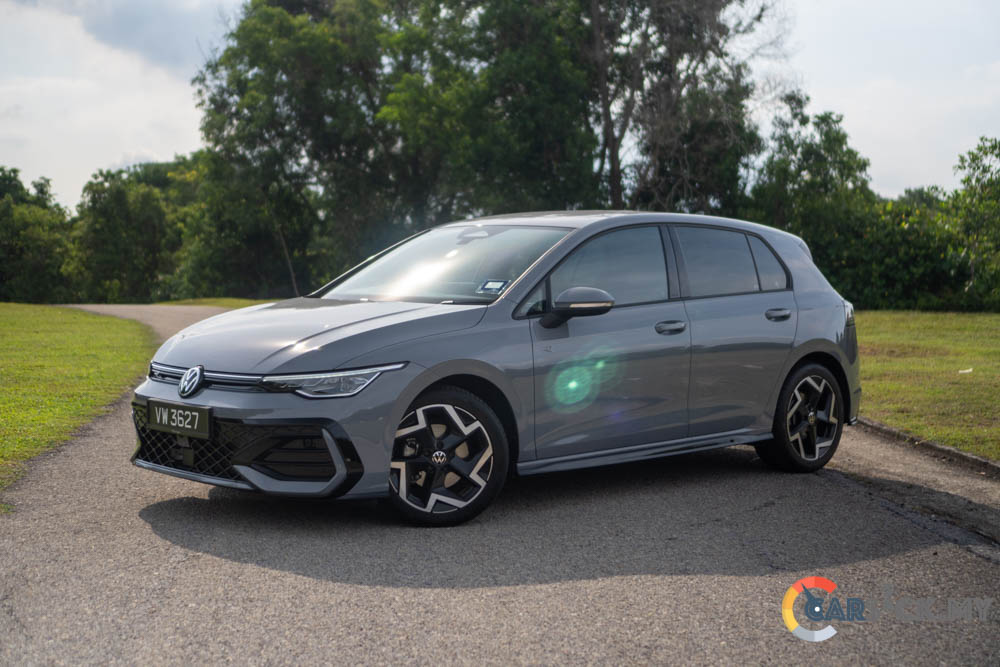
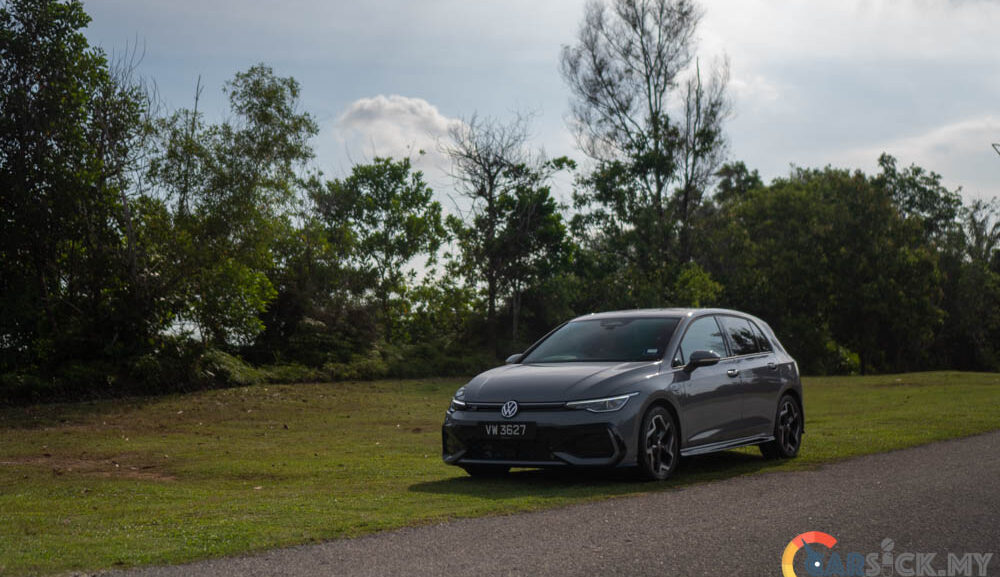
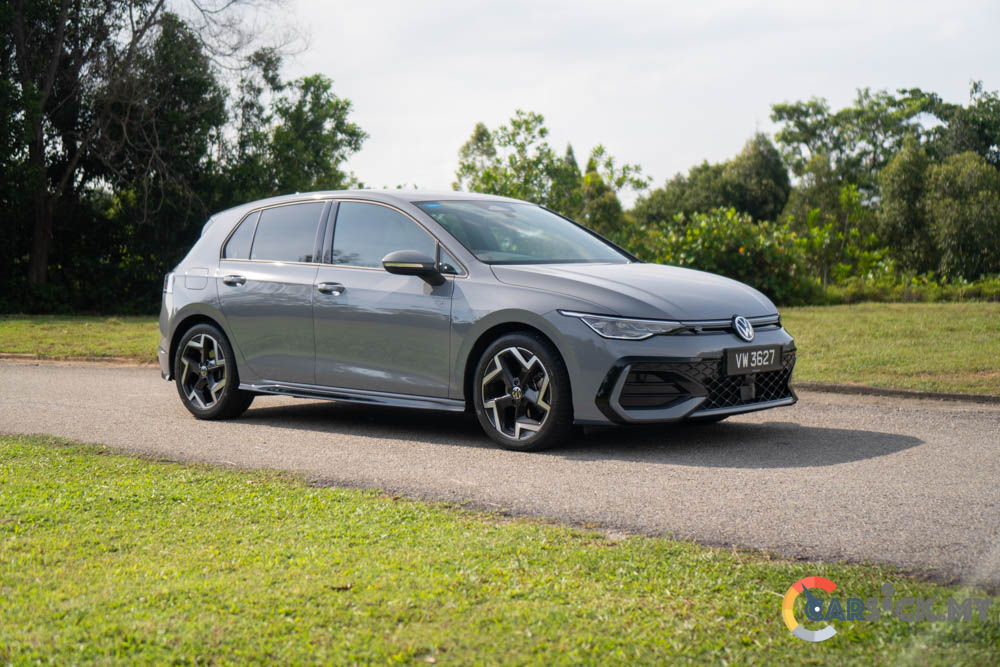
Let’s get one thing out of the way first. The Golf R-Line isn’t going to surprise anyone with a completely different design. It is, after all, a Golf. And that’s probably a good thing. Volkswagen hasn’t messed around too much with the familiar Golf silhouette, which remains one of the most recognisable shapes in the hatchback world. However, look a little closer, and you’ll start noticing a few details that make the R-Line rather interesting.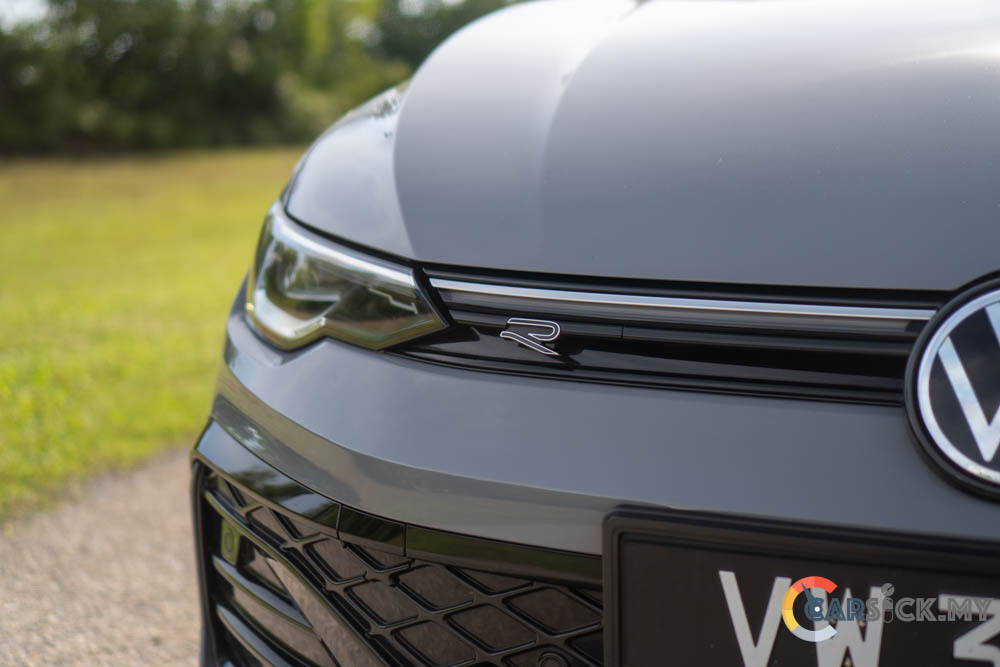
Starting at the front, you’ll find an R badge instead of the GTI lettering. This is because the R-Line borrows its sporty styling cues from the range-topping Golf R rather than the GTI. The front bumper follows the same theme, looking remarkably similar to what you’d find on its much more powerful sibling. The headlights are full LED units, complete with a Matrix high-beam function. And honestly, this is one of those features that makes the Golf feel considerably more premium. Having intelligent lighting technology like this in an entry-level Golf is quite impressive, especially when you consider that plenty of vehicles in this price category still don’t offer anything quite like it. 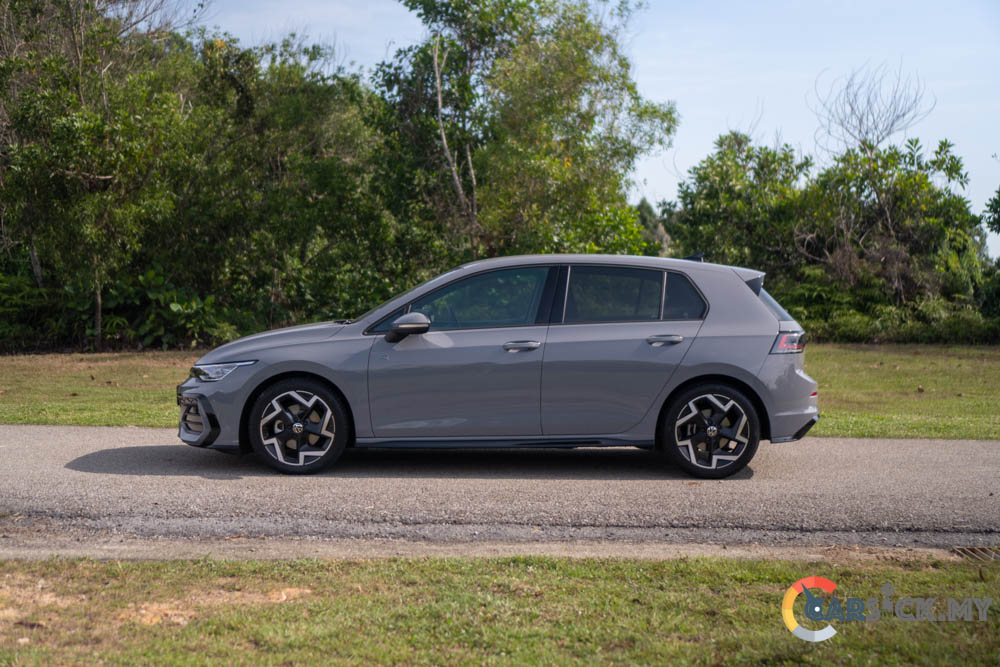
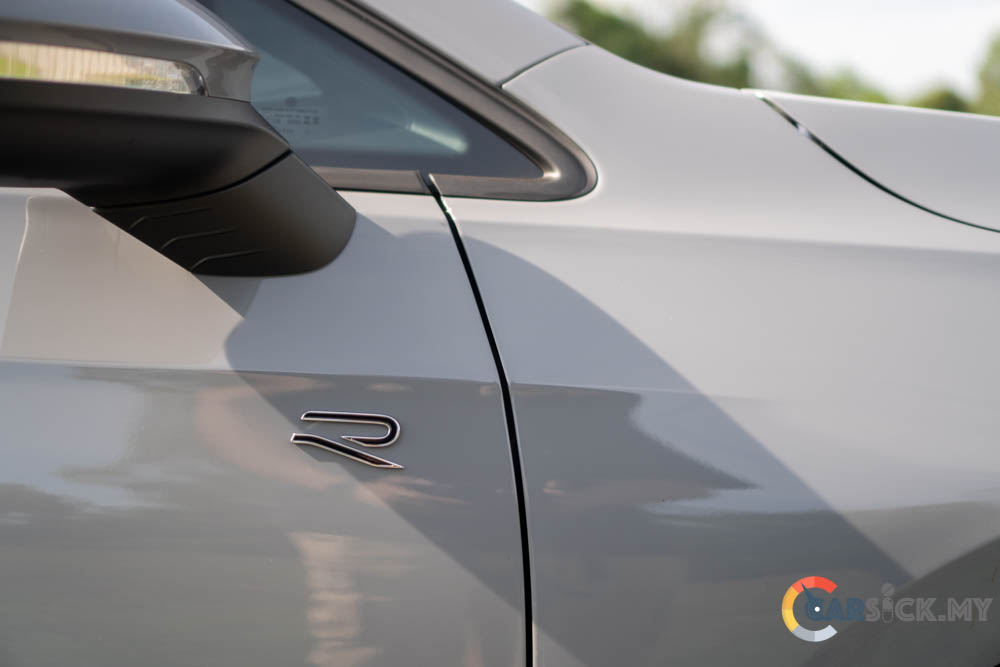
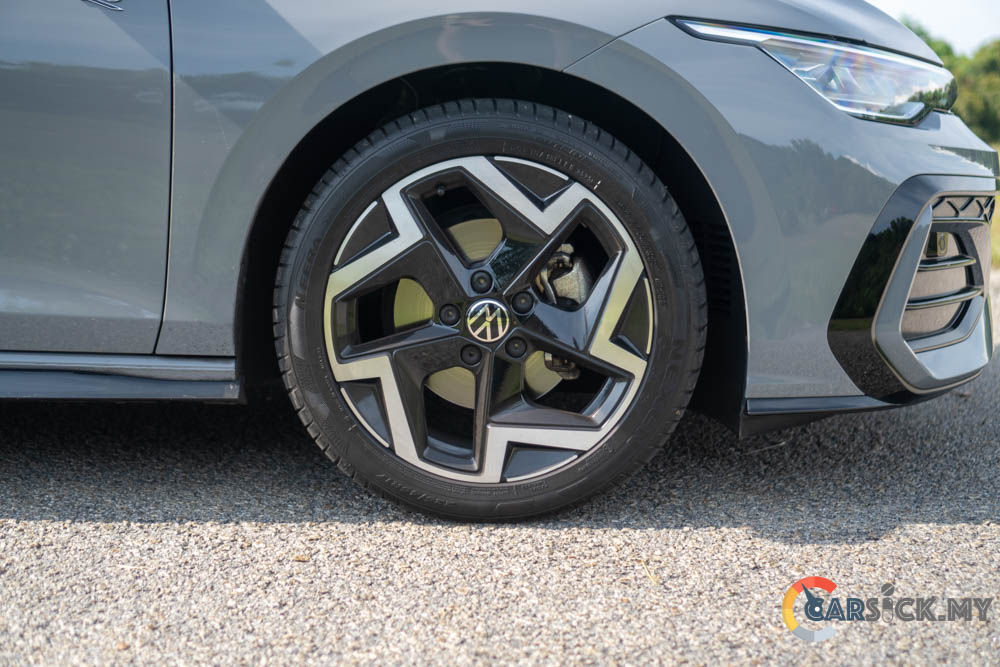
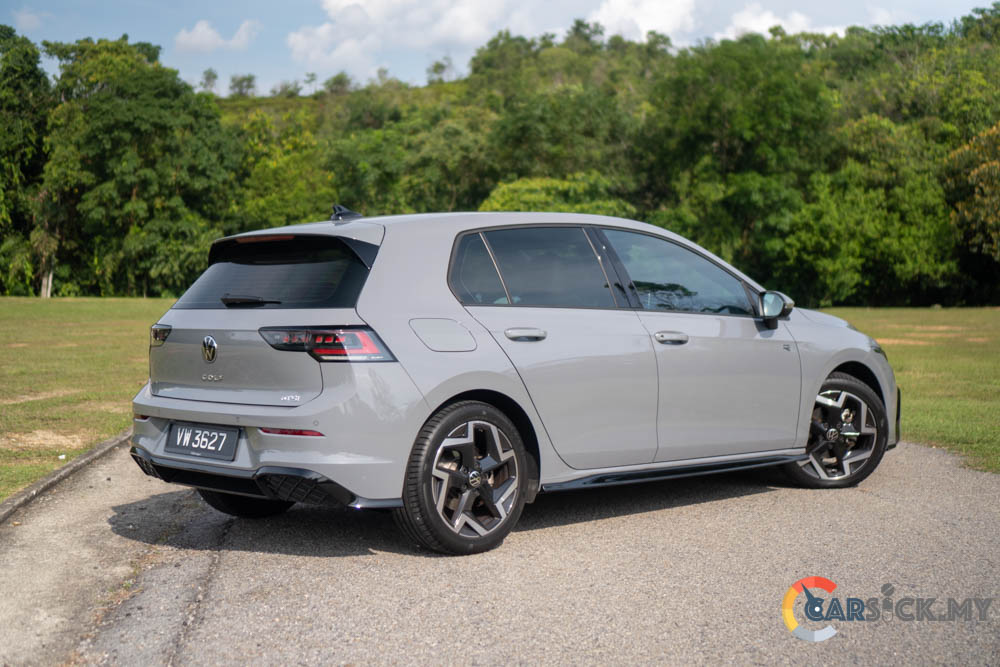
Moving to the sides, the R-Line gets the smallest alloy wheels in the Golf lineup. Measuring 17 inches, they’re wrapped in 225/45 R17 tyres. Now, I know some people will probably prefer larger wheels because they look sportier, but there’s actually a benefit to having smaller ones. They should provide a more comfortable ride, while replacement tyres will also be a little easier on your wallet. You’ll also notice that the GTI badge underneath the wing mirrors has been replaced with an R badge. A small detail, perhaps, but it helps reinforce the R-Line’s connection to the Golf R.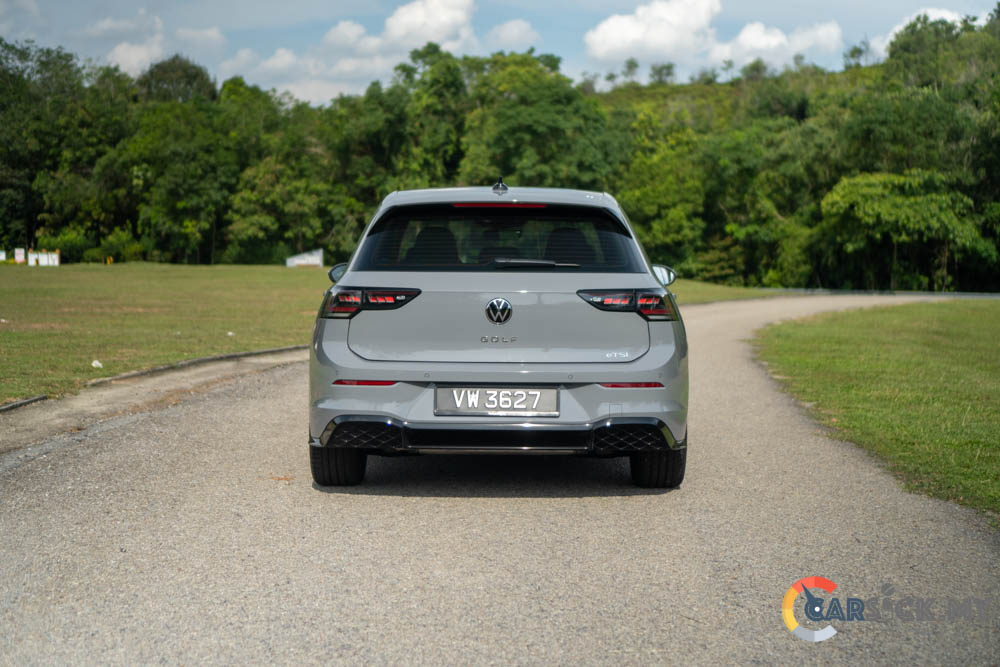
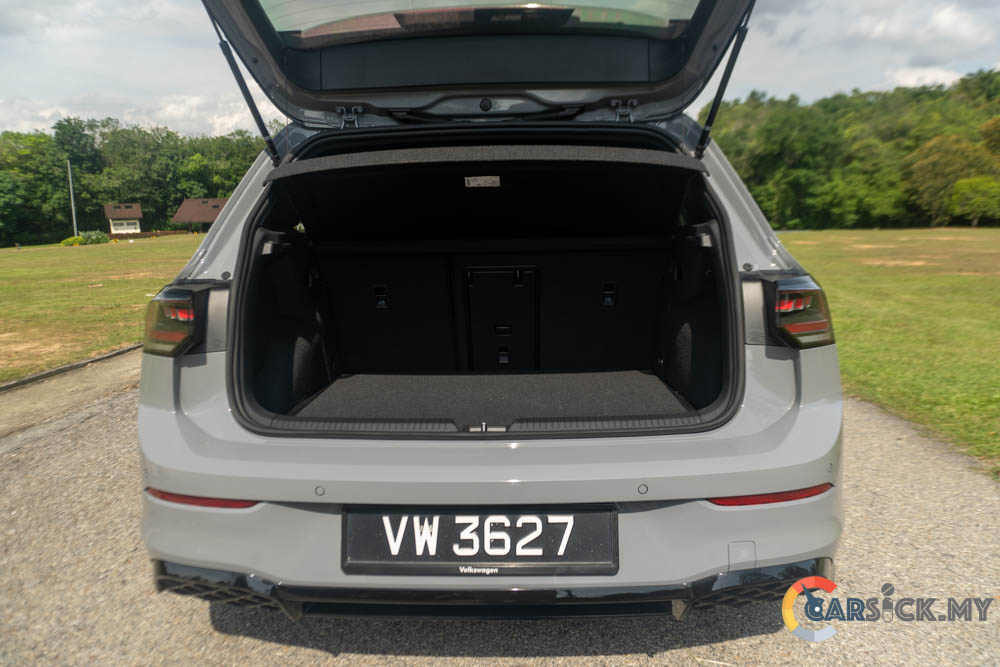
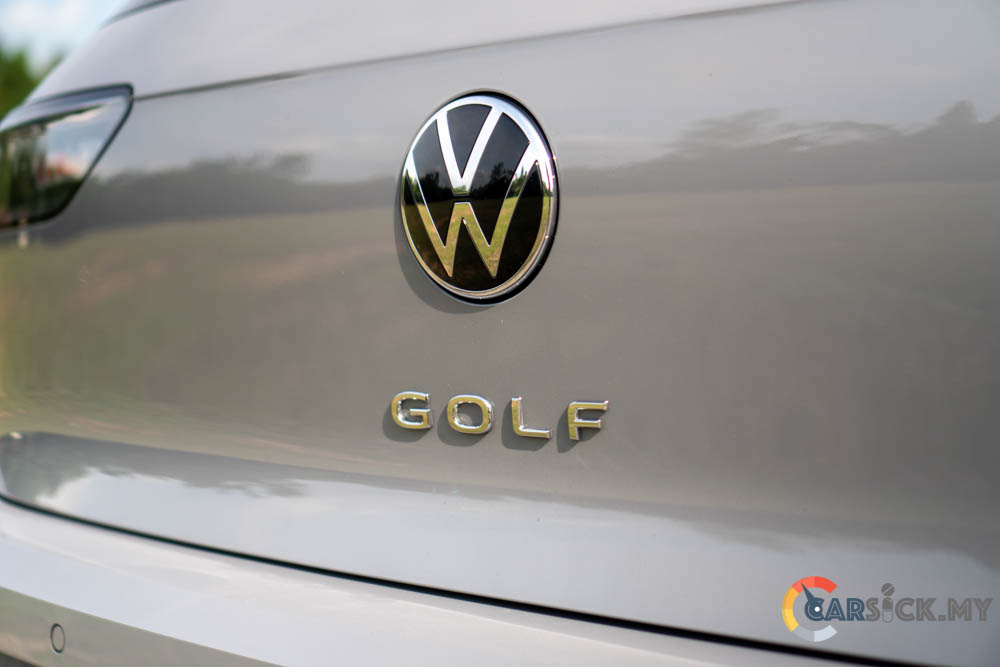
At the back, things are pretty much business as usual. The overall design is very similar to the GTI, except that the GTI lettering underneath the Volkswagen logo has been replaced with a simple GOLF badge. There’s also an eTSI badge to remind you that this isn’t quite the same Golf R-Line we’ve known before. And since this is the entry-level variant, the exhaust outlets are neatly hidden away, giving the rear bumper a cleaner appearance. Personally, I quite like what Volkswagen has done here. It hasn’t tried to reinvent the Golf, and I think that’s the right decision. The design remains familiar, understated and rather handsome. Even after seeing countless Golfs on Malaysian roads, it’s still a car I don’t mind turning around to look at after parking.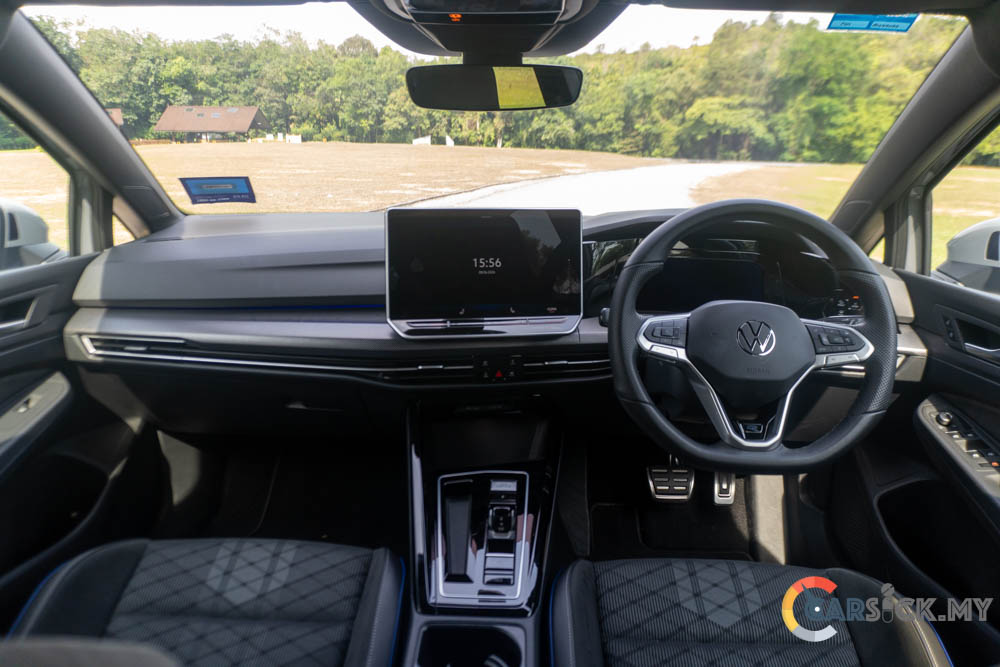
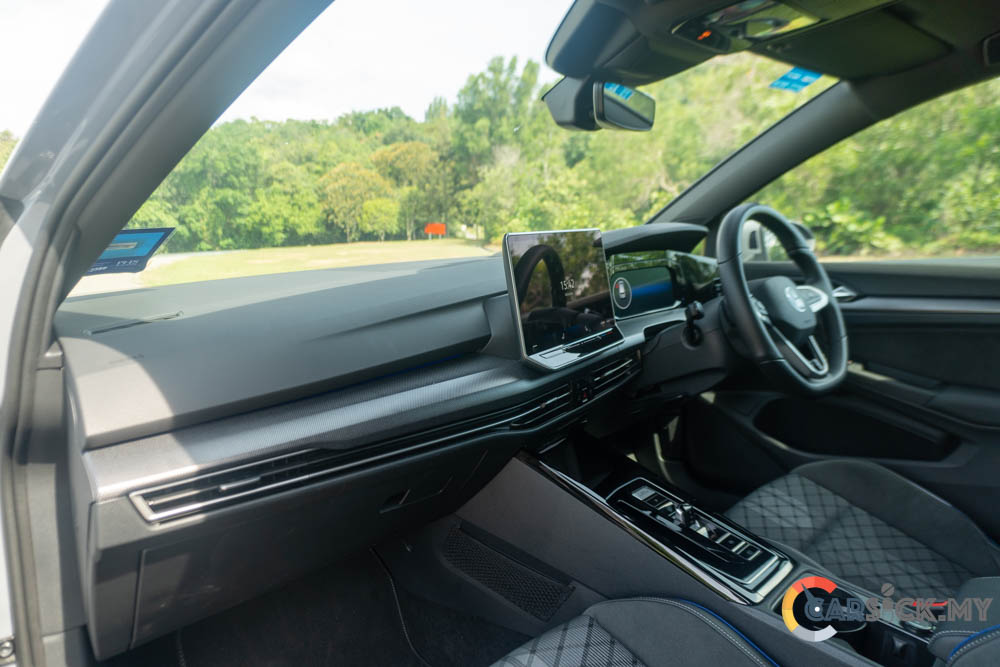
Step inside, and you’ll immediately feel at home if you’ve spent any time in the Golf GTI. Volkswagen has retained the familiar dashboard layout, so you don’t have to relearn everything just because you’re buying the less expensive variant. Of course, there are a few compromises. Starting with the steering wheel, the GTI logo at the bottom has been replaced with an R badge. The red stitching has also disappeared, making way for a slightly more understated look. You’ll still get the same 10-inch digital instrument cluster and 12.9-inch infotainment display, complete with wireless Android Auto and Apple CarPlay. 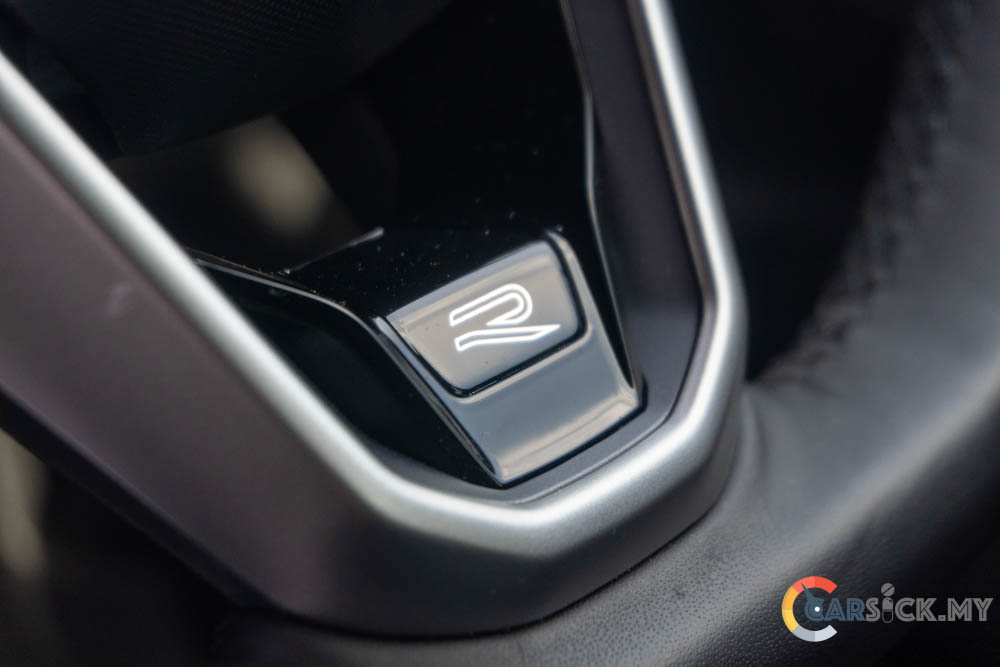
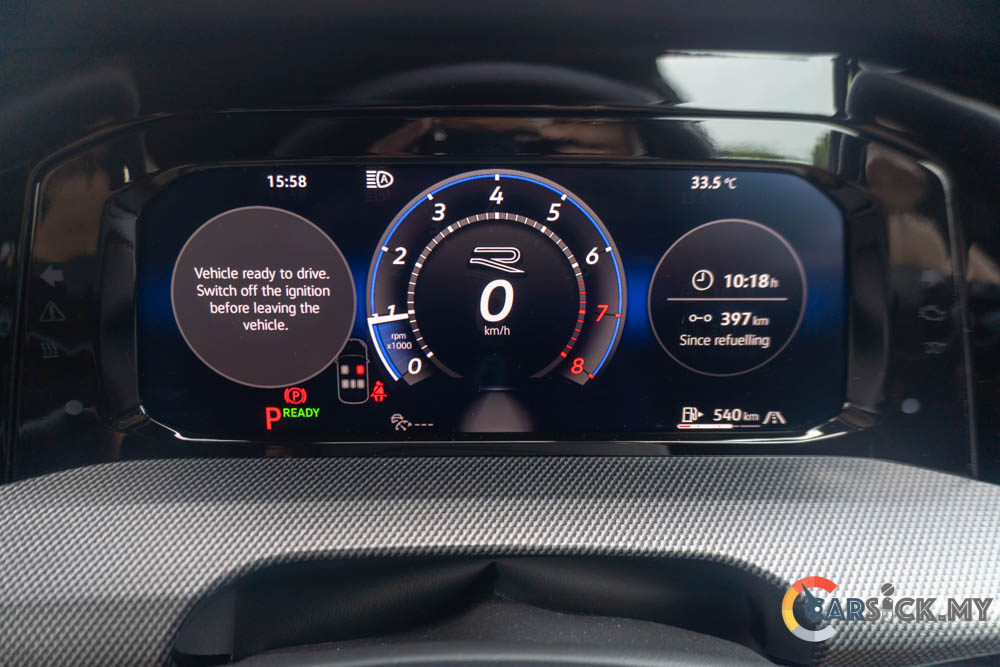
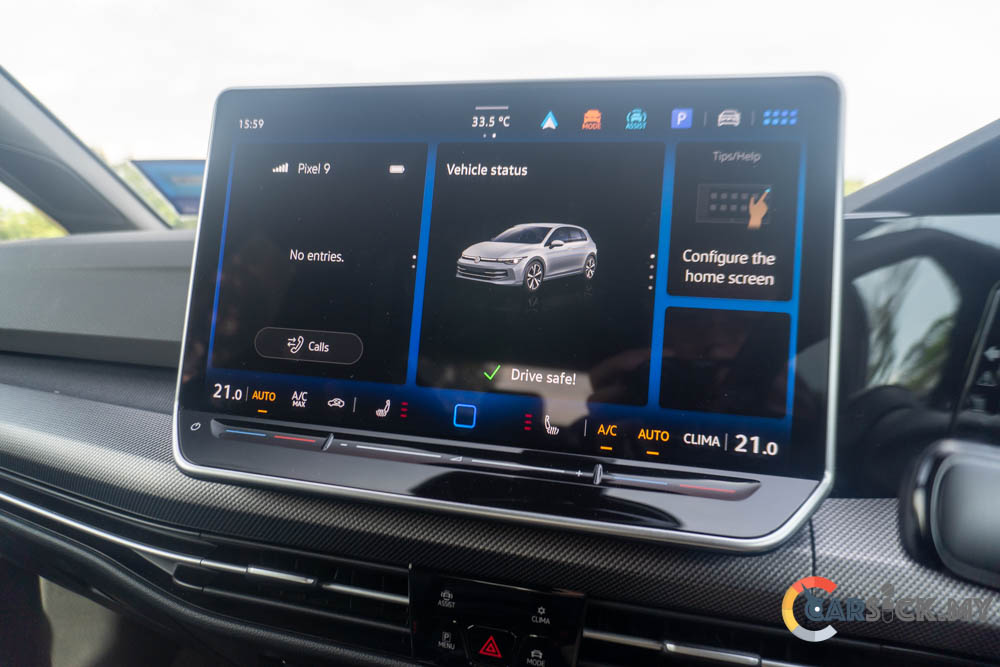
However, the R-Line only gets a conventional reverse camera instead of the 360-degree camera found in the higher-spec variants. It’s not the end of the world, but at this price point, I would have appreciated having the extra camera coverage. The sound system is another area where Volkswagen has kept things relatively simple. You get a standard eight-speaker setup instead of a fancy premium audio system. Thankfully, it doesn’t sound half bad. Unless you’re particularly fussy about your music, I reckon most people will be perfectly happy with it. 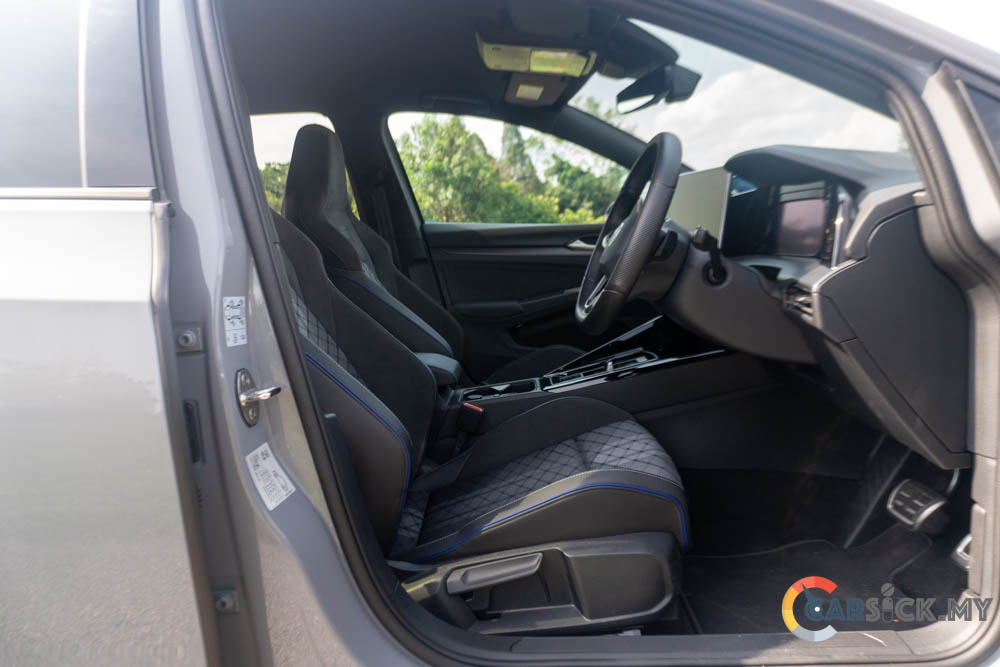
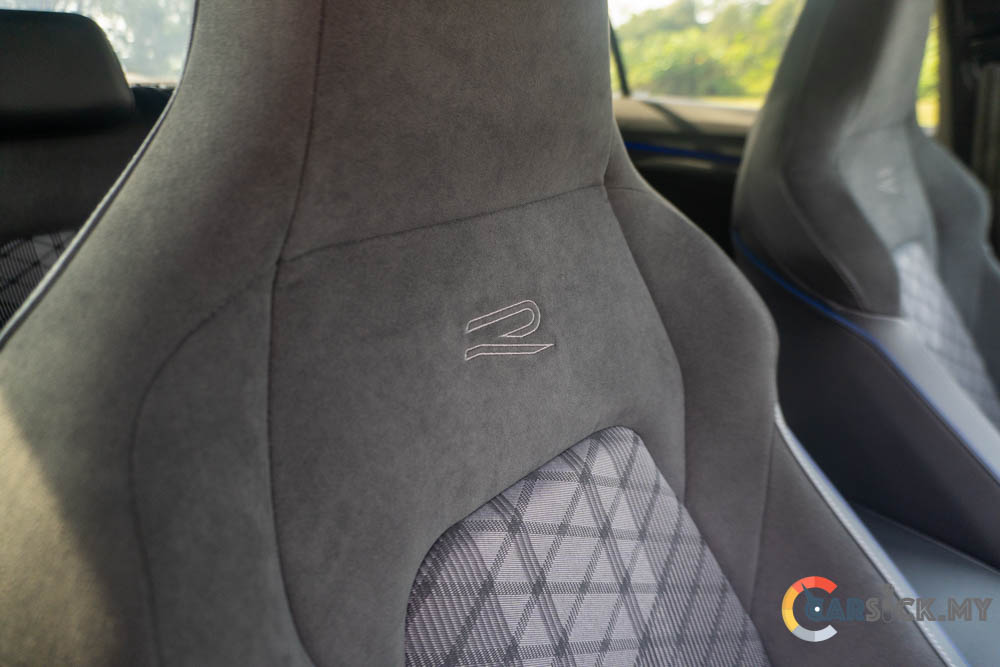
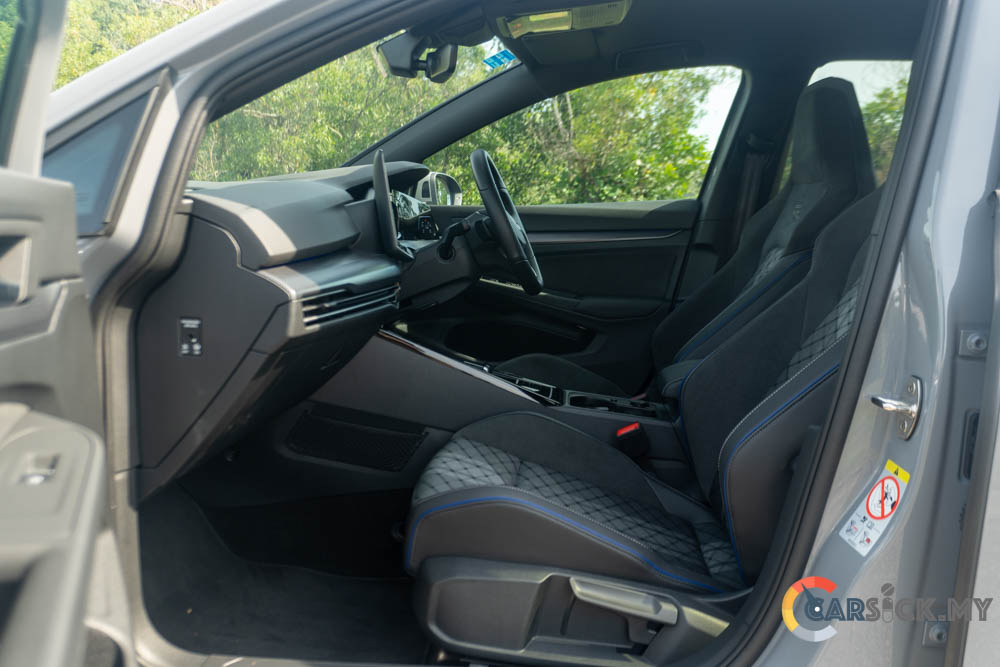
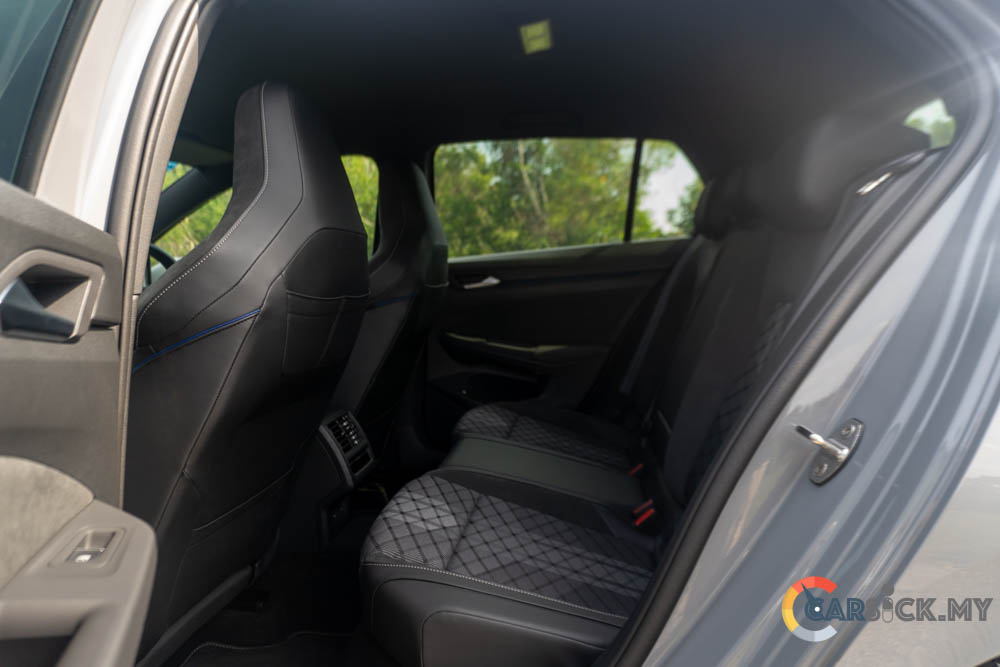
But the biggest difference is actually found in the seats. Unlike the GTI, which gets its own sporty upholstery, the R-Line uses a combination of suede, cloth and leather. Thankfully, Volkswagen hasn’t decided to throw away one of my favourite things about the Golf: those wonderfully supportive sports seats. I genuinely like these seats. They’re ergonomically designed, provide excellent support and do a fantastic job of keeping you in place when you’re driving enthusiastically. They’re comfortable enough for long journeys, yet supportive enough when you decide to have a little fun on your favourite stretch of road. There are a couple of features missing, though. The R-Line loses electric seat adjustments and seat ventilation, leaving you with manual adjustments and seat heating.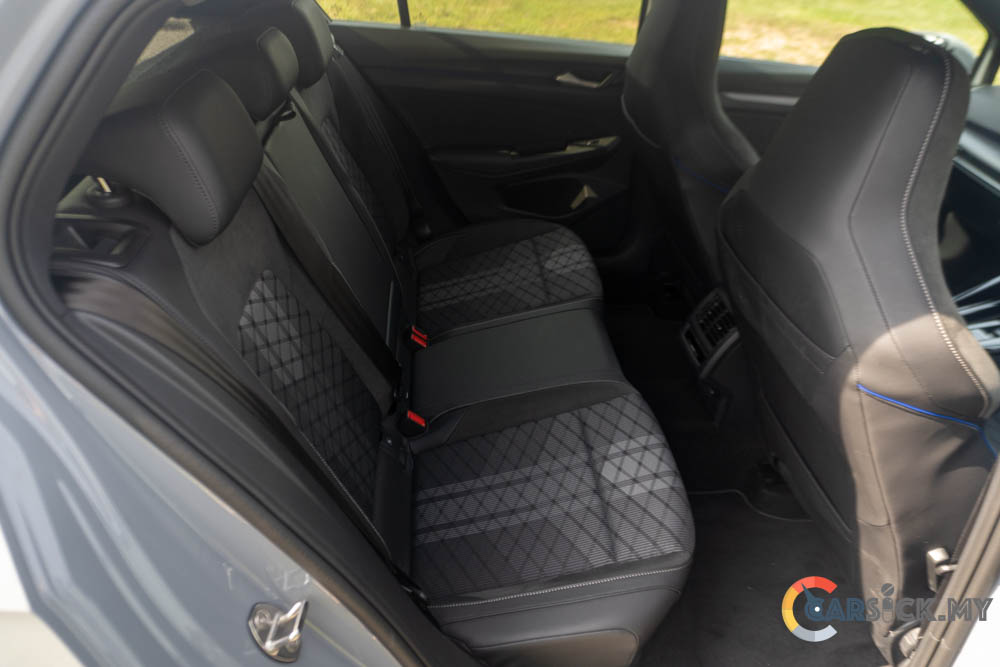
Now, I can already imagine some buyers complaining about the lack of electric adjustments. But personally, I’m not particularly bothered. And when it comes to seat ventilation, I’m not exactly losing sleep over it either. The cloth-heavy upholstery doesn’t absorb heat as readily as a fully leather seat, which makes the omission a little easier to accept. So yes, there are compromises, but nothing that makes the cabin feel particularly cheap. At the end of the day, it still feels very much like a Golf.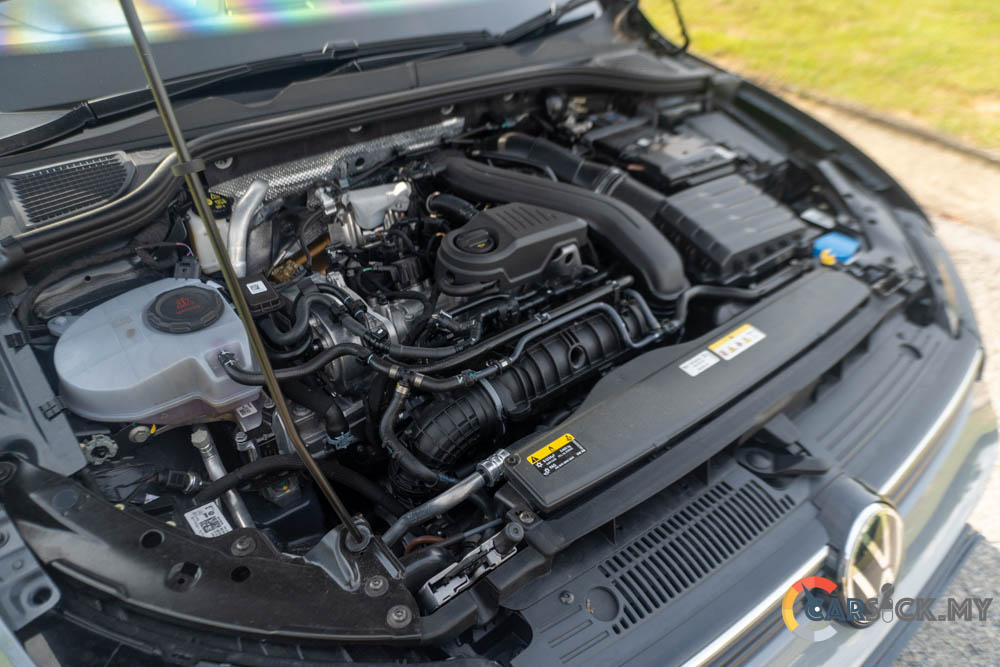
Now, this is where things get interesting. The biggest change for the Mk 8.5 Golf R-Line isn’t something you’ll notice from the outside. It’s what’s sitting underneath the bonnet. Gone is the previous powertrain, making way for a new 1.5-litre turbocharged engine with mild-hybrid technology. Volkswagen has also brought back the dual-clutch transmission, this time in the form of a seven-speed unit. Power is still sent to the front wheels, while the engine produces approximately 150 PS and 250 Nm of torque. This allows the Golf R-Line to complete the century sprint in 8.6 seconds. Now, let’s be honest. An 8.6-second 0-100 km/h time isn’t going to set anyone’s hair on fire. There are considerably cheaper cars out there that can do the same sprint faster. But here’s the thing: I don’t think outright performance is what Volkswagen is trying to sell with this particular Golf.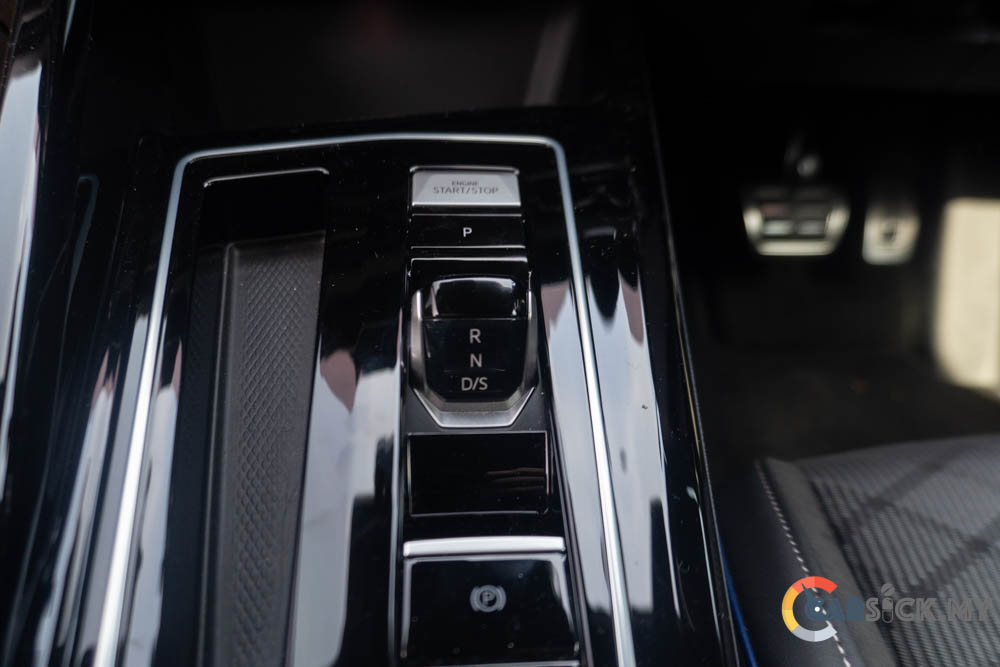
During my time with the car, I found the engine more than adequate for everyday driving. It has enough punch to get you moving quickly, and when you put your foot down, it certainly doesn’t feel underpowered. You can still make decent progress on the highway, and overtaking slower traffic isn’t something you’ll need to plan three business days in advance. But what makes this engine particularly interesting is its efficiency. Volkswagen has packed quite a bit of technology into this little 1.5-litre unit, with the mild-hybrid system playing an important role in keeping fuel consumption under control.
The mild-hybrid system works somewhat like what you’d find in a full-hybrid vehicle. Its electric motor assists the combustion engine and allows the car to manoeuvre at low speeds without always needing the engine to kick in. It can also shut the engine off when you’re coasting, helping to save fuel whenever possible. Combine that with an already efficient turbocharged engine, and you have a powertrain that’s designed to make the most out of every drop of petrol. During my mixed-driving experience, the Golf R-Line returned an average fuel consumption figure of approximately 6.7 litres per 100 km. That’s a rather respectable figure for a car of this size and performance.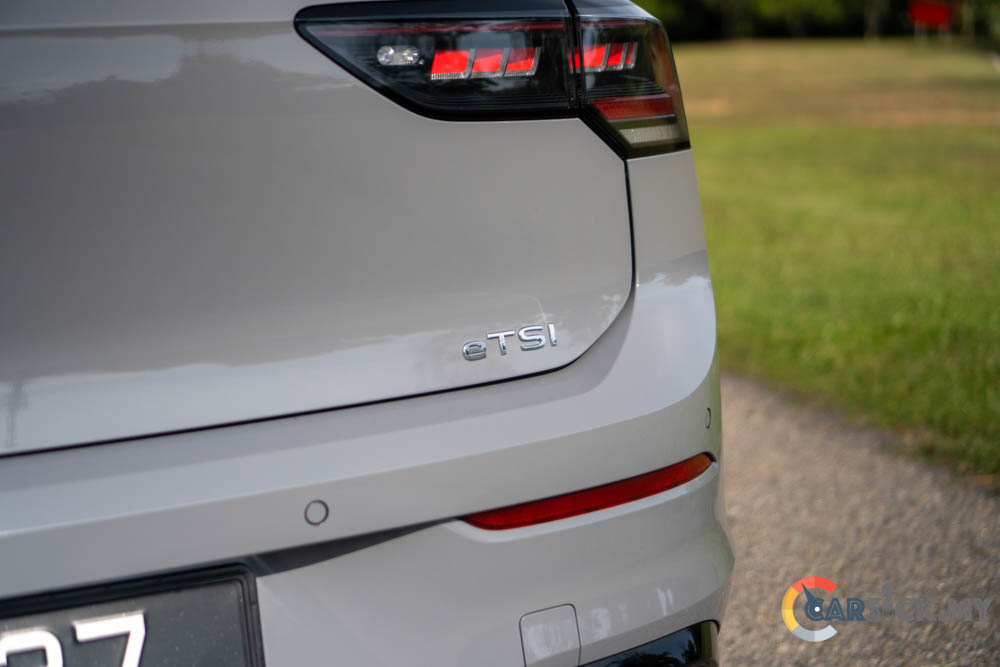
The gearing is also tuned with long-distance cruising in mind. So, if you’re someone who regularly travels between Kuala Lumpur, Penang, Johor Bahru or anywhere else in the country, the Golf R-Line should be a rather pleasant companion. You get enough performance to make decent progress, while its efficient powertrain means you won’t have to make quite as many stops at the petrol station. And honestly, that’s something I can appreciate.
Of course, a Golf wouldn’t be a Golf without its driving characteristics. And thankfully, this is one area where the R-Line hasn’t disappointed me. Let’s start with the suspension. Despite wearing the smaller 17-inch wheels, the Golf R-Line has a suspension setup that’s remarkably well-tuned. When you’re travelling over the usual collection of uneven roads, potholes and less-than-perfect surfaces that we Malaysians have grown accustomed to, the suspension does a great job of soaking up most of the imperfections. What’s even more impressive is that it doesn’t feel overly soft or disconnected when you start pushing the car through corners. The Golf R-Line remains remarkably planted, and there’s still a good amount of that sporty character you’d expect from a Golf GTI. It manages to strike a rather nice balance between everyday comfort and enthusiastic driving.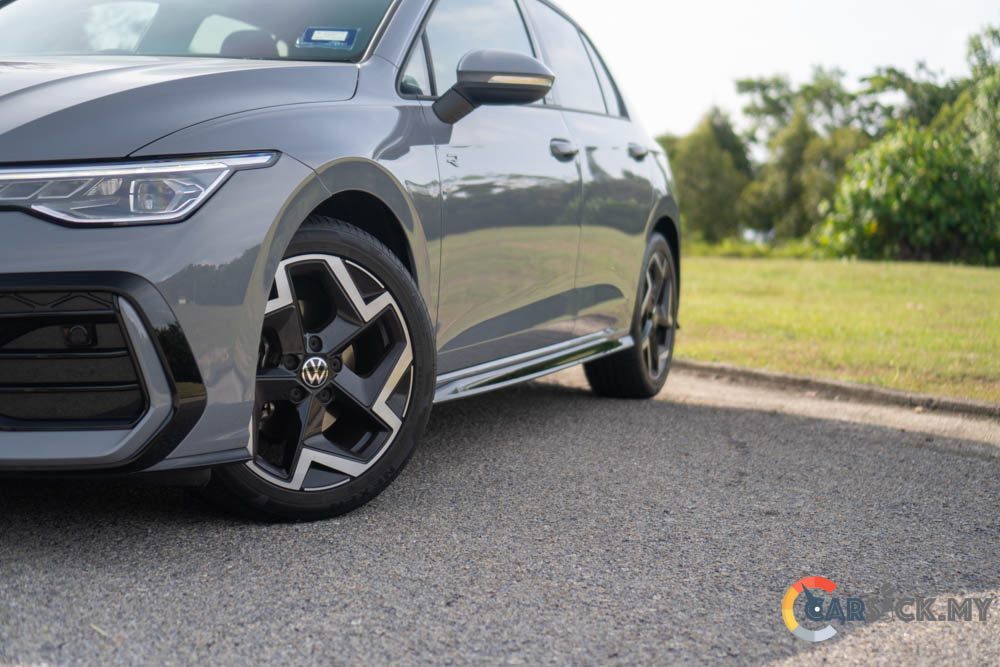
The steering is another highlight. The steering rack is quick, giving the car a rather sharp and responsive feel. Make an input through the steering wheel, and the car reacts almost immediately. It feels agile, eager and surprisingly entertaining for something that’s supposed to be the entry-level Golf. In fact, if you were to drive this car without knowing which variant you’re in, I reckon you’d still recognise that familiar Golf driving character. It has that same sense of confidence and composure that I’ve always enjoyed in the GTI. And that’s probably my favourite thing about the Golf R-Line. It may not have the engine or outright performance of the GTI, but it hasn’t lost the fundamental qualities that make a Golf so enjoyable to drive.
Now, the brakes are a slightly different story. I’m not particularly impressed with the initial bite. While the brake pedal feel is comparable to the GTI, I find that you need to apply slightly more pressure before the brakes start biting properly. Don’t get me wrong, the overall braking performance is perfectly acceptable. Perhaps I’m simply spoilt after driving so many GTIs over the years. But I do wish Volkswagen had given the brakes a slightly sharper initial response.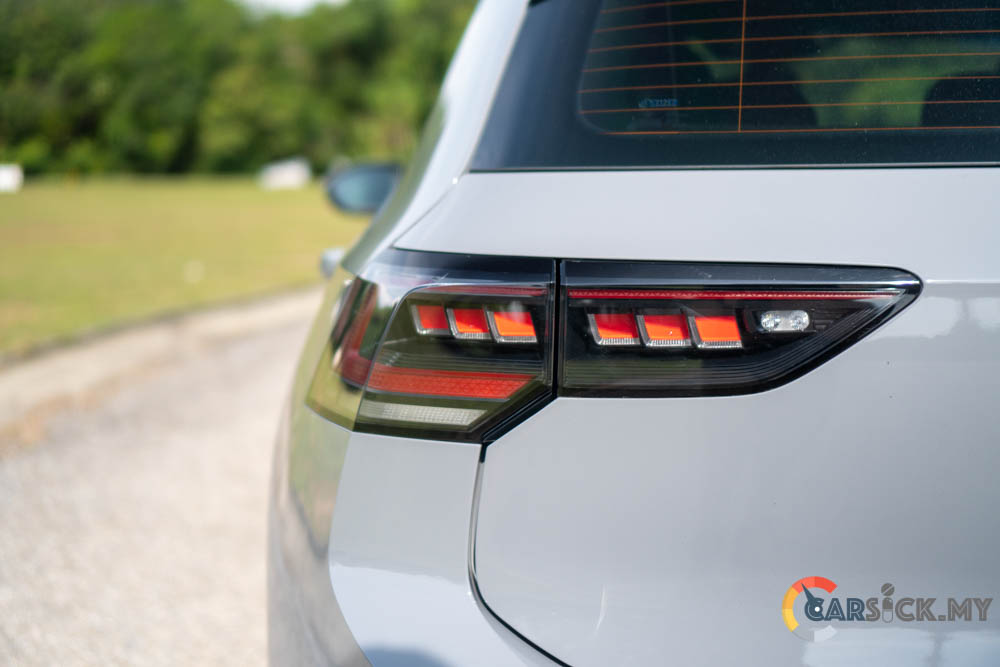
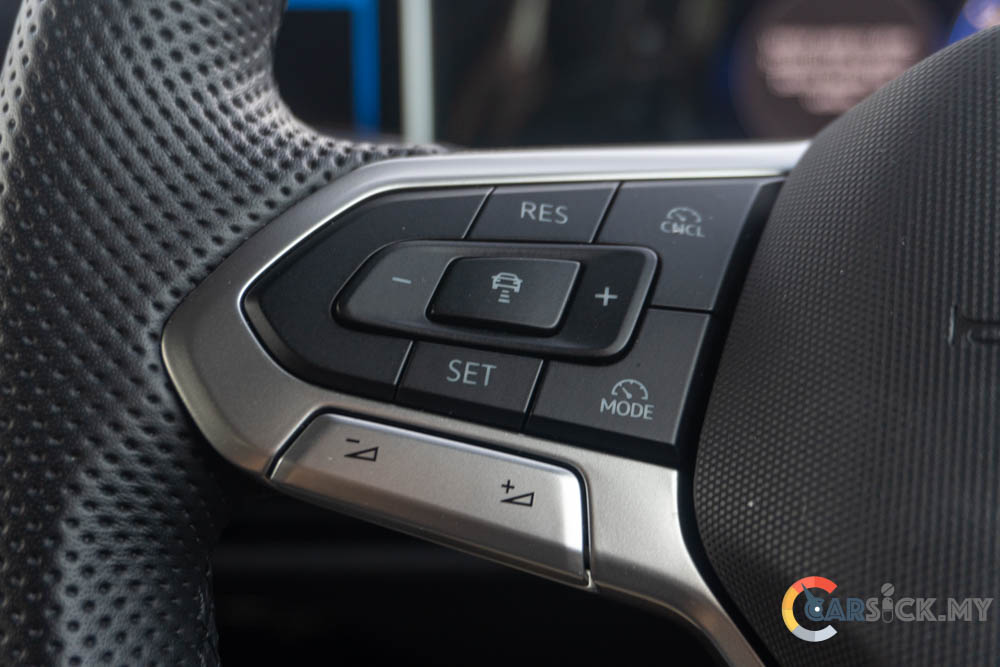
Another important addition to the latest Golf R-Line is its comprehensive suite of advanced driver assistance systems (ADAS). Volkswagen Malaysia has equipped the car with a rather extensive list of safety features, making it a much more complete package. You get Rear Traffic Alert and Exit Warning, Lane Assist, Side Assist, Travel Assist, Park Distance Control with front and rear obstacle warnings, Front Assist autonomous emergency braking with Pedestrian and Cyclist Monitoring, Adaptive Cruise Control (ACC), and Emergency Assist. That’s quite a long list of features for the entry-level Golf.
More importantly, I found the systems to be relatively unobtrusive. Some ADAS systems can be rather annoying, constantly beeping and intervening when you least expect them to. Thankfully, the Golf R-Line doesn’t make you feel like you’re constantly negotiating with the car just to drive it. It’s there to help when you need it, without taking away too much of the driving experience. And I think that’s exactly how these systems should work. 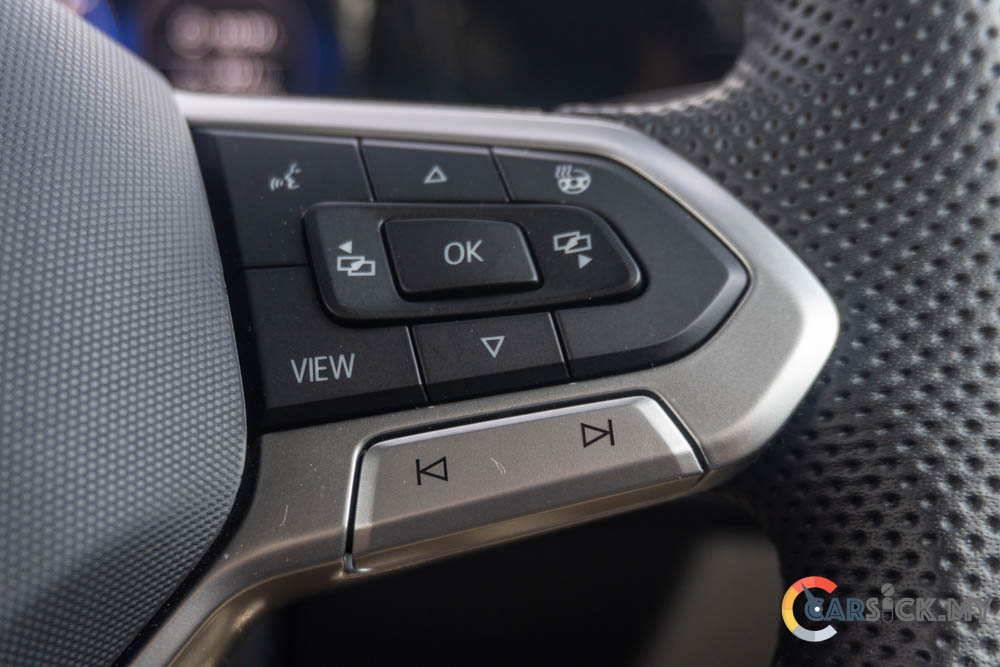
At the end of the day, I came away from the Volkswagen Golf R-Line with a rather positive impression. Its biggest stumbling block is undoubtedly the price. At RM186,580, this is not exactly an inexpensive hatchback. In fact, that’s quite a substantial amount of money to spend on an entry-level Golf.But after spending some time behind the wheel, I find myself liking this car even more than I initially expected. And I’m certainly not the only one. Quite a few of my peers who have experienced the R-Line have also come away with positive impressions. What makes the Golf R-Line appealing is that it doesn’t feel like a stripped-down version of the GTI. It still has the familiar cabin, the excellent driving dynamics, the supportive sports seats and, most importantly, that unmistakable Golf character.
Sure, it doesn’t have the performance of a GTI. You won’t get the same acceleration, the same soundtrack or the same outright excitement when you put your foot down. But not everyone needs those things. What you do get is a car that’s genuinely enjoyable to drive, comfortable enough for everyday use and considerably more focused on fuel efficiency. And that’s where the new 1.5-litre mild-hybrid powertrain makes a lot of sense. The Golf R-Line might not be the most exciting Golf in the showroom, but it could very well be one of the more sensible ones to live with. After all, you don’t necessarily need a GTI to enjoy a Golf. Sometimes, all you need is the right Golf.
Check out the full photo album here.