For many Malaysian families, a car is part of everyday life. It takes parents to work, children to school and families on long balik kampung journeys. While comfort, fuel efficiency and technology often influence buying decisions, safety remains an important consideration, particularly when choosing a vehicle to carry loved ones.
 Modern cars come equipped with various safety features, from multiple airbags to advanced driver-assistance systems (ADAS). However, protection in a collision depends on more than the number of features listed in a brochure. The vehicle’s body structure, the materials used in its construction and the way its safety systems work together can all influence how occupants are protected. Understanding these elements can help buyers make more informed decisions when choosing their next car.
Vehicle safety generally falls into two categories: active safety and passive safety. Active safety systems aim to help drivers avoid accidents. Technologies such as autonomous emergency braking (AEB) and lane-keeping assist can provide warnings or intervene in certain situations to reduce the risk of a collision. Once largely associated with premium vehicles, these features are now available in a wider range of models.
However, these systems have limitations and cannot prevent every accident. Their performance depends on factors such as road conditions, visibility, vehicle speed and whether the situation falls within their operating parameters. This is where passive safety becomes important. Designed to help protect occupants when a collision occurs, passive safety includes the vehicle’s body structure, seatbelts, airbags and head restraints.
The body structure is engineered to manage crash forces, with certain sections designed to deform in a controlled manner to absorb energy while other areas help preserve the passenger compartment. Seatbelts and airbags work alongside the structure to restrain occupants and reduce the risk of injury. Their effectiveness also depends on factors such as the severity and direction of the impact, correct seatbelt use and the occupant’s seating position. Much of this protection comes from engineering that is not immediately visible to someone sitting behind the wheel.
High-strength, hot-stamped steel components are used in selected areas of Hyundai vehicles. A vehicle’s body is made up of components with different structural roles. Some are designed to absorb impact energy through controlled deformation, while others need to resist deformation to help maintain the space around occupants.
This requires careful selection of materials, steel grades and thicknesses. Ultra-high-strength steel and hot-stamped steel, for example, can be used in structural areas such as centre pillars, side sills and roof rails, where strength is important for managing crash loads. Within Hyundai Motor Group, Hyundai Steel works with the Group’s vehicle engineers to develop steel grades suited to these requirements.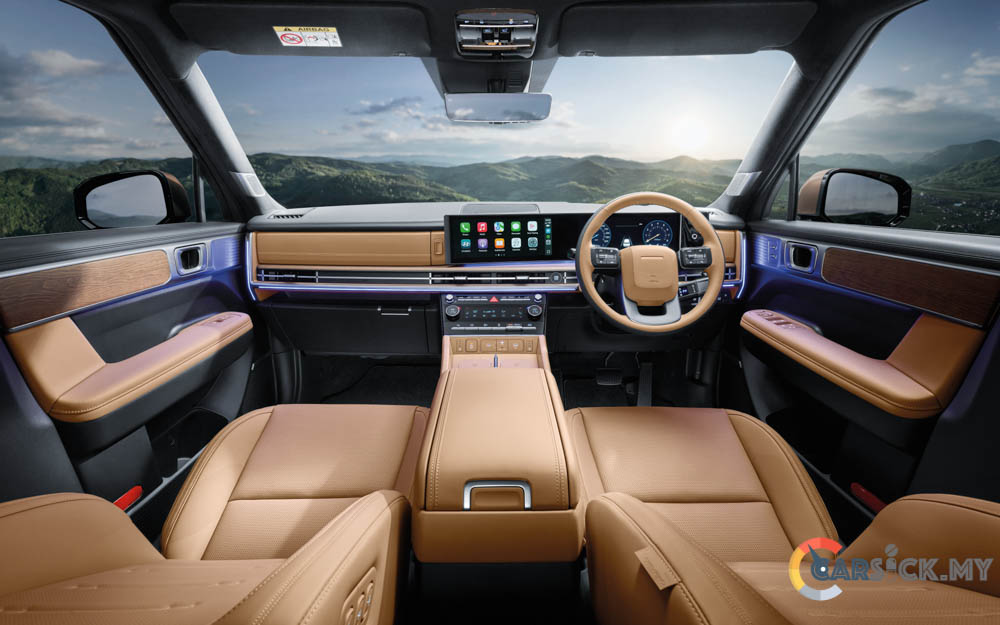
Manufacturing methods also influence how materials perform. One example is tailor-welded blanks (TWB), which combine steel sheets of different grades or thicknesses through laser welding before the material is formed into a component. This allows engineers to place stronger or thicker material where needed while reducing material use in other areas. Another process is hot stamping. Steel is heated to above 900°C before being pressed into shape and rapidly cooled, producing components with high strength for selected structural applications.
These techniques allow engineers to reinforce important sections of a vehicle without adding unnecessary weight. However, stronger steel alone does not guarantee better occupant protection. The overall design, component placement, manufacturing consistency and integration with restraint systems are equally important.
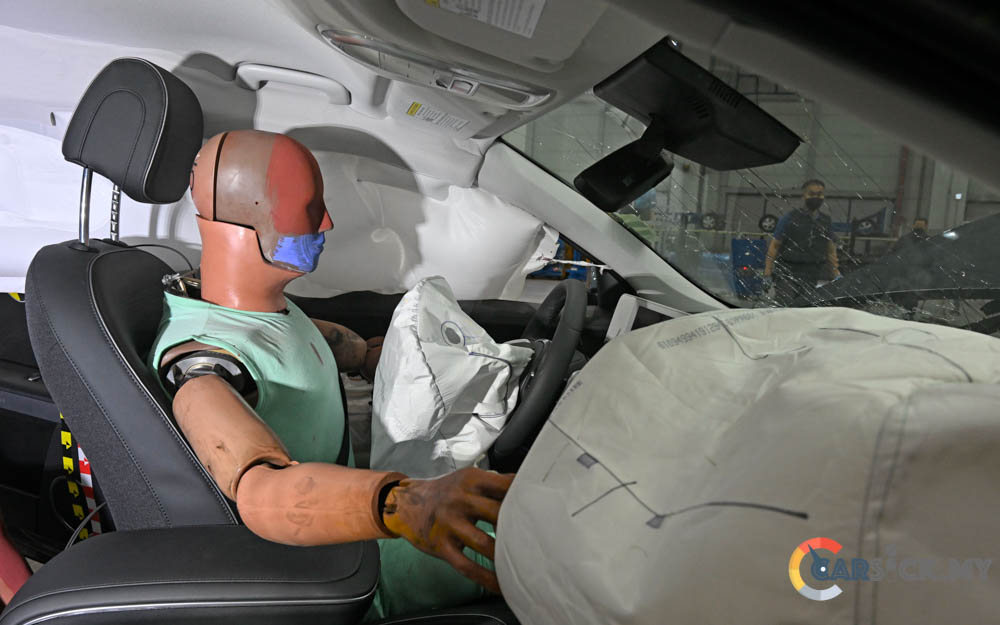
THOR crash-test dummies provide detailed measurements to help engineers assess potential occupant injuries. Before a vehicle reaches the showroom, engineers conduct crash tests to evaluate how its structure and safety systems respond to different collision scenarios. Hyundai’s Namyang R&D Centre in South Korea is one facility where this work takes place. Among the tools used are advanced crash-test dummies, including the Test Device for Human Occupant Restraint (THOR).
The THOR dummy is equipped with 157 sensors designed to measure forces and movements at different parts of the body. These measurements help engineers examine how occupants may respond during a collision and identify areas where the vehicle’s structure, seatbelts or airbags could be improved. Crash testing is not simply about determining whether a vehicle’s body remains intact. Engineers also need to understand how forces are transferred to occupants and whether the restraint systems manage those forces effectively. The findings can then inform improvements to structural components and occupant protection systems, with the aim of reducing injury risk across different crash conditions.
The Hyundai SANTA FE combines structural engineering with occupant restraint systems to help protect passengers during a collision. The Hyundai SANTA FE provides an example of how material selection and structural design are applied in a production vehicle. According to Hyundai, the model uses third-generation steel that combines higher strength with formability. The proportion of hot-stamped steel has increased from 13.2% in the previous model to 15.3%, contributing to a rise in average body tensile strength from 67 to 70 kgf/mm².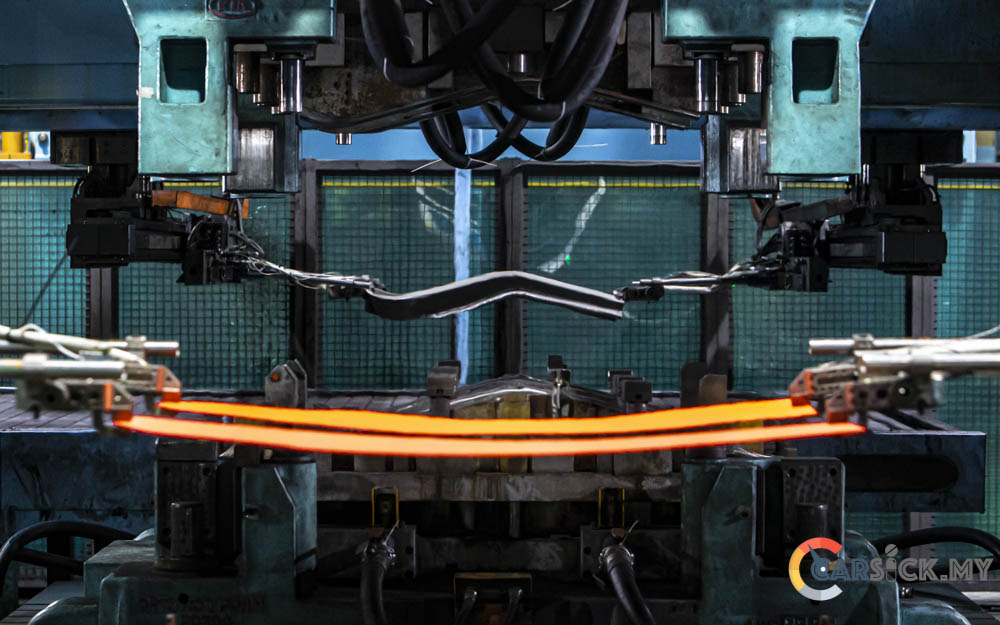
Selected areas also use 150K-grade tailor-welded blanks alongside hot-stamped components to meet specific structural requirements. In a frontal collision, the vehicle needs to manage impact energy while helping preserve space for the driver and front passenger. The SANTA FE incorporates a subframe designed to distribute crash forces through the structure, while its multi-skeletal engine room helps dissipate impact energy. An aluminium bumper beam also contributes to impact absorption without adding unnecessary weight.
Side impacts present a different challenge because the distance between the point of impact and an occupant can be relatively small. To address this, the SANTA FE uses reinforced seat cross-members, intermediate reinforcement, an additional bulkhead and thicker hot-stamped pillar sections in selected areas. These components form part of a broader structural approach intended to help maintain occupant space during a collision.
External assessments offer another reference for buyers evaluating vehicle safety. The SANTA FE received an Insurance Institute for Highway Safety (IIHS) TOP SAFETY PICK+ award for 2026 and achieved a five-star Australasian New Car Assessment Program (ANCAP) rating in 2024. Such results should be considered alongside the specific model year, market specification and testing requirements covered by each assessment. Safety equipment and vehicle specifications can vary between markets, so ratings should not automatically be assumed to apply identically to every version sold worldwide. Understanding vehicle safety does not require buyers to become automotive engineers. A few practical checks can help provide a clearer picture of how a particular vehicle is equipped and assessed.