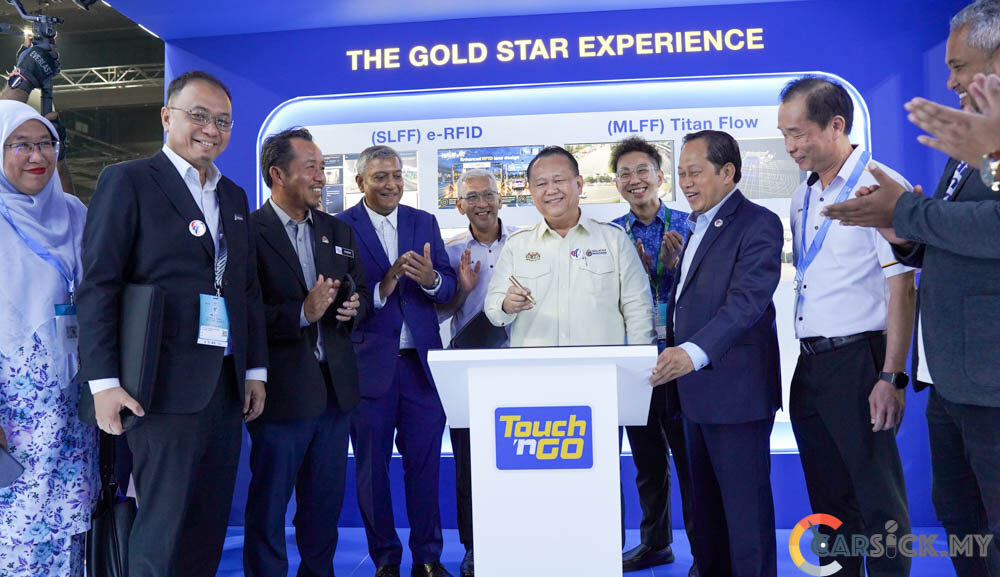

Touch ’n Go is marking three decades of supporting Malaysian mobility by expanding its Enhanced RFID infrastructure, with 10 additional lanes set to be introduced across five highways. Announced during the MyARTTE 2026 exhibition, the expansion represents another step in Touch ’n Go’s efforts to support Malaysia’s eventual transition towards Single Lane Fast Flow (SLFF) and Multi-Lane Fast Flow (MLFF) tolling.
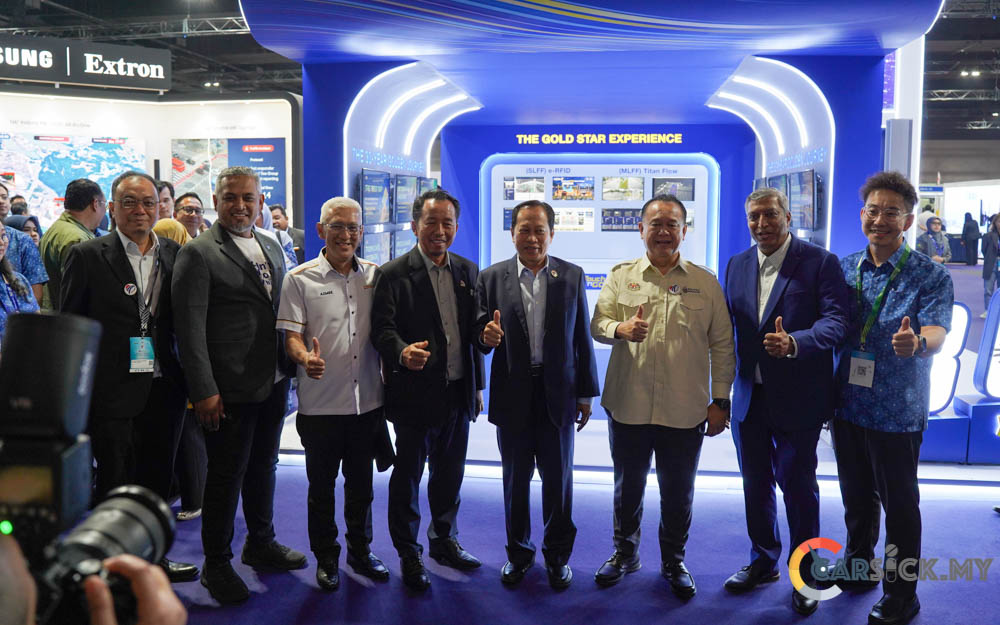 The new Enhanced RFID lanes will combine RFID technology with Automatic Number Plate Recognition (ANPR), artificial intelligence and machine learning through selected elements of Touch ’n Go’s locally developed Titan Flow technology stack. The combination is designed to improve vehicle detection, increase lane throughput and enable toll transactions to take place more smoothly at higher vehicle speeds. The new lanes will be identifiable by a gold star symbol on their signage.
The 10 additional Enhanced RFID lanes will be introduced at six toll plazas across five highways. These comprise two lanes each at Putrajaya Toll Plaza on the Maju Expressway (MEX), Sungai Ramal Toll Plaza on the Kajang Dispersal Link Expressway (SILK), Bukit Raja Toll Plaza on the Grand Sepadu Highway and Bukit Jelutong Toll Plaza on the Guthrie Corridor Expressway (GCE). The East Klang Valley Expressway (EKVE) will receive one Enhanced RFID lane each at the Sungai Long and Ampang Toll Plazas.
Rather than representing a complete departure from today’s tolling infrastructure, Enhanced RFID is positioned as a practical stepping stone towards future free-flow tolling. The technology allows elements required for SLFF and eventually MLFF to be deployed and tested within existing toll environments before wider implementation. Since RFID was introduced in 2019, more than 4.8 million motorists have registered for the system, allowing them to pass through equipped toll lanes without stopping to make a payment or lowering their vehicle windows.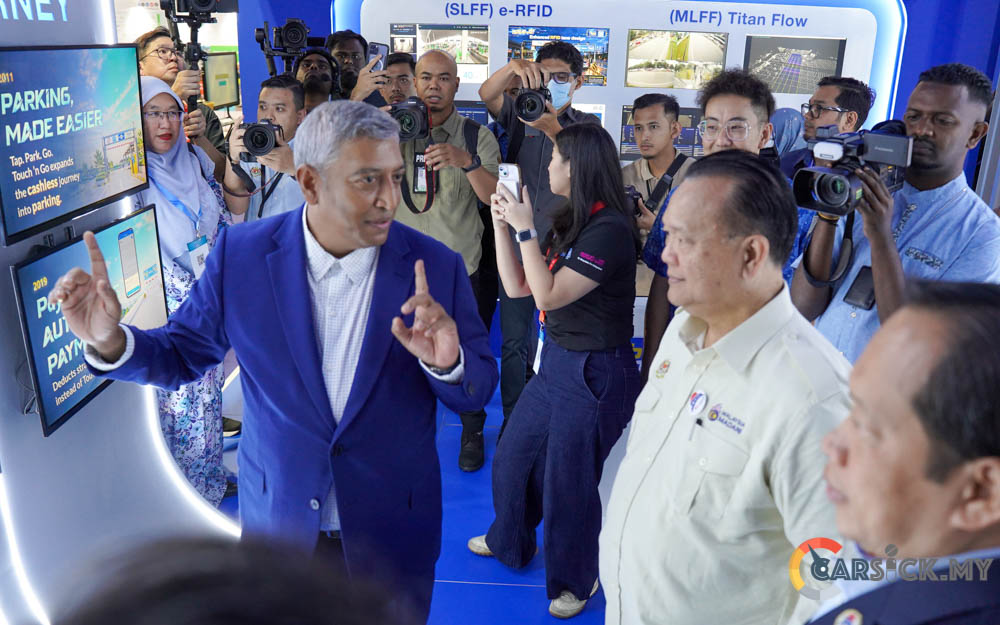
The announcement also highlights just how far Touch ’n Go has evolved since its original toll payment system was introduced in 1996. Today, the company says it has more than 40 million active cards and 4.8 million registered RFID tags, while its infrastructure covers highways, the Malaysia-Singapore border, parking facilities, public transportation and more than 15,000 physical reload points nationwide.
It also serves more than 5,900 corporate customers and over 3,300 government customers. The scale of its operations is reflected in its transaction volumes, with Touch ’n Go processing approximately 2.5 billion transactions annually. That works out to around 6.8 million transactions every day, or more than 283,000 transactions every hour.
At MyARTTE 2026, visitors to the Touch ’n Go Connected Mobility Pavilion can see how the company’s tolling, RFID, parking and other mobility technologies are integrated into its broader ecosystem. The pavilion carries the theme “Future of Malaysia’s Mobility, Built on 30 Years of Trust”, highlighting the infrastructure and technologies developed throughout the company’s three-decade journey.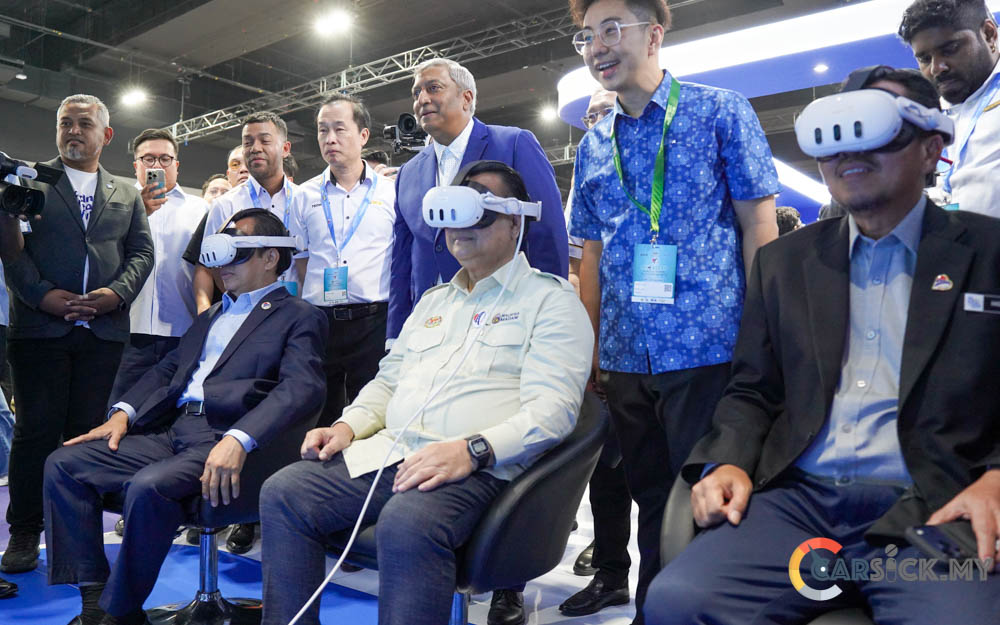
Following the official opening of MyARTTE 2026 on 30 September, the pavilion also welcomed a delegation led by Works Minister YB Dato’ Sri Alexander Nanta Linggi and Deputy Works Minister YB Datuk Seri Dr. Ahmad Maslan.
Beyond tolling, Touch ’n Go has introduced several services aimed at reducing friction across different stages of a journey. Its Digital Transit Pass (DTP), for example, allows commuters to purchase and renew My50 passes through the Touch ’n Go eWallet. The company says the service achieved a 51.7% adoption rate compared with conventional over-the-counter channels within 14 months of launch. Its SOS Balance feature has also enabled 42.6 million toll transactions to proceed despite users having insufficient balances, potentially helping motorists avoid being held up at toll plazas.
Meanwhile, PayDirect has more than 15 million linked cards, allowing users to pay for tolls through their eWallet without having to reload their physical cards. Touch ’n Go has also expanded into parking with its License Plate Recognition (LPR) Parking service. The ticketless and cashless system automatically recognises registered vehicle number plates and deducts parking fees from the user’s eWallet. The service is now available at more than 200 sites.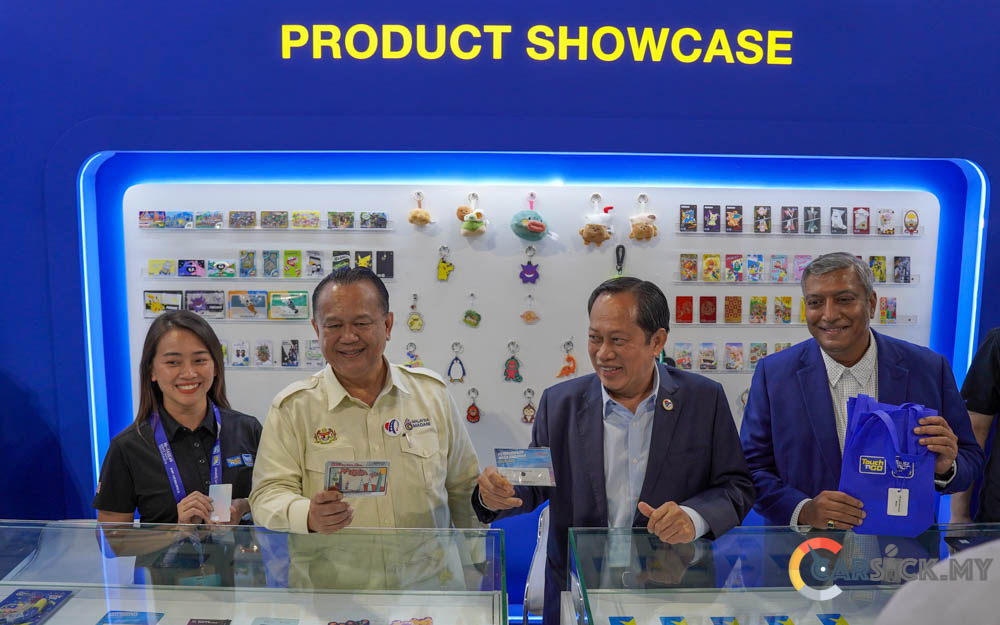
For Touch ’n Go, the 10 new Enhanced RFID lanes are about more than simply adding additional RFID capacity. They form part of a broader effort to develop and deploy the technologies that could eventually support Malaysia’s shift towards barrier-free tolling. “Malaysia’s transition towards SLFF and MLFF will require close collaboration across Government, highway concessionaires and industry partners,” said Prabakaran Sangarajoo, Chief Executive Officer of Touch ’n Go Sdn Bhd.
He added that the company’s investment in Enhanced RFID demonstrates both what the technology can deliver today and how it can contribute to the industry’s progression towards future tolling systems. After 30 years, Touch ’n Go has moved well beyond its origins as a toll payment solution. With millions of motorists and commuters relying on its services every day, the company’s next phase will focus on using its existing infrastructure and technology capabilities to make Malaysian journeys increasingly seamless, connected and ready for the next generation of tolling.