
The Toyota Camry is slowly becoming something of a rare sight in Malaysia. Not because it is expensive, exotic or particularly difficult to buy, but simply because the D-segment sedan is becoming an endangered species. The market has moved heavily towards SUVs, and buyers seem to love the idea of sitting higher off the ground. But while everyone else is busy climbing into SUVs, Toyota is still keeping the Camry alive. In fact, there is a possibility that the D-segment could make a comeback in about 10 years, especially as the international market begins showing signs of renewed interest in cars that are actually fun to drive. So, while we wait for the great sedan revival, there is one important question to answer: can the Camry survive the SUV onslaught? Let’s find out.
 For the longest time, the Camry has carried the “uncle car” reputation. It was the car you bought when you had made it in life. It was comfortable, spacious and respectable, and somehow always seemed to arrive with an uncle behind the wheel. But things have changed. Chinese SUVs have blurred the traditional boundaries between car segments, while younger buyers now have more disposable income and very different expectations. If Toyota wants the Camry to remain relevant, it cannot simply rely on its reputation as a comfortable executive sedan. And thankfully, Toyota seems to understand that.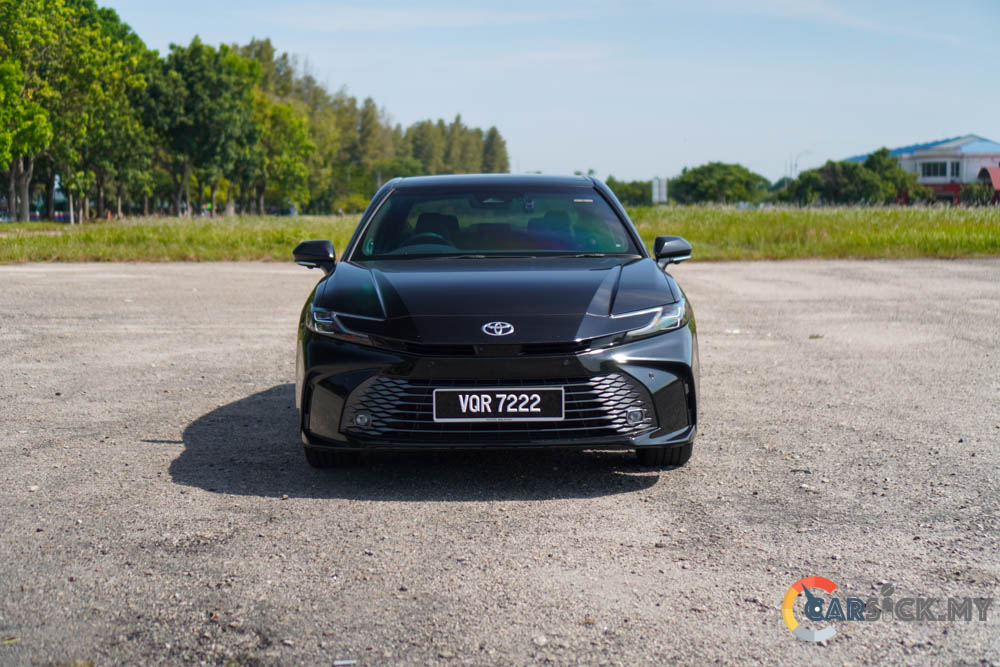
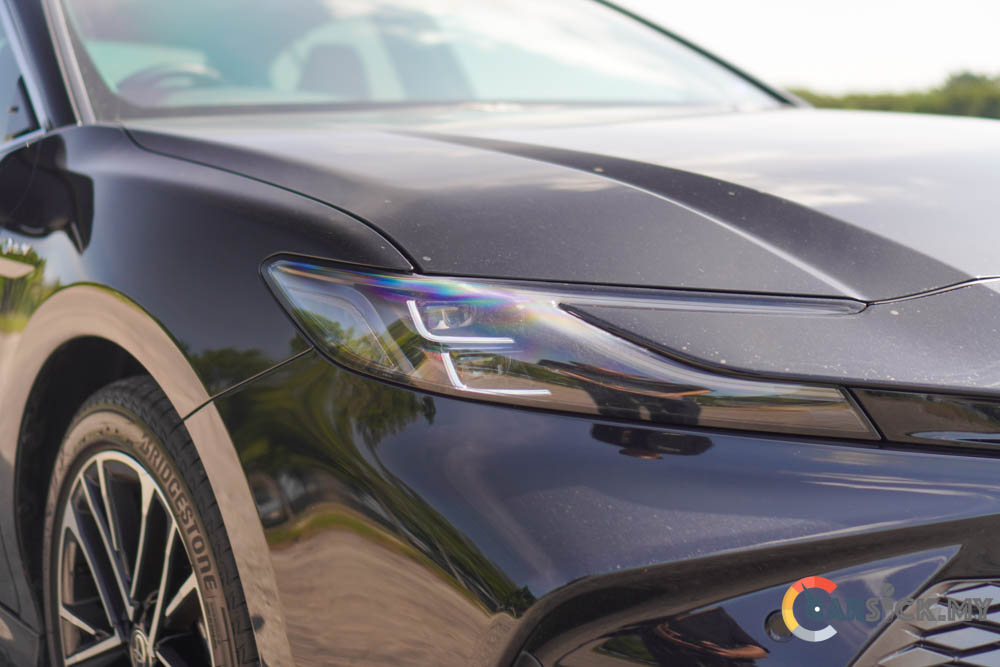
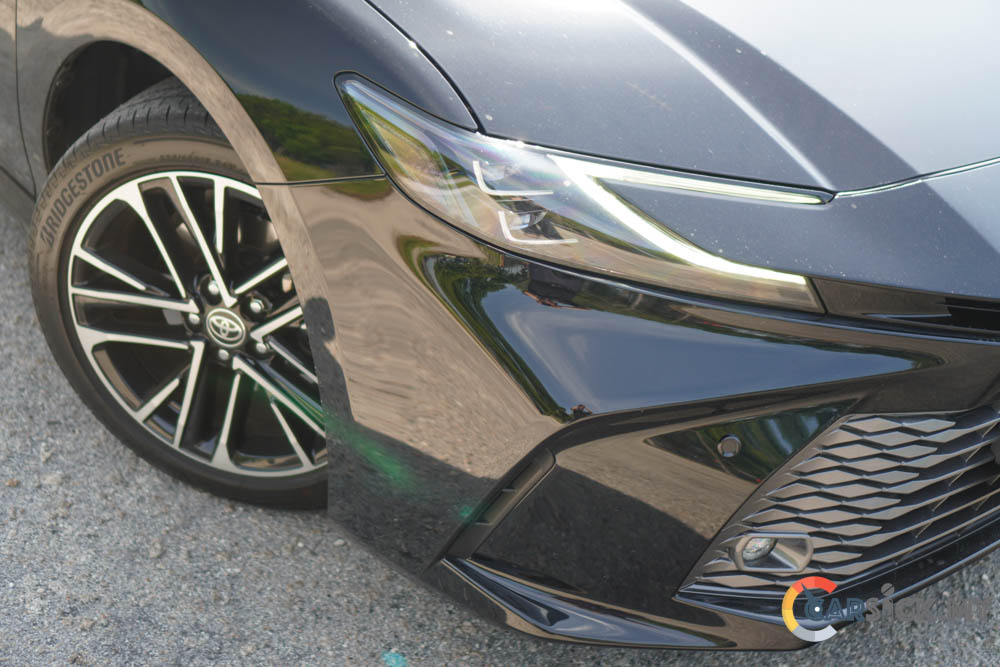
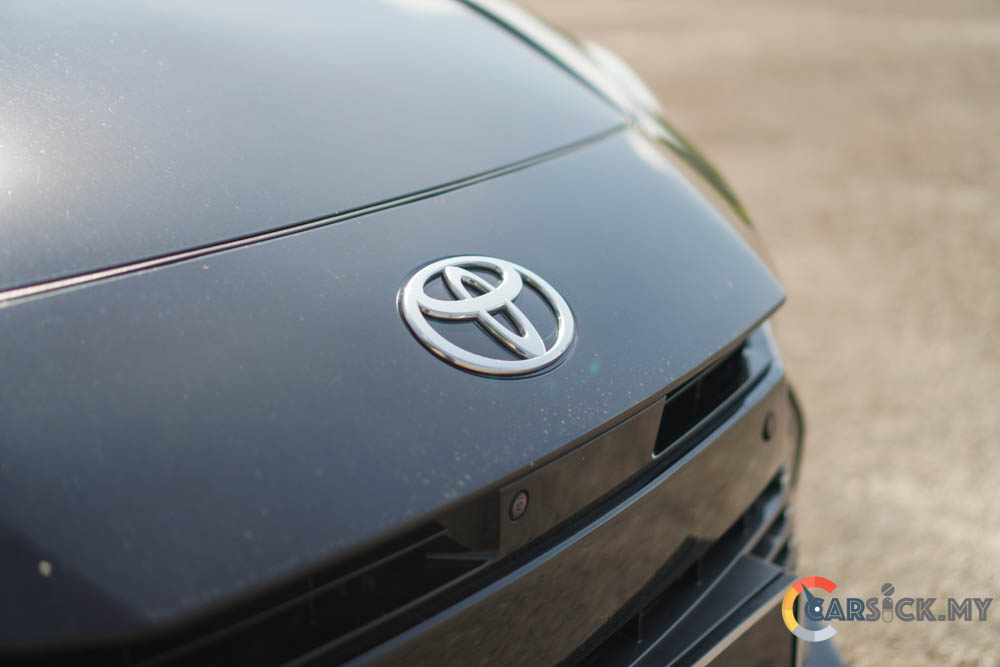
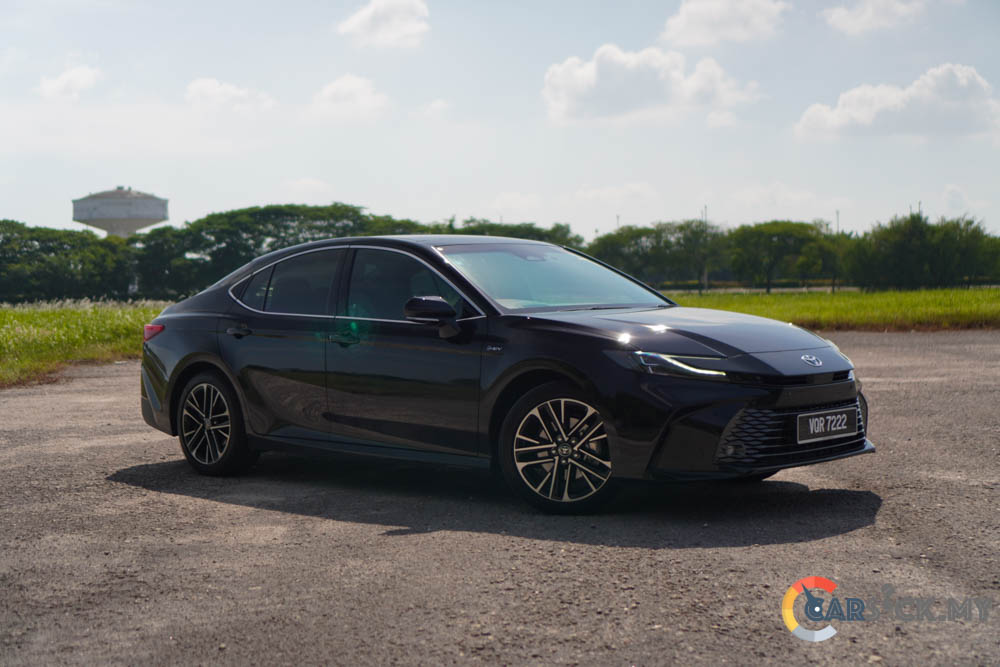
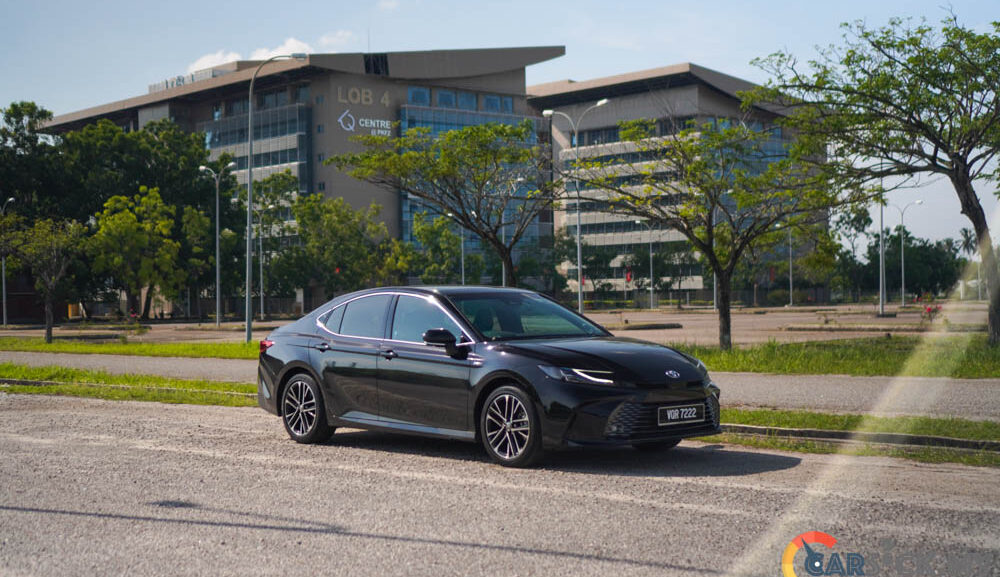
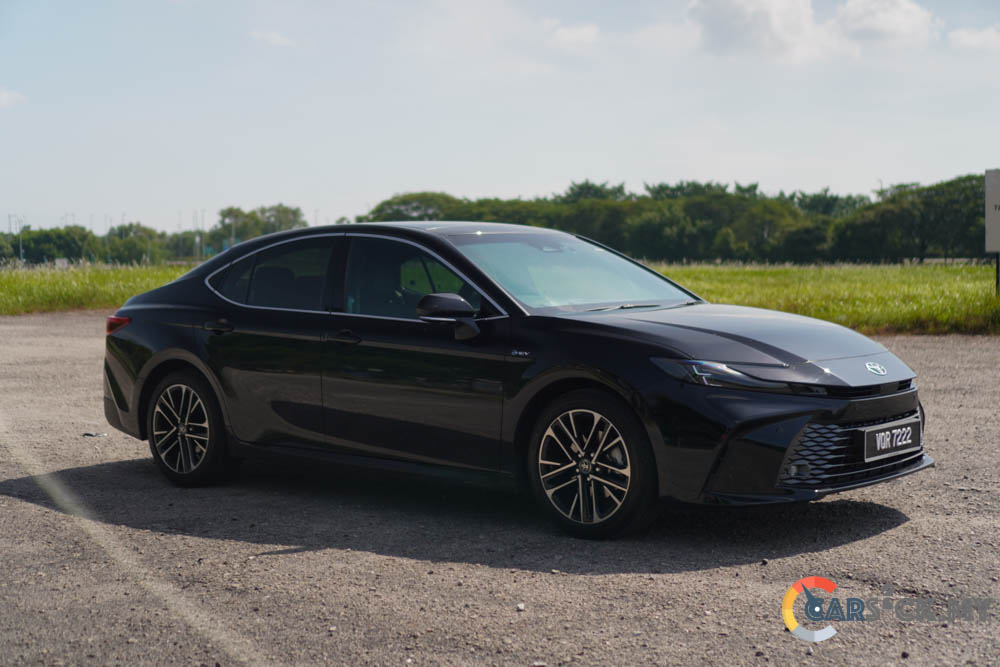
The latest Camry looks like it has finally decided that being an “uncle car” isn’t enough anymore. While the pre-facelift model was already a good-looking sedan, Toyota has incorporated its latest family design into the updated Camry. It shares styling cues with the more expensive Toyota Crown, and the result is a much sharper-looking car. The front end is particularly aggressive. The slim headlights and C-shaped daytime running lights give the Camry a surprisingly sporty face, while the slimmer upper grille and larger lower grille make the front end look much more purposeful. This is not the Camry I remember. And honestly, I like it. 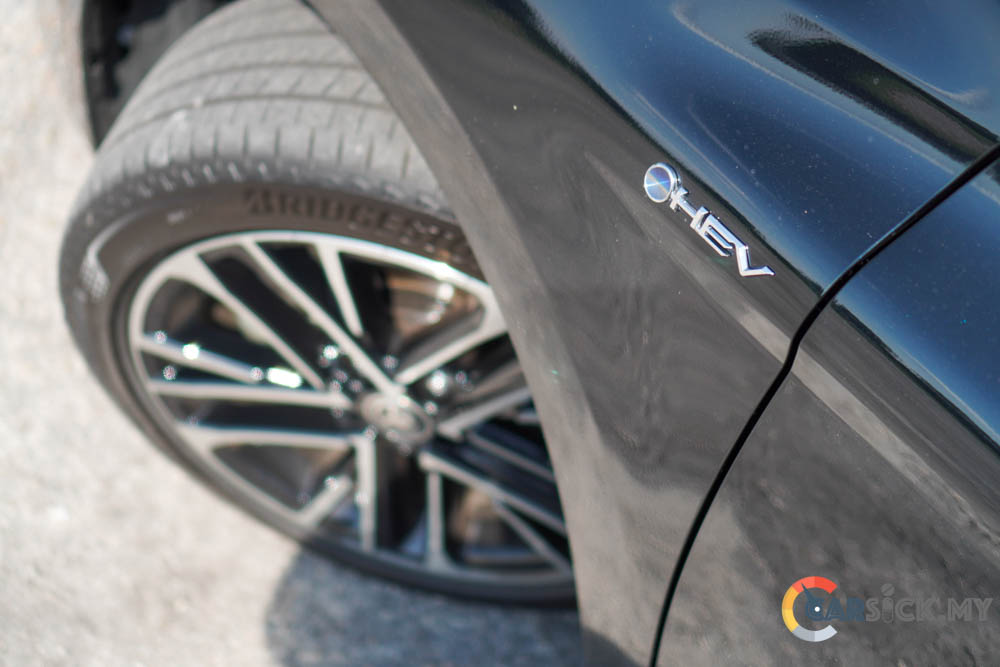
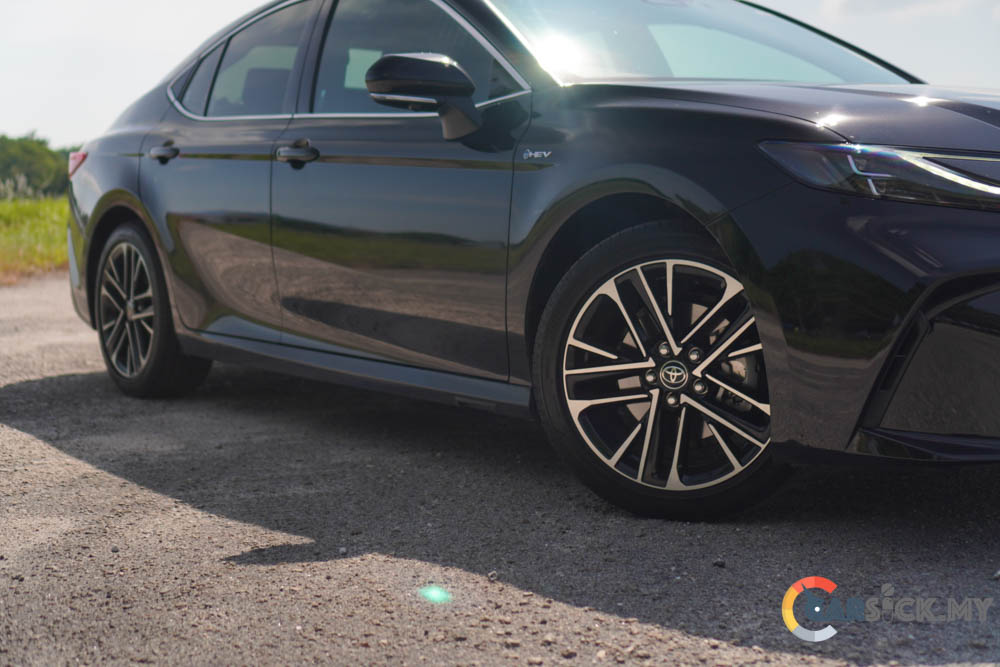
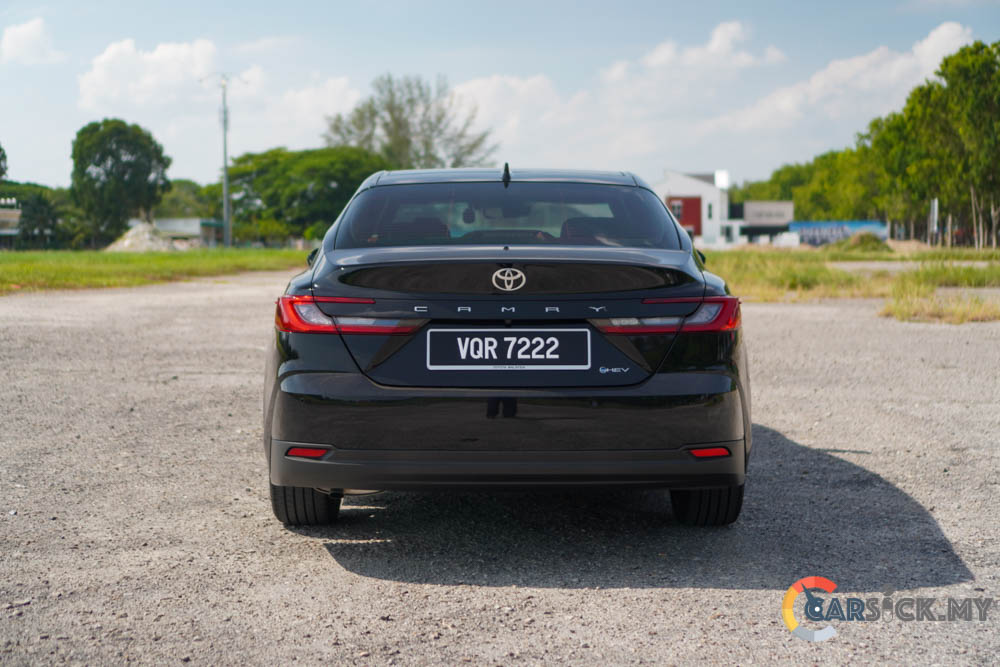
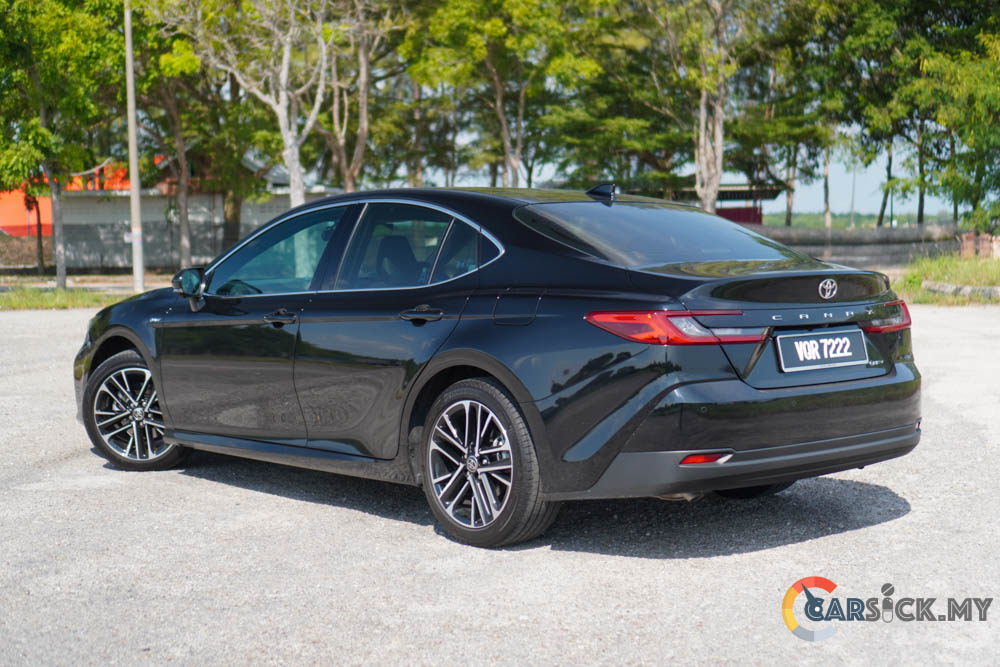
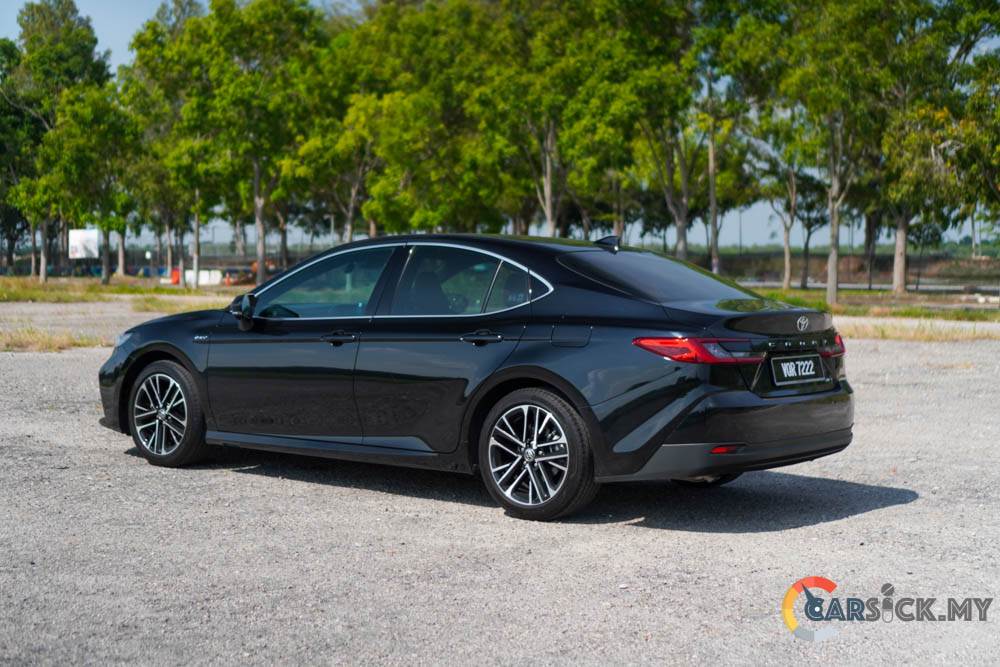
At the side, you’ll find the HEV badge on the front fender, reminding everyone that this isn’t just a regular petrol-powered Camry. The car rides on 18-inch two-tone rims wrapped in 235/45 R18 tyres, which further adds to its sporty appearance. Move towards the rear and you’ll notice that the silhouette of the pre-facelift Camry is still very much there. Toyota has, however, updated the taillights to mirror the design of the headlights. Overall, I really love the look of the latest Camry. For a large executive sedan, it looks remarkably sporty. And if I’m being completely honest, the looks alone already have me sold.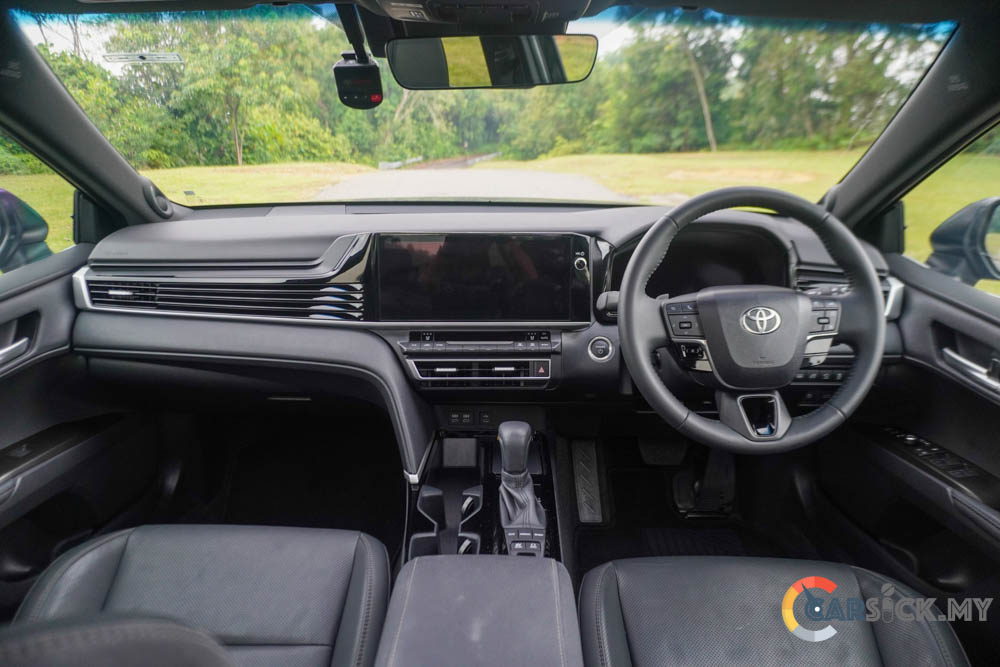
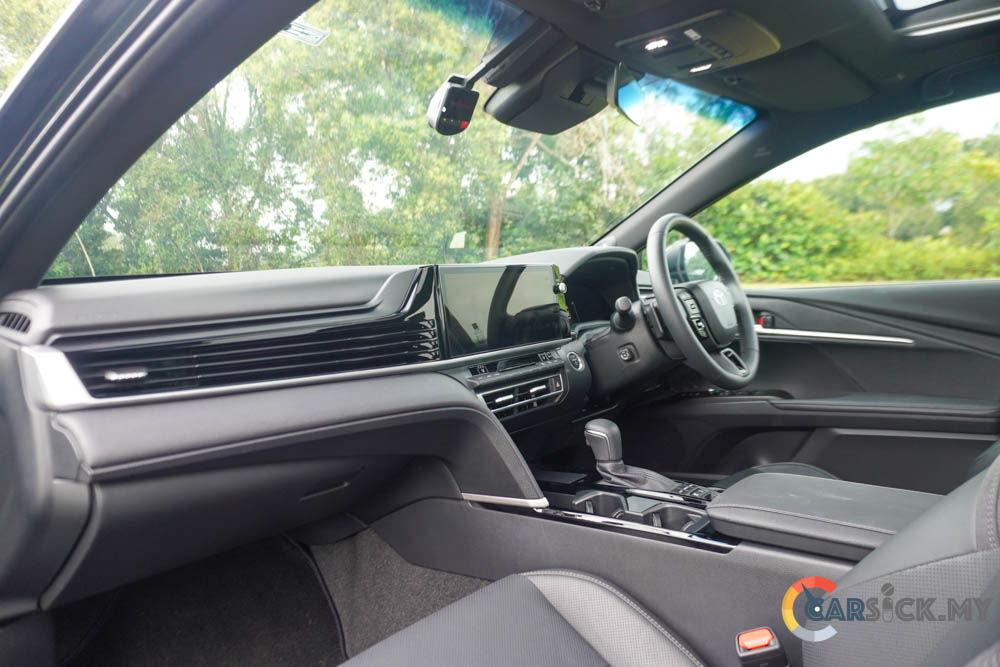
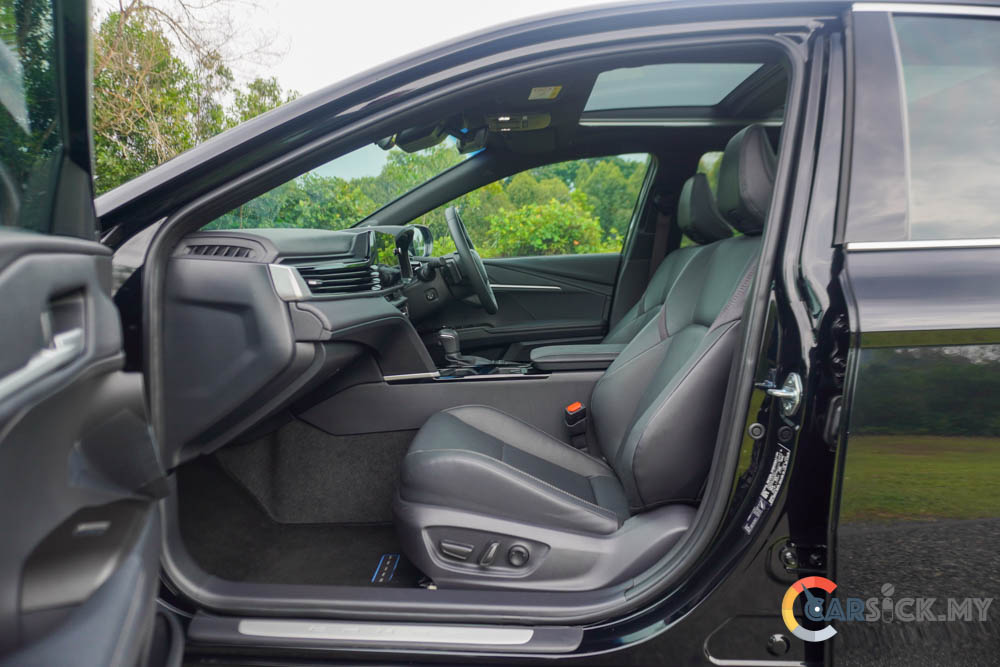
Step inside and the transformation continues. The latest Camry gets an all-new dashboard that looks drastically different from the pre-facelift model. It is much more modern, although Toyota has thankfully resisted the temptation to turn the interior into a giant screen-filled spaceship. It still feels unmistakably Toyota. The interior feels solid, while the materials are premium enough to justify its roughly RM250,000 price tag. There is, however, one thing I wish Toyota had done differently. The entire interior is black. Now, there’s nothing wrong with black. It is safe, classy and difficult to make look bad. But if Toyota offered burgundy leather, especially with a black exterior, the interior would immediately feel much more special. Fortunately, the large panoramic roof helps brighten up what would otherwise be quite a dark cabin.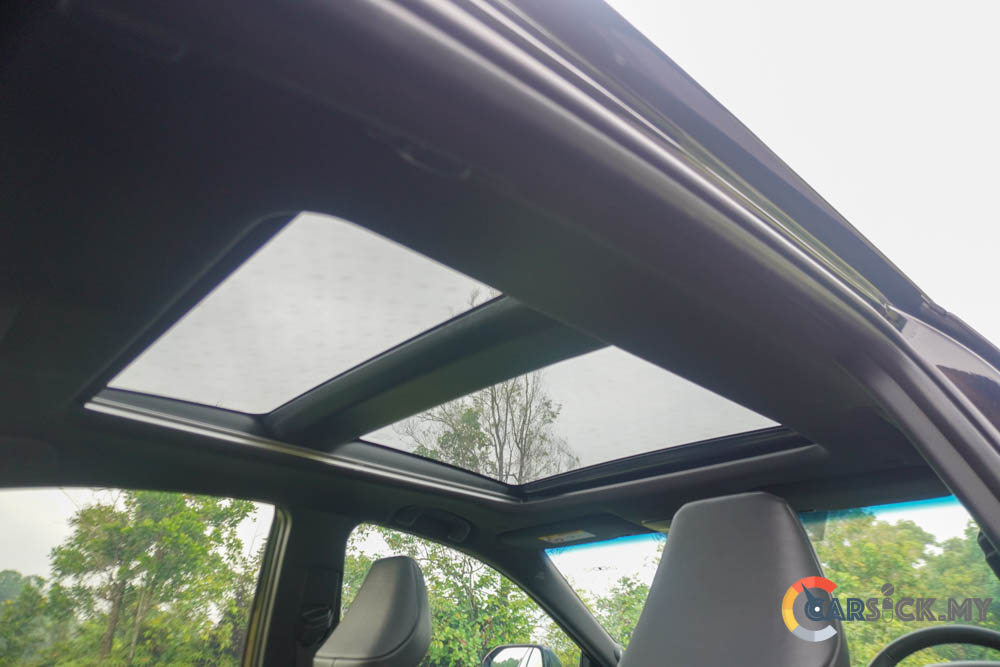
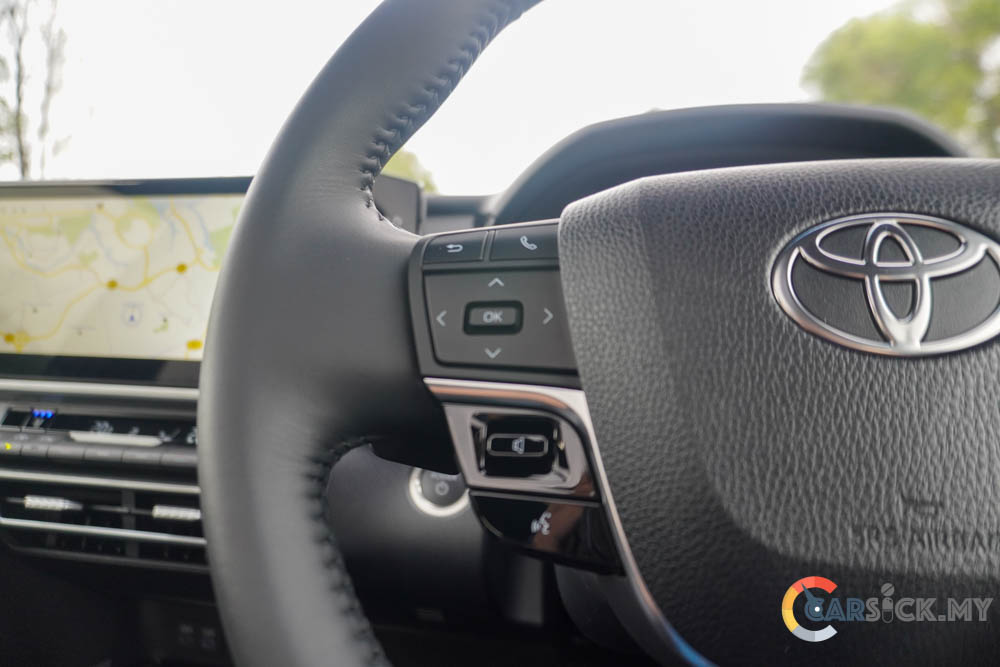
On the dashboard, you’ll find two large 12.3-inch displays serving as the instrument cluster and infotainment system. The larger displays also free up some space around the centre console, giving you more room to store your belongings. And yes, there’s a wireless charger too. The instrument cluster is essentially the same type of unit you’ll find in many modern TNGA-based Toyotas. Toyota’s latest graphics are easy to read and navigate, and I particularly like how informative they are without making the screen look like someone dumped every piece of information onto it.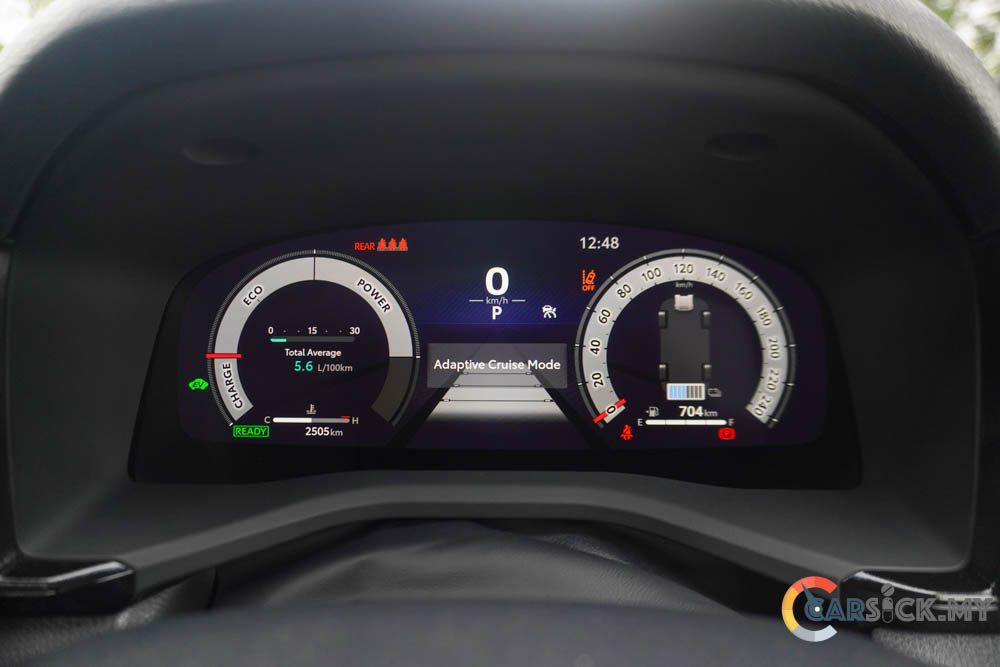
The infotainment system is borrowed from more expensive Toyotas such as the Alphard and Vellfire, which sounds impressive on paper. In practice, though, it takes a little getting used to. The biggest issue is the menu structure. Different settings are tucked away in different menus, so I spent quite a bit of time digging around to find the things I wanted. Once you learn where everything is, however, it becomes much easier to live with. At least the system is smooth. It barely lags when jumping between menus, which is something I appreciate because there are few things more frustrating than waiting for an infotainment system to catch up with your fingers. 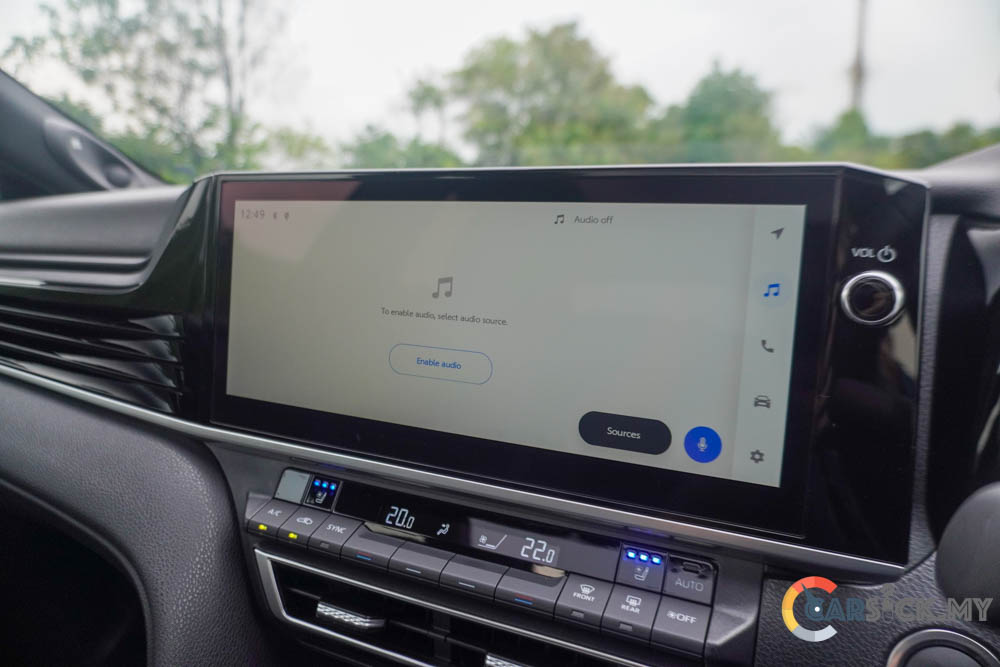
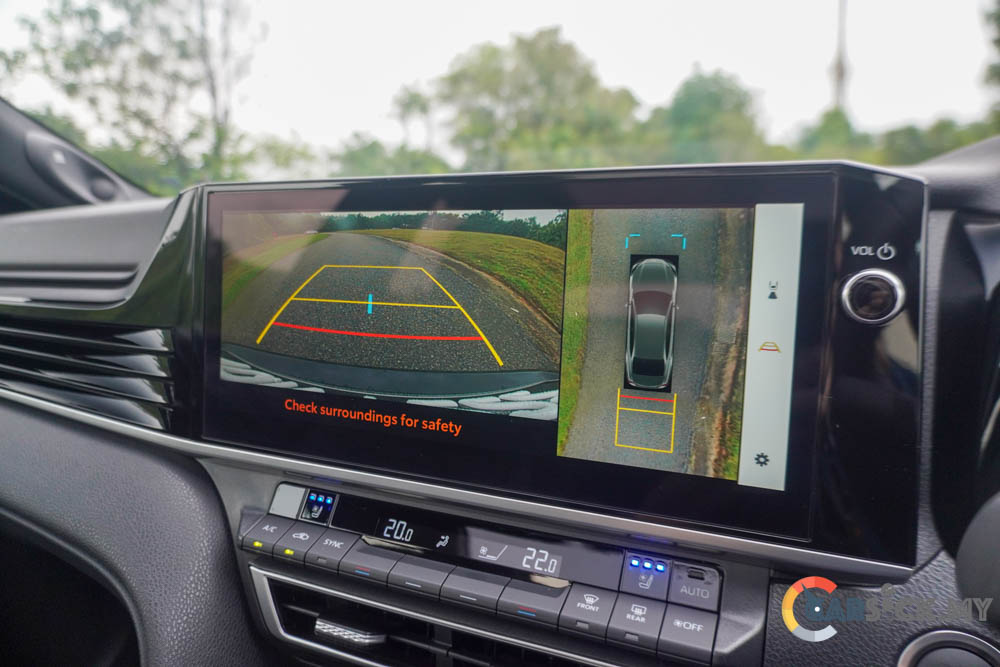
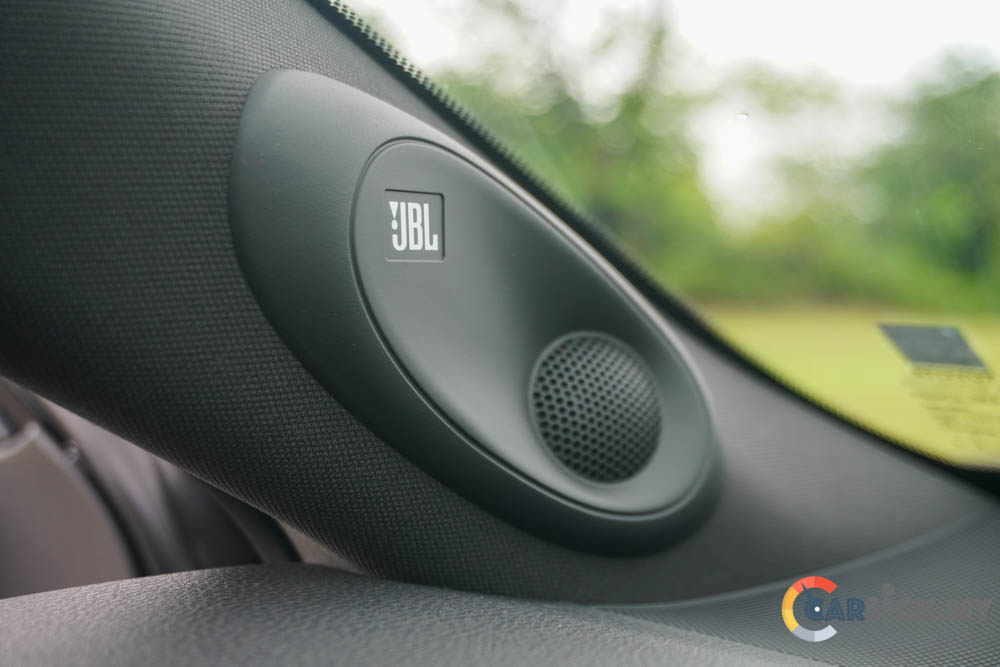
You also get Android Auto and Apple CarPlay. During my review period, I noticed that Android Auto uses a wired connection, which feels rather outdated in 2026. As for Apple CarPlay, I can’t comment much on it because, well, I don’t use an iPhone. There are USB-C ports for charging, a 360-degree camera with good image quality, and a nine-speaker JBL premium sound system. Thankfully, Toyota also kept the climate controls separate from the infotainment system. That’s a small detail, but a very important one. Nobody wants to dig through three touchscreen menus just to make the air-conditioning colder.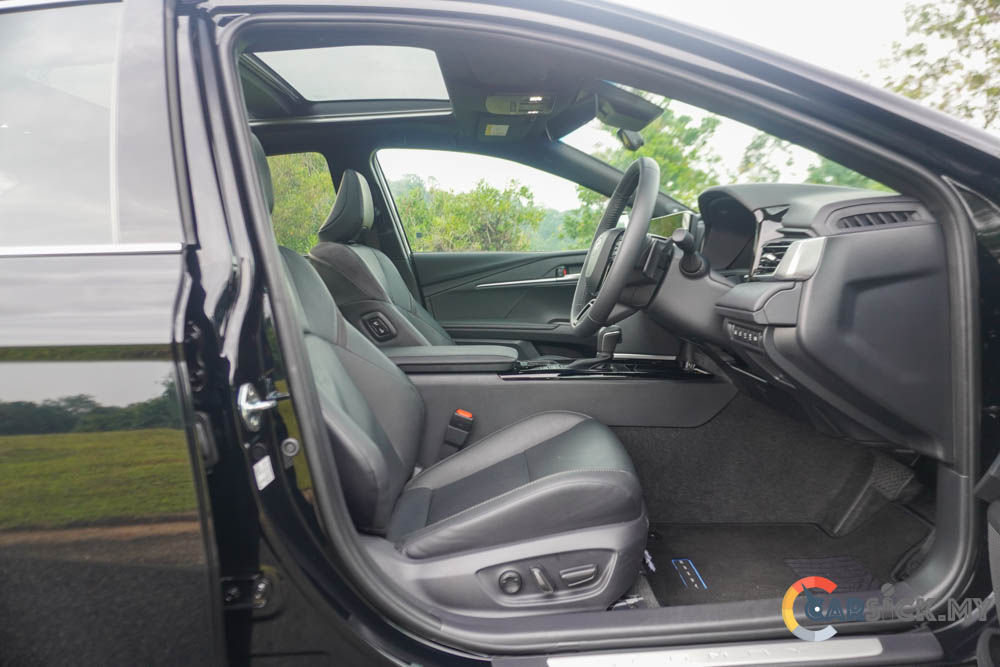
One of the things that surprised me about the Camry is the driving position. It is actually quite sporty. The seating position puts you in a comfortable place behind the wheel, and almost every button and switch is within easy reach. The only thing missing is a proper set of bucket seats. Add those, and you might start wondering whether you’re actually sitting in a sports sedan. The front seats are also ventilated, which is exactly what you want when living in Malaysia. Because no matter how sporty your car looks, there is nothing remotely sporty about arriving at your destination covered in sweat.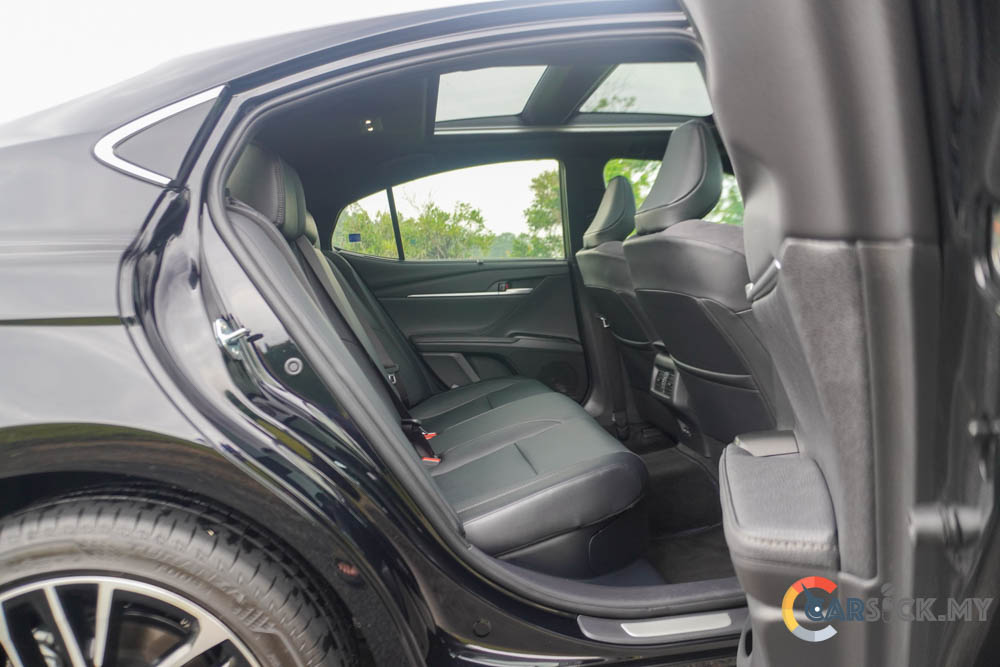
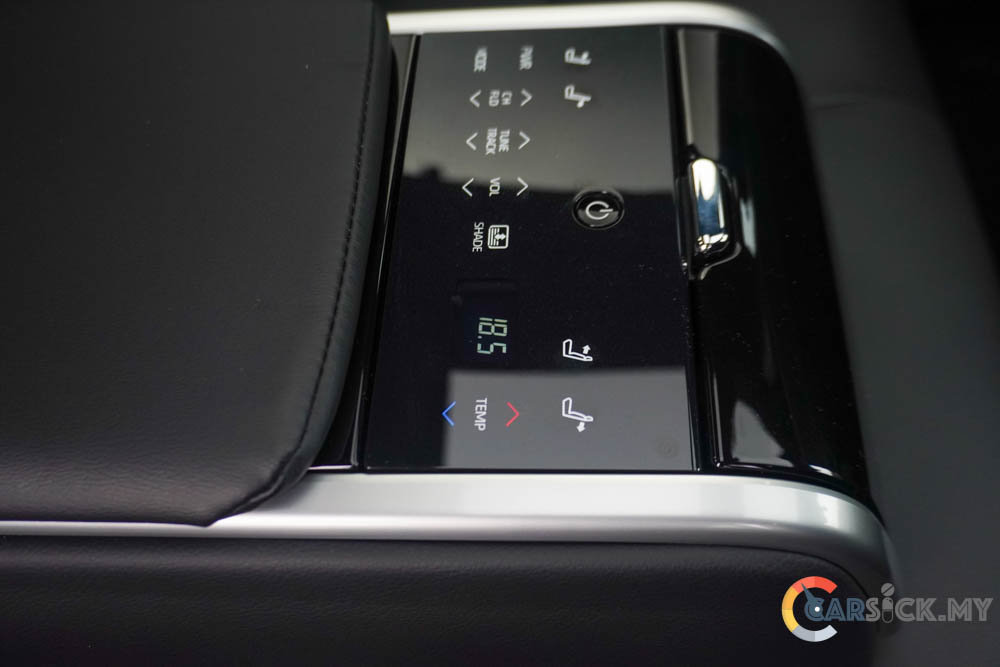
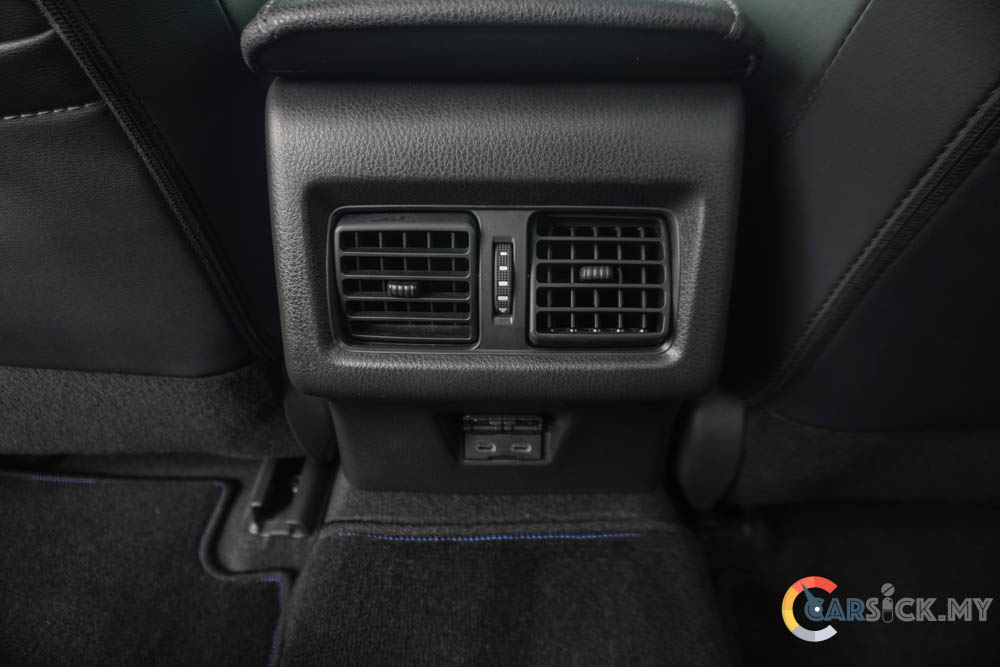
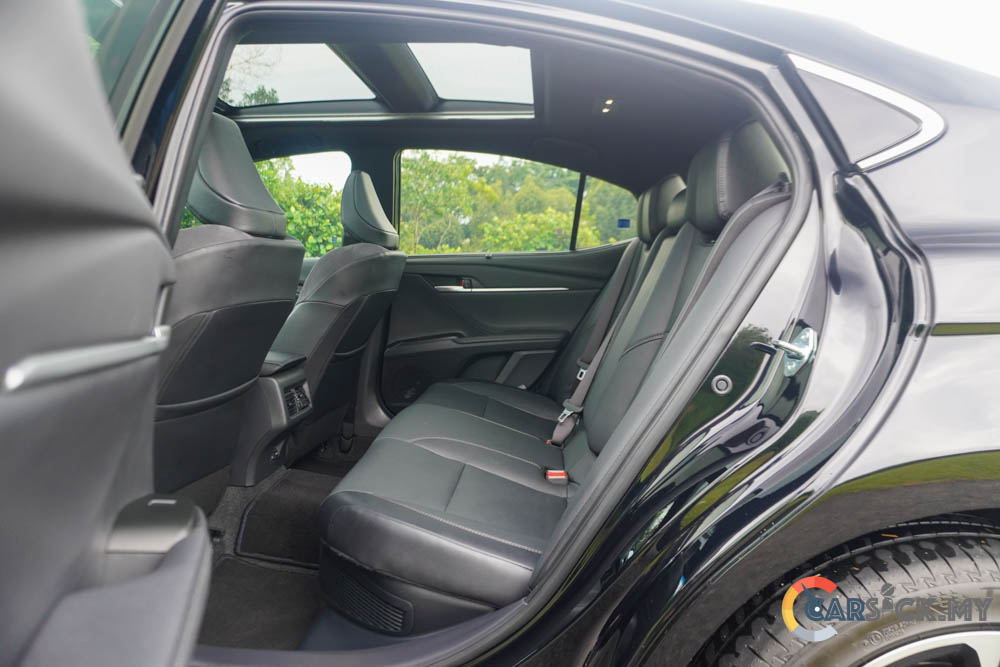
The second row remains very much in executive sedan territory. There is loads of legroom and headroom, and the rear seats are genuinely comfortable. The thigh support is spot on, while the electrically adjustable reclining function allows rear passengers to find a comfortable position. In other words, the person sitting in the back can still feel like the boss. Rear passengers also get their own climate zone, although there are only two air-conditioning vents in the centre. Two additional USB-C ports are also available for charging devices. This is exactly what you’d expect from a Camry. Comfort first, everything else second.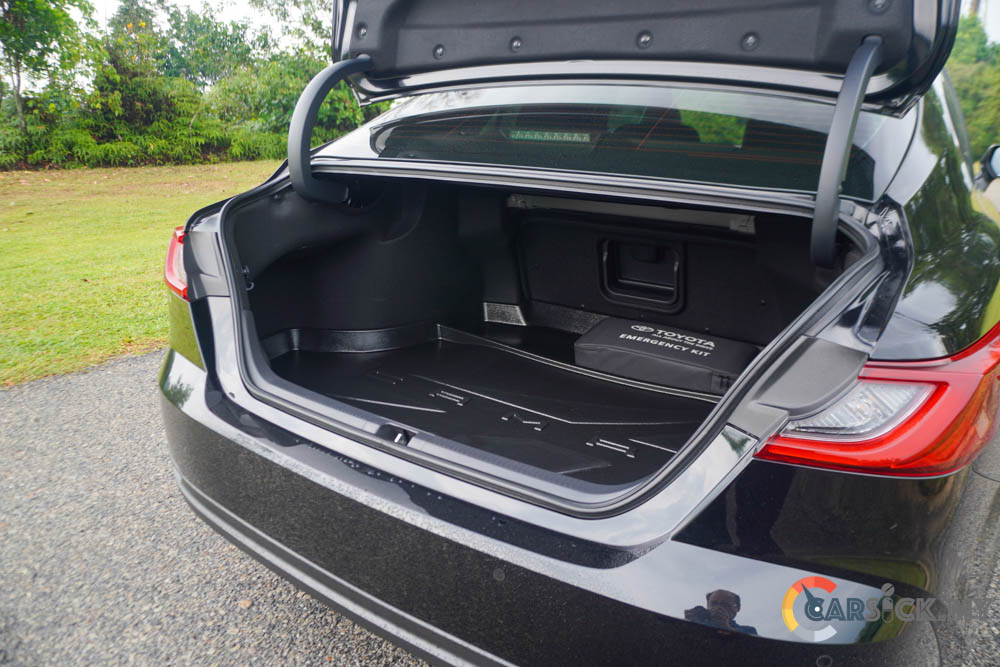
As sedans go, the Camry has a rather generous 524-litre boot. That’s plenty of space for everyday use, but there is one major compromise. The rear seats cannot be folded down. This is because they feature electrically adjustable reclining functions, which prevent the seatbacks from being folded. It isn’t exactly a new problem either, as the pre-facelift Camry had the same limitation. So, if you’re carrying luggage, groceries or the usual collection of things you somehow accumulated over the years, you’ll be fine. Just don’t expect to turn the Camry into a delivery van.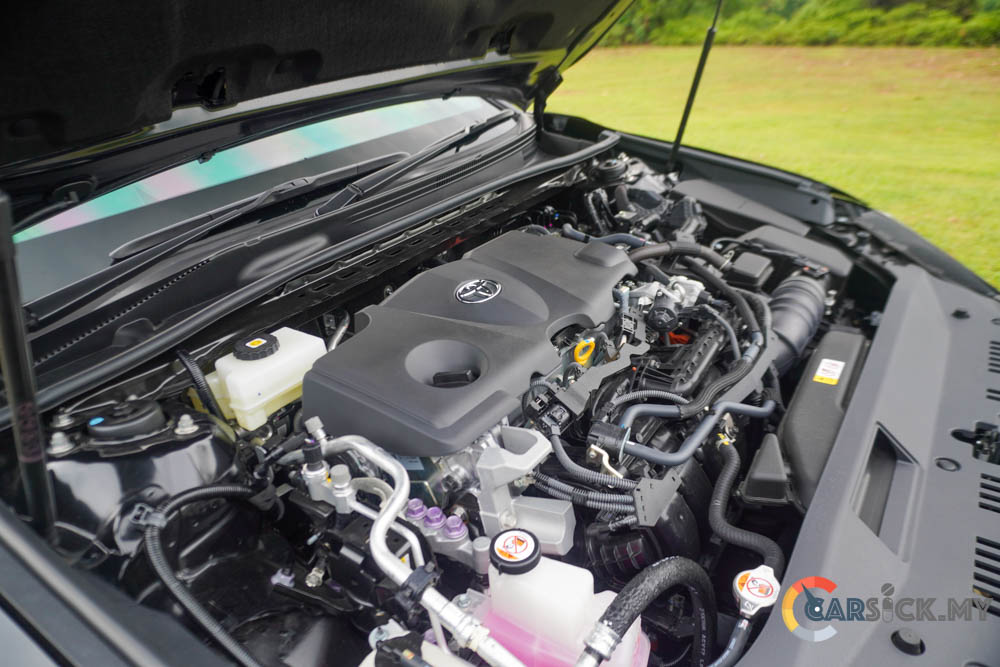
The biggest mechanical change comes underneath the bonnet. The latest Camry gets Toyota’s fifth-generation hybrid system, combining a 2.5-litre engine with an electric motor. Power is sent to the front wheels through an E-CVT. Combined output stands at 230 PS, with 221 Nm of peak torque. Toyota claims a 0-100 km/h time of 7.2 seconds and a top speed of 180 km/h. But numbers only tell half the story.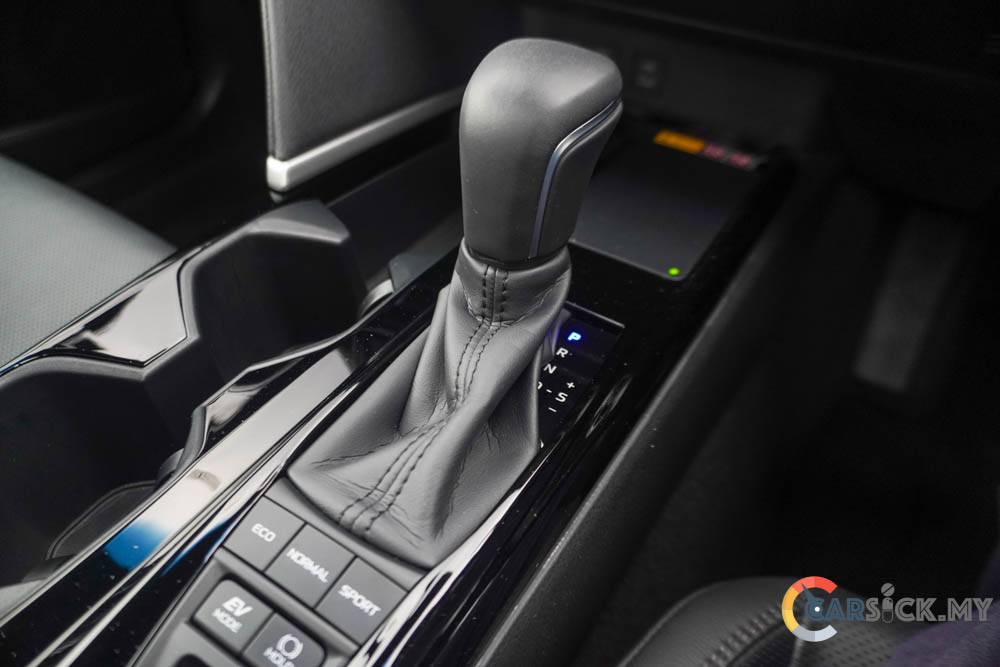
The hybrid powertrain delivers an impressively smooth drive. The electric motor alone has enough power to pull the Camry around at lower speeds without immediately needing the petrol engine. The problem is that it feels just sufficient. Personally, I would have liked a slightly stronger electric motor to provide more electrified assistance. At lower speeds, the electric motor is perfectly happy doing the work. But if the car in front suddenly decides to accelerate harder, the petrol engine quickly has to jump in. Once both power sources work together, though, the Camry has more than enough performance. It just needs both the engine and electric motor to work in tandem to get the most out of the powertrain.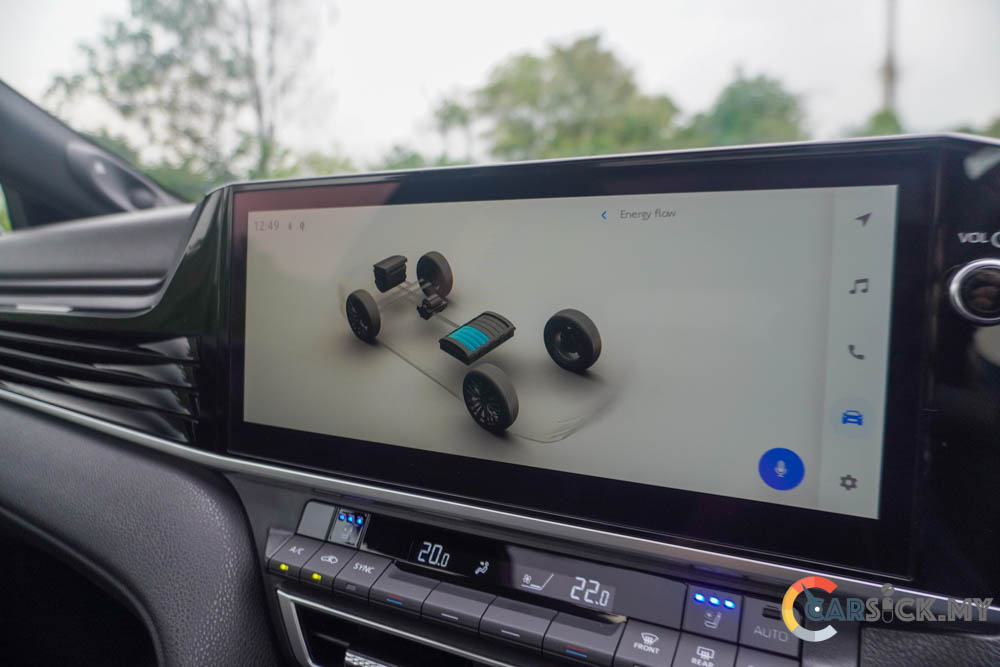
Of course, one of the biggest questions surrounding any hybrid is fuel consumption. Toyota has spent years refining its hybrid technology, and the Camry shows the benefit of that experience. During my time in the car, I managed to get around 5.1L/100km quite easily. Considering the size of the Camry, that’s a pretty respectable figure. I was actually expecting it to do even better, especially considering how efficient Toyota’s hybrid systems have become. But 5.1L/100km is still a good result, and with a car this large, it should allow you to cover a considerable distance before needing to visit a petrol station. Which is always a good thing.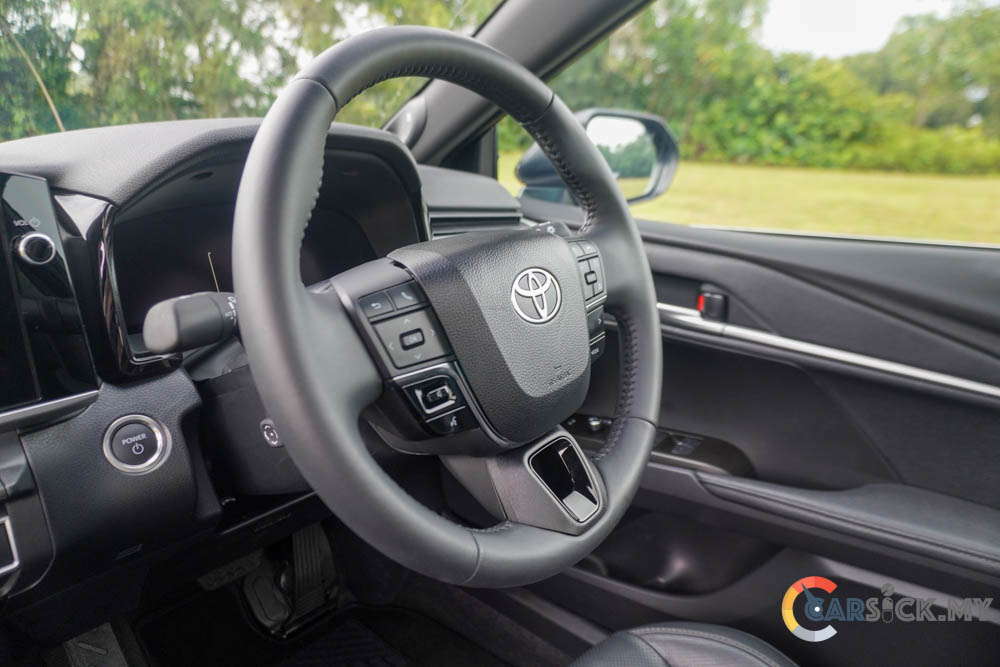
But fuel efficiency isn’t where the Camry impressed me the most. That honour goes to its ride and handling. The Camry may look like a large executive sedan, but underneath that comfortable exterior is a surprisingly sporty character. The ride is smooth, just as you’d expect from a large executive sedan. Yet, it doesn’t feel completely detached from the road. The car communicates with the driver through its movements, giving you a sense of what is happening underneath you. And when the road gets twisty, the Camry becomes even more interesting. The steering feels sharp and gives you plenty of confidence when tackling corners. It is also nicely weighted, allowing you to understand what the front wheels are doing. Even with the comfort-oriented suspension, body roll is kept under control. It doesn’t suddenly transform into a sports car, of course. But for something designed primarily to transport executives comfortably, the Camry is surprisingly entertaining when you decide to have a little fun.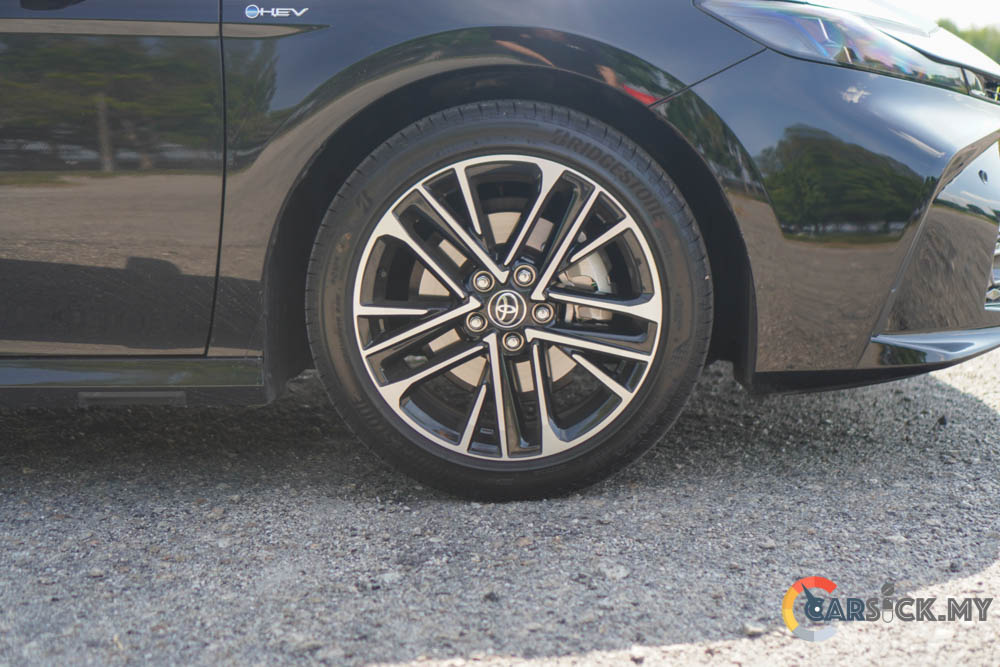
The brakes, however, aren’t quite as impressive. Most Toyota hybrids have a fairly prominent hybrid-style brake feel, but the Camry feels surprisingly similar to an ICE vehicle. The transition between regenerative braking and the physical brakes is rather vague. For someone coming from a conventional petrol car, this might actually be a good thing because the braking feel is familiar. Personally, though, I would prefer a clearer distinction between regenerative and physical braking. That would make it easier to use the electric motor to slow the car down and maximise the benefits of the hybrid system. As expected, the Camry also comes with a comprehensive suite of ADAS features, including Pre-Collision Warning (PCS), Dynamic Radar Cruise Control (DRCC), Lane Departure Alert (LDA), Lane Tracing Assist (LTA), Automatic High Beam (AHB), Road Sign Assist (RSA), and Blind Spot Monitor (BSM) with Rear Cross Traffic Alert (RCTA). 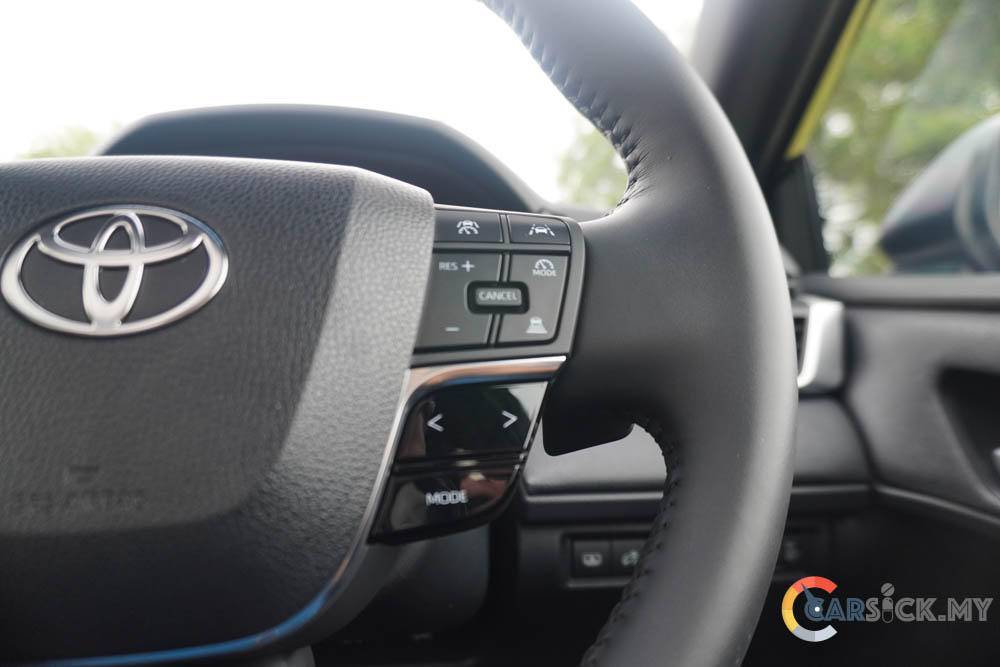
So, back to the big question. Will sedans ever return? I think they will. But it’s going to take a few years. Interestingly, some of the changes are already happening at the higher end of the market. As SUVs become increasingly powerful and capable, buyers who can afford almost anything are starting to look for something different: driving engagement. The mass market may still be obsessed with high-powered SUVs that can outrun supercars, but the wealthy are increasingly looking for ways to make driving fun again. And that could eventually trickle down. Sedans and hatchbacks have traditionally been some of the easiest platforms to make engaging without spending ridiculous amounts of money. If the mass market eventually follows the direction of the premium market, we could see sedans making a return. Of course, they probably won’t return exactly as we remember them. They’ll be more electrified than ever.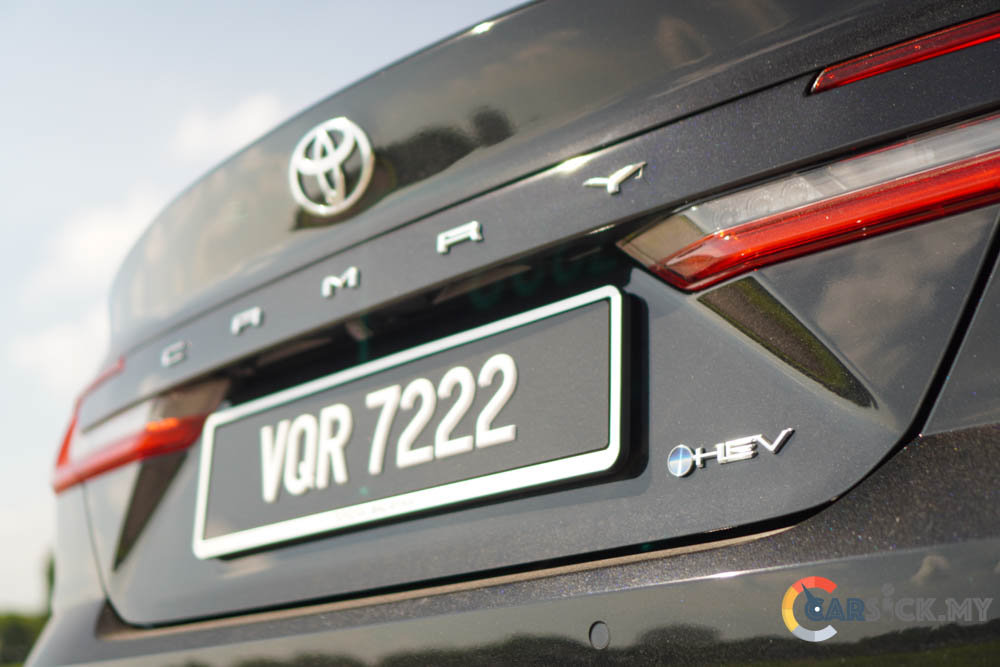
At RM248,800, the latest Camry isn’t exactly cheap. But then again, inflation has already gone through the roof, and the days when D-segment sedans could be bought for less than RM200,000 are long gone. And being one of the last survivors in the segment does give the Camry an interesting advantage. It doesn’t really have many direct competitors anymore. Personally, I really like the latest Camry. The looks are a huge part of that, but the rest of the package is solid too. It is comfortable, spacious, efficient and, surprisingly, quite enjoyable to drive. Would I buy it over an SUV? At this price point, yes. In fact, based on the looks alone, I’m already sold. The Camry might have spent decades being known as the quintessential “uncle car”, but this latest generation feels like it has finally decided that it doesn’t want to be just that anymore. And perhaps that’s exactly what Toyota needs to keep this old-school sedan alive long enough to see the great D-segment comeback.
Check out the full photo album here.