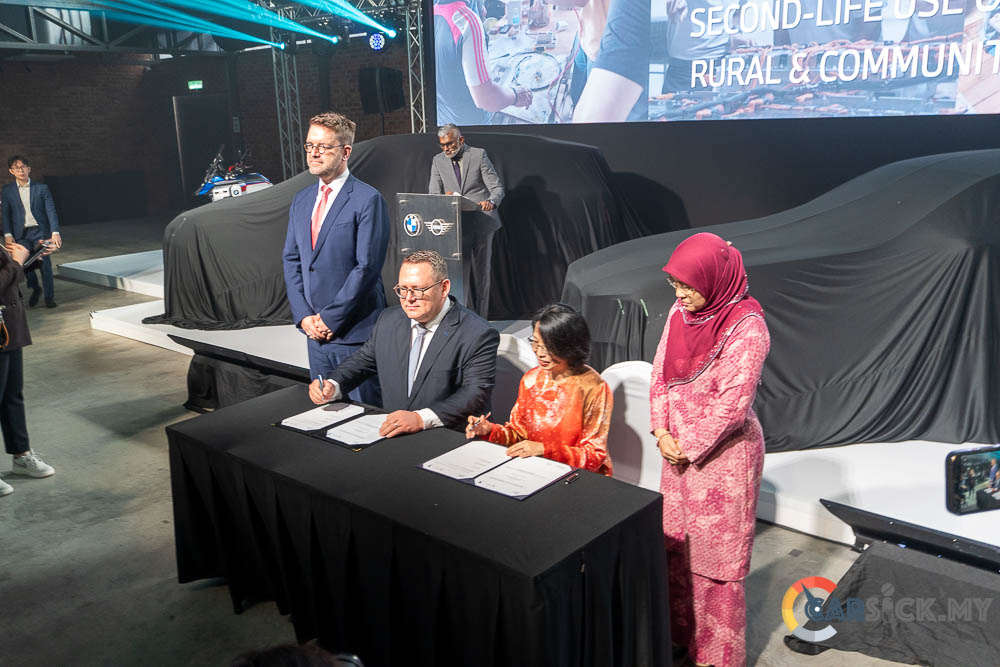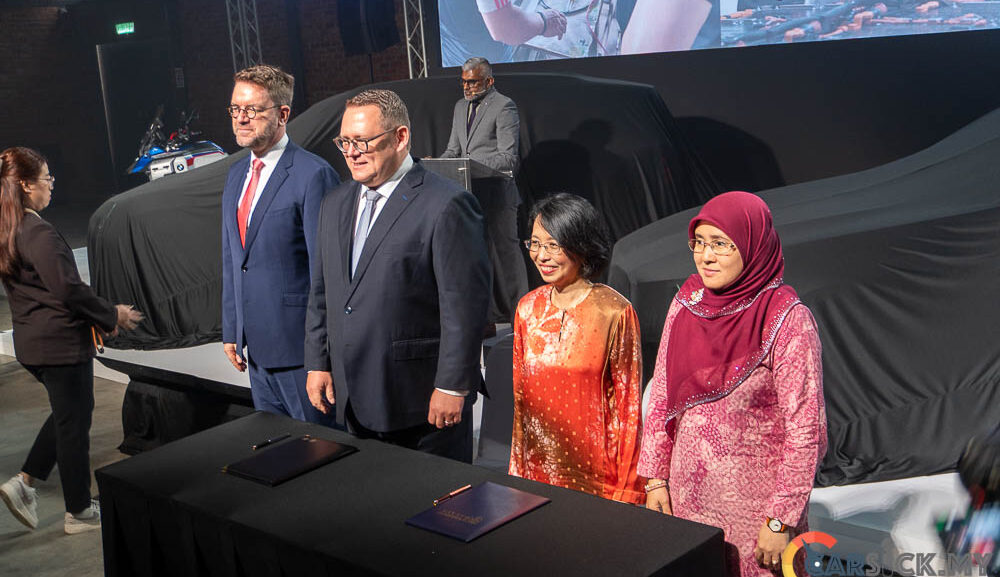

BMW Group Malaysia has taken another significant step toward sustainable mobility by formalising a strategic collaboration with Universiti Malaya (UM) to explore second-life applications for electric vehicle (EV) batteries. Through a newly signed Memorandum of Understanding (MoU), both parties will jointly research how used EV batteries can be repurposed for rural electrification and community-based energy solutions across Malaysia.
 Under the partnership, BMW Group Malaysia will provide used EV batteries to Universiti Malaya’s Power Energy Dedicated Advanced Centre (UMPEDAC), where they will be studied and developed into innovative energy storage systems. These solutions are expected to support practical applications, including stationary energy storage and sustainable on-campus energy projects, while also being extended to community engagement initiatives through UM Community Engagement Centre (UMCares) and UM Sustainable Development Centre (UMSDC).
The collaboration highlights BMW Group Malaysia’s long-term commitment to Circularity and Sustainable Mobility by extending the useful lifespan of EV batteries beyond their original automotive purpose. Instead of reaching the end of their value once removed from vehicles, these batteries will be repurposed to support renewable energy integration and local electrification efforts, particularly in underserved communities.
Beyond technical research, the partnership also places strong emphasis on knowledge sharing and capacity building. BMW Group Malaysia’s technical experts will work closely with UM’s faculty members and students, fostering hands-on learning opportunities while accelerating the development of real-world use cases for second-life battery technology. Joint public engagement initiatives are also planned to raise awareness of circular economy principles and sustainable energy solutions.
Benjamin Nagel, Managing Director of BMW Group Malaysia, described the collaboration as a meaningful step in ensuring EV batteries continue to create value beyond their initial use. He noted that working with one of Malaysia’s leading universities not only strengthens BMW Group’s circularity agenda locally, but also contributes to broader national sustainability goals by delivering solutions that benefit both communities and the environment.
Universiti Malaya Vice-Chancellor, Professor Dato’ Seri Ir. Dr. Noor Azuan Abu Osman, echoed this sentiment, highlighting the university’s strong background in energy storage research. He emphasised that access to premium-quality battery systems from BMW Group Malaysia enables the university to develop practical and scalable solutions, demonstrating how second-life batteries can support renewable energy adoption and bring circular economy concepts into real-world practice.
By proving the viability of second-life battery applications, the collaboration aims to help shape a more sustainable and circular ecosystem for Malaysia’s rapidly growing EV sector. The initiative also builds on BMW Group Malaysia’s broader sustainability efforts under its RE:THINK and RE:GENERATE programmes, which focus on reducing waste, improving resource efficiency, and embedding circular practices across its entire value chain.
Through this partnership with Universiti Malaya, BMW Group Malaysia reinforces its vision of sustainable mobility—showing how innovation, collaboration, and responsible resource management can deliver lasting environmental and social impact for Malaysia’s future.