
GWM has been selling vehicles in Malaysia for a long time. Back then, they only offered the Haval H1 and H2. Both models were attractively priced, but the cars were mediocre at best. While they could still get you from point A to point B, their build quality and engineering left much to be desired. Fast forward to 2025, and GWM has come a long way with a completely new and improved product lineup. One of the best-selling SUVs GWM offers in Malaysia is the Haval H6. Even though this model has been on the market for quite a while, I’ve always been curious to understand why Malaysians have embraced it. Not too long ago, I reached out to GWM to review the Haval H6—and here I am, ready to find out what makes it so appealing—and whether I’d like it myself.
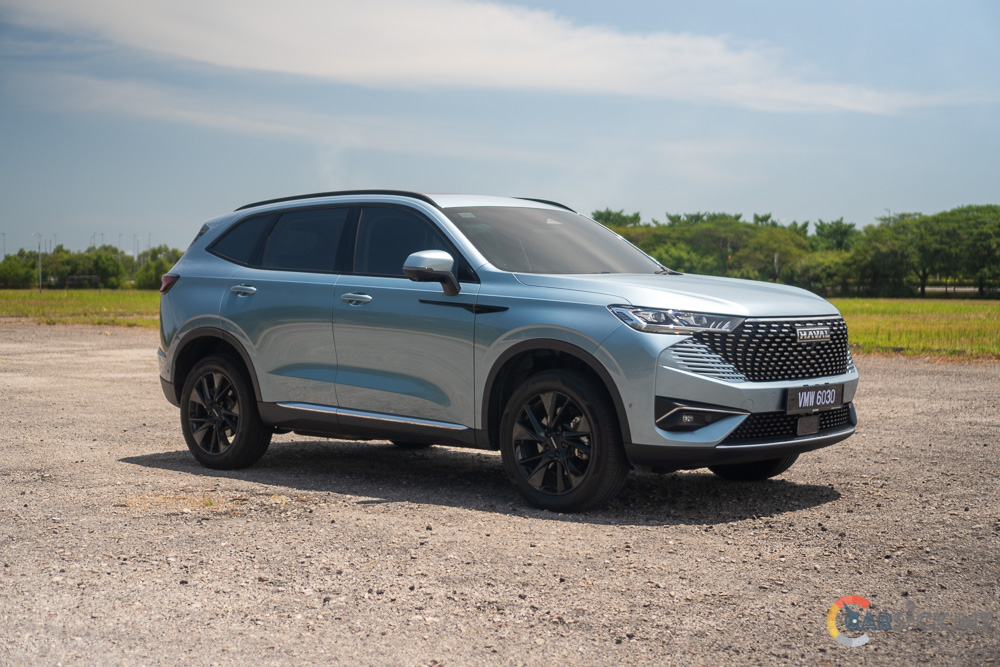
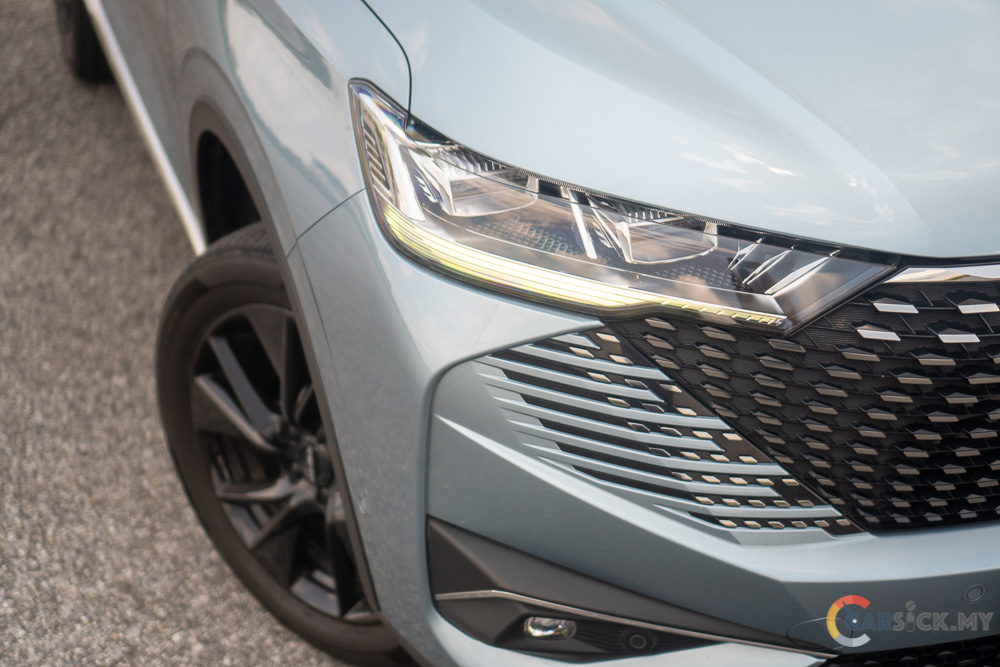
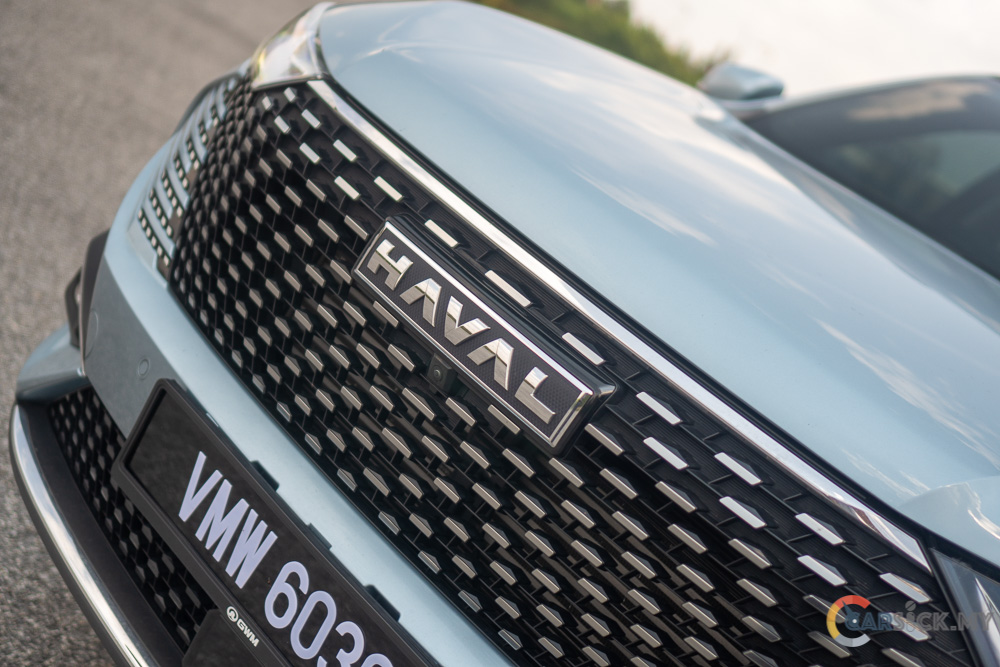
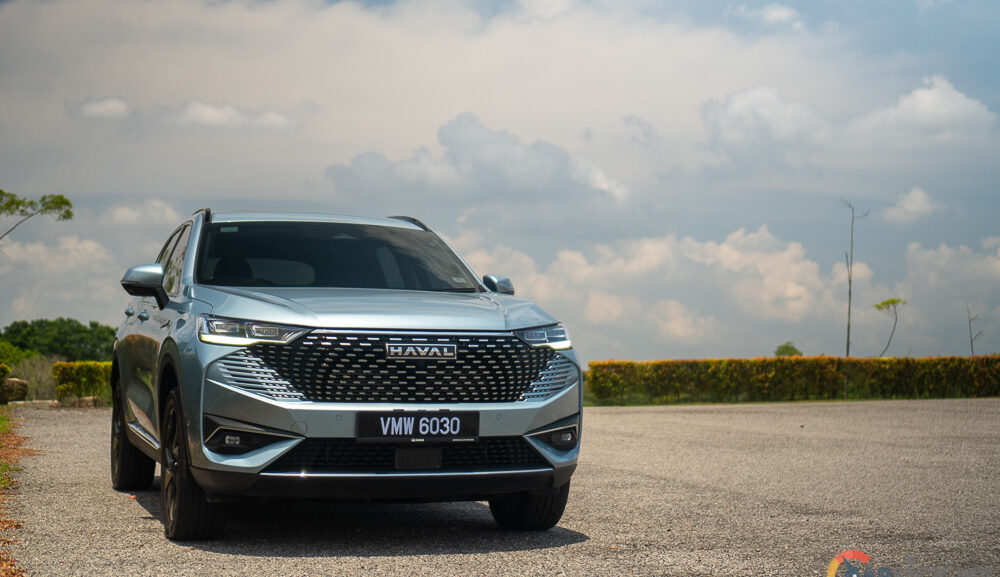
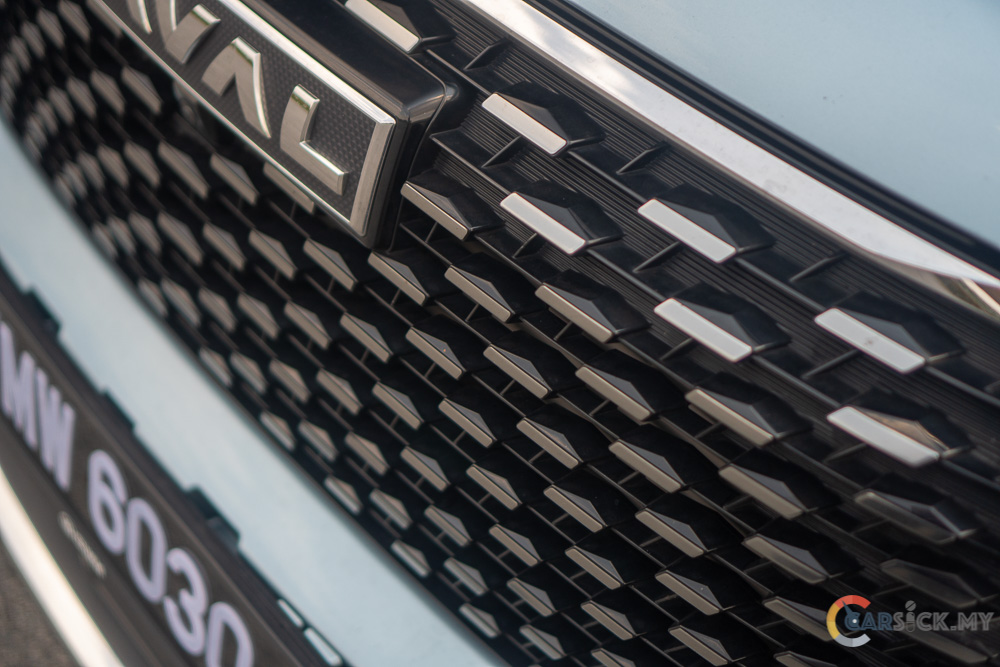
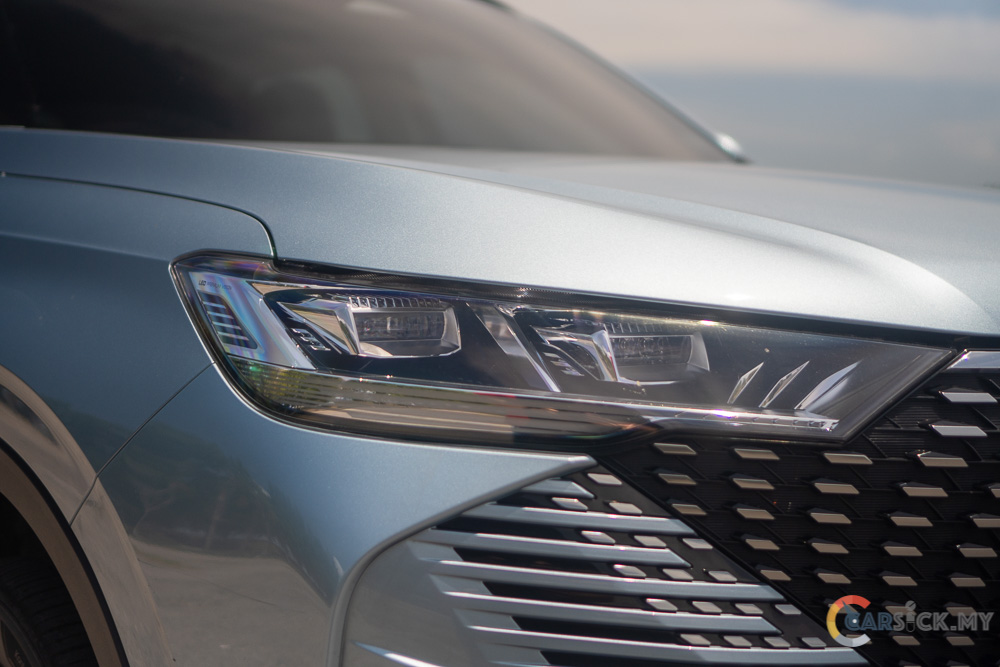
 From the outside, the H6 is a decent-looking vehicle. It’s pleasing to the eye, though not particularly striking. The best-looking part is the front, where GWM’s designers have blended muscular styling with a touch of elegance. The first thing you’ll notice is the large grille, which dominates the front end. Within the grille, the 3D patterns give the H6 a modern aesthetic, and the full LED headlights integrate seamlessly into the design. However, these headlights don’t come with automatic high beams, which I find quite odd.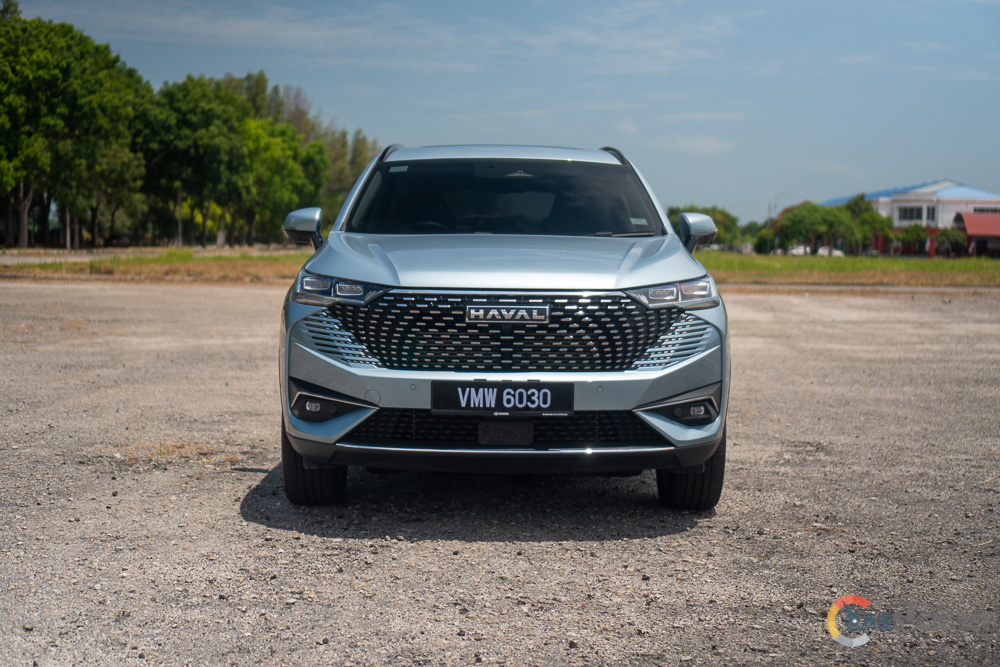

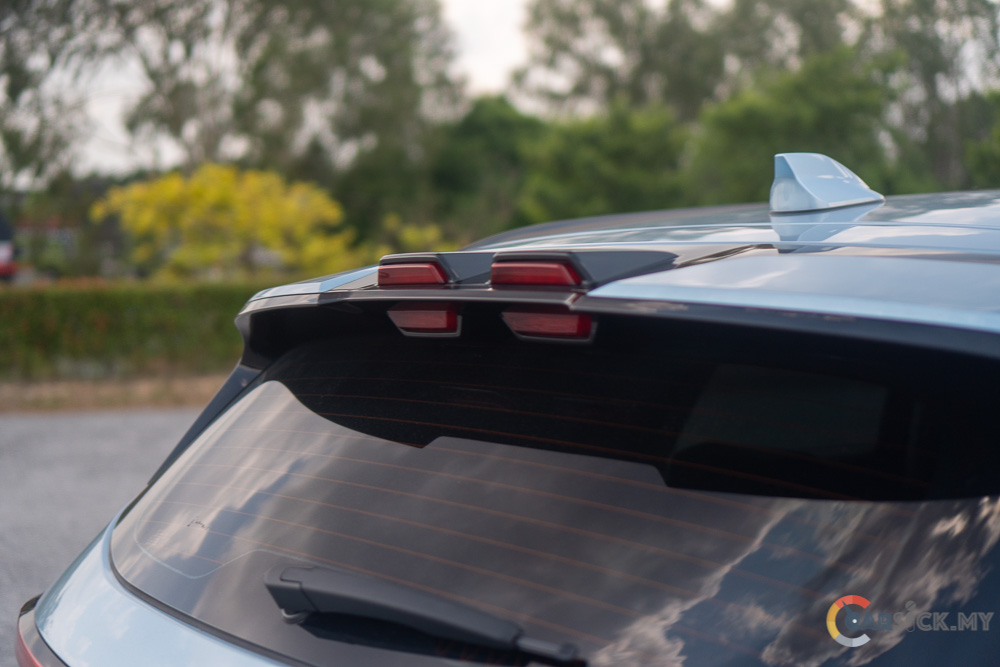
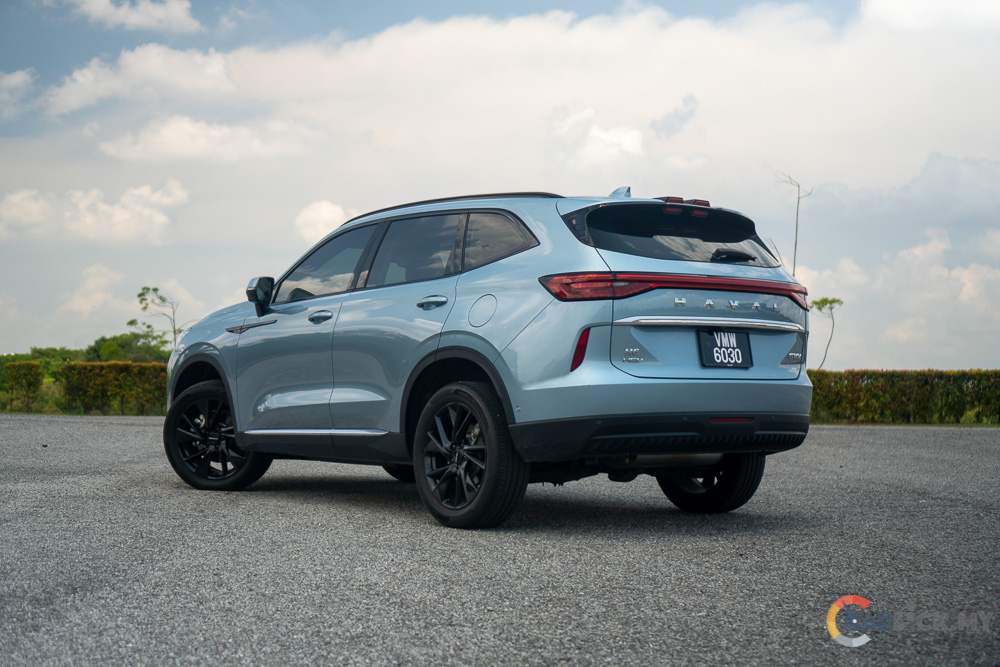
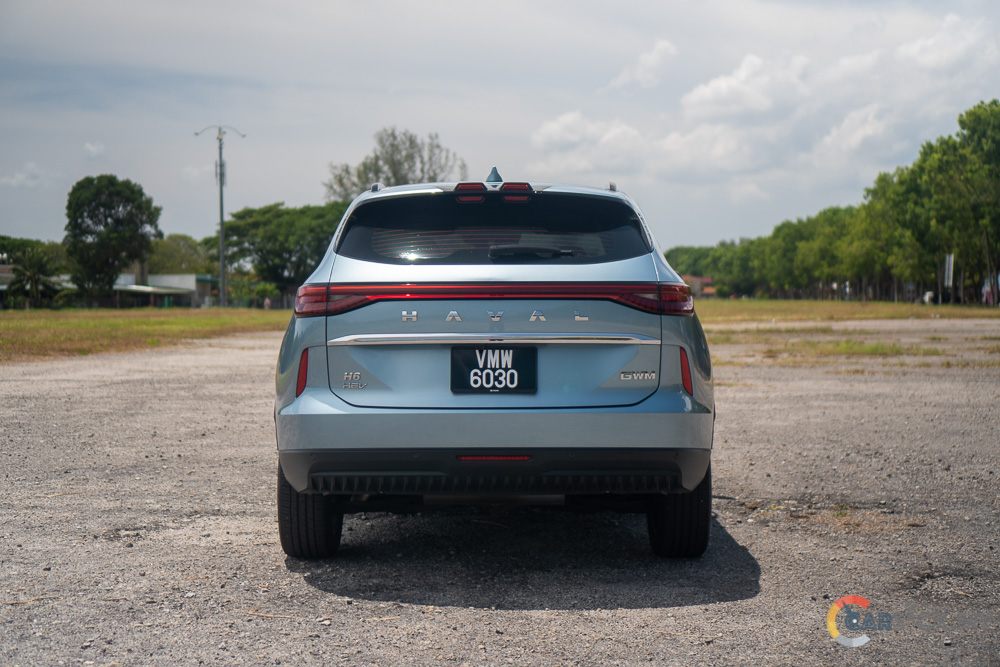
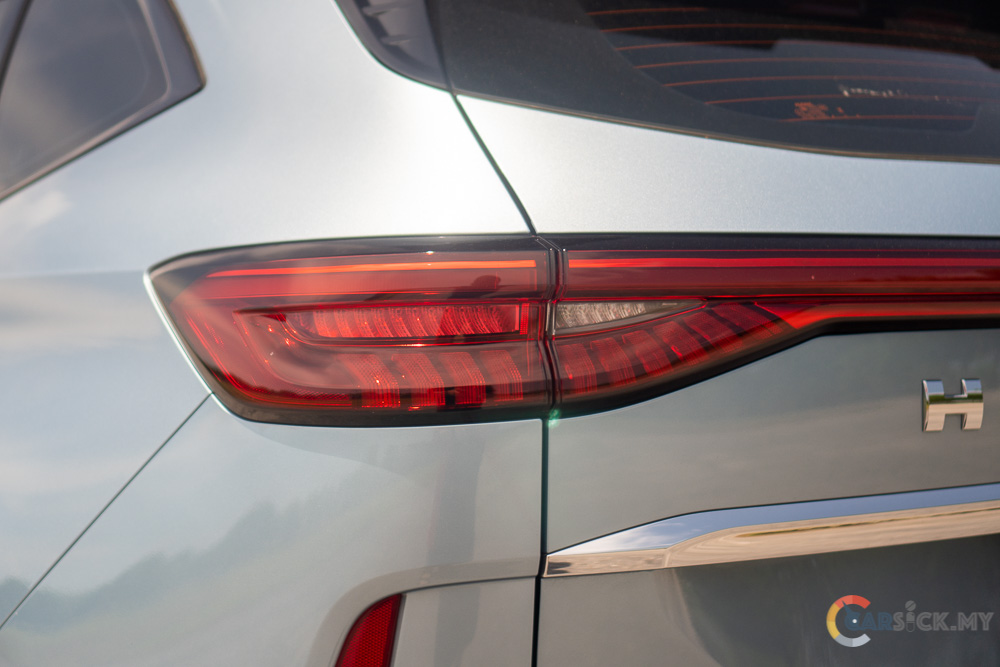
From the side, the H6 features a conventional SUV silhouette that most people won’t mind. The rear follows suit, making the vehicle easy on the eyes overall. At certain angles, the H6 resembles another Chinese SUV sold in Malaysia by a different brand, particularly in the taillight graphics. True to Chinese SUV fashion, a light bar runs across the rear, giving it a futuristic appearance. At least it comes with a large automatic tailgate, which can be opened and closed hands-free. Lastly, the H6 rides on blacked-out 19-inch rims wrapped in 225/55 R19 tires. While the black finish adds a sporty touch, silver rims might have made the SUV look more premium. 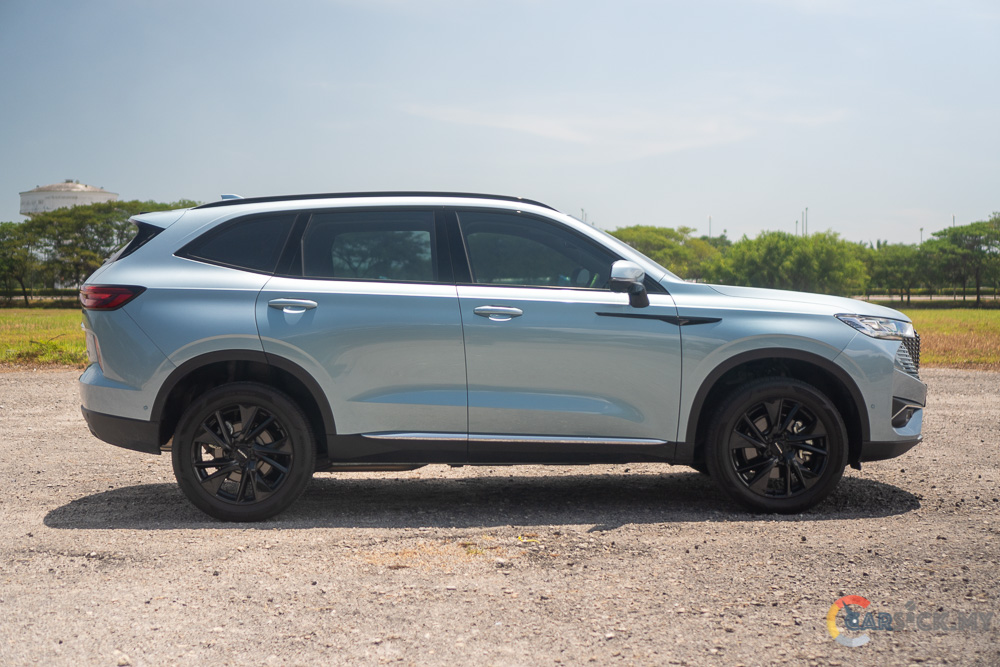

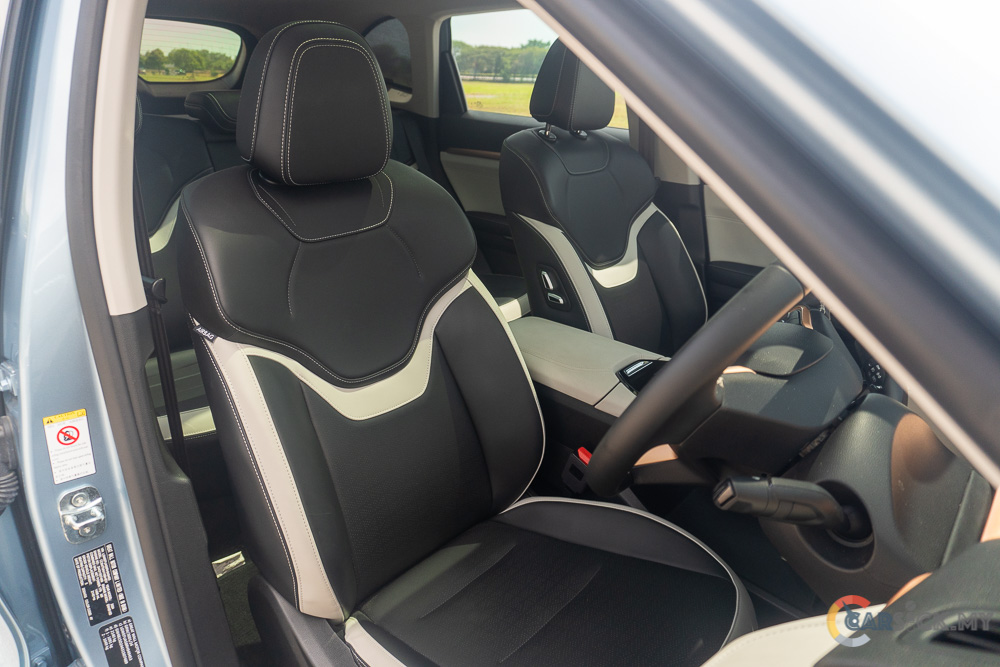
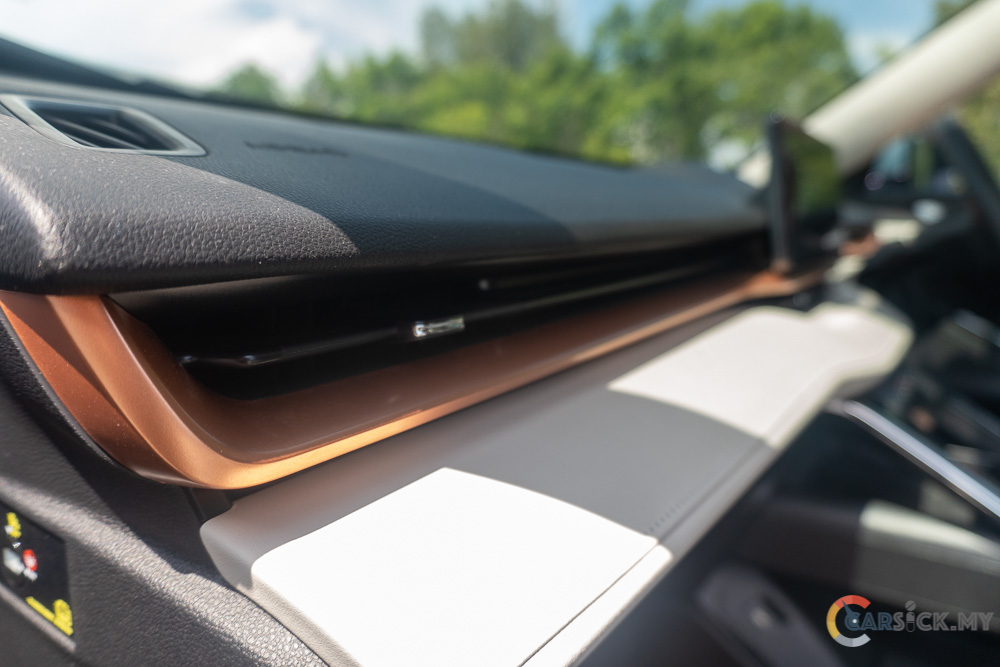
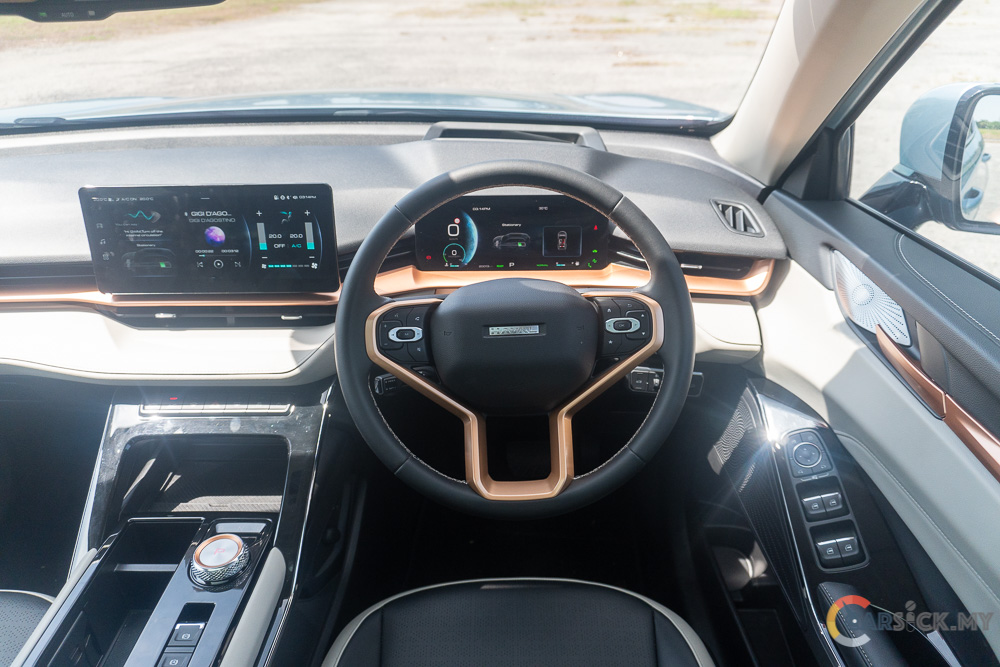
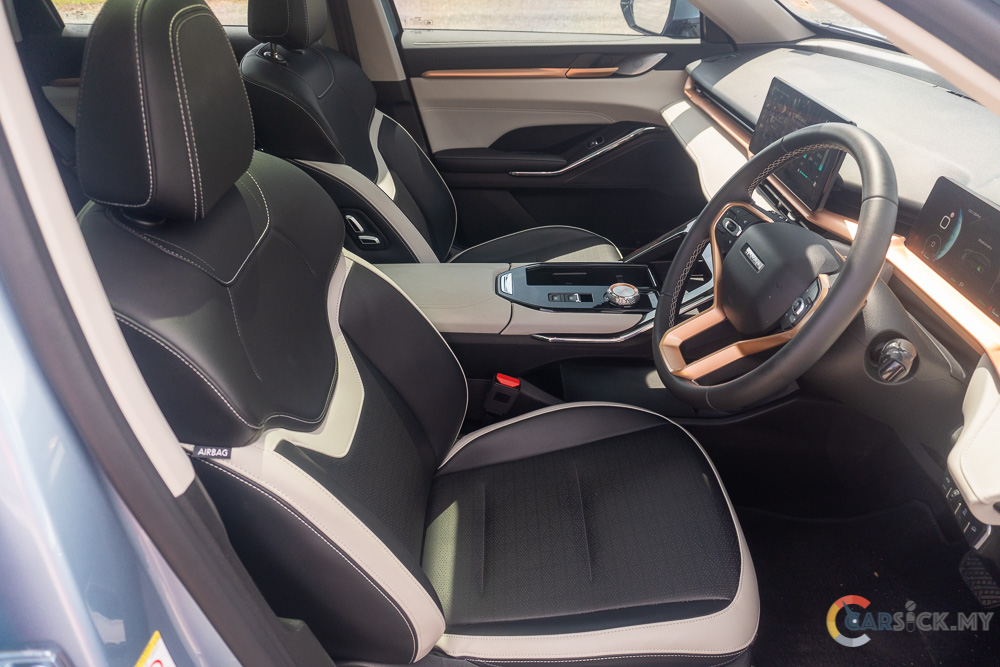
Inside, the H6’s cabin is similar to many other Chinese brands on the market. The dashboard is dominated by two large displays, but at least it still feels like a proper car interior. Some physical buttons remain on the dashboard, though the shortcuts don’t correspond to functions I use most often, so they weren’t particularly useful. GWM uses multiple interior colors to create an upmarket feel: most trims and seats are finished in white and black materials, accented with bronze highlights to create contrast. The cabin is brightened by a huge sunroof, making the space feel airy and spacious at first glance. 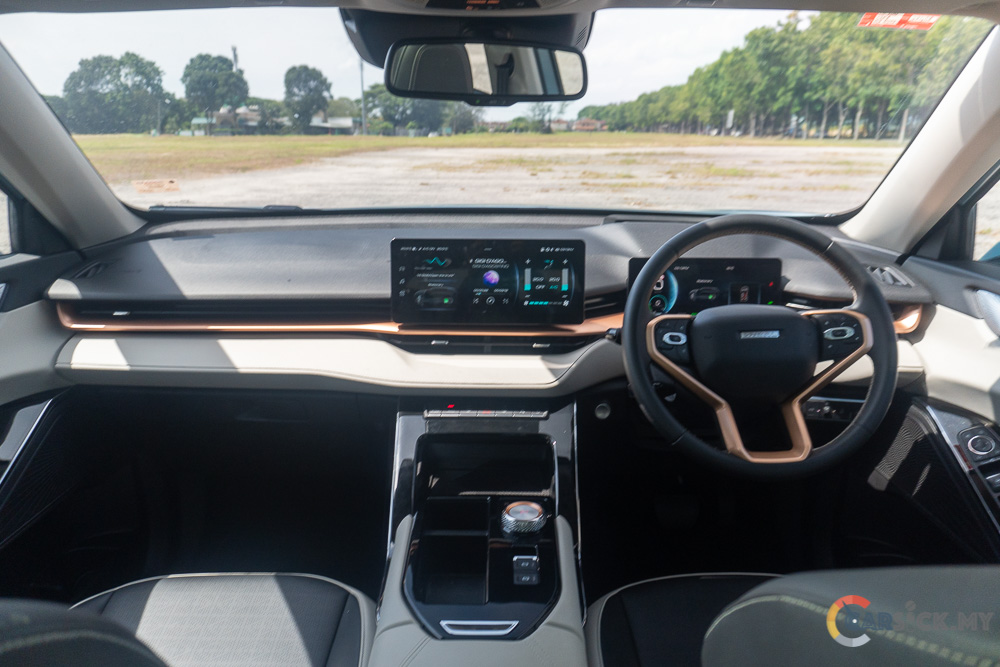
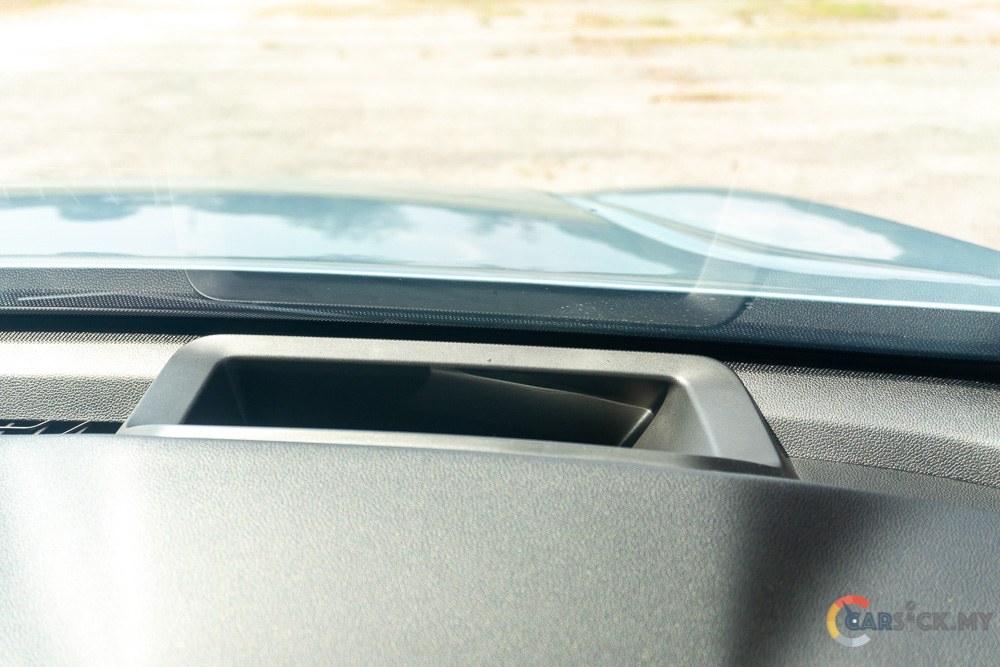
On the dashboard, the two large displays measure 10.25 inches for the instrument cluster and 12.3 inches for the infotainment screen. They are surrounded by soft-touch materials and well put together. However, the buttons and switches lack tactile feedback, which is somewhat expected at this price point. The instrument cluster graphics look elegant thanks to the darker background, and GWM provides multiple themes for customization. Unlike some other Chinese brands, GWM fully utilizes the screen. Complementing the instrument cluster is a head-up display that shows speed and navigation directions from Waze or Google Maps—though this feature only works with Android Auto, not Apple CarPlay. 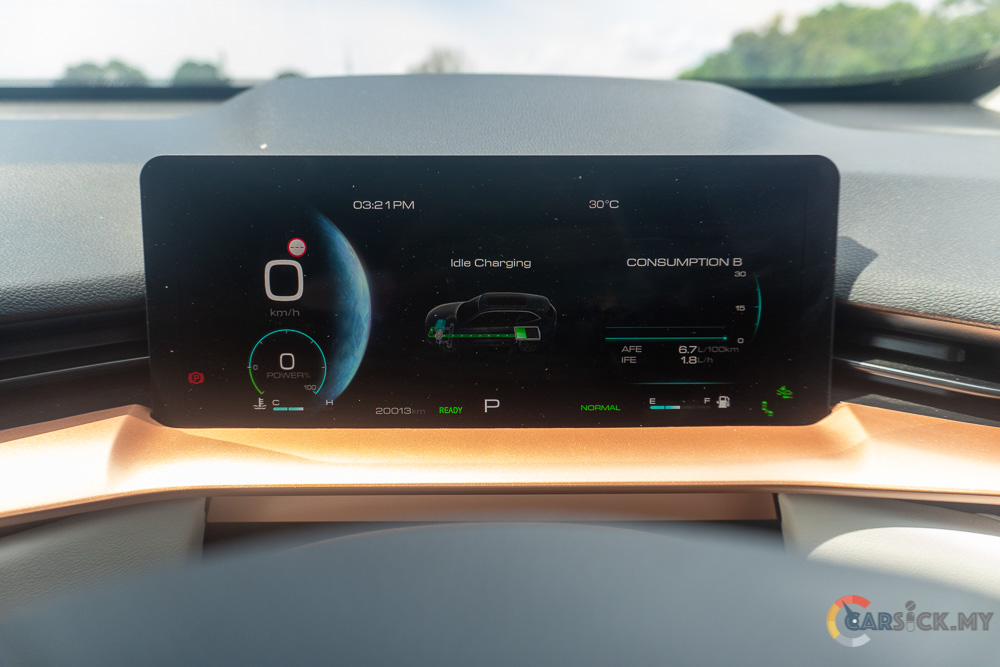

The infotainment screen mirrors the elegant graphics of the instrument cluster, making it easy to read. However, the system is similar to other Chinese brands, and the presence of two different settings menus makes navigation cumbersome. Climate controls are integrated into the infotainment screen, which isn’t very user-friendly. While Android Auto and Apple CarPlay are supported, connections aren’t wireless—a little dated for 2025. USB-A ports throughout the vehicle add to this dated feel.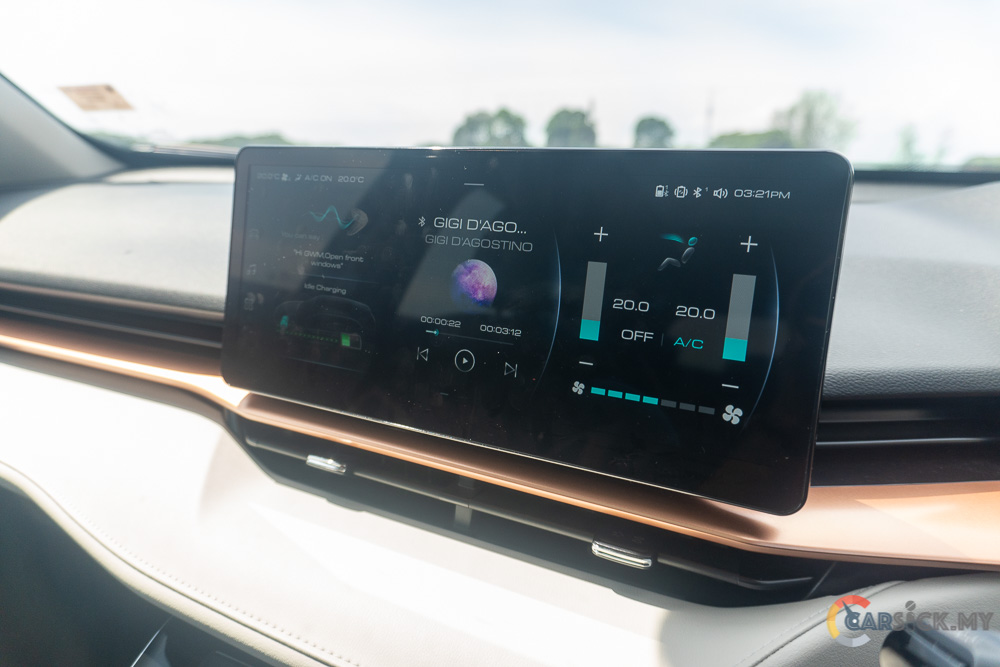
Still, the H6 includes modern features like a 360-degree camera, which is especially helpful for precise parking. The camera performs well even in low light. The sound system is standard—adequate for entertainment but not impressive, which is expected at this price point. The front seats aren’t particularly comfortable in terms of seating position. I find the steering wheel sits a little too high, giving the impression of driving a truck. Bolstering and thigh support are minimal; the seats are simply functional. For everyday driving, however, they are adequate. 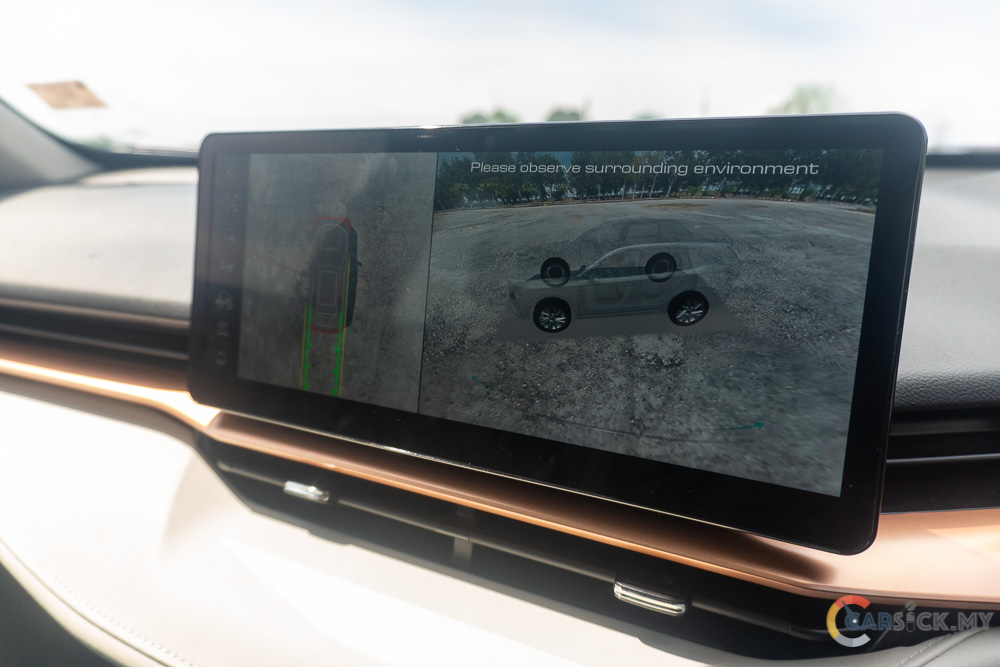
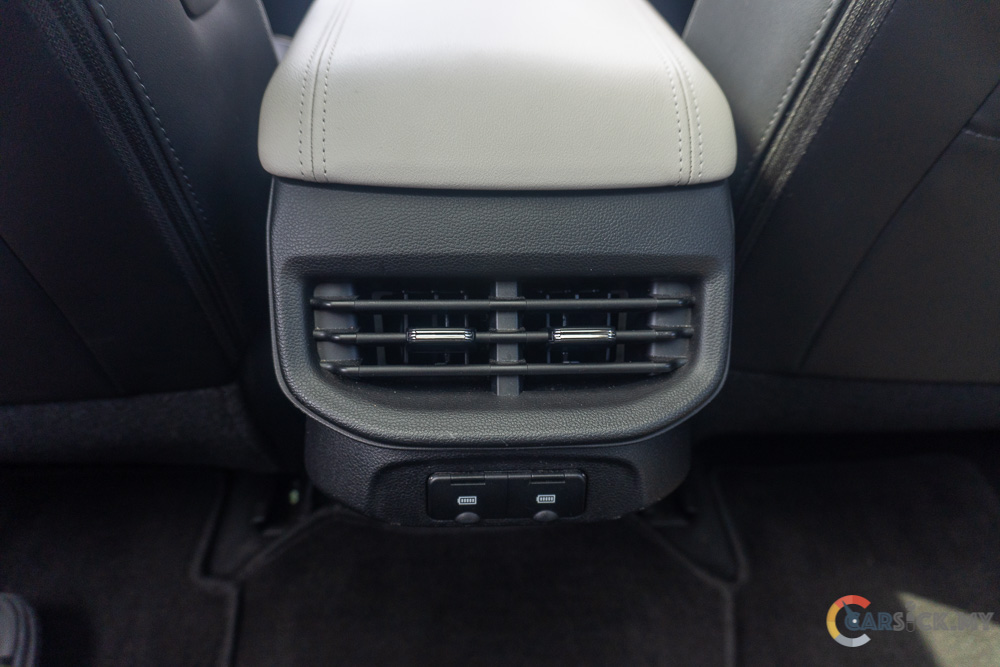
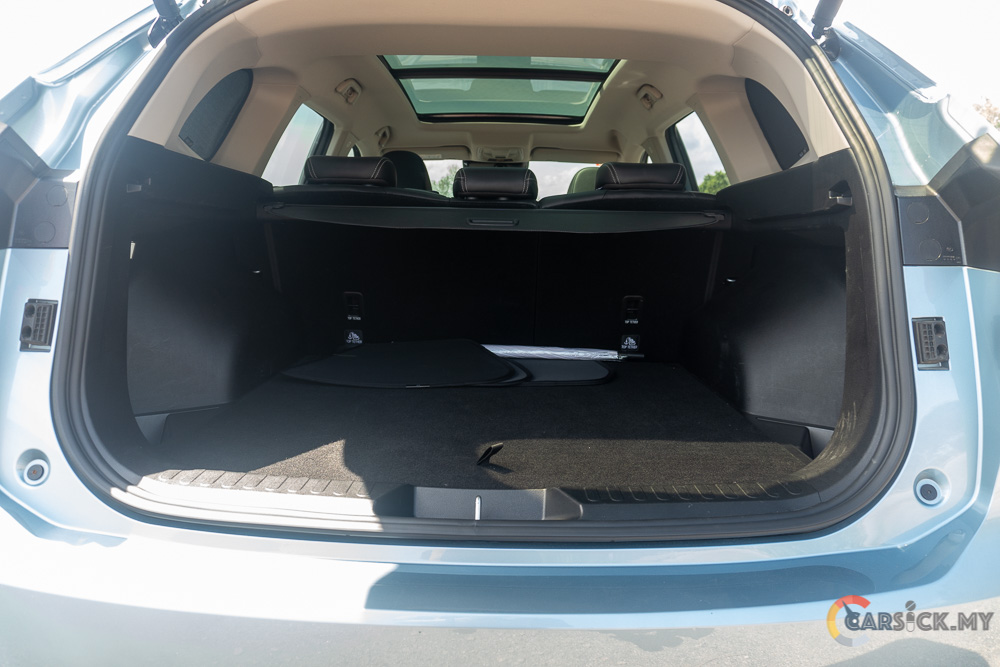
Rear passengers enjoy generous legroom and headroom. The rear seats are comfortable, though the bench is slightly short, limiting thigh support. The seat-back angle is fixed but reasonably comfortable. Two AC vents and two USB-A ports are provided for rear passengers. The H6 offers a massive 560L boot, which can be expanded by folding down the rear seats—ideal for families. 

Powering the H6 is a 1.5L turbocharged engine paired with an electric motor, delivering power to the front wheels through an integrated 2-speed Dedicated Hybrid Transmission (DHT). This setup produces 243 PS and 530 Nm of torque, allowing 0–100 km/h acceleration in 7.7 seconds.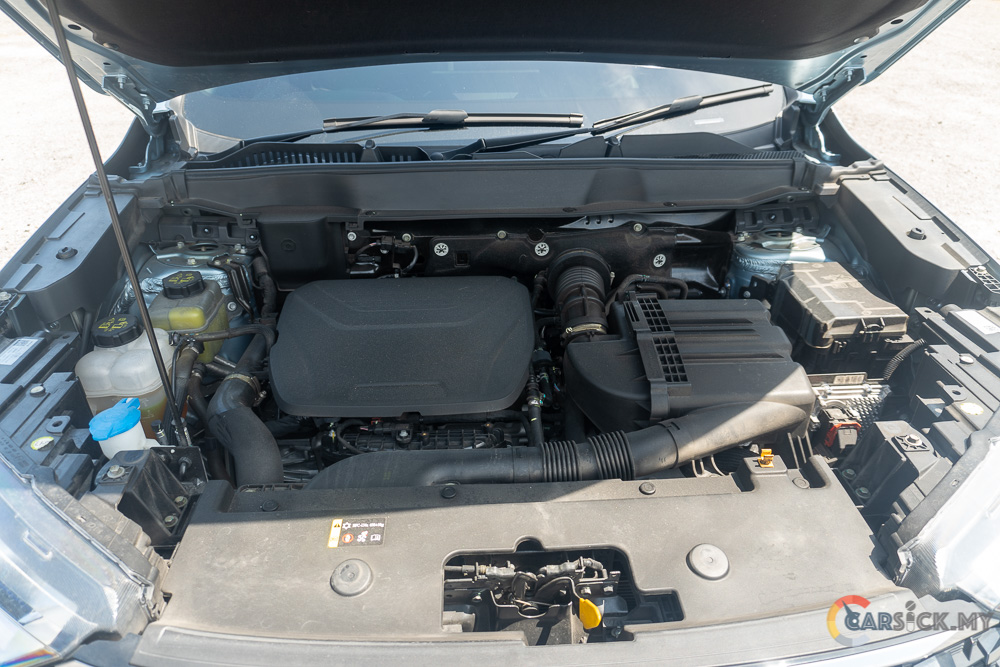
The H6’s powertrain is capable and handles various road conditions with ease. In city driving, keeping up with traffic is effortless, though the engine can feel lazy under heavy demand, even in Sport mode. The hybrid system transitions smoothly between electric and internal combustion power, with minimal vibration. Fuel economy is good: during my review, I averaged 6.5 L/100 km in city driving. Without the hybrid, consumption would rival Proton’s 3-cylinder engines. The 2-speed transmission ensures smooth acceleration without noticeable gear changes.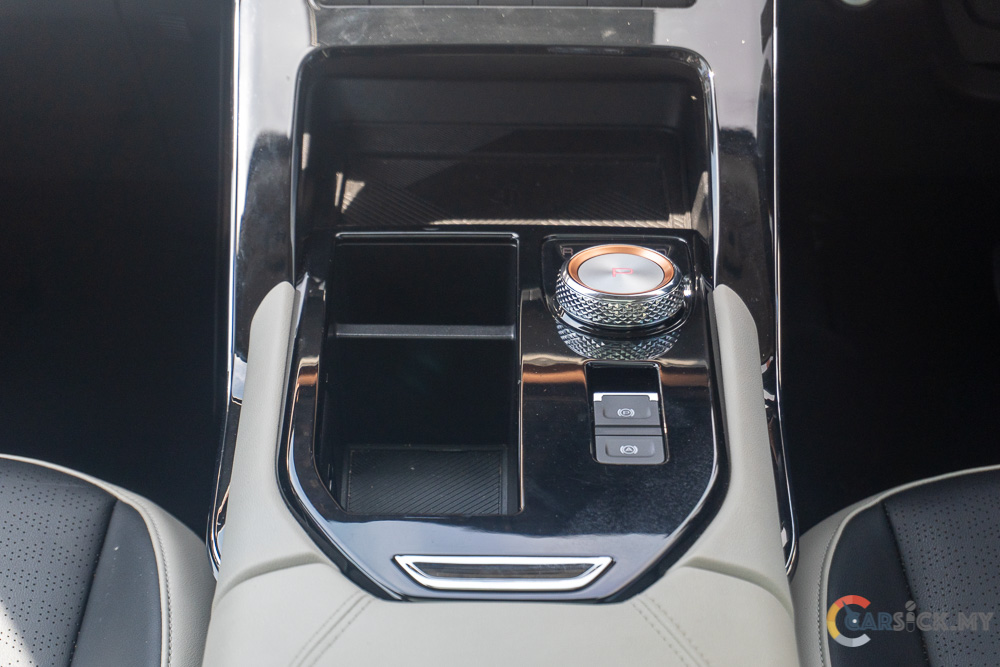
The H6’s suspension is basic, with a soft front and stiffer rear setup—likely to accommodate the HEV battery and enhance stability. While the ride absorbs bumps reasonably well, road imperfections are still felt in the cabin. Handling is decent on twisty roads, though the steering lacks feedback, and body roll is noticeable due to the high center of gravity.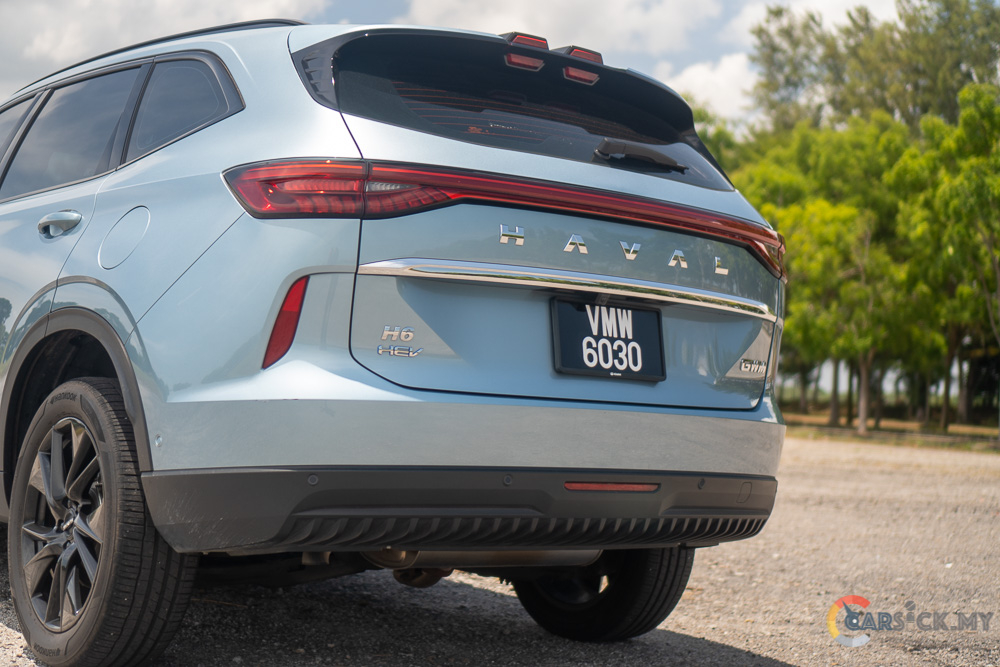
The brakes are well-tuned; I can distinguish between regenerative and physical braking. For everyday driving and spirited sessions, braking performance is sufficient. The H6 is fully equipped with modern driver assistance systems, including Adaptive Cruise Control (ACC), Traffic Sign Recognition (TSR), Lane Keep Assist (LKA), Wisdom Dodge System, Lane Change Assist (LCA), Blind Spot Detection (BSD), and Automatic Emergency Braking (AEB). A convenient feature is that disabled systems remain off once switched off, unlike some competitors.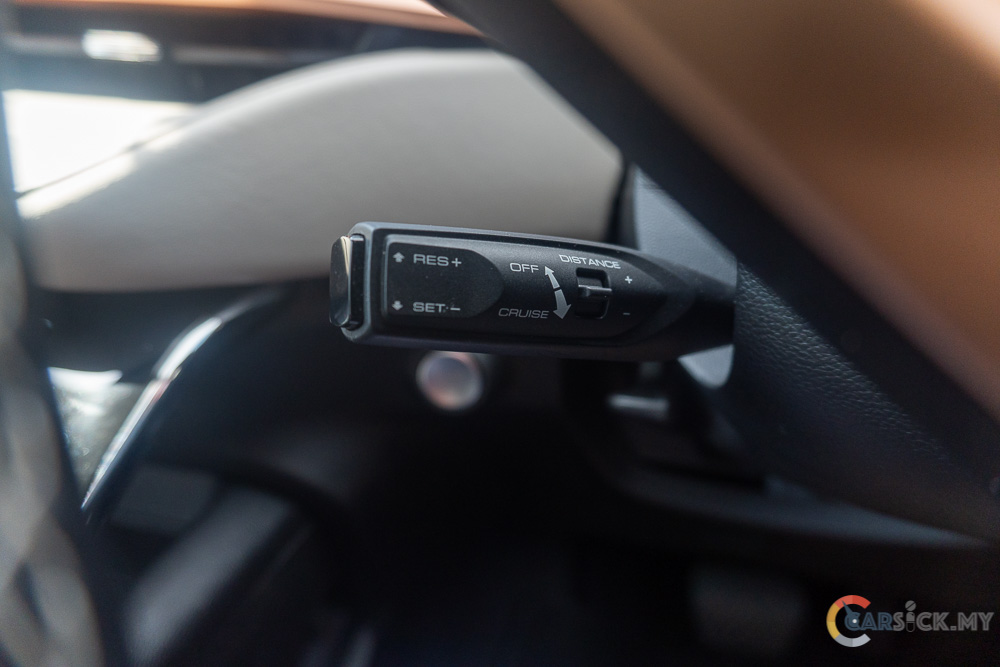
Priced at RM149,800, the H6 offers impressive value. Though not the newest model, it competes directly with the Toyota Corolla Cross and Honda HR-V while offering a larger SUV package. For buyers seeking space and fuel efficiency, the H6 ticks many boxes, explaining its popularity among Malaysian SUV buyers.
Check out the full photo album here.